The Music of John Williams: Our Top 5 Favorite Scores


 Apple Podcasts

 Spotify

 Goodpods

 Pandora

 Amazon Music

 iHeartRadio

 Castbox

 Deezer

 TuneIn

 Podcast Addict

 Podchaser

 Spreaker

 JioSaavn

 Castro

 RSS Feed
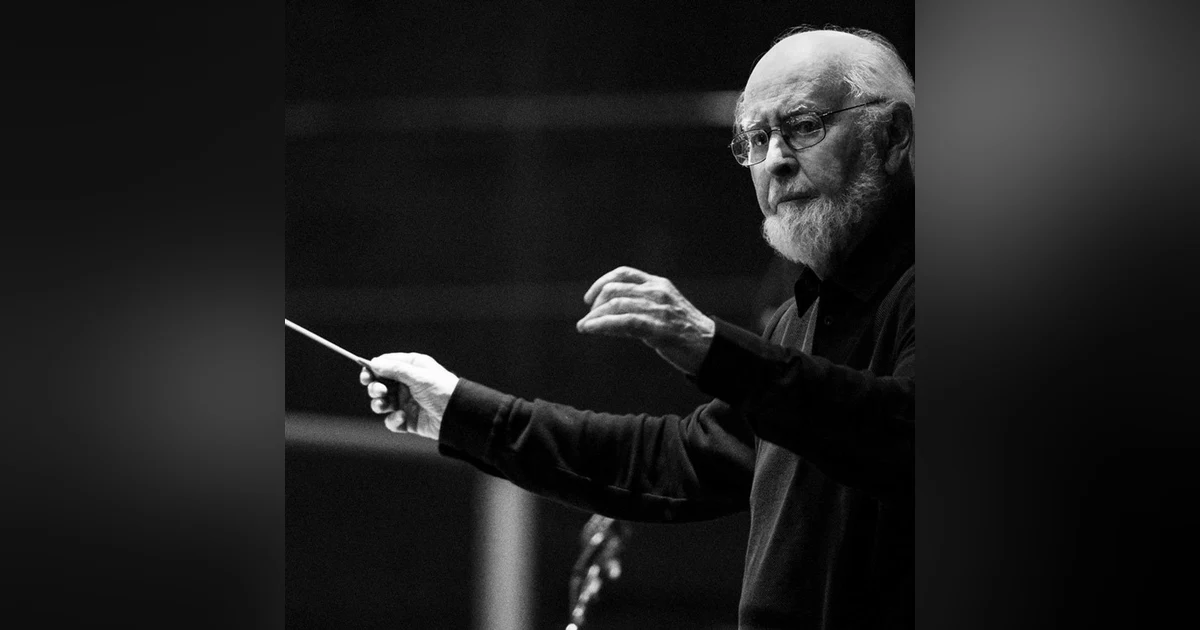
It's John Williams' birthday! Wayne and David are celebrating by sharing their Top 5 Favorite John Williams scores. Will all of your favorites make the list?
Check out our NEW YouTube Channel and subscribe now! Leave us a comment on our YouTube channel telling us your top 5 favorite John Williams scores. One lucky winner will receive the John Williams film score of there choice, as well as some A Film By... swag!
Head over to our Patreon and get started with a FREE 7-day trial. We've got plenty of exclusive content and episodes that you'll only find there! You can also sign up as a free member!
www.afilmbypodcast.com/ for more information.
Email us at afilmbypodcast@gmail.com with your questions, comments, and requests.
Find us on Instagram, X, and Facebook @afilmbypodcast.
Special shout-out to our friends at All '80s Movies Podcast, MaiRo & Co Dog Treat Bakery, and the Accidental Legends Podcast!
0:00 Films that I've composed of my favorites, A Close Encounters, some of that music, I'm fond of All Alone, I'm fond of the score. Steven Spielberg loves the Reavers, which is a step McQueen film done so many many years ago, so quite a bit. Superman as an overture to a concert works extremely well. There's a lot and so all of various Star Wars films, Indiana Jones. But really, you know what people ask about the favorite scores? Really like about saying what's your favorite child? When you've got three kids, you love them all and there are things about each one you might want to improve if you could.
0:43 This Sunday is John williams ninety fourth birthday, and gentlemen, in honor of the occasion, let's talk about the music of John Williams with our top five favorite scores. Hello everybody, I'm Jeff Johnson.
1:27 I'm David Burns, and I'm Wayne Whiten. And this is a Film by podcast doing a special episode once once again. Last month we talked John Carpenter, the music of John Carpenter. You guys were with me. We did our top five Carpenter scores. Wayne doing an amazing job hosting that one, and I know how busy you guys are with phaser sets of stunt are ongoing Star Trek themed pod that that happens. To my knowledge, Williams has never been involved with the Star Trek franchise. Correct, he has not, no, unfortunately, okay. Well, well, Despite his absence from the Star Trek franchise, John Williams is one of the most iconic and influential composers in the history of cinema, with a career spanning more than six decades and a body of work that has defined the sound of modern cinema. From the unforgettable themes of Star Wars, Jaws, Indiana, Jones, and Jurassic Park to the emotional depth of Et, Superman and Schindler's List, Williams's music transcends the screen, becoming as memorable as the films themselves. His mastery of orchestration and melody has shaped generations of filmmakers and audiences alike. John Williams is more than a composer. He's a cornerstone of movie history. And I am so thrilled that we are getting to talk
2:58 about it today. Before we get into it, I know we're I know you guys are probably excited to share your your top five John Williams scores. But you guys have something I can only dream. You guys have both had an experience I can only dream of. Uh, you've seen John Williams in concert three times? Three times? Okay, see, I saw you guys had seen him twice. I didn't realize that it was it was three. I was, okay, Can we can we talk a little bit about what that experience is like for for for those of us that dream of seeing it and are hoping to see it, because you know, the man's still out there, he's still he's still torn and doing stuff. What what What was it like? So tell me about the first time. Let's talk about the first time.
3:44 I remember the first time. That was great, the first time. We're never going to forget. For one, I was definitely sick, definitely were but nothing was stopping me from seeing John Williams in concert. We were in Pittsburgh, our favorite city, not but yeah, and we went to see it downtown and then it was the first time. Obviously, I mean Wayne and I both were like gigantic Williams fans, and the fact that we were getting to see him for the first time in concert with a thrill in itself, so me being. That was a fancy concert to addressed? Was that one? Yeah, that's a fancy one. But the only thing, the one thing that I vividly remember was the fact that Sin as he started his the music and started conducting, a screen came down and it started showing clips from the movies as the orchestra is playing them live. Yeah, and I'm telling you, it was just chills, goosebumps running up and down my spine on how incredible that experience was.
4:41 It was amazing. You know. He started off with playing some of his concert works, but then the first film piece he played was Close Encounters. When he played those those five familiar notes set chills down my spine. It was just unbelieve. I couldn't believe I was actually listening to this lie with him right in front of me. And then you go back, you see him a second time. Is this like a I imagine like maybe a couple of years down the road, And if so, yeah, what you know, Like I think about like seeing one of my favorite bands multiple times when they come to town. The set list is always going to change. A little bit, but they're going to also play the hits. So the second time you see him, is is it a little bit different or is the set list kind of like is the man doing the same the same thing?
5:24 It was different, Yeah, because what he likes to do is for every concert he does, he'll choose like one of these obscure films that most people don't realize, and he'll play like three or four pieces. I remember for the first concert he did TV film that he had done called Jane Eyre, And I think the second one didn't he played Harry Was it Harry Potter? Yeah? I think it was Harry Potter? Maybe that he that he did, but it wasn't obscurity. I know he was doing. Didn't he debut Chamber of Secrets? Play a piece? Maybe? I think I remember it correctly. I do know he did the was it this? Was it CNN that he did? Yeah, at the end, not many people knew that he had he had done the NBC.
6:07 NBC, that's what it was, NBC. A lot of people didn't realize he had done that. So he kind of like kind of turned around to like talk to the audience, and then he was like I'm going to play something that a lot of you probably don't realize I have done. Uh, but uh, you're gonna recognize it pretty quickly. And as soon as he went into the first few bars, like, oh, we know where that's from, it was the news. Wow. Uh. And of course the third time, you're you know you guys, I have to imagine the excitement is just as strong as the first time. Right. So, so the third time was in our hometown here in Cincinnati. It was was the last time we got to see him. And funny story behind that was as soon as we saw that he was coming to Cincinnati, I immediately went on and bought tickets first because Wayne had taken care of the other two, so I went ahead and bought them. And then at the time Megan, my niece, decided that her and her husband at the time, were going to buy tickets too, So we all bought tickets separately, and by we did not end up right next to one another. And what are the chances than that?
7:03 Honestly, all I'll ask is if and when he comes anywhere near us, we please just call me and let me let me know. I really don't want to miss out, you know, Okay, so I've I've actually had conversations with both of you off Mike, so I kind of got a little sneak preview of what your top five lists are looking like, which I was surprised by some of the choices. I'm a Williams is my all time favorite composer. I could easily make this top five list, but I'm excited because most of my selections are I believe you guys are gonna are gonna talk about them, but we're gonna take a quick break before we get to that top five.
7:58 Welcome to the All Eighties Movies Podcast. I'm Bill and I'm Jason, and this is the podcast where we talk about the blockbusters, the flops, and everything in between from one of the freshest decades for movies, the nineteen eighties. So whether you're a brain, a jock, a valley girl, or a Jedi, we've got some Eighties classics for you. Do these movies stand the test of time? Are we discovering something new? Is there an Eighties movie we are finally watching for the first time. Join us each week as we dive into the cinematic nostalgia that inspired and influenced a generation from the hits to the cult classics. We'll discuss our earliest memories, favorite scenes, fun facts, and are not so favorite movie moments too.
8:40 You can find the All Eighties Movies podcast wherever you listen to your podcast. Please subscribe and happy listening. Welcome back. We are discussing the legendary composer John Williams and we're doing a little top five. This had to be difficult for you guys to to pare it down to just five choices. I know, you guys are gonna cheat and give me like an honorable mention later on, but even even at six, like picking six, you know, I can't imagine you two, especially agonizing over your choices.
9:21 Well, I mean, my number one was easy. That's always been my number one. Yeah, that one was not hard at all. But the other four I struggled, especially when I got to picking five, because there's so many that like could be there that I had to like put on the back burner. A couple of them that are not there really broke my heart not to have them there. But I mean I had to look at what are my five favorites, and I can't have them all there, otherwise it'd be ten. Right, So, yeah, here we are. You know what you make. You make a good point. It's you know, you said your five favorites, and we're not saying these are the top five best John Williams scorers. We're saying these are our top favorites. Right, So Wayne, why don't you start us off? I would love to hear your number five pick.
10:08 My choice for number five will start in nineteen ninety one with the often overlooked and forgotten Steven Spielberg Classic Hook Hooks Score. It's an emotional roller coaster from you got your gentle sweet melodies, you got your loud, bombastic marches that you're very familiar with, thrilling, exciting action cues. It perfectly matches Spielberg's magic vision of Netherland and the legend of Peter Pan that he gives us. It's got an incredible sweeping main theme, some beautiful motifs, especially the ones associated with Peter's you know, lost childhood. Just it's got an incredible melody, really brings out wonder and a bit of romantic orchestration there. It's it's just an incredibly magic score. You got you know, things like the song when You're Alone and then there's that six minute que the Flight to Netherland, really capture that pain of growing up and joy of rediscovering fun and imagination, with Williams's music doing just as much work telling the story as Spielberg's visuals do. There are two cues that I really wanted to point out of this score. One of them is You Are the Pan which is just a haunting and almost overwhelmingly beautiful theme. That's the scene where Peter
11:43 is formally recognized by the Lost Boys and their leader, and then he gives them the sword. It's an emotional ceremony. This is a new theme that was introduced in the score about halfway through the film. Rich strings and choir, the lovely French horn. It reminds me just how much Williams can really tug at the emotions. And then there's Remembering Childhood, which is really the centerpiece of the entire score. It's also the longest cue, with over eleven minutes. All of the themes that he's composed for hook has heard there, big brass, sweeping streams, beautiful piano. It's heroic, it's glorious, it's majestic. It's really John Williams at the top of his form and hook has been released quite a few times on CD. It just recently was released about two years ago by Lall La Land Records in a three CD set. I think you got I got you that, David.
12:36 What do you think of that set? I haven't. I don't have that one yet. I got the two CD one. Oh, it's a wonderful set. I mean, giving us inditional music and stuff that we haven't had before. It is extremely well done, as you know, and try to. They do everything extremely well by the way they do when they remaster this stuff. It is just beautiful in listening to it. So yes, I would highly recommend if you don't have it in your collection, get it. Yeah, it's top of my list, right, you know, aget I said, I got the two CDs set that they did about ten years ago, and it's wonderful. This this is just an incredible score that just shows everything that Williams can do, especially during the eighties and the nineties. Wayne's starting things off with an underrated choice from an underrated Spielberg film, David your number five choice.
13:27 So Wayne mentions he used one word that encapsulates the score that I've ever already talked to and of course he used the word magic, and of course I am talking about the two thousand and one Harry Potter and the Sorcerer's Stone. This will come as no surprise to anybody that this is in my top five. For one, I love the books, I love all of the films, I love everything about them. But the fact that Chris Columbus got John Williams to do the music for this, because one, it's not a Spielberg film. Spielberg has nothing to do with this. And as you know, and Williams are like connected at the hip, which is great because they both are incredible at what they do. And with this one, when Chris Collins announced that John Williams was going to be performing the music for this, I knew right away that we were going to be in for something special. And boy did we get another special score from John Williams. So two tracks that I want to point out. One is Headwig's theme, probably the most recognizable piece of music from Harry Potter. Headwig's theme is truly magical.
14:30 It begins with simple and enchanting bells, delicate by yet powerful that immediately set the tone for a score as wondrous as the film itself. While it is named for Hedwig, this theme encapsulates everything we imagine about Harry Potter and the enchanting world surrounding him. There's a reason this theme was used throughout the entire franchise. It perfectly captures a sense of magic, adventure, and discovery that defines the story. From the very first notes, John Williams signals that we are about to embark on a powerful journey, one filled with magic, witches, a remarkable boy in a school like no other. The other one is the Quidditch Match. Now, every piece on the soundtrack is incredible, but these two always pull me in. John Williams is not only amazing with themes for characters, which I'm sure we're going to get into a little while, but it is also a genius when it comes to action music that perfectly matches what's happening on screen. In the Quidditch Match, we experience the game for the first time through both Harry Potter's eyes and our own, and Williams's score heightens the excitement for everyone. The music quickly merges us in the vast, energetic atmosphere of the stadium, with the crowd cheering the mysterious magical elements that define the franchise ever present. We ride alongside Harry and his team as they zip around the pitch on their brooms, battling opponents while Harry desperately searches for the snitch CHAOSI RUPs all around, and then music propels us through every twist and turn, even weaving in hints of Headwig theme to tie the action back
16:02 to the magical world. The dynamic complex orchestration delivers the heart pounding edge of your seat, thrilled that only Williams can provide. Man, David, you you have just put me in the mood to sit down and watch every film in the in the in the Potter franchise. Great choice, absolutely great choice on I mean is let me just ask because I'm not gonna First off, there are no wrong answers on this top five list. I'm wondering. We say that now, but wait until I give you my next one. Oh jeez, here we go. Oh yeah, Dave, you have no idea, but no My quick question here is when you look at his work in the Harry Potter franchise, is the Sorcerer's stone like the just the the go to choice or is there is there any any music from the others.
16:57 So, for me, it depends on what you're looking at because the music changes as you go. Obviously we know John Williams didn't do at all, and but the story goes. You know, the kids grow up with the story, so the music kind of grows with the kids if you think about it. Yeah, when you get into later years, you're still getting John Williams themes throughout the entire UH franchise, but you get that that more mature horror type, if horror is the correct word I could use. But you get more of those elements later on in it, but you're still getting elements of John Williams head with steament all that stuff in the entire franchise. So I guess it depends on what you're really looking at when you're looking at Harry Potter itself. Are you looking at the beginning or you look at the middle, or you're looking at the end. So if you're looking at what part of the story you're really in tune with, that would be your answer. But for me, because I love John Williams, I have to go with the Sorcerer's Stone.
17:55 Well, yeah. I looking back, I think about my love for the Harry Potter, the films and the books. Uh. And I have you to think for that because uh, I think back to uh, I think the fourth the fourth book, the Goblet of Fire, had not been released, and you had been after me for months to to start reading this, uh this, this this book series that I I believe I told you, uh what was obviously a stupid children's book that I didn't have time. I remember this, and man, was I a fiend after that first one. I was knocking on your door like, hey, you got another one? You got another one. It was like that what was it that Chappelle with the Christ.
18:39 You got more than Harry Potter books? Yeah? Yeah, Now I I owe that to you, my friend, for for introducing me to what what is arguably one of the the great uh uh literary and uh cinematic heroes of our of our generation. Wayne. Can we talk about your your fourth pick? Well, let me start with a quote. Every man would praise it. It's such a splendid plan. And someday soon we shall point with pride to the guide for the married man. Who what we need.
19:29 In the world today is a god for the married Man as being that in every way we'll provide for the hurried man, help not. Too worried, assist too he sor. I'm such a god. But in many ways during the time for okay, yeah, well now let me let me get into this. You know, Williams has scored a lot of different genres. In the nineteen sixties was a defining style and sound for him, very much rooted in his jazz background and just starting to blossom into what we know and love, you know from the seventies, eighties and beyond.
20:20 I love his sound in the sixties. So my choice for number four is the nineteen sixty seventh film A Guide for the Married Man, directed by Gene Kelly and starring Walter Matthew and Robert Morse. The plot from the film is simple. It's a man named Paul, who is played by Matthew, is discovers it as neighbor has been cheating on his wife and getting away with it, and then he's introduced to the Guide for the Married Man, which is an unspoken rule book for husbands who want to keep their wives but have fun on the side in the meantime, therefore leading to a happier marriage. I love this score so much I probably listened to it a thousand times. Now. I'm sure most of you out there listening are screaming why because this isn't the John Williams that we're familiar with. But this is a Williams that is working out of his comfort zone, trying different things, and he seems to be having a lot of fun doing it. He's crafted a jazzy, lighthearted sound that reflects everything we think about the nineteen sixties, you know, complete with that swinging rhythms, muted brass, clever instrumental textures that are just all over the place. The music never once takes itself seriously, you know, punctuating jokes and situations with a cheeky wink rather than the grand statements that we are used to from John Williams. It's clear he's having fun embracing the air's pop infected sensibilities while keeping the
21:52 score agile and elegance. It's it's almost cartoon like, with a lot of inspiration coming from bugs, Bunny and Tom and Jerry rather than you know, like Beethoven and Mozart. Now I see you laughing, Well, the film may today look a little sexist and politically and morally incorrect. It was the swinging sixties, after all. But what you really can't deny is John williams brilliance. He delivered it here written. He's written an opening song for the film, titled The Guide for the Married Man. It's sung by the Turtles. It's a really catchy theme, fun to listen to, and it plays over images of Walter Mathow tempted by a woman's rear end while walking down the street. Okay, Another highlight of the scores the cue the Globe Trotters, which is an exciting sweet It's very reminiscent of John Barry's James Bond style, but with Williams's own grandiose flare. And then There's No Place Like Home, where the main character Paul is rushing home to see his wife after deciding not to go through with the affair, which you know, really wouldn't find itself out of place right in a Chuck Jones Looney Tunes cartoon. You know, don't dismiss it.
23:08 Search it out. It's been released on the CD once and only once, back in July of two thousand by film Score Monthly. Beautifully remastered complete. It's even got the song by the Turtles, which is so much fun. But you know, all I got to see is it's not your usual John Williams. But don't dismiss it because of that. Give it a listen, Admire the fun, the care free style of Williams that we rarely hear listeners. I have to come to Wayne's defense here just briefly, because one thing you don't know about our content episodes. Obviously, we are always we're traveling, We're going to We're always one of these conventions, you know, to seek out some of our favorite celebrities and get some interviews. For you guys, No road trip is complete without the Wayne wided road trip music. And Wayne is always going to give you just film composers. That's that's all we're gonna get from Wayne.
24:06 Last year, I think we're driving to Steell City Con in Pittsburgh, and I recognize when I hear John Williams. I know I hear John Williams. I recognize it, and then I I kind of perk up on the back seat because I'm curious why Wayne would have the Austin Powers soundtrack on his playlist, and He's like, no, no, this is this is John Williams. I was like, no, it's not John Williams. And yeah, it was my first time hearing The Guide for the Married Man, so it's it's fun. It actually is a fun a fun soundtrack to listen to. Would you agree with that, Dave? Oh, no, absolutely, And I mean John Williams is good with the JS stuff, So I mean, if you if you listen to some of his older stuff, you know, sixties, I mean, he was really good, So why not put that into the films? And it is a good score.
24:52 I don't wouldn't put it in my top five, but this is our top five, so Wayne, it's cool. Well yeah, yeah, Yola. I understand. You know, I'm more into the same six sixty sound that a lot of people a lot of people are, you know, they're so used to the Star Wars Indiana Jones style that you know, the sixties is very, very different. But I love his sound. He's he just he changes his style and the way he does things every decade, it seems, and and you just got to appreciate that. And as it was stated, there is no wrong answer to John Williams. There is no there is no wrong answer, and David, I have to say your number four pick is absolutely not a wrong choice. It absolutely deserves and should be on this list. Can you give us your number four?
25:37 I sure can so. I mean this one automatically new is going to be in the top five without question. Okay, obviously I'm talking about nineteen seventy eight Superman. So this score in itself is probably the greatest superhero theme ever brought to cinema, to television, whatever you name it. Everyone recognizes this theme without even know where it's from. So there's actually two tracks on here that I really would like to point out. First one, obviously, is the prelude and main title March. You know what can be said about this piece of music except that it is indeed
27:08 the greatest them to any superhero, without question. This is the theme that defines who and what Superman is. Even within the score, you can almost hear the music itself declaring his name. John Williams composition truly makes you believe a man can fly. As you listen, it's easy to imagine yourself leaping into the air, arms stretched out, red case billowing behind, and soaring through the clouds. This powerful theme is a testament to Win's unique ability to capture the essence of a hero, and it remains unmatched in its impact and legacy. The other one is the Love theme from Superman. A slowed down rendition with subtle hints of the main theme, this piece beautifully conveys the blossoming relationship between Lois Lane and Superman. The score gently guides listeners through their emotional journe capturing the moment when their hearts connect as they soar together among the clouds. Williams's composition is both powerful and dramatic, expressing a love that transcends boundaries, even those between worlds. Romantic and evocative, these this theme stands as a fitting musical tribute to the enduring bond between these iconic characters. Jeff, I know what a Superman fan you are. You are probably you are the biggest supermanan fan that I personally know. Oh and you I know you agree with me that nothing can match this theme. Nothing when it comes to a superhero.
28:36 No, this is This is the definitive theme for a superhero. I don't care if you're talking Marvel, DC, what what year, what decade? This is the go to theme. This is the one I feel like anyone that if they haven't seen a Superman film, they still can hear this music and they they know, you know, they know what it is, and ultimately they they they will believe a man can fly. Just beautiful, beautiful score. I love this one. Definitely one of my all time favorites. I know Scott and I talked about this film for a film at forty five. When we come back seventy eight, Yeah we got, we had, we had, we had baby Superman himself erons with us on that episode. Sure did Yeah great to s Yeah, listeners, go back and check that one out. Scott and David uh just doing an amazing job having a wonderful conversation.
29:30 And and I got to point out to missus Tesmacher herself, Valerie Perne was was so kind, uh you know, friend of the show. She actually did a little little opening uh for us on that one. So that that was always That's one of my all time favorite episodes. I love, I love that we had that experience with with uh, with those individuals. Very special episode. It was uh before I know, we got to take a break, but before we do, uh, you know, I'm just thinking back to Wayne's interesting choice. Wayne. Now might be a good time to talk about the early years of John Williams, is there? What could you tell us about that? Because I know you could probably write his autobiography. If you, Oh, I could, but it's already been done.
30:11 There's that wonderful, wonderful film that Spielberg did by John Williams. So if you really want to know about his early years or for his entire career, just watch that. But I just wanted to point out that two and talking about his early years. You know, we we mentioned that he got his start working in jazz. You know, he he used to work as a session pianist, which meant, you know, he's with the orchestra. He would play piano for a lot of other composers and a lot of other films. So you know, you may not see his name, but you can hear him on a lot of films. You wouldn't You wouldn't realize, like Breath directors in Tiffany's Sharad the Great Race, that he both you know, all three of those films by for him Agnsini. His piano playing can be heard in To Kill a Mockingbird for Elma Bernstein and even like the films like said Blane again, City of Fear, Face of the Fugitive. Those are all three very very early scores of Jerry Goldsmith's that Williams played.
31:08 He was known as Johnny Williams though back there Williams, Johnny Williams, and you know, probably he's probably most famous if you really want to hear his piano playing. If you ever remember, there's an old TV show called Peter Gunn, very very very famous opening theme that starts off with a piano that's that's John Williams. Wow. Yeah, And he's incredible. You know. He started on a lot of very early TV series like M Squad is one of them, which he was working with Stanley Wilson. I've got it there that's actually been released on CD and it's it's got some wonderful jazz scores by him. But he you know, when he was working there for Universal, he shared an office with a lot of the other composers like Leyla Scheffrin, Quincy Jones, Jerry Goldsmith. They were all crammed into this one little room with all with the piano trying to compose for the various TV series.
32:00 Williams has been known to quote it was a situation where we taught each other and learned from each other, and it was a group effort to produce the results that each one of us were able to accomplish. You know, it's amazing. I can only imagine being in that room with all these fantastic composers that at the beginning of their career. Just to sit there say nothing and just listen. Yeah, oh my gosh, you fly on the wall. God, what what an amazing experience that would have been. And Wayne didn't. Wayne didn't, he didn't he do some Gilligan's Island stuff. Yes, he scored the pilot episode. He didn't write the theme, but he scored the pilot episode, and that music was used throughout the rest of the entire series. You know, all those familiar themes, especially the opening thing that they use in practically every freaking episode, and then the closing bit that they used. That's all John Williams, he worked on so many different different shows. We'll talk about it when we go into TV. But I also remember his first film. I want to talk about his first film real briefly. It was The American International's Picture, which is a B movie about a teenage street racer who gets mixed up in a drug ring and has to clear his name was started a Dick Contino. It's mostly a forgotten film. No one and you'd even remember this film if it wasn't for a Mystery Science Theater three thousand.
33:17 Having chosen you, there you go. Is it in nineteen ninety one, so you can go out and watch it and enjoy the earliest of John Williams and it is very interesting. Well, before you you all run off to check out Mystery Science Theater three thousand, we're gonna take a quick break, but stay with us because when we come back, we've got more of our top five favorite John Williams scores. This episode is brought to you by the Mayroe and Co. Dog Treat Bakery, a full service bakery for your dogs, providing classic treats, cookies, doughnuts, custom cakes, and more. Their treats are baked with only the highest quality, locally so ingredients.
34:01 Baking just a pound of treats at a time ensures that their treats are the best and the ones your best friends deserve. Mayrow and Co. Dog Treat Bakery has been treating Cincinnati's dogs to tail wagon goodness since twenty twelve, and now they're available online at Mayroanco dot com. Welcome back. We are talking about our favorite, our top five favorite John Williams scores. Wayne and David have given us just a few very fun ones to talk about, and now we arrive we're at the top three, gentlemen, so I know we're going to get some very interesting choices. Wayne, Let's start with you your number three pick, sir.
34:49 Well, for my number three pick, I'm I've been the rules a bit, but I love this score so much that it had to make my top five pick for best John Williams score. In nineteen eighty five, at the height of his career, Steven Spielberg had an idea, what if I took the look and feel of big budget Hollywood motion pictures, but size it down into a half hour anthology series for family viewing right in your own home. And from that idea sprung Amazing Stories, a half hour television series emphasizing wonderment, fantasy, irony, and comedy. But Spielberg knew that the only way to achieve this was to bring some of Hollywood's top talent on board as well, and the only way he would be able to do that is to show them by stepping right in and doing it himself. Spielberg directed episodes, and because of this he was able to get big names like Peter Hyam's, Burt Reynolds, Clint Eastwood, Jo Dante, Martin Scorsese, Tim Burton, Roberts, and Mechison many many more to join him on that TV adventure. But he allowed these famed directors not only the freedom to do what they wanted, but to bring their own people to work with them as well. And because of this, amazing stories of some of the most incredible and diverse musical scores ever written for television, music by Jerry Goldsmith, James Horner, Danny Elfman, Allen Silistrie, George Delarue, my Uncle Kaymen, Bruce Broughton, David Newman, Thomas Newman, so many more. I could just go on continuing naming, but it goes without saying that Spielberg's own episodes would be
36:22 scored by his friend and musical partner John Williams. Of course, Williams provided the opening and closing theme for the series, as well as the pilot episode, but his second effort that makes my top five list, the fifth episode called The Mission. This was a special episode in hour long World War two drama again directed by Steven Spielberg and starring Kevin Costner, who plays an airman of a B seventeen bomber who one of his crew members could become trapped in the belly turrant after a fireflight and is fated to die when the plane has to land. It's got some amazing special effects, beautifully shot, beautifully directed, stands as the first scripted TV episode ever to be broadcast in stereo surround sound. So it's fitting that John Williams would give it his all, delivering us one of his most remarkable scores ever for television, one that stands right alongside Et the Extraterrestrial and Raiders the Lost Art. Now, two cues I want to point out. The first one is The Parachute and the Control Room, which plays over the scene where the crew come up with the idea of shoving a parachute into the turret so Jonathan can jump out. It's an incredibly suspenseful piece with crazy strings and frantic woodwinds that build up to a hopeful glee until it all begins to fall apart and the parachute is ripped, and then the music instantly goes solemn and dramatic as they begin to lose all fool. The highlight of the entire score is the final massive queue titled Jonathan Begins to Draw and the Landing, over eleven minutes
37:52 long and plays from the return from the final commercial break to the end of the episode without stopping. This piece is one of the finest exam pulls a suspense and emotional build up that Williams has ever produced. It starts off slowly with his themes that he had created and begins to build with every refrain, adding percussion and brass along the way, and then just when the tension becomes unbearable, Williams releases it all with an incredible fanfare of brass and strings as the plane makes a miraculous safe landing. But once fanfare is over, it once again goes quiet with a surreal and magical style that before bringing back the full orchestra one final beautiful rendition of the theme to play the episode out. This music, it's just absolutely incredible, and it really reminds me of the score that he wrote for Et, especially the build up that Williams given it just because it's TV. He put everything he had into it and created the most incredible television work ever. And it is out on CD, but it's really hard to find. Back in two thousand and six, in Torotter Records released a three volume Amazing Story Set, which had six CDs. The Mission is the final score included on volume three. It's complete, along with eight other episode scores and an unused version of the main title, the end credits, and William's own theme he created for the Ambuland logo. They're all out of print and they are really expensive, but if you can get your hands
39:23 on one, get it. It's worth it. Good pick only, Yeah, a great pick. I have two things to say about this choice. First off, our very own Amber lewis the voice of reason. She too happens to be a huge John Williams fan, and Wayne is clearly channeling a little bit of Amber here as he breaks the rules and just goes, we're gonna do a TV theme. So I'm sure Amber is happy to hear Wayne talking about this one. I had to I listened to it so many times, you know this one. I went to pick my top five, I had to look at which scores do I enjoy the most, which ones by listening the most? This one is way up there at the top of the list.
40:07 Well listeners, Wayne, you know, he kind of shared some of the incredible composers that were part of Amazing Stories. He gave you just a murderer's row of legendary directors who were involved with this show. You guys are so busy on phaser sets of stun But I hold out hope that one day we'll get the the the Amazing Stories limited series where you guys go back and talk about this, because man, I would love to hear it. But I'd love to do that. I love this series. One day, Yeah, all right, we one day soon. In the meantime, though, David your number three pick.
40:50 So I think Wayne's kind of like looking at my notes because I know when he was talking about his fifth pick, he mentioned the word magic, which obviously led into my Harry Potter. This time he mentions a particular movie that's very close to what he was discussing, and of course I'm talking about nineteen eighty two. Is et This film I vividly, vividly remember seeing in the theater when I was a kid, and I'm never going to forget the experience because I know as pretty much probably everybody who saw this in the theater, and I think it was the entire country who saw this in the theater and probably went back multiple times to see it. Not a dry eye in the house. And I remember being that young and just bawling my eyes out at the end of this film. So there are two tracks of that goes along with this score. Again, the whole score is just beautifully done and pretty similar to what Wayne mentions on how John Williams is just a master of just that build up that he does, and he does it brilliantly throughout this score. The first one is flying.
42:28 In this segment, the musical theme vividly accompanies the moment when Elliott's bike is pushed to its limits, careening towards the edge of a cliff, before magically lifted into the air as the bike soars across the sky in front of the moon. The score perfectly captures a sense of childhood, innocence, dreams, and wonder. John Williams's composition evokes the spirit of exploration, an adventure that resonates with audiences, reminding us of the excitement and imagination we experience as children. The theme is as epic and memorable in its musical form as it is the iconic visual of Elliott and Et flying together, a moment that remains etched in cinematic history. The second piece, which is clearly my favorite of all of ET, is Adventure on Earth. This stands out as a remarkable track both in the album and in the film. With a duration of over fifteen minutes, every note in this orchestra piece evokes the wonder and excitement of childhood, capturing the innocence of magic and adventure that defines the story of Et.
43:35 The music mirrors the urgency in the exhilaration of the film's climactic scenes, racing through the neighborhood, escaping the authorities on flying bikes, and plunging into the forest in a desperate bid for freedom. John Williams masterfully guides listeners through a journey of suspense and emotion. The score beckons us to follow the characters into the unknown, building anticipation for the pivotal moment when Elliott must say goodbye to Et. The orchestration swells with emotion, reflecting both the hope and the heartbreak of letting go As the music reaches its crescendo, it encapsulates the bittersweet farewell, allowing us to experience every tear and every heart felt goodbye alongside the characters. This piece is more than just a soundtrack. It is a powerful narrative in itself. William's composition heals and uplifts, leaving a lasting impression that resonates deeply with anyone who has witnessed the story unfold on screen. The final notes, paired with the iconic line I will be right here, wrap up the emotional journey, ensuring that this score remains unforgettable for generations of listeners.
44:45 What an amazing film score PT is. Yep, David, you just took me back. So I'll tell you this. The very first movie I ever saw in a movie theater was E t the Extra Trestdrill. I remember, I was six years old. I was captivated, and I remember bawling my eyes out at that that pivotal moment when when Et dies and you you you're crushed. You know, I didn't understand what was going on at six years old. But you know, we've we've we've talked, guys, We've we've we've talked with with the the the Beautiful d Wallace several times. Oh yeah, we you know, she's very fond of the other film.
45:30 Uh. And you know, I've been to univer we we've all been to Universal Studios. We've with E T the Ride, all of this. None of it works without this beautiful music. And it's David. It's a It's an absolutely great choice. I know we got we only got a couple of picks left for you guys. But before we move forward, you know, and I got to jump back to Wayne here since he he brought a TV theme and you know, kind of piqued my interest with John Williams and TV. Way, Wayne, can we talk a little bit of about his television work. He's worked a lot on television before. Wayne. I do know I knew one big one that you're going to mention, So go ahead. I'm excited to hear the one sci fi series that Wayne's going to mention that John Williams did.
46:16 Oh oh yeah, of course, Landed the Giants. I absolutely love that. I know that's not what you That's not what I'm thinking of. I try you're talking about Lost in Space. Yes, Lost in Space. I mean you know that was That series was produced by Irwin Allen along with the Time Tunnel and Land of the Giants, and Alan and Williams had a partnership before even long before Williams of Spielberg and John Williams was the the head composer on Lost in Space, which means his music was prominent and used throughout the entire three three years of this series. And it's it's incredible. It's once again, it's that sixties style that I talked about earlier, but it's probably the closest you can you can hear within his scores for the first season, the seeds that would eventually become the Star Wars films, yep.
47:07 Because you know, like just like the Star Wars films, where he's got you got Yo Yoda's themes, you got your Darth Vader's theme, you got your your Jaba theme. You know, you got themes for different characters. He did the same thing in Lost in Space. You know, you have your robot theme, you have your chariot theme, you have Will's theme, the launch theme. You know, it's very very, very similar, and you can hear that style, even though the sound, the sixties sound is very different from what he was doing in the seventies. But it's it's an incredible body of work that he did throughout all the three years. He only actually composed scores for the first season. But and I'm going to explain this later on when I get to my first first choice in more detail, but he had to come back every season and reperform his his music so that they can use it throughout the series, and then a kuaike A CD. He mentioned he did Time Tunnel, which is another wonderful score he put.
47:58 He scored the pilot which had them going back to the Titanic. So if you ever want to hear him doing his score with the Titanic, there it is. And Land of the Giants is absolutely incredible. It's probably the closest to his sound of Star Wars and of like Superman than he's had he ever got, only because it's like seven years before. But he scored every second of that episode. His music only stops for the commercial breaks in that pilot episode of Land of the Giants, and I love that. Wayne. I'm glad you're the one offer in your picks because I could not be talking about Williams in the depth that you are tonight. With the jazz and the sixties compositions and then the TV stuff, So thank you for that. I gotta be honest, I was surprised, you guys.
48:50 I kind of had the idea like, oh, this will this might not be a very long episode because you guys are really give me your top five John Williams picks and you're probably there's gonna be a lot of crossover, is what I had initially prepared for. And it's it's not until your number two picks where you guys finally are sharing one. So David, I think it's, uh, we'll start with you, and because I'm sure Wayne's gonna have plenty to say about this one, but I'm sure, yeah, but what are we talking about? What is the number two pick that you guys both have on your list. So it's a it's a tiny science fiction film from nineteen eighty yep, and it's called Star Wars The Empire Strikes Back, which still is the best Star Wars film ever made in my opinion, by the way.
50:13 That's not just your opinion, that's my mine too. And it's probably the best the best music that John Williams had done of the entire series, as well, and there's two reasons why for me that this is the best Star Wars music from John Williams. The first one obviously, and Wayne kind of you know touch based on this too, that John Williams is incredible with his themes. Uh, He's done so well with that and pretty much everything he's touched, especially you know he got into the seventy eighties and nineties and stuff that, you know, his his themes are just beautifully done and beautifully written. But the first one, obviously, and no one's gonna be surprised when I mentioned this, and this is the Imperial March, among the best themes for any villain. The Imperial March stands as a defining musical statement in cinema. From its very first notes, listeners can envision Darth Vader's striding through ranks of troops, with massive star destroyers gliding across space and tie fighters screaming past.
51:10 This piece perfectly embodies the strength and power of Vader in the entire empire, illustrating the immense control he wields over his military and the galaxy itself. John Williams's brilliance shines through in this instantly recognizable theme, which has become synonymous with impending doom and the reign of the Emperor and his sith Lord. The Imperial March is without question the definitive musical representation of the Empire, signaling the arrival of death and destruction whenever it is heard now. The second piece is probably very close to being my favorite, as is the Imperial March, and Wayne might agree with me on this, I don't know, but this is the Battle of haalth oh Yea. This expansive piece from the Empire strikes Back masterfully captures the intensity and drama of the Battle of Haalth Banning nearly fifteen minutes, John Williams Scores takes listeners on a journey from the tense anticipation of trench warfare to the exhilarating flight of snow speeders, weaving through the icy landscape and around the towering of at eight walkers. The music opens with a sweeping rendition of the familiar Star Wars theme, dramatic inviting, before gradually building momentum as the action unfolds. Brief interludes of the Imperial Marts signal the looming threat of the Empire, while the piano magnifies the imposing presence of the at eighties as they advance, each step echoing and pending doom. As the battle escalates, the tempo quickens, mirroring the frantic pace of the snow Speeders and the chaos of combat. William's
52:42 composition perfectly synchronizes with the on screen destruction and fast paced action from the trenches to the base, desperate evacuation, and the speeders darting between the legs and the massive metal walkers. The result is a thrilling musical narrative that not only matches the visuals, but also heightens the emotional impact of one of cinema's most memorable battles. David, that was very well, said Wayne, I you know anything you want to add? Well, this was probably my only obvious choice for the favorite the list. But how could I not choose this? You know. I won't go into the details because David, you did a phenomenal job on that, but I want to tell you why I think this and my number one pick that I chose coming up is on my list.
53:31 The score to The Empire Strikes Back is is everything a perfect film score should be. It's music that perfectly accompanies the images on screen. It's it's a tone in emotion for the scenes that it underscores, but it tells the story both on screen and while listening to it separately. You know, when you listen to his cues, like what you mentioned the Battle of Hawk, you can close your eyes and listen, and you know through the music, the dialogue, the movement of the actors, the steps of the ad ads, Because the music is telling you the story just as much as Irban Kirshner did on screen. You can hear the moments when the Millennium Falcon enters the asteroid field, when Yoda lifts the X wing with the force, when Leah and Lando and the others narrowly escapes Cloud City.
54:19 His themes are so memorable, and they forced our way into pulp culture. Really, I mean, like you mentioned, Imperial March is one of the most iconic moments in film music history. It's just absolutely incredible. No other composer could ever do it better than him, I'll say that right now. And you mentioned probably my favorite cue of the entire score, one of the longest one too. But I also want to bring up a short one, the Clash of Lightsabers and the stormtroopers are coming. It's a short piece compared to the rest, but that's the scene where Lando and Lea are running towards the money of Hooking to escape from Cloud City. It's a fanfare that showcases all of Williams's new themes that he wrote the full hour of the London Symphony Orchestra. It's just an incredibly beautiful but strong piece of music that it's not quite the end of the film, but it's it's a great lead in to to what we've got you know what's coming for the final scenes.
55:27 H You guys have offered us some incredible picks and we are now on our way. There's only there's only one left. I know you guys are gonna sneak in honorable mention listeners. Yeah, of course you will. Listeners. I'm just I'm just checking my my list and I still see two that you guys haven't talked about that would be on my top five. And listeners, if you're like me, uh, probably wondering will they name one of your choices that's on your list. We're gonna take one last break and when we come back we'll find out.
56:42 Ever noticed how some of the most legendary movies, TV shows, and songs were never supposed. To work, box office flops, on paper, network rejects, songs the artists didn't even want to. Record, and yet boom instant classic cultural obsession songs that have played everywhere NonStop for decades. We dig it to the projects that were supposed to flop and accidentally became icons. Bad ideas, bad timing, somehow perfect results. This is the accident the legends, proving that failure is just a success that showed up late. We're available anywhere that you find podcasts, Speaker, Apple or Spotify. All right, gentlemen, you have given us some amazing picks so far, and I know you're gonna you got to give us an honorable mention. So Wayne, I'm gonna let you you start. Tell us about a John Williams score that almost made your list. Not good enough to make it, but yeah, but good enough just to just to give it a mention.
57:48 Oh, it came very very close. But my honorable mention has got to be a score that many people have never really even heard or have just forgotten about. And that's his music for the nineteen seventy nine horror adaption Dracula. If you haven't seen this film, please go and watch it. It's a gorgeous film. It's beautifully acted, beautifully directed, and Williams's music that's the icing on the cake. He's never made a horror movie sound so beautiful, you know. He approached it like a tragic love story and wrote these long, sweeping melodies that give the count a sense of dark melancholy, just beautiful, lush strings, fantastic use some action sequences. It's definitely an incredible score. Just it blows my mind how this little film of Dracula got this, this just beautiful score by John Williams. And this score was lost for a very very long time. The tapes, the original tapes were lost, and it had an album released back in nineteen seventy nine, and then they couldn't find them, and I was so sad. But it was just a few years ago they actually found the original tapes and released it, remastered it and it's available. Go find it out, Go watch this film, Go find the score. You'll never regret it, because this is just absolutely incredible.
59:04 It is a good rank. Franklin Jella as Dracula is one of the all time greats. As far as Dracula performances goes David an honorable mention something that is great because it's John Williams, but just not great enough to make your list. So Jeff, I'm throwing an audible here. I gave you my one that I thought I was going to do, but I decided to go a different route for my nable mention. So I've always enjoyed this score, but the third time I saw John Walliams live in concert really made me fall in love with this score. Matter of fact, it even made me well up a little bit for tears because of just how good it was hearing it live in person from John Williams. Of course, I'm going to go back to the seventies like Wayne, I'm going a little bit further back into the seventies. I went to a John Wayne film from nineteen seventy two called The Cowboys. The main title of The Cowboys is everything you would hope for, playful, adventurous, and brought to life by the sweeping orchestration that John Williams is renowned for epic and scope. The music perfectly captures the spirit of high adventure in the American West, roping, fighting, riding horseback, and the youthful exuberance of boys discovering what it means to be a cowboy. Led by the legendary John Wayne, these young cowboys are accompanied by a score that evokes the vastness and openness of the prairies. Williams masterfully intertwines themes of danger and youthful optimism, inviting listeners to imagine what it must have been like to be young in
1:00:35 a world where excitement and peril were never far away. This piece is a testament to Williams's versatility, proving he can tackle any genre and seamlessly weave together both grand and intimate musical moments. So, yeah, when we saw when I listened to this piece of music when we were there live, I literally was welling up with tears because it was done so well. If you've not heard this music, this theme, you're really missing out. It is a beautiful piece of music from this movie, and it's one of the rare movies that John Williams dies. I hope I didn't ruin that for people, but it's from nineteen seventy two. A cmp for crying out loud, Come on now. But this it is a really good movie for one thing.
1:01:17 Jeff Bruce dern is in it for crying out loud. Yeah, it's it's one of job it's one of John Wayne's best Yes movies. I completely agree. That was what a stealthy choice. I you know your onnable mention. I was like, wow, that's of course. I'm surprised it didn't make your listen and now it's not even making your honorable mention. So interesting, very interesting, very very recently released, complete and remastered. So go out and get it. Yes, absolutely, all right, Well, gentlemen, it is that time. I know you both well enough. I didn't have to ask. I knew what your number one picks would be before we even you know, before I even got your lists, Wayne, because I've been on enough road trips with you, and I've heard this theme maybe as often as I've heard the themes for Empire or for et. But you want to go ahead and let us know what Wayne White's number one John Williams pick is.
1:02:21 I know this is an odd one, but hear me out and let me explain it to you. Here we go again. My number one pick for best On Williams score is the nineteen seventy eight Brian de Palma film The Fury. Now, I know, I can imagine, I can hear everybody out there screaming, what are you crazy? You know, But of all the John Williams scores that I own and love, this is the one that I go back to the most, the one that gets the most frequent listens from me. And there's a good reason for that. You know. This is a case of where I purchase and listen to the score before I saw the film. So when I first listened to this music, and it was the original album version, which I'll get into shortly, I had no context to what I was listening to. I was just enjoying the music, which brings me in too explaining this, Well, there's a huge difference between when I say the album and the score. Back in the sixties, seventies and eighties, it was very difficult and expense to release soundtrack albums, you know. Most of the time, actual releases were left to just the big blockbuster movies, in huge filts like Star Wars and Superman. And there was a good reason for that because the Musicians Union had different rules when it came to the reuse of music. When a score was written for a film. It was a one time use and that was for the movie. In order to for a record label to release a score on LP ror cassette, the rules stated that not only the musicians had to be repaid one hundred percent, but every instrument player, every technician, everybody had to be repaid one hundred percent
1:03:53 of the wages as well. It made it very expensive, and the record labels, they don't want to pay all these people for, you know, doing nothing, so they decided most of the time to instead have the composer and the orchestra go back in and reperform the score or whatever part of the score that the composer wanted to include on the album. Now, with most composers like Goldsmith and Horner and John Berry, they usually just went in and reperformed it, but not John Williams. He would rewrite the music before even going back in there, and just to give the listener of the album an ultimate musical experience. Sometimes it was just a little bit kind of like for what he did for Superman and Star Wars, but other times it was very extensive to almost where none of the music is likewise he's heard in the film.
1:04:42 He did this for Et the Extraterrestrial and Return of the Jedi, but for the most extreme case, it was The Fury. With the Fury, he created one of the finest listening experiences I have ever heard from a soundtrack, an almost concertlike event that tells the story in surreal and hauntingly beautiful way. The original score was recorded by the Hollywood Symphony in la and early nineteen seventy eight with a seventy five piece orchestra, but the album was recorded later in seventy eight when Williams was working on Superman the Movie, with the London Symphony Orchestra, a much larger and profound sounding orchestra with well over one hundred players. But this makes the album much fuller, the music much richer and emotional than the actual score. It's two completely different listening experiences with one score, and both are equally brilliant.
1:05:32 And there's differences, I mean there are differences. With the Hollywood Symphony he was using a theareman quite often in it, but with the London Symphony, since there was no theoremin used in this score for Superman, he had to recreate the sounds with the more traditional instruments. Just you have to listen to both of them to appreciate it. There are a couple pieces, like for Gillian, which is a typical Williams's style, but it's light and hopeful. It's greatly expand on the album version. And then there's the Search for Robin, a lovely piece with the main melody played on clarinet, and then the woodwinds and the brass coming in later, builds up to a waltz that reminds me of the kind of a little bit of the Christopher Young's theme that he created for hell Razor. And then finally there's Death on the Carousel and end titles, which starts off somber and quiet with woodwinds and strings, before transitioning into the sounds of a wild calliope, continuing to go faster and faster before it becomes practically unbearable. Then Williams unleashes the full power of the entire orchestra for one final scene, the last scene in the movie where Robin uses her telekinesis to kill the men on the amusement park ride. This is the most powerful and dramatic that Williams has ever gotten. It's incredible in the actual film version, but with the London Symphony Orchestra performing it, it nearly blows you out of your seat. Everyone needs to go and reevaluate this separate from the film. I know the film is a mediocre the score is anything but that. It's been released many many times over, both
1:07:06 the original and the score beautifully remastered by Lala Land. Just I don't know what more to say this. It's it desperately needs reevaluated away from the film. It's a full blown psychological thriller that Williams scores so beautifully but shockingly. I wish Williams had done more horror films in his careers because he's a master at it, and this score proves it. Wayne, I gotta say it the Fury. It's a pretty good thriller. It's a really cool film, made significantly better. By John Williams music. So not a bad choice, ed absolutely is not a bad choice. That leaves us one final selection, one pick left, David.
1:07:55 If adventure has a name, it must be your your number one pick. It absolutely is, Jeff, So anybody who knows me is not going to be surprised that this is my number one pick. I have said it quite a few times on our podcast, actually that this is the one movie that made me fall in love with movies and filmmaking, and that's the same thing with the score. The score actually helped me fall in love with music too. And of course I'm talking about nineteen eighty one's Raiders of the Lost arc So we could sit here and talk probably an hour about how incredible this score is and what John Williams did. But there are three pieces of music that I would really like to talk about that are throughout this film. Of course, you have to talk about the Raiders march, right, guys. This theme stands as one of the most iconic adventure motifs in cinematic history, instantly evoking the spirit of nineteen thirties escapades like no other.
1:09:18 Its unmistakable melody is deeply intertwined with the film's legacy, inspiring countless viewers to fall in love with both movies and music, just as it did for me. Few pieces are as universally recognized. The moment it begins, audiences everywhere are transported into a word of daring exploits and heroic journeys. Like many of John William's scores, this theme embodies the essence of the story, the hero request and the thrill of discovery. Listening to it, you could almost feel the urge to Donna whipp leather jacket and Fedora, ready to adash in the unknown in search of treasures destined for a museum. The second piece is, of course, Marion's theme. Every hero needs a counterpart who can stand alongside them, and in Raiders of Laws Dark, Marion's Stem provides just that.
1:10:04 John Williams crafts a dramatic and emotionally resonant score that perfectly compliments Inniana Jones, highlighting Marian's strength and resilience. The music captures her fortitude and independence, while also reflecting her deep passion and unwavering commitment to protect those she loves. William's mastery and character driven themes shines through in this piece, offering it another example of how his compositions bring cinematic figures vividly to life. And of course, the last one is kind of like the Battle of haw in the Empire strikes Back. This is the Desert Chase. Among the many unforgettable scenes and Raiders of Lost Dark, the Desert Chase sequence stands out not only for its thrilling action, but also for its dynamic score. In this piece, John Williams brings the music to life, reintroducing the iconic raiders them as any of Jones' racist on horse back to catch up with the caravan carrying the arc. Every punch, leap, and moment of tension is echoed in the score's energetic rhythms, perfectly mirroring the on screen action, as Iniana fights to gain control of the truck being thrown in front of it and narrowly escaping by sliding underneath. The tempo intensifies, with William's composition brilliantly matching each beat to the escalating suspense.
1:11:24 The result is a musical experience that amplifies the excitement and heroism of the scene, making it as memorable as the visuals themselves. And let me add that if any labels are listening, we need a complete and remastered version of this score. Plead. Yes, it's ridiculous that we don't have this yet. I agreeing, Wayne, it's it's it's it's a crime. It is that we don't have this yet, And I don't know who's to blame. I might want to look at Disney now for this. Yes, I know. How difficult it's been for you guys to narrow this down to your top five John Williams scores. But I will say this, if you guys were ever gonna try and do the impossible task of doing your top five John Williams themes, I will I'll say right now, Marion's theme from Raiders of the Lost Arc would without a doubt be in my top five. Just beautiful music, amazing film score, all these, all these have been and uh, gentlemen, I gotta thank you because you did not disappoint with with your lists.
1:12:33 No, so thanks, Jeff, appreciate that. It's always a pleasure to talk about John Williams. I know Wayne were both highly anticipating this podcast. Yeah, oh yeah, I know my choices are odd, but I love John Williams and every one of his scores. Yep, you know, just I couldn't wait to do this one now. Wayne, I love your choices, and I appreciate that you you you you chose from the heart. You you went with your favorites. You didn't you know, it would have been easy for you guys to have an an exact mirror image, and I'm glad that you didn't. Wayne's Dave was a shadowy reflection of your channeling my inner listeners.
1:13:17 What would be your top five John Williams scores? I'll tell you what. We're gonna have a little fun here. If you are listening to this episode on YouTube or you're not, doesn't matter. It is available on YouTube right now. Go check it out on that platform. Leave us a comment and let us know what your top five John Williams scores are. Wayne and David are going to choose one of these comments when they look over these lists, and someone will get the John Williams score of their choice on what would be Wayne CD? Or are we doing like an album like Vinyl?
1:14:04 What do you want to do? Oh? Okay, Wayne, Wayne's going with like you know? If Wayne who who? If he's not being paid by uh La La and uh in Trada that he should be. We will get you the John Williams score of your choice, and we'll probably through some film by Swagen as well. All you gotta do is head to YouTube right now and drop us a comment and let us know what your top five picks are. Other than that, you can join us on social media find us on Facebook, Instagram, and x You can hit the website to Film by Podcast dot com. Wayne is writing all these Star Trek novel reviews. Wayne, I don't know how you have time to do the Phaser show, do the regular show. You're you're reading all these Star Trek books and writing these amazing reviews. I'm assuming you sleep sometimes.
1:15:00 I don't know. Check I do. Yeah? Check out Wayne. Yeah, check out Wayne on the Film by podcast dot com. Uh, and you'll see h all the episodes that we have there streaming on the platform with your choice. Guys, we've got another composer by the name of John. We're going to talk about that. We've talked about John Carpenter. We tonight, we just now discussed John Williams. I think our next John. What's that happening in the fall? Maybe August? August, August, August, yep summer. Okay, who we got Wayne saying that name? Oh, it's going to be one of my favorite composers as well, especially television, and that is John Debney.
1:15:44 Yeah. We will have a top five favorite film score slash television score because Wayne is going to be uh running running a muck again. I'm sure. Oh, I'm gonna run amuck. I'm gonna cheek like Wayne did on one. Okay, Well, John Debney's coming uh in the meantime, hopefully Wayne will maybe he'll drop in on the on the the regular film by show and give us some some of his uh soundtrack spotlights. It's we haven't had that yet this season, Wayne, So. No, and but I'm sure we got a few of them coming up. You know, I'm always ready to talk about film scores. All right, well, what do you what's going on with the phaser sets of Stun continuing every Wednesday? Right now? Right?
1:16:27 Yeah, we're talking about Starfleet Academy right now, which has turned out to be a really good television. Yes, I had such low expectations and it's it's been fun so far. And this is this is a correct me if this is what the sixtieth anniversary. For starting sixty years? Wow, listen, I don't, uh, I don't. I don't run the show, but but actually I do run the show. So can can we hope? Can? I? Can? I? Can? I? Can you guys be. Volunteer to cover the original series at some point this this season. You don't need a volunteer list, because we've already decided that we're going to cover the og Star Trek this year. I'm so excited for that. All right, well, listeners look forward to that, and we look forward to hearing from you about your John Williams choices. And as always, for all of you that are listening to the show, following us on social media, subscribing to both our YouTube channel and to Patreon where we get all the bonus content. Well, thank you,