Christopher Nolan - Memento
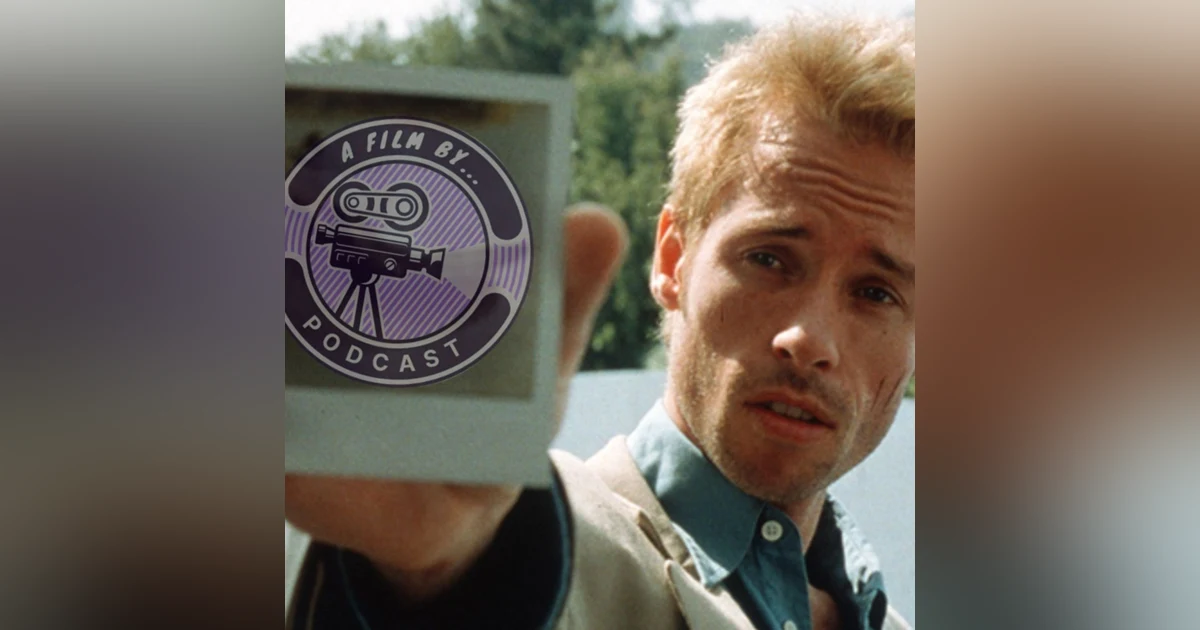

Mystery, Magic & Nolan! Jeff and Scott dive deep into Christopher Nolan's highly stylized, mind-bending 2001 film Memento! Unraveling this neo-noir thriller asks questions. Is Leonard the victim, or the villain? What really happened? How do we...

 Apple Podcasts

 Spotify

 Goodpods

 Pandora

 Amazon Music

 iHeartRadio

 Castbox

 Deezer

 TuneIn

 Podcast Addict

 Podchaser

 Spreaker

 JioSaavn

 Castro

 RSS Feed
Jeff and Scott dive deep into Christopher Nolan's highly stylized, mind-bending 2001 film Memento! Unraveling this neo-noir thriller asks questions. Is Leonard the victim, or the villain? What really happened? How do we feel about the story's resolution? For those of you that have seen and enjoy this mystery, we hope you'll enjoy this special episode. For those of you that haven't seen this one? ... buckle up!
This episode is available AD-FREE on our Patreon right now! Get started with a FREE 7-day trial. We've got plenty of exclusive content and episodes that you'll only find there! You can also sign up as a free member!
Check out our NEW YouTube Channel and subscribe now! Our new series Previously On... is exclusively available over on YouTube to cover your favorite TV shows, and ours!
Connect with us on social media and our website!
0:00 It's fantastic. It's, it's really cool because it's not, I don't think people immediately think insomnia for Christopher Nolan because he, he's known for writing and directing his stuff. He did not write insomnia. He directs it. He does not write it. All right. Well, Hey, but it still feels, it still feels very Nolan. I mean, you just sold me. I think it's one that I gotta, I gotta revisit. Well, speaking of the next time there's a visit, uh, next time on a film by we'll continue the Christopher Nolan conversation and, with Scott's pick, his 2006 magic thriller, The Prestige. So if you've seen it, how would you summarize it in exactly five words? You can go to www.afunbypodcast to give us your answer. Email us. If we use your five-word synopsis on the show, we will definitely shout you out on the episode, and we will give you some Afunby swag. As always, please join us on social media.
1:00 You'll find us on YouTube, Instagram, Facebook, X. We love interacting with you, sharing opinions, taking your requests for future episodes, and debating great movies. All of you out there listening to the show, following us on the social media, subscribing to the Patreon, we thank you. Scott, I know how busy you are on our Star Trek-themed Phaser Sets a Stun series, so... thank you. I know you guys are really busy with the 60th anniversary and you're doing, you got what strange new world's happening right now. You're doing a trek right now. Yeah. A lot happening. So love that. Love that series. Yeah.
1:42 I will. I want to thank you for taking time to, uh, to talk memento with me, but I do have one last question about Leonard. Yep. Is he the victim or is he the villain? He's the villain. Not an easy question. Uh, someone watches memento and they, they say, Hey, Christopher Nolan. I, I get it. He's, he's the guy he's loved. He's, he's the theater going experience guy, the IMAX guy, the blockbuster guy. But is there anything he's ever done? Is there anything he ever has written or directed? Maybe it was in that's maybe underrated.
2:29 Maybe people don't talk about like, what would be your suggestion? for an underrated Christopher Nolan project that someone should definitely recommend. So I don't know if this qualifies as underrated. So you might say, like, Scott, no. When I look at his catalog, at least the ones that I've seen, the one I think of is The Prestige, because I don't feel like that gets the same attention that some of his other catalog does. And I think that's a similar kind of idea of something that just becomes something different every time you watch it. at least in my opinion. When I think of the big things that hit for him, it's obviously the Batman trilogy and Inception. Obviously, the Odyssey has just come out.
3:16 Oppenheimer, Tenet. Yep, yep. Tons, right? So I feel like that one got mixed reviews when it came out, or that I don't hear people talk about it as much. So, I mean, that's my pick. What about you? How about one you hear people talk less about, 2002. He made this film right after Memento. 2002's Insomnia. That's with Al Pacino. Psychological thriller. Yeah, psychological thriller starring Academy Award winner Al Pacino, Academy Award winner Robin Williams, Academy Award winner Hilary Swank. And it is a highly underrated murder mystery.
3:57 Is that with Robin Williams as kind of a villain character? Yeah, yeah. He is the villain. Pacino's the cop heading into Alaska to catch this serial killer. Hillary Swank's like the local law enforcement. Yep. This is one ofâ if you remember, this is a time when Robin Williams was doing some really incredible serious work. And he does Insomnia where he plays like a serial killer, and then he's also in One Hour Photo. That's what I was thinking of, yeah. Which is maybe one of the creepiest films ever. Robin Williams ever did. Hard for me to watch either of them. Honestly. It is, but he's so mesmerizing in them. Yeah, I would love... I have to believe that next time we talk Christopher Nolan, you know, next season or whenever, I'm sure we'll talk Insomnia at some point.
4:52 Yeah. Because it's such an underrated film. That would be a fun one to talk about. The little bit I know offhand is Nolan, and this is early on in his career, he's got a hard time trying to deal with the methods that his stars want to use. And what I'm talking about, you have to remember, Pacino thrives on a lot of rehearsal. He wants meaningful conversations about the character's motivation. He's a theater guy. He wants a lot of takes. That's not Robin Williams. Robin Williams wants no rehearsal. He wants plenty of takes, but so that he can experiment and try different things. And then meanwhile, you got, you got Hillary Swank, who's just there to do a few takes and stay focused on doing good work. She, she's like the professor. She's the actor that's like, Hey, let's get in here. And we got seven shots to do today.
5:47 Let's get it done. So no one has to just kind of let these guys find a compromise. So fantastic film. If you haven't, if you haven't seen insomnia, let me tell you a scene. Uh, There's so many scenes I could talk about. And it would almost be a disservice to many of them for me to pinpoint one. Aside from that great opening shot, I'm going to go with one that I thinkâ I haven't asked her. But I would think that this one pissed Amber Lewis off. There's one shot that I justâ is the prostitute scene necessary? And as you think about that, I will say this. Nolanâ He argues for it. He has stated that it's relevant because it shows a moment where Leonard, and I kind of mentioned this earlier, Leonard is willfully manipulating himself, right?
6:38 His present self is creating a situation that his future self will have to deal with. Because Nolan has also said, you know, people have asked, like, well, where does the memory, how long does the memories last? How far does he go before he starts, where he hits reset, right? And I love that Nolan... he's on the record saying, well, it really comes down to how long Leonard can focus on something, where he can put all his energy and his effort into it. And if you watch the film, it happens faster and faster because he's being overwhelmed. There's a lot going on. Think about the scene with Natalie where we see her walk in the door and she's clearly been assaulted. And she, hey, Dodd beat the hell out of me because I did what you asked me to do. And you're like, you know, we got to get Dodd, you know, and he's mad. He's ready to get Dodd. But then we find out moments later, he's the one that hit her. And she's like, you'll never remember.
7:43 And she walks out the door and he's frantically trying to find a pen or anything to say, I got to remember that. I got to remember this. And all she does is she sits in her car for a couple minutes and then she opens the door, walks back in. And then he's like, what, what happened? What's going on? And now she's playing the victim. Yeah. And then there's that subtle, subtle thing that I, that I caught onto, but I wasn't quite sure why she was doing it. After she gets hit, she goes and takes all the pens and pencils. Yes. Yes. Puts them in her purse. Like, I know what I'm going to do. So that, the scene with the prostitute where he, like the present Leonard is basically saying, okay, when it, when all said and done, once, once I fall asleep, I need you to get up. I need you to go to the bathroom and slam the door hard enough that I'll wake up. And she's like, okay, whatever gets you off.
8:36 It's your money, pal. Because what's going to happen, he wakes up, and now he doesn't know where he's at. He's in a hotel room, and he hears someone, and he opens the door, and there she is. And she's like, okay, how was it? And he's like, please leave. I need you to leave. Because future Leonard has now become present Leonard, who would neverâ He loves his wife. He's trying to find his wife's murderer. He would never do something heinous like this, right? So it's a moment where we have to loathe and like the character simultaneously, and it's a tough beat. And I think the delivery of the dialogue is a little clunky. The actors even talk about how it was just an awkward thing to shoot because they didn't know how to play it, and no one really got it. But no one was insistent. I don't think we need it, though.
9:26 So my read of that scene, kind of thinking back to it, the items that he chooses are trying to trick him into thinking, I'm either in our bedroom, the bedroom with my wife, or my wife and I were at this hotel room and she put these things around to make us feel at home. And then I'm surprised to see that there is actually a prostitute. Yeah. And he's disgusted with himself. And he's seeing those flashes of what happened. And he's like, wait a second. So the guy that I've become is not seeking out vengeance for my wife. He's sleeping with a prostitute? Yeah. So it's almost like he's trying to get himself angry with himself again.
10:14 Yes. Scott, let's take one last break. And when we get back, we'll start wrapping things up. We're going to discuss a scene. Scott has a scene that he'd like to talk about. The scene that you want to talk about, are we talking about it because of a strong performance? Is it the pivotal moment? Is it because of the cinematography? Is it something that pissed Amber Lewis off? Why are we talking about this scene, Scott? I don't want to piss off Amber Lewis. Well, it's not about pissing her off. It's about, did, do you think this, this scene pissed her off?
10:56 Oh yeah, that's true. So it's interesting. Like when I thought about this and there are so many, I feel like key moments in here and the one that I'm going to choose might not seem that significant, but it's the one that just kept rolling in my head the entire time. And we've already talked about it, but for me, it really is that opening shot in. Reverse where, That brilliant opening shot. Yes. In a subsequent viewing, my second time watching it, it meant so much more. And it's something that I couldn't help but just kind of replay. I love the fact that the photo that you see is the first moment of kind of compromising trust a little bit or kind of maybe challenging your conventions. to say like, you think that you're watching this in real time, but you're seeing it fade, fade away, you know, um, Marty McFly style, um, as it keeps going forward. So you're being told, this is something that you're going to, this is something that's going to unravel. This is something that's not just going to be fed to you. It's something you're going to have to pack and understand. Um, I think it was beautiful cinematography. I think it was a beautiful use of of timing, because I think there are certain elements that they kind of play with speed and slow down or speed up for the need of the shot. But it does a beautiful job, I think, of setting the stage for a narrative told in reverse. And to me, it
12:27 was like the chorus of a song that I just kept hearing over and over again as I was watching the movie after every reset, because I was so fixated on specifically the relationship between Teddy and Leonard. Um, I don't know. That's the one that stuck with me. Credit, credit to Joe Pantoliano for this, this shot, because no one is looking, how do I start this movie and, and just immediately get the audience's attention? How do I pull them in to where they can't let go? And someone being shot in the back of the head is pretty, that's a pretty, uh, harsh way to start a film and get your audience's attention. But you've got to be careful.
13:16 We don't want it to be a gory movie. We don't want the scene to be gratuitously violent, right? So Pantoliano says, hey, I've got an idea. Let him shoot me. Let me start to turn my head. And then he shoots so that the glasses I'm wearing get knocked off my face. And you can let the camera focus on the glasses as opposed to to my brain splattered all over the wall. And that's the way the shot tracks. And it's brilliant. I don't want to say that it's artistic, but it is. Because I don't want to see a special effect where we see his brains get splattered all over the wall, but it's visually stimulating. The way that we follow the glasses being violently knocked off his head.
14:10 I feel like there's also a little bit of vulnerability that that gives to Teddy. Because when we first meet him, we don't know who this guy is. It's just something that this guy is beating up and gets shot. But the fact that he loses his glasses, something he needs to be able to function and get through his day, right? It's a hollow point going through his his temple knocks the glasses off i don't think he's gonna need much after. That but to your right yeah it's but like it's it's it's causing you to focus on the fact that like you know yeah i don't know who this guy is but he was in you know you even though he's a corpse even though he's had his you know face kind of blown off he he i feel like he's put in that role of vulnerability because he he loses the glasses and you're still not like did he kill the right guy That was a question I kept asking a bunch in the beginning of the movie.
15:05 The opening of this movie, you have to ask yourself, did I just see the victim get his revenge? Or did I see the villain execute the victim? And you have to go along for the ride to find out that answer. Right. And even with that, at the end of the movie, you're still questioning which one it is. The fun of it, too... Again, talking about whether or not we can trust Leonard, the fun of it is here, and I challenge you the next time you watch this, pay attention because each scene, each new scene begins where the previous scene kind of left off, right?
15:47 Right. I don't know if you noticed this, but sometimes it's the exact same scene, and sometimes it's not. It's shot from a different camera angle. It's shot from a different perspective. Oh, interesting. That's a good point. You know, Leonard's usingâ he's using theseâ he's got notes, he's got tattoos, he's got the Polaroid pictures. And this is his way of kind of creating evidence, right? Yeah. But we've also seen how he can manipulate this to kind of serve his current self as opposed to his future self at times in the movie. So I wrestle with the fact of how trustworthy he is. That's interesting because there are pointsâ So you're talking about like the fact that occasionally he will write a note on one of these Polaroids and then he'll cross it unintentionally or he'll kind of be aware of the condition and kind of design it to kind of use himself? Yeah.
16:40 So, well, okay. So he does both. Think about this. Because there's one scene I want to get to. I'm going to wait on it. Well, you know, we'll get to it. But to kind of illustrate my point, think about when Teddyâ is trying to convince Leonard that Natalie is no good. Right? He's like, I want you to write this on the picture. What's he do? Well, he writes what Teddy asked him to do, but he also writes it in cursive. I don't know if you picked up on that. I did at the moment, but I didn't get the sequence. Everything he writes on a Polaroid is in this block print, except for that. And it's basically, it's like, hey, I'm going to give you what you're asking me to do.
17:31 But it's a trick for a guy that knows that his memory is going to be gone in just a handful of minutes. He's going to look at that and he's going to, I didn't write that. I don't know who wrote that, but I don't trust that. He specifically writes in a different font. He's doing it purposely so that he knows... Hey, that's not right. And then we see him cross. Yeah. He crosses it out later. Right. Right. Yeah. Yeah. By the end of this movie, are you, are you satisfied with learning the truth or is it a situation where we are now forced to adopt Leonard's version of the truth? Cause he, if you think about it, by the end of this film, he has kind of, he's forcing us, we have to accept that he's creating an, he's basically creating a never ending loop for himself. Right.
18:23 Right. Teddy explains as much. Right. And that says some things about Teddy's motivations and how, how much of a good or bad guy he is. But I mean, the whole, the whole thing was Sammy, you know, remember Sammy Leonard is Sammy, this whole story that we keep hearing about, um, who is it? Uh, Steven Tobolowsky, you know, Ned, Ned, the head, Ned Ryerson. Yeah. Yeah. We see, and it's a different... It's black and white, but now it's not moving forward. It's a flashback in black and white. So now we're going one level lower. It's becoming Inception because we're on a whole other level.
19:07 Sammy is Leonard, though. Leonard's created this character. Yeah. And if you think about it, that's who kills his wife. He is the one that killed his wife. So the story about Sammy's wife... you know, kind of testing Sammy with the insulin shot. It was Leonard's wife that had the insulin. Go back and watch it. At one point he's remembering, think about this, at one point he's remembering her, she's sitting on the bed, she's like, ouch! And it's him pinching her. And then another time it's, ouch! And it's him poking her with a needle. Think about when he's doing the tattooing. Okay, so he goes to Emma's tattoo, which I thought was kind of cool. Cause that's just, that's just Christopher Nolan just throwing some love towards his wife, his wife.
19:54 Yeah. Um, but in other times when he's talking on the phone, you know, you've mentioned like, is he talking to someone or not? Cause I, he's clearly talking to Teddy. I think I, I believe he's, he, Teddy's been manipulating the get go. Yeah. But think about what he's doing while he's on the phone. He's doing the jailhouse style with the ink pen. Watch how he handles that ink pen. If you have a hypodermic needle in your hand... He flicks it. He's flicking it, right? He's tapping it. He's treating that ink pen, that big ink pen, like it's a hypodermic needle. Like it's filled with insulin and not just ink for his tattoo. It's the physical... It's the muscle memory. He's doing it without knowing that he's doing it.
20:41 Interesting. And also to that point, like what you mentioned about the handwriting. Yeah. I feel like the Sammy Jenkins tattoo is similar. And I wonder if that's one of the first tattoos that he did for himself. It may have been the John G, the one that's written backwards, right? But I wonder if that's like, it's the first that he designed to tell himself. And every time he sees it, it's like it... I wonder if the Sammy story has changed for him over time. It's why I had to ask you, is Leonard the victim or the villain? Because his actions, this muscle memory he's creating for himself, it works for him and it works against him.
21:31 Yeah, that's interesting. Especially by the end of this movie, Rather than accept the truth that Teddy, like it or not, Teddy gives him, he tells him the truth. This is what happened. This is what's going on. And he's so upset with that reality. He chooses self-exile, right? He chooses to stay in this world where he will always have the mystery to find out who is John G. And who do I find that's going to help me? It's become cyclical. Yeah. This movie became so much more trippy than it was when I first saw it. Let's take, let's take another break. And when we get back, I'm guessing you want to talk about a scene. Natalie, she's one of the bigger mysteries of the movie because she's that, I think at different times, different scenes, she, it's either, you know, his girl Friday, or she's the femme fatale. Or she's just repulsive. The moment she lashes out about Leonard's wife.
22:42 Yeah. And he's like, don't talk about my wife like that. And she just ratchets it up a notch by saying, I can say whatever I want. And the best thing about it is a few minutes from now, you won't know. You won't remember. And you and I will be best friends. We may even be lovers. I could call her and she uses a pretty colorful language to describe his wife, his dead wife. And you're like, man, she's repulsive. She's such a terrible person. Yeah. And she's one of those people that will, does and will manipulate Leonard in the course of this movie.
23:25 Yeah. Also, she spits in his beer. I mean, that's just cool. Well, she... She and others around the bar spit in that beer. I mean, it's even worse. To prove the point, you know, it's interesting. Is this guy full of shit or is he legitimately suffering from this condition? I'll find out. Yeah. And that's such a, it's gross, but it's a fun scene because like you're watching that schlep at the end of the bar chuckle. And you're like, what's he laughing about? All he did was take a drink out of a beer. Yeah. And then when you find out that she's He calls it the bar mat, you know? Right. Everyone's spitting this beer. He's like a Cheers caricature, right?
24:06 He's like something that somebody rolled off of a, you know, I don't know, like a clown off a set. It's a very unsettling kind of laugh. I want to talk about, I got a couple of fun things about this film's background. And since we're discussing Carrie Ann Moss, I want to start with this one. Costume designer on this film, a woman named Cindy Evans. first off, Carrie-Anne Moss looks fantastic in this film. Again, she's just a year removed from playing Trinity in The Matrix. Maybe she's even in the middle of filming the sequel at this point. Cindy Evans, the costume designer, raided her roommate's closet for clothes for Carrie-Anne Moss to wear. Her character, Natalie. Really?
24:58 Really. Yeah. I mean, the taste, like the style of choice, you know, this roommate, you know, she's got some, whoever this roommate is, she's got some taste, right? She's got style. Natalie, Carrie Moss looks, she is a smoke show in this movie. Do you know who Cindy Evans' roommate was at the time? Whose closet was raided? I'm guessing it's a surprisingly big name. It was Charlize Theron. Really? Carrie Ann Moss is wearing Charlize Theron's actual clothes, not costume. This is what Charlize was wearing in 1999, 2000, when we're filming this film.
25:46 I feel like she needs to have a little note in the credits, something related to wardrobe. Oh, yeah, definitely, right? I got another fun one here for you, Scott. And this is some nerd stuff. I don't know who first discovered this, but given the subject matter, I love it. Teddy's phone number, which we clearly see on the Polaroid, is 5550134. Well, Teddy is not the only person, the only movie character to have that phone number. This also happens to be the same phone number that Marla Singer had in Fight Club. Oh, interesting. Interesting.
26:27 You've got to wonder, like, is that just Nolan watching Fight Club, watching an adventure movie, going, you know what, I'm going to just do a little fun thing. I'm just going to borrow that. I don't know, but I dig it. If you're wondering, Scott, how we get the film Memento, Nolan conceived this idea from his brother, Jonathan Nolan, while they were on a road trip from Chicago to L.A. Nolan moves to America. He is in Chicago, where his brother is, and his brother's going to help him move. And, you know, what are you working on? His brother mentions a short story that he's writing, kind of fleshes it out on the car ride. Nolan loves it. Christopher Nolan loves it. He says, yeah, that sounds like an awesome short story, but I think it'd be an excellent film.
27:20 And as he tells the story, because I've heard him tell this story a couple times, he tells his brother, Hey, I want you to give me a call. Once you've got this thing written, brother says, Oh yeah. All right. No, no problem. And he does just that. Jonathan Nolan calls Christopher. The only problem is Nolan has already written the script and shot the film. All right. Yeah. So the fun thing here is Jonathan Nolan's story was in fact published. Uh, and I think it was Esquire magazine. Okay. Um, Yeah. The short story is called Memento Mori. And what's cool is that they kind of coexist nicely because they are the same but yet different story.
28:05 Because obviously Christopher can't write a script when the source material doesn't exist. He's got the bullet points. He's got the fragments. He's got the Polaroids and the tattoo facts of what this movie could and should be, more or less. Yeah. I love the fact that it's written on a road trip. That's really cool. I want to talk a little bit more about Leonard. I've been enjoying this conversation. We keep coming back to Leonard. My question to you is whether or not we can trust him. And I'll start with this sub-question, if you will, Scott. Is telling the story backward, which I think we both are in agreement that we enjoyed it, is telling the story backward an effective method to help us feel Leonard's confusion.
28:54 I think it is. I think, I think it's necessary to get the empathy from the audience to include. It's like the maze quote you were talking about, right? Yeah. It brings you in with it so that you have more empathy for what he's going through. That doesn't necessarily give you a clear answer of whether or not, you know, he's a good guy or a bad guy. Um, if he has always been a good guy or a bad guy, Um, and how you're supposed to, to feel about his experience. I was actually thinking that a lot with this movie, because I've never watched the, there's another cut of this on the, uh, the Blu-ray, the DVD or something like that, right?
29:37 Where you can watch it in actual chronological order. order. It's like an Easter egg. I think there was a special edition DVD that had it. And you remember back in the day when DVDs were just loaded with Easter eggs. Filmmakers loved to create little things. I know there's a way on one of them that you can watch it in... Chronological order. I don't know if I'd enjoy it, honestly. I don't think I would. I mean, like, it's interesting to know that that exists, but it just feels like it would be a litany of facts and not three to solve. We're back. We're talking about Memento, a film by Christopher Nolan.
30:22 Were we? Oh, right. Sorry. Guy Pearce is playing Leonard Shelby. Afterâ initially, after Brad Pitt tells Nolan he's interested, he wants to do this, he has to back out. He's got a scheduling conflict. Nolan decides, you know what? I'm not going to wait for a large-scale actor. I'm a big name. And if I just go with someone who's got the talent but maybe will cost significantly less, I can put that towards the budget. Because remember, this is his first film followingâ following. not to be redundant there. So this is his, this is his first crack at like a big budget, a bigger budget, I should say. I think, I think it was like 3 million on this one, which is huge.
31:12 It's huge from, you know, when he, when you think of what, you know, go back to our following episode where we talk about how he was basically shooting that on his own money on weekends here and there over several, over the course of several months, several years with his, with his friends to make that movie happen. So he starts looking at a couple people. I want your take on this. Before landing on Guy Pearce, he's strongly considering Aaron Eckhart, who he will eventually work with in The Dark Knight, Charlie Sheen, and Thomas Jane. If Guy Pearce is not available, who are you looking at?
31:56 That's it. I've got Tom Jane. I'm kind of going Tom Jane too. I was going to say Aaron Eckhart. I definitely wasn't going to say Charlie Sheen. Just because I think one of the things that works about this is that it's really interesting that first question you asked, victim or villain, because I feel like it has to be an actor that doesn't have a lot of background for the majority of the audience. Not that any of them are necessarily not well known, but I feel like At that point, Charlie Sheen has so much kind of history accrued with the general audience that they're going to come into it with certain perceptions of who we think he is or how we think we should feel about him.
32:43 I think Pierce, to your point, Pierce is, he's a bit of a mystery. Right. We don't know, we don't know how to feel about him yet, aside from knowing that he's an amazing talent. And I say that because they're looking at Guy Pierce, the casting director, um, I remember watching an interview with her where she said, we're looking at this guy, and the fact that this is the guy that's in both Adventures of Priscilla, Queen of the Desert, and L.A. Confidential, and the stark contrast between the two characters that he plays, the fact that that guy is in both roles, you just don't know what to think. You don't know what to expect about Guy Pearce. And he has. He's played amazing over the course of his career. He's played some amazing heroes. He's played some amazing villains. And he's played a little bit of everything in between. But I think he's an outstanding choice for this role. Do you know who disagrees with that, though?
33:44 Who's that? Guy Pearce. Really? Yeah. So Pearce has said in interviews that he would have loved to become a quote-unquote Nolan regular. Because, you know, Nolan kind of sticks with a pack of actors that he likes to work with time and time again. Now, Pierce did come close to Batman Begins and The Prestige. He was in contention for both the leads in those movies. Losing both of them, obviously, to Christian Bale. But it was last year, 2025. They're doing a screening with a live Q & A of Memento. And he admitted that he was ashamed of his performance in the movie, saying, quote, I watched Memento the other day, and I'm still depressed.
34:37 I'm shit in that movie. What? Yes. And he cites his work in Memento as the reason he's most likely not collaborated with Christopher Nolan since. I don't know that. Nolan has not said, you know, Nolan does not confirm it. Nolan has, like, never been on record saying, yeah. Yeah. There's been talk about an executive at Warner Brothers who's very much not a Guy Pearce fan and said, we will not be doing work with Guy Pearce. And Nolan has, for the longest time, he's always been a Warner Brothers guy. That's interesting. I think he's a little tough on himself. I dig him. I dig him in this movie. I do too. Like, there's another nuance of this. Again, going back to your first question that makes it really, really interesting. Um, his delivery of lines through the first, I don't know, half of the movie, uh, have the tone of a villain, in my opinion, like it seems like it's a little bit more menacing. And I guess where I'm going with it is it's almost like he has a menacing tone or a villainous kind of tone in a, in the, in the situation of a victim, like in the early part of the movie, You feel for him. You want him to unravel the mystery. You want him to kind of get through it. But it almost feels like maybe there's a little bit of a flip halfway through where he's slipping into the role of a victim. He's sounding a little bit more hectic, more
36:12 sporadic as he slips into the role of a villain. It's interesting. No, that's an interesting point. My question is, Are you referring to the color scenes that we're seeing play out in reverse, or are you referring to the black and white? Okay. How do you feel about the tone and the delivery in the black and white scenes? Interesting. Even, I would say. Even? I feel like my answer is the color scenes are where I'm getting most of that. I remember it being in conversations with Natalie where it was feeling that way. Okay. Try this on all of the voiceover work that he does in the black and white scenes, a hundred percent improvised.
36:59 That's incredible. Dialogue was not provided to him. That's incredible. Yeah. And when you, when you know that and you go back for a rewatch, it's almost like he's watching the black and white scene and just trying to explain what's happening. Cause he's, he's, his statements are in the form of a question. It's almost like everything he says has a question mark at the end of it, even though he's not asking questions. You know, so I'm in a hotel room. Well, what's, how did I get here? I don't know. So what's interesting about that is there was a certain point in this when I wondered if there was actually anybody on the other end of the phone.
37:41 Is it too early to talk about that? Or do you want to, you want to save that? Uh, we can save it. Yeah. Okay. I'll tell, well, I'll tell you what, that's a good segue there. Joe Pantoliano as Teddy. Oh, yeah. Christopher Nolan is looking at Dennis Leary. Live in that world for a minute where Dennis Leary plays Teddy in this movie. And I love Joe Pantoliano. I absolutely love him. How many movies have we talked about that have had Joey Pants, as Hollywood calls him? A ton. A ton, right? One of my favorites from 1986, Running Scared. Running Scared, yeah. But you can't deny that Dennis Leary would have just crushed this role.
38:25 Absolutely. Well, I'm trying to kind of think of what Leary era we were in at that point. And I think he could have been that kind of guy who was like, should we trust him or shouldn't we? Yeah, because this is. Is this Rescue Me kind of times? This is 2000, so it's like post-MTV, like current or pre-Rescue Me. Okay, okay. I don't know. I'd pull that off the shelf with the alternate reality of Video Store. Yeah. I think he's definitely more menacing as Teddy. And I don't know if I trust him as Teddy. But you don't know Joey Pantoliano. You don't know if you trust him either because he seems kind of shady in his delivery.
39:09 All the way through. Right? Yeah. He constantly wants to kind of challenge your perception of him like, Is he just some kind of con artist or is he really like the actual villain of this whole thing? A few minutes ago, you were talking about what happens when you get an actor that's maybe too big, right? And we have a preconceived notion. notion of them. That was, in fact, Christopher Nolan's concern with hiring Joe Pantolano. And he gets this role because Carrie Ann Moss suggests him and says, no, this is the guy. Because she had such a fun time working with him on 1999's The Matrix. Yeah.
39:49 Which is an interesting point. Like he, with, uh, with her role in the matrix being such a kind of hero role. Yep. There's very much of a, a useful trend in this. Like there's so many times when you don't know what to think of Natalie, just thinking about the core idea of somebody who can't form new memories, you know, 10 second Tom. Yeah. Um, if somebody were to use that person over and over again, um, to, uh, Just abuse the hell out of him. He's a very violent guy. I'm not saying like, oh, he's completely innocent, but yeah. Yeah. Well, the medical condition that you're alluding to, the one that Leonard suffers from, it actually is a real condition.
40:39 It is known as anterograde amnesia, which is the inability to form new memories after damage to To the hippocampus? I'm not a doctor, Scott. Hippocampus? Yeah. Hippocampus? Thank you. Fun fact about doctors. It was during the 1950s. Doctors were inadvertently causing this condition when they treated patients that had forms of epilepsy by removing parts of the hippocampus. As Dr. McCoy would say, my God, are we in the dark ages? This is not the first time a movie has used reversed chronological order to tell its story. Did you ever see a film called Betrayal?
41:24 I don't think so. Who was in that one? So it's Jeremy Irons and Ben Kingsley. This is a 1983 movie. It's all about, basically, it's about this guy. He's having an affair with his best friend's wife. Yeah. And they tell the story backwards, so. You got to wonder, I wonder if, I wonder if Nolan saw this, if he saw betrayal and was like, Hey, that might be the, the way to do this one. How did that compare? Like the way that they use that device? Like, I mean, telling it backwards and this one seems to fit very much with the, um, like the, the point of the story. It's almost like the narrative is challenging your own ability to make memories. Right.
42:07 Well, I want to, yeah, I want to, well, let's talk about that. Um, Because I feel like Nolan ensures that we, the audience, are in this constant state of confusion. I mean, it's because we're entering every scene that we see. We're entering it. We don't know where we are. We don't know what's going on. People are kind of walking in to the scene, and we don't know who they are. We don't know, okay, do we trust them? Are they here to help Leonard? Are they here to hurt Leonard? We... We honestly, we just, we have no idea what's happened moments before the scene. This use of storytelling, which I won't even call a gimmick, I think it effectively makes us become Leonard, in a sense.
42:57 I absolutely agree. I think that is a great point. And I think it's a much different viewing experience between your first and your next. But I remember the movie. I remember... loving it when I first saw it, but I haven't revisited it until just recently for this one. And my first viewing, I remember being pretty confused, but eventually able to catch on with how they were kind of stringing that together. Well, I think Nolan, who is a master at the plot twist and the surprises in his films, I think one thing that he does brilliantly with Memento, it's the opening shot. It's one of the best opening shots I've ever seen in a film. Because we're watching this Polaroid picture.
43:56 The Polaroid camera, you took the photo and then you had to shake it, right? To help it come into focus. Like the song says. Yeah, like the song says. But the more. This hand is shaking this photo of what is clearly someone that's been executed. You know, they're laying on the, on the tile floor with, you know, blood, you know, blood spatter everywhere. The more we shake it, the more it dissolves, the more it blurs out, the more it goes away. Right. So you're kind of, I think, you know, especially if it's a first time watch or you're, you're, you're immediately getting confused.
44:36 Right. And even as you pull back and we see Leonard, I think it's not until that moment where his hand goes out and then the gun flies up into it. And we see that we're watching the actual scene in reverse all the way down to Teddy's, no! So he has justâ no one has just told you. Nothing is what it seems. And I'm going toâ if you want to move forward, you're going to have to follow me backwards. And it's fantastic. It's so confusing the first time you watch it, but it pulls you in. You want to go along for the ride, I think.
45:16 I agree, and I think it's the design of the subsequent scenes that are very helpful, because he's not intentionally wanting to confuse anybody. You get the initial scenes, and this is just from memory, not meaning to be a pun, the first couple scenes stack in such a way that it's like, he's able to set up the, the general premise, you know, building on that first scene, obviously set up the general premise and then take back through that general premise all the way, uh, back till he comes back to bird at the front window. Right. And it sets you up to be able to follow how this narrative is going to unfold. It almost feels like it's like a, um, you're going into a, a library, uh, to be given a story in reverse order. And every scene is another book that goes on the stack, right? And as you're walking through, you have to think through, okay, what did I just see going all the way back to the beginning?
46:20 It's almost like it invites you to kind of like weave those things back together, but it also gives you a little bit of a black and white vignette for you to be able to like stop and reset, right? At least that's how I feel about it. Well, so it's the black and white I like to use vignettes, right? Because we're seeing everything in color is happening in reverse, and it's more or less flashbacks. We're going backwards. The black and white vignettes, as you call them, that's where we're telling the story forward. He purposely uses this documentary format, right? So you kind of, even the first time, even the first couple times you're watching this, you're kind of wondering... What's happening in the past? What's currently happening? Where, where am I? And it's, and I, I wonder if it makes you, how it makes you feel for Leonard because you're, you're forced to experience what he's experiencing. Scott, if your memories were wiped out, but all your habits, all your personality traits remained, would you still be Scott Hoffman?
47:33 Hmm. Um, I don't think so. I feel like that would mean every time that I wake up or reset or whatever, I'd be a different person. I'd be a different person each time, right? I mean, I'd still obviously be the same guy and name and whatever, but it's almost like that feels like it's putting you in a position where you're kind of rewriting this template of a person that kind of resembles, you know, who they were, but without the memories, it's hard to say that you are. It's sad. It's truly tragic. Because the person suffering from this condition, they're in prison not knowing they're in prison.
48:18 Yeah. I mean, it's a particular kind of hell, I think. Yeah. Let's take a quick break. And when we get back, we'll talk a little bit about some of this cast. I feel like Nolan's body of work... You just have to have the physical media. You have to have it because not only are you going to get an incredible film, but you're going to be able to dissect it over and over again. Because every time you watch one of his films, you're coming away with something new. Yeah. Well, I mean, even if the 4X that you're mentioning obviously has great, qualities about it. Cause it's truly like extra immersive, but like the theater going experience really is meant to be immersive in that you're in this dark room, you're sitting, paying attention. There is no chance to pause. There is no chance to get a break.
49:16 So it's one of the few times in our lives, I think that you have a chance to get in there and truly commit to an experience whether you've got shaking chairs or not. Yeah an experience that we haven't had you deliver too much this season the five word synopsis Scott Using exactly five words, what is memento? Now, I deliver this with trepidation because I feel like sometimes this can be kind of polarizing, but it's genuine to how I felt when I was watching this movie.
49:57 50 first dates with vengeance. You're pulling the Jimmy Fallon, Drew Barrymore rom-com. Oh, Adam Sandler, Drew Barrymore. Oh, yeah, Adam Sandler. Yeah, Jimmy Fallon, that was... The baseball one, the Red Sox one that they did. Oh, yeah. That's a deep cut. Yeah. Yeah. I couldn't shake that. I couldn't help. Adorable, adorable, adorable rom-com with Drew Barrymore. And you're. So that's your double feature, I. Guess, you know, I guess. I mean, I might, I might. Yeah. I mean, I told you it's weird, but it's just interesting. Like the, the. Obviously they're not, you know, they're apples and, pizza places, right? They couldn't be much more different.
50:46 Hey, I'm Jeff Johnson. Who are you? I'm Scott Hoffman, and this is a Film By Podcast. And we're going to talk about the Christopher Nolan film, Memento. I thought Amber was going to do this one. Yeah, no, she's got tickets to an event that she can't pass it up. She can't make it. Three things you may know about this director in a quote. He has mentioned that his primary influences are Stanley Kubrick, Ridley Scott, Michael Mann, and Orson Welles. During last week's episode, Amber Lewis suggested that Nolan would make an excellent James Bond film. Do you agree with that, Scott?
51:35 Oh, yeah, for sure. Yeah. Nolan happens to be a huge fan of the Bond franchise and once told writer-director David S. Goyer that his favorite 007 film was 1969's On Her Majesty's Secret Service. I happen to be a fan of that one. I love that one. Yeah, do you think he would... That's interesting. I wonder if he would... If he had the chance to make a Bond film, would he want to go back to that era? I think he would. That'd be nice. I definitely think he would. He's fiercely... protective of the theatrical experience for films and has oftentimes said in interviews he will only make films to be shown in theaters, further stating that he will never work for Netflix and criticizes their distribution model as, quote, mindless because they opt against a theatrical release window.
52:29 I mean, you've got to respect that. You have to. I'm really... glad there are people that want to keep the theater experience alive and know what it's worth. I think this is why he continues to push the envelope, making his films as big as possible. I mean, the Odyssey is shot completely in the IMAX format. And in some cases, in some parts of the country, you can see it in the 70 millimeter version, which I wish we could have had here, but, you know. I was happy. I was happy with what we got. You know, I loved, I loved seeing the IMAX. It was, it was fantastic. I still have not seen it. I still have yet to see it. I got to the other Tom Holland movie. Uh, the web swinging and whatnot.
53:16 You got the other Tom Holland, John Bernthal movie. That's right. That's right. Yeah. So, uh, how should I see the Odyssey then? Please see it in IMAX. Um, actually, actually, if you come down to, uh, Scott, you're not too far away. Uh, and I'll go with you. Um, the B & B in Liberty. They're doing that, what they call, I think it's called 4XD or something crazy. It's where the chairs are moving and you kind of experience some of the stuff that's happening. Like if there's wind, you get hit with wind. If there's water, you get hit with a little bit of a mist. It's like a... Yeah, that whole immersion thing, right? Yeah. So I just saw that they are showing it at the B & B like that. So come on down.
53:59 I'll go check it out again. All right. I'll get the popcorn. I'll buy the tickets. That doesn't seem fair. Those are probably very pricey tickets. We'll figure it out. It's all right. On film noir in general, Nolan is quoted as saying, I always find myself gravitating to the analogy of a maze. Think of film noir, and if you picture the story as a maze... You don't want to be hanging above the maze watching the characters make the wrong choices because it's frustrating. You actually want to be in the maze with them, making the turns at their side that keeps it more exciting. I quite like to be in that maze.
54:42 I quite like the fact that you pulled that quote because when I was looking into this, I gravitated toward that quote because I think it's a perfect connection to not only memento, but Inception, and I'd say the Dark Knight trilogy. I would say Tenet. Yep. Also, I mean, there's so many. Following his directorial debut, we actually covered that a couple seasons ago. A lot of his work really falls on that. Because a lot of times when you find these quotes online, it's like, here's what he said about this movie, and here's what he said about that movie. This was just him discussing film, film noir, as it were. But you're right, it fits.
55:29 It fits so many of his films fantastically. I mean, a lot of his catalog, when I think of the top ones that come to mind, especially the one we're talking about here, that quote married with his perspective on theater, on a theater-going experience, I think they kind of feed each other. Because I feel like things like Tenet, I feel like things like Inception, I definitely feel like Memento, that we'll talk about in a little bit, lends itself well to a second showing. It doesn't demand it. Like, you can see it in one setting and get it and move on. But there's a richer experience, I think, you get when you watch it a second time. Is Leonard the victim or the villain? Victim.
56:47 Let's talk about a film by Christopher Nolan. His 2001 neo-noir thriller, Memento.