Frankenstein (2025) Review: Spoiler-Free

GUILLERMO DEL TORO GIVES NEW LIFE TO A CLASSIC TALE OF MAN AND MONSTER.
Review by Angela D. Norris
There are few well-known artistic persons in modern times that I fully entrust reimagining a beloved classic: Guillermo del Toro is one of those rarities. The direction, the production, the score, and the cast…all the most viable parts surgically put together to make Frankenstein (2025) an exceptional film.
At first, I winced at the film’s running time, but the enthralling opening quickly made me forget about time all together. The beginning nears the conclusion providing a seamless wrap around of the whole story, which is broken into three parts without interfering with the individual tales of Viktor or the Creature. Using the continuous shot technique allows the audience a closer presence with the characters while immersing within the scenes. The cinematography aided in the suspension of time.
Remaining true to the original story in Mary Shelley’s Frankenstein (Or, the Modern Prometheus), we watch the key conflicts constructed and performed throughout the story on scientific, philosophical, and spiritual levels: man versus man, self, nature, and society.
Viktor Frankenstein (Oscar Isaac) appears seriously injured and panicked before a crew of Russian sailors who have been tirelessly working in the bitter cold to liberate their ship currently held hostage by ice. They bore witness to a distant explosion followed by sounds of a polar bear. What else would be chasing a man across the Arctic?
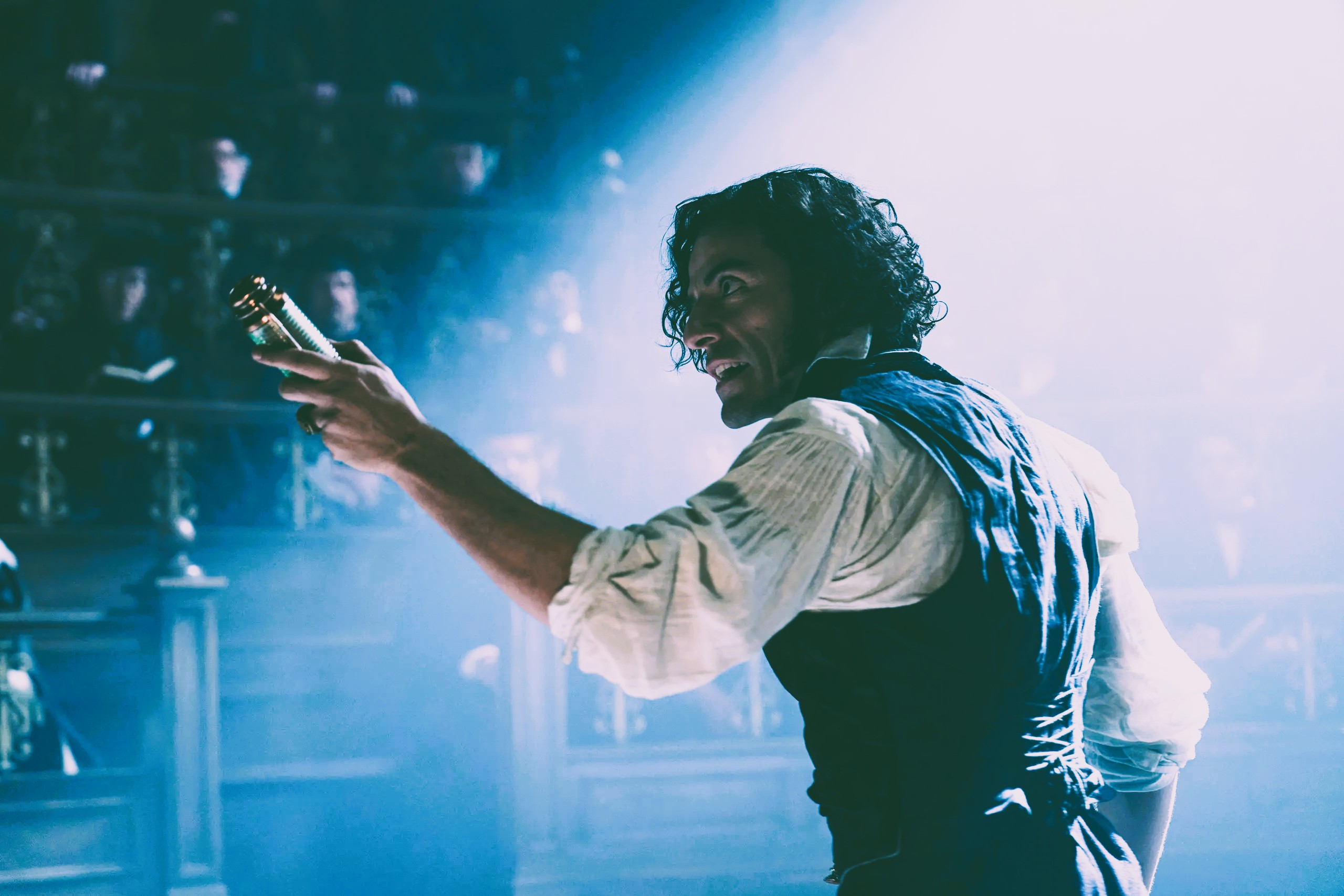
Isaac delivers a compelling performance as an obsessed, egomaniacal scientist out to prove to his academic peers and his dead father that he is on the cusp of creating life out of death, or ‘reanimation.’ Rather than burning him at the stake or throwing him into an asylum if he had been a woman to suggest such ideas, they disregard his ambition as blasphemous and unnatural, shunning him as a charlatan.
The debate revolves around the ability to give life, but never really addresses the deeper, philosophical questions upon success, and of course, the accountability of such creation. If one reanimates life, would death be able to find it again? Would this extend life or be a curse of immortality? How would such creations fit in with society? The list goes on, but I digress.
Where there is a far-fetched futuristic concept, there is a moneyman looming in the shadows waiting to pounce at the possibility whereas majority rejects as nonsense. Enter Henrich Harlander, smoothly and confidently played by Christoph Waltz, with all the money to spare albeit a hidden agenda (because one does not come without the other) to provide everything Viktor requires to continue his experiments with the expectation that success will soon follow. These benefits include the building of customized equipment and access to dead bodies on the battlefield; ironically, war is how Harlander obtained his fortune. He is affable enough with a genuine interest in science and anatomy while enjoying photography as a hobby. He appears to be happy to be along for the ride in Viktor’s work, but that would be an act of philanthropy, and we know better than to believe that! Despite anticipating the proverbial shoe to drop, Waltz procures likeability as an authentic do-gooder for the sake of science.
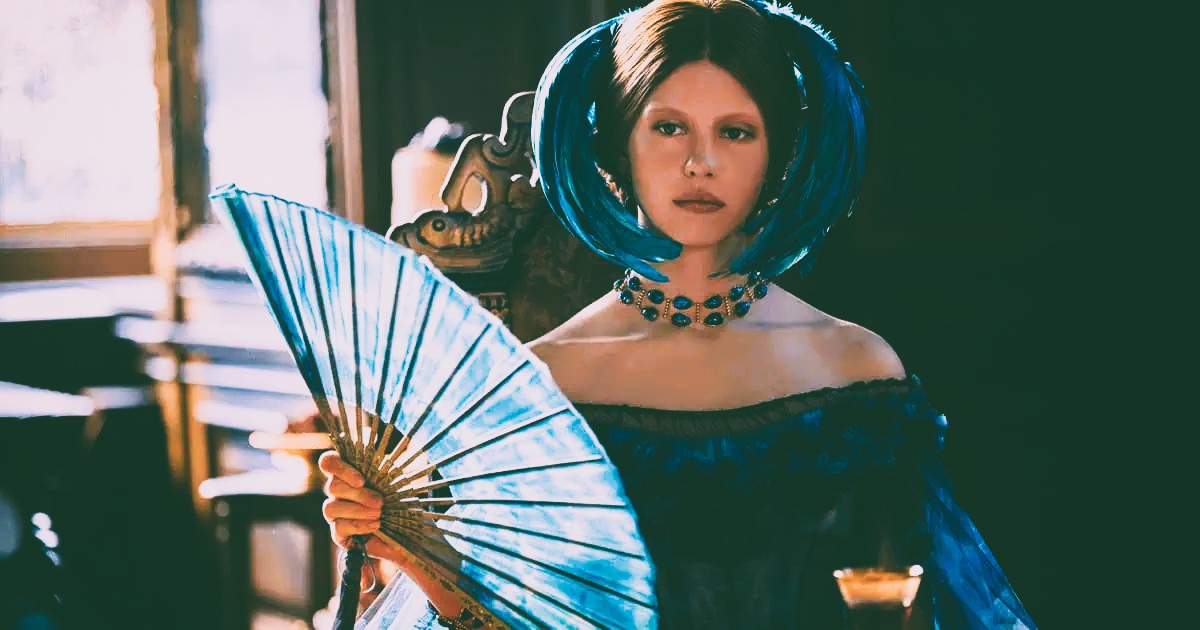
With the business arrangement procured, Viktor is introduced to Harlander’s niece, Elizabeth (Mia Goth). She is quiet and calm, even mouse like, but freely provides her opinions about war and the men who are remote from it, like Viktor, warm in their beds with ideas and ambition, never getting their hands bloody. At first, Elizabeth seems detached and unaffected, but I understood her to be bored with the likes of men, particularly their trite actions and ambitions. While she is trapped within the confines of what it means to be a Victorian woman, she discovers wonder and solace in her books, notably about insects as she views as ‘a pure form of God’s creation.’ These are the topics that liven and lightens her otherwise controlled, and perhaps unhappy, demeanor; the use of which Viktor leans on to win her favor.
With a haunting castle set up with a shiny new laboratory, a benefactor with deep pockets, and war to keep the fresh dead bodies coming, Viktor works exhaustedly on his experiments until he figures out the last piece of the puzzle. With his specimen put together on the table, he preps the equipment during a lightning storm, in hopes of harnessing nature’s energy to reanimate the pile of dead flesh. Nothing performs as planned, resulting in total failure; or so Viktor heartbreakingly believes.

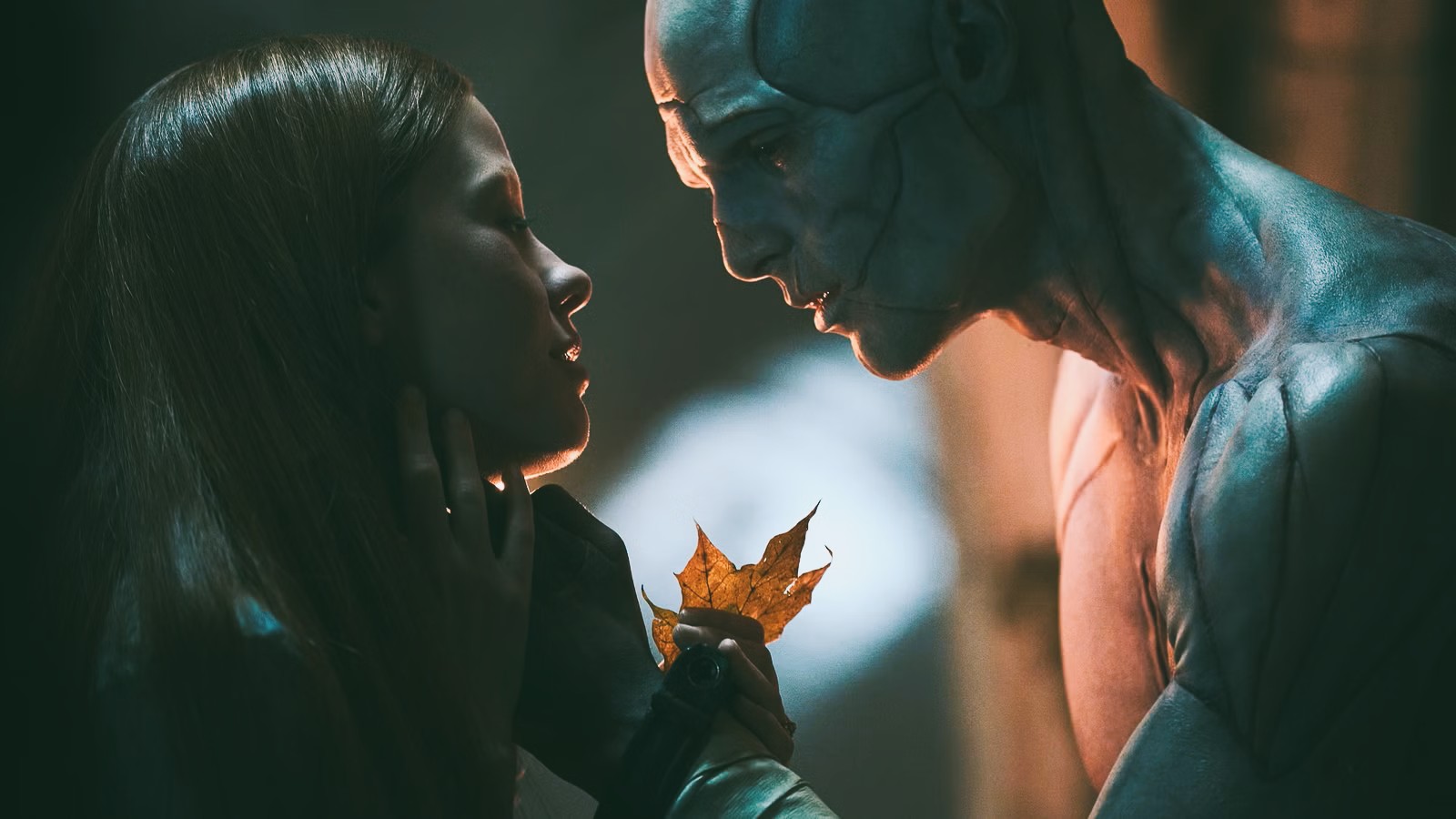
Jacob Elordi perfectly captivates the embodiment of The Creature who appears child-like, vulnerable, and curious. At first, Viktor is delighted with this life form, but discards it rather impatiently, unsatisfied with it’s development, appearing to have expected it to recite Shakespeare and Sir Isaac Newton.
This infatuated scientist achieved his lifelong purpose yet so easily turns his back on his own creation. He did not biologically bring him to life, but he created it nonetheless. Man desires to create in his own image only to be dissatisfied with the result, failing to recognize their responsibility in the creation and upbringing of such a being – whether of this world or another. It was like watching a gender reveal party, noticing the disappointed father when learning he is not having a boy.
When circumstance forces the Creator and the Creature to be apart, we watch as the Creature develops and evolves upon observing a family, performing chores in secret as acts of gratitude, and learning how to read. From there the Creature can form thoughts, opinions, and express feelings. Ignorance is bliss until knowledge cures it thus bringing the Creature around to asking the age-old question, “Why am I here?”
Although Mary Shelley’s book was released in 1818 (Regency era), this film version takes place in 1857 allowing for Victorian themes and having scientific advances further along like electricity, anatomy, medicine, and warfare. The score by Alexandre Desplat (who also provided the score for Del Toro’s Shape of Water in 2017) matches skillfully with the film’s dark, Victorian elements that resonates haunting melodies and magical inklings of wonder, innocence, and curiosity. Listening to the soundtrack is like being contained in a fantastical music box.
Del Toro’s production team always exceeds expectations when it comes to set design and visual effects – some may say the CGI was a bit much but I just roll that into the fantasy of the story as I was not distracted by the use of such technology. The costumes were magnificent in matching the characters, particularly those of Elizabeth and The Creature, with her dream-like dresses and his layers of furs and rags. The set design and visual effects captured the Victorian darks and reds with a hint of steam punk influence.
My main criticism lies within the film’s tendency to manipulate the audience more often than not in automatically categorizing Viktor as the Monster and the Creature as the victim. In the book, the Creature seeks revenge through killing of Viktor’s family members and friends, including Elizabeth. Viktor is so distracted by ego and validation that it crosses into abuse until the end where he can be seen as a decent human being who simply went too far. Viktor is no more human or monster than the Creature; the former will die while the latter will not – having no choice but to live its cursed life.
Both Creator and Creature execute the spectrum of human tendencies, selfless or monstrous, in equal measure. Although the act that tips the scale in the Creature’s favor as to being most human is that of displaying an act many of us find difficult to achieve: forgiveness. The peace that is necessary to live freely and fully.
The best, and most human, interactions by far involved the Creature: meeting Elizabeth, holding a mouse, befriending a blind man, and coming to terms with his origin and existence. I imagine the Creature finding purpose as a true spirit of the forest, a protector of the wild, and a benevolent benefactor to those in need…an unconditional type of love.
Del Toro’s Frankenstein (2025) is truly a gift from the visionary storyteller, providing a whole that is greater than the sum of its parts.
4/4 Stars

Angela D. Norris can be found on A Film By... Podcast. For her full, in-depth of review of Frankenstein (2025), check out the A Film By... Patreon page here
Star Trek Novel Reviews: The Entophy Effect | Yesterday's Son