1976 - All the President's Men

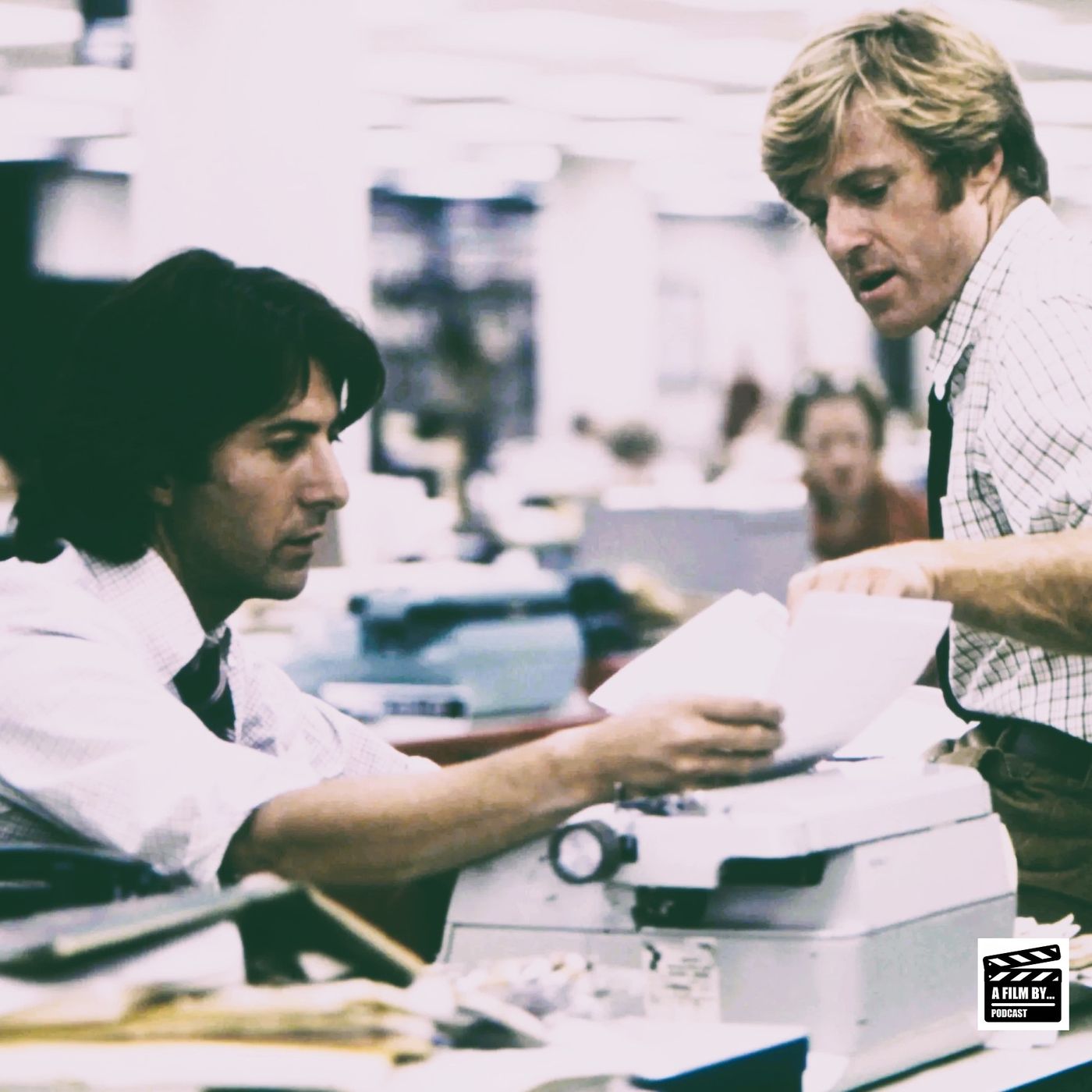
"Woodward, Bernstein, you're both on the story now." It's a bonus episode for our limited series "1976!" Brad Koszo and Scott Hoffman, our very own Woodward and Bernstein take a look at another Dustin Hoffman film, All the President's Men. Check out...

 Apple Podcasts
 Spotify
 Goodpods
 Pandora
 Amazon Music
 iHeartRadio
 Castbox
 Deezer
 TuneIn
 Podcast Addict
 Podchaser
 Spreaker
 JioSaavn
 Castro
 RSS Feed
 It's a bonus episode for our limited series "1976!" Brad Koszo and Scott Hoffman, our very own Woodward and Bernstein take a look at another Dustin Hoffman film, All the President's Men.
Check out www.afilmbypodcast.com for more information, and www.patreon.com/afilmbypodcast to get exclusive content!
Email us at afilmbypodcast@gmail.com with your questions, comments, and requests.
Find us on Twitter, Instagram, and Facebook @afilmbypodcast.
0:00 So some what are you saying? Well, I'm trying to tell you that if you'd read mine and then read your readers yet nobody knows better, you're gonna do it. Do it right here. My notice, I don't mind what you did. I mind the way you did first sting. You're fault on the story and I don't fuck it up. Hello everybody, and welcome back to a Film Buys Limited series nineteen seventy six, and today we are talking about All the President's Men, and you've got the Woodstein of podcast hosts with you today. I am Brett Kozo, and the Bernstein to my Woodward is, of course, the other Hoffman over Dustin Hoffman. It is Scott Hoffman. Scott, welcome to the show, and thanks for being here.
0:55 Thanks Brett. Happy to talk about my uncle Dustin's favorite movie. Yes, actual relation, but if that'd be cool if there was, just just give me a call. That's all I'm saying, dust. So we're continuing our celebration of Dustin Hoffman's eighty fifth birthday this week. We had talked about Marathon Man later earlier this week, but this time we're talking about All the President's Men. Popular book, Popular screenplay popular movie. We don't really have to say what the movie is about because we pretty much know what it's about. But it's a very complicated movie, don't you agree, Scott, Yeah, absolutely, And I mean, you know, it's it's something that obviously has a lot of historical significance because of the Watergate scandal. This is something that you know, a lot of people are probably learning about in school right as part of history class, and you know, it might even be shown as part of the class. But at the time, we're talking about a wound that's still pretty fresh, right four years after the scandal hit. Yeah, thats right. So, and at the time there's limited news sources. You've got television, you've got newspapers, but not a lot of other vehicles to learn about these things, at least not in one clear chunk. You could probably read a book, you could probably read a memoir, but this is, as far as I know, one of the most kind of concise ways that somebody can get a grasp on everything that was going on. This is
2:27 definitely, to me, one of those movies that is a great snapshot of seventy six. The technology, the topic obviously was still very hot and still very much something that people were still talking about and trying to wrap their head around, because this thing is complex, extraordinarily complex. Yeah, and one of the things that Goldman talked about tackling this thing, it was like I had too much time gone, you know since that happened, you know, where people had water Gate kind of fatigue or were they ready for something like this, Are they gonna Hollywood flash it up? So it was still kind of a gamble because there were still a lot of people you could have upset at the same time. Yeah. Absolutely, by the same token, it's something that you know, took in a pretty significant box office draw for a movie like this. I remember thinking, you know, my recent viewing of this, this is a pretty long and quiet movie. There's not a lot of flash. It's not like a you know, a Michael Bay type thriller where you're seeing a bunch of you know, action shots of people running around.
3:40 There's a fair amount of action, but for the most part, it's investigative journalism. It's private conversations, it's whispered conversations. Actually had to crank the volume way up on this movie to hear what was going on and watch it with subtitles, because aside from everything being very very low and quiet, they're talking under the pounding of typewriter keys, which was apparently punctuated with like whip lashes and gunshots. So it was kind of like, it is extraordinary, extraordinarily hard to hear parts of this movie. It feels like if you miss a word, you miss a lot, because there's a lot of names, a lot of connections to try to digest. Honestly, I could see myself probably falling asleep in the theater, not because it's not interesting, not because it's not told in a compelling way, but because it is so quiet and so hushed. And I think in the seventies that may have been pretty hard for a movie theater. And I think too, like, for instance, when I first saw this movie, you know, it was on all the list, you know one a fis one hundred, you know, one hundred best screenplays type of thing, and seeing it, I was like, well, I enjoyed it, but I'm also lost. You know. I still felt the excitement and the espionage type of thing, but what it made me want to do was to I was like, I enjoy it, but
5:11 I don't want to feel kind of dumb about it, and it made me very interested in the subject itself, you know, so it was like, why don't you read the book? And then reading the book and it outlying the players more and you kind of had a little bit more information about people because, like you said, there is so many names, so many people, so many names. It's kind of like a Lord of the Rings or a game of throwing things. There's other people's names that sort of sound alike, so you're like, are you talking about this person or that person? And the fact that you kind of had these things so rewatching it after seeing that reading the book. And then another thing that goes along great companion with this movie is HBO recently did a mini mini series called White House Plumbers that's about Howard Hunt and Gordon Liddy and it's Woody Harrelson and Justin Throwe and being able to put a kind of a face to the name because these people that you that they're talking about in the film, you don't see them the main players. I mean, you never see an actor portraying them, or you know, you see some news footage of Nixon and the real stuff, but you never really see any of the actual culprits of the crimes. But now after seeing that and I rewatched it again and knowing that, and it makes the movie so much more enjoyable because you know who the players are. But
6:45 yeah, it is a complicated movie of you know, someone can watch Star Wars like us and be like, oh, well that's because of this and this. Now somebody that doesn't know the players and is watching it for the first time is going to be completely a lot. But once they get in that mode, they're good to go, right. And I think they do a great job in this movie of giving it just enough exposition to let you know who's who, because honestly, I felt the guy who I felt like the guy who graduated in the lower tenth of his history class. I was like, I know Nixon, I know Watergate, I know what the White House is. But otherwise, you know, I'll recog names, I'll recognize names like Lyddy. But there's a great scene early on when Redford's character is asking about like, now, who is this guy and Ben Bradley's no, his editor, Yeah right, He says, I'm glad you're asking me, because if you asked him, he'd say, you're an idiot and have you fired? Yeah, So they do a great job of walking you through who's who and even if you get lost, like when they were naming like all right, so we've got L. P. H. And M. I think it was Mitchell and or yeah, right, And it doesn't it doesn't necessarily hinder the understandability of it to not know those things or to know the history, which at the time has to be really useful. Again like and I was born in seventy six, so I don't necessarily remember, you know,
8:15 what was happening with the news media. But the impression I get is that you would probably see somebody in a magazine if you subscribed to Time or Life or something like that, and you're reading through these things. You might see a photograph in the newspaper, or you'd have to be watching the six o'clock news or the eleven o'clock news to get any of the faces to see any of this kind of stuff. Because you don't have CNN at the time, right right, you might have PBS where you can try to, you know, watch hearings on a rolling basis. I don't know if they had you know, wall to wall coverage at the time, but it doesn't have the same atmosphere that we have now where you could recognize the faces, you know the names because you've heard of a thousand times, right, you don't have that much access to it. So it seems like it would have been a very useful movie for somebody to like me at the time, to say, like, Holy God, all I know is that there's a massive catastrophe.
9:11 The president is not the president anymore Watergate. I don't understand all the players, and you get a better appreciation for what these two reporters went through for the story. I think it's absolutely fascinating to see them doing things like writing down notes by hand, having to make phone calls to different people to make connections. So now you've got a factory in like time zones and work schedules and all this other kind of stuff. Having to look through phone books stooks. Good God Like, knowing how much they had to do with such expediency is astonishing. The amount that they would have to remember is astonishing.
9:58 And I I think this job does a great job of showing that it's a it's a great slice of the of the time, and yeah, I think it was really well done. So a little bit about the making of the film. You got Alan jape Coola behind the camera. He had done pretty well with things like the parallax view. But the main person kind of with the driver of this was was Redford. You know, he was producer on the film, and of course his agreement to play Woodward. I mean, you know, we've all seen Woodward and Bernstein now, but you know, to see it at that time, it's like, Okay, yeah, they didn't look exactly like him. But I thought Redford's performance not as over the top as somebody like, you know, Hoffman was. It was stellar.
10:50 What about you? Yeah, I think it was definitely the right balance. I know that I had seen that there was the thought behind casting Pacino instead of Hoffman. Yeah, I feel like that would have been the wrong kind of energy. I think it would have been a little bit of competing, competing energy with Redford's energy to have Pacino in there. I think, Uh, Dustin Hoffman, you know, it's a it's a far cry from Marathon Man, which is still disturbing me when I think about like the teeth scene and things like that. But I mean, he has he has the right kind of balance. I think he really gets you into that idea that he's the veteran working with this semi green rookie and you know, walking him through the ropes and getting things right. You get the idea that they're a duo that complement each other well without competing with each other. Yeah. And once you see they've got that when they do the polishing scene, you know, they were like, these two they might not like each other, but they can work together. Yeah. Exactly. He's like, I don't like the way you did it, but I like what you did. Yeah. Yeah, and then they just jell in connect. I thought that was fantastic.
12:01 I thought there was an interesting connection with Nora Ephron. Yeah. William Goldman not a big fan of that that story. Basically, he had delivered about four versions of the script, you know, because the had to basically cut out a third of the book because towards the end of the book, you know, not much had happened, and the only the scene that they wanted to do because Nora E. Fhron was dating at the time, later married Nora Efron, And when Redford had Goldman come over to discuss the script, comes over there and Redford is there, Woodward and Bernstein and Nora Ephron, and Redford says, I think he's this is his girlfriend, uh, Nora Ephron, and she wrote some stuff and I think you should take a look at it. And Goldman got mad. He said the only thing that he that wasn't his was the Bernstein getting into Ned Biddy's office by doing the that's the only one he goes. That was the Hollywood stuff. But Goldman said he saw the film because he didn't know what script they were going to use out of his. He's like, I was surprised. He's like, some dialogue was rewarked here and there and somebody. He goes, but that was my script. He's like, I was. I was happy with it, you know, and Winds the Academy Award for it for Adapted Screenplay. So he was actually satisfied with except obviously that one part. And he didn't like that one part in Marathon Man that we talked about, you know, right,
13:35 yeah, no, and it's you know, we've talked about the writing a bit. We've talked about the two lead actors in this. I think we've got a great bullpen of other actors. Yeah, at the top of their you've got Jason Robards, who always makes me think of in this role. Absolutely. Yeah. It actually threw me for a loop because at first I was thin the whole and this is me without doing the history. He thought that Ben Bradley was somehow going to be trying to squash the story because he was being paid off by the White House or something like that. But took a great turn and said like, no, I'm going to see this through. These aren't necessarily the reporters that I would always put on this, but I want them on this, these two reporters specifically, and would help to champion that all the way through. Similarly, you've got Jack Warden, Martin Balsam, everybody, Like all those all those bullpen meetings, I thought were a great way of kind of looking at how the rest of the journalistic community was probably looking at this story, even though it wasn't getting a lot of talk. It wasn't like they were sharing it here and became the headline of every newspaper. Necessarily, it was a very slow burn, but they had a great cast going through. A couple that stood out to me, and this is just random TV references, but it takes me back to the seventies. Obviously that Secretary scene, seeing flow from Alice as the secretary that
15:09 got yeah, she's yeah, she's uh, she's the girl that actually likes the men, the scene that Goldman didn't like, right exactly. She's always great to see. And then I thought there was another kind of interesting pop culture connection with Meredith Baxter saw Debbie Sloan. I was like, wait, Alex p. Keaton's mom is in all the President's Men. Yeah, you gotta you gotta look close, because it doesn't really look like her. She's very stoic. Yeah, she's got like no emotion in her face. You know. Yeah, this is an honest house, but it shows how, you know. And obviously it was Jane Alexander who who won the Academy Award. Is that right or is it nominated? She was nominated, I can't.
15:52 I don't think she won, but it was we should be talking about on that nineteen seventy six episode, right, But it was of course Jason Robards, who I mean just every scene that he's in is just it makes makes you want to have him as a boss. It just really doesn't like every boss should kind of be like, you know, he's not your pal, and he still holds some authority, you know, like when he one thing is you know, sometimes brutal, especially probably for a journalist, is the red pen. You know. Yeah, oh I remember that scene he hands him their draft, he takes out his red pen and he's like, you don't got it, you know, and they're just like, all this work and you just crossed out like two pages basically right, but always forcing it to be better. Yeah, dig deeper, dig deeper for all these facts that make it rock solid, even done to that great tense scene later when they say, you know, you've got minutes to get somebody on the phone and corroborate this story, the story, because otherwise we can't run it right, you know, there with it the whole time. Yeah, and this was a time where you know, you're talking about very small news sources, you know, so you had to have credibility, you know, you had to be able to cite a source that site. That source had to be confirmed, and you know we don't see that today, you know,
17:22 it's just like oh yeah, yeah, yeah, but you know that's how it was. And if you didn't confirm your source, your reputation is down the tubes, your job is gone, you know, your company is shut down because then at that time, no one would want to trust you, you know, and it was such a big risk at that time, or today it is just like whatever, we can say whatever online, it's fine, right, And you've got the biggest powers in the US that are controlling all the information and the infrastructure of the US taking steps to shut this one down. So even if you get all your facts right, you're going to have bigger faces, bigger names telling you discrediting it. Basically. Yeah, that's why I think, you know, the span of the cast, from the biggest to the from the leading actors to the you know, character actors that supplement every one of them helps to paint that picture of the tension at the time that was going on with it. Nobody wanted to talk. Everybody's whispering, everybody's hiding around this. And I think we've got sellar performances across the board within those parts. And you had the unveiling of the Pentagon papers earlier, you know, so the country is already hurting because of that and knowing what what basically happened in Vietnam, so they're not looking good right now, and this would just could be the nail on the coffin if they but they have to be right. They just have to be right right, and
18:56 all they have is their phone, their pen and their memory to be able to capture one of the most complex and damning stories at the time. It's fascinating. Where we're gonna take a quick break in here from our sponsors, and when we come back, we're gonna be talking about underrated scenes and words that matter. If your dog had the chance, which chopburger do you think he'd bought? Hamburger for us gains Top choice Chopburger for dogs. If you really knew what's good for him, he'd buy the top choice. Top Choice is so moist and meaty. It holds together like Hamburger, but it's better for your dog because it has what he needs for complete nutrition. Top choice, original and country style with the taste of cheese and eggs. For dogs who love Hamburger, they're better for them. Announcing you stove top stuffing mix for pork, Lorie, We're having pork chops tonight night. Honey, I got a great idea instead of potatoes. Why, honey, stovetop stuffing isn't stove tap for chicken? There's a brand new one specially season to go with pork. Sounds really tasty. Is that a fact? This stuffing is absolutely perfect with pork? Is that a fact that new stove top stuffing mix for pork instead of potatoes? Scott, let's talk underrated scenes. Now, it's not your favorite scene. It's not in the trailer for the film. Both added the film is less to you. What do you think is the underrated scene of the movie? For me, it's I'm going to count to ten.
20:30 Hi, this is Carl. I'm sorry to strive you now, but we're going with the story that holmost a fifth man in control of the fun and they're hassling is here. We got three confirmation. But if you could just help us, i'd appreciate it. Look, I won't say anything about hold of it. I understand that we wouldn't want you to do that. We know it's against the law for you to say anything. If there's some way you could warn us to hold on the story, we'd appreciate it. I'd really like to help you, but I can't. Look, I'm going to count to ten, all right. If there's any reason we should hold on the story, hang up the phone before I get to ten. If the story's all right, you'll just be on phone after I get to ten. All right, you know we've already talked about, you know, having to vet and corroborate these things to make sure that that it holds water and that your publisher feels comfortable doing so. That entire scene, from their chat in the bullpen to stopping Ben Bradley on the elevator, they have very little, limited time, very limited technology to be able to corroborate an enormous story, and their editor is about to leave for the night, so the story is dead if they can't get somebody on the phone. Dustin Hoppin has a great scene where he gets on the phone with a key player and says, I tell you what you can't say. Yes, you can't say anything.
21:41 You can't help me out. So I'm going to give you something that you can do that won't that won't demand that you do anything that implicates you. I'm going to count to ten, and if you don't stop me, I'm going to assume that you agree with it and that I can run it. And he gets that confirmation and they literally have to run and put their hand on the closing elevator door to get Ben Bradley to agree, and he says, go with it, right. I think that that says so much about the movie, but understandably it's not one that you can necessarily show a reveal to somebody who who doesn't know it be a big spoiler. Yeah, what about you, underrated movie or a moment let's see. I think I have a wife and two kids and a cat and a dog. I knew you're gonna say that. Yeah, no, I actually think And don't judge me for this one. When the scene where they asked the girl if the guy that she used to date if they could get if she could get some information from him, yeah, you know, and how he's just like, do you think he said it to impress you to go to bed with you?
22:48 And it's wouldward at this point that's being a little push you with it, and he knows he's kind of got her when he goes forget it. We don't want to make you do anything uncomfortable, and he knows he's got her. And it showed that sure, these guys were doing a good day, but they did some kind of rough stuff to get, you know, to get what they needed to get, you know, But I think that kind of shows that's what you had to do, you know, and that leads into somebody happen to make the decision of can I go see this person? And is it good for the story? You know, it definitely helped that she was a journalist and she even did it that way. I think that's one of the most one of the underrated moments. But there's, like I said, this movie is chock full of good scenes, you know. I mean, but it's it's a talkie, but it's an exciting talkie. I know we said before it wasn't like a Michael Bay action movie, but it it has so many big scenes, and I mean, it probably is considered the best movie about journalism ever. I know they still show it to journalist students, even journalists that at least for the set. They said the set was, Yeah, that looked like the Washington Posts, you know, and the accuracy definitely helped hurt the audio. But you know, I mean, it's it's considered one of those you know, but I mean it just I
24:19 think it still holds today. I think it's still is just as good then as it is now. Yeah, and you can definitely see the influence on modern movies about journalism. You know, validates that the story behind these stories is not only worth telling, but it's worth showing. It's worth getting into the emotional depth of the characters who are real people, and you know, bringing that to late, I think the scene that you mentioned is the underrated scene is a great representation of that, because I wasn't sure whether Redford was saying, well, I should say would, but whatever Woodward was saying in that scene, you know what, I genuinely don't want to push because I want to be a good person and hold back. This is personal. This is a line I don't want to cross. We've got it. It's okay, you don't need to do so. At the same time, I was thinking, is he just putting a little bit more slack in the line?
25:18 Yeah, and say, we're trying to pull you in. We're trying to pull you in. I'll let you go a little bit if you don't want to go any further, no hard feelings. If you do want to go any further, I'm going to make it your voice, your decision. And you see her when she hands off the paper and then sits down at the desk. That actress does an amazing job by the way she gives that look, that's like, I did you this favor. Don't talk to me about it and don't ask me again. Yeah, talk to me for a couple of weeks. Yeah, we just we will neither not talk about this at all, right, Right, And I think it's still it's still something worth showing to a sparring journalists obviously historians, but for journalists to say limited technology limited means being able to do these things the rotary phones, Yeah, taking off the magnetic speaker part that you talk into of the phone so that you can listen in without being heard, right, knowing the pressure that goes throughout the bullpen to say, there's consequences to this. If we run a story that we can't support, it could shut us down. It'll compromise the integrity of everybody involved in this, and we won't be able to work again, which means a lot of people won't be able to get their information right.
26:38 A lot of things that go into this, and I think it just encapsulates it really well. Aside from being one of the most important stories it's ever been written in history, it's definitely one that you know, influences a lot of those journalistic movies. You can see a lot of the tropes that we're used to in other movies, journalistic or not, that just were pervasive throughout from this, I mean specifically deep Throat in the garage. How many times have we seen, like you know, in trading places they're exchanging orange futures. In Police Academy three, they're exchanging information about dumb stuff. But that's a that's a trope that we became so used to seeing in subsequent movies in the seventies, eighties, I'd say probably through the nineties that we're so used to seeing. But now you're seeing kind of the genesis of it. At the same time, you're seeing, you know, the covert steps that somebody had to go through to get this information to pull it out. It's it's no wonder there's probably a thousand books, one hundred classes taught that are still talking about this. Speaking of words that matter, this script considered one of the best written scripts of all time. You know, it's in the National Library of Congress. It's like I said, it's on all the top ten lists. I mean, so many great quotable lines in the movie, you know, follow the money Woodstein, uh, you know, rock talking,
28:14 you know what I mean. There's terminology in this under enunciating things, you know. You know, besides the fact that everything that we associate with somebody doing wrong or something went wrong ends with the word gate. You know, everything is now nipple gate, you know, you know, uh inflate gate. You know. So, what are some of the best lines You've named? Some great ones. I think one that sticks with me sweep away all the political stuff and just focus on these characters as people, to let them thinking of is is there any place where you don't smoke? Right? Because I didn't notice how much he was smoking until I heard that line, and then every scene I'm like, he's you know, forcing it. Well, he's in what I want to say, not intruding. But he shows up at the bookkeeper's house, right, and he's like, can I just get a cigarette? Do you have a match? And I'm like, man, this guy's a change smoker. And I know that was part of the production that they had seen how much he was doing so as they were as they were talking to him and kind of getting the story. But I think that's a great lens into when you're doing cinematic storytelling and you're telling the audience something that they never knew they were seeing the entire time, that tells you a
29:45 little bit more about the person. Yes, Bernstein is in a high, high pressure profession and he's been in it since he was sixteen. Yeah, naturally, the guy in the seventies is gonna smoke like a chimney. So I just thought it did a great job of kind of giving you an extra little bonus. And it's just something I can't look away from when I see his scenes What about You, I think as many lines that Jason Robards has in the film, it's his last scene, which you know, almost basically kind of closes out the movie of you know, nothing is riding on his except the you know, Constitution, the First Amendment, you know, freedom of the press and the history of the country. But if you two guys fuck up again, I'm gonna get mad. And it was and it's just oh man, that just in But I mean, every single thing, even the mess ups are good. Like when he is on the phone, when Woodward is on the phone and he's trying to keep one guy on hold while he's doing he says the wrong name. That actually was a mess up, and they just but it kept going because I'm like, it probably would be confused. You're like, can you hold on? You know, but and the intensity of having to talk on the phone and you know when and also you get to kind of be a little bit of a spy as you're watching.
31:11 Everybody else is like putting it and putting it on mute, you know, And I'm right here, I'm gonna listening on it too. It's like Rob Arts, Oh you got too, you know, kids and a wife and a cat and a dog. You know. So it's like, so I love all those things. How they keep it it's a very serious subject, but they also keep it light, like, yeah, is there anywhere you don't smoke? And you know him pulling the napkins out and I don't know what, I'm certain when he hand seem a cookie, he's I don't write just that he's like, I don't want to cookie. Get out of here. Yeah, or just scenes where they think they're like, you know, when he's like, just let you know, I believe when they're talking to Sloan, I'm a Republican, I am too. When Woodward where Woodward says that it's like, oh yeah, and then she just look like you're just not like a liberal hippie trying to put me down. Yeah. Yeah, there's there's so many words that matter in this but yeah, I think those are some of the great ones. All Right, we're gonna take a quick break, but when we come back, we're gonna talk prequel, sequel, remake, yo meal meal meal meo meo meal meal. Cats are singing the praises of neo mix cat, a tasty combination of the three flavors.
32:36 Cats love tuna, liver, and chicken, each a separate bite sized morsel, so a cat gets a mouthful of variety every time he opens his mouth. Yeah, welcome back to nineteen seventy six. We're still talking all the President's Men, prequel, sequel or remake. Yeah, I'm gonna go full bristers millions and vote for none of the above because looking into you know, I've never seen the post, the recent movie with Meryl Streep and Tom Hanks. Now I really really want to because I think that's the appropriate kind of prequel that you want to have to this, right, Yeah, because it's about the Pentagon paper papers coming out exactly you're getting more into Ben Bradley, you're getting more into the publisher who you know. They pursued some some different casting there, and I think at the time she was pretty nervous about, like, oh God, who's going to play me? And then kind of relieved when they didn't. Now you know, unfortunately she passed away before that movie came out, But you know, it's it's definitely worth seeing. I don't think that I would remake this movie. I wouldn't touch a stitch of it because it's so of the time. I can't imagine trying to even if you had the perfect set design, it would lose something and the grittiness of the film, in the sound quality, in the set pieces, of the actors, who are all kind of trying to be very careful with the subject matter. And sequel. I know there's got to be follow ups that are
34:07 worthwhile, but it's kind of like, I don't know that i'd want to hear more about this moment in time. It's so fixed that I just don't see where else you would go. Well, the thing is this movie has other companions to it. If you want to know more about what happened to Nixon, afterwards, watch Frost Nixon. If you want to know more about Hunt and Lyddy, watch White House Plumbers. You want to know more about the Pentagon papers in Bed Bradley before that the Post. You know, you want to know more about the case. You know, you got the book. So there's so many things about it. And if you're in the mood for something, just in that same vein you look at something like two thy seven Zodiac. I mean, Fincher has said All the President's Men was my template for Zodiac. You know. Unfortunately it didn't do well. But when you watch it now, it's it's like all the Prison's been. It's a talkie, it's investigated journalism. It's writing things down on notepads and you know, rotary dial phones, you know, so there are other things to it.
35:12 It just yeah, it just couldn't be done. You can do movies in that vein, but it's and it's two. It's a part of our pop culture now, like I said, the Watergate terminology and everything like that. It just like I said, it's a great movie. It's got great performances, it's direct to great, it looks good. Gordon Will's photography is stellar. How Hallbrook, Jason Robards, I mean Hoffman Woodward. Like I said, they both compliment each other. No one outshines the other. I mean, the only thing Hoffman told Pakola is make me look better than Redford, make me look more head is the only thing you taught him. Yeah.
35:53 Well, when it comes to ratings and scores, I think, without a doubt for me, this movie is a full on four star. I'm guessing that you are similar in that, but you may surprise me, Like what do you think, No, no surprise here, four out of four. I mean, even when I was talking about like you know, hard to hear in some places, it's still knocks it out of the park. And yeah, I think it's it's it's highly recommended. We're at the fiftieth anniversary of the Watergate scandal itself. We're obviously, you know, coming up on a lot of anniversaries, but it's it's a great time to crack this one back open and see where it leads you. Like you were mentioning a lot of other journalists and movies, this is the four star pinnacle you want to start with. Yeah, I mean, now this would be either a stream it I think it's streaming on I believe HBO Max at the moment, maybe even to be it. Well, so it does have some places where you can see it. It pops up on streaming all the time. I mean I have a copy. But yeah, well and I mean I was I had to go to the local library to get this one. So if you can't find it streaming, it's always a great resource to think about supporting the library and getting some physical media, which I think Dayton Johnson would love.
37:13 Yeah, I have the physical media of it. Well, Scott, I want to thank you for being my Burns scene today. Speaking of libraries, that's actually where Jeff Johnson is. He is looking out all the books at the White House asked for on chop a quittic. So if you've seen this film, you know Jeff's going to be there quite a while. Scott, I know you've got some stuff. You got something else coming up pretty soon, am I right? So yeah, and we always have a great conversation. We actually talked on a regular basis with Wayne White. Did the three of us get into Strange New Wednesdays, which if you've never turned in tuned in, we get into Star Trek Strange New Worlds, which in my opinion, is one of the best series on TV and a great way to get into Star Trek, great way to revisit it if you're a longtime fan.
38:00 Uh, we're gonna be talking about the season finale, which is going to be fairly intense. So if you have a chance, tune into Strange New Wednesdays on our podcast and we'll talk about some exciting things turning up. Well, I want to thank my co host Scott Hoffman for joining joining me today. It's been fun talking about Dustin Hoffman movies. You know, we knocked a two out, you know, with Marathon Man in this one, but even though the guy's eighty five, you still got a ton more. Check out more of them. If you have any comments about this film at all, please leave them. You can message us at www dot a film by podcast dot com, or let us know what you think on social media and for everyone else, check you on the flip side.