A Film at 45: The China Syndrome
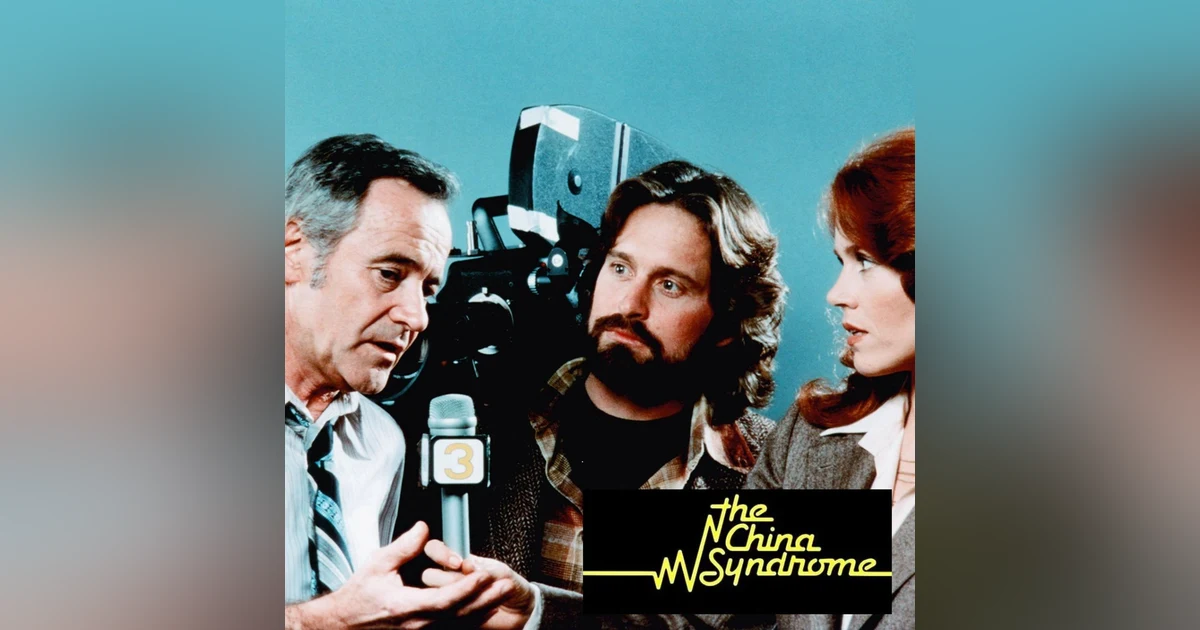

"We had an event happen. We had...an accident." Our limited series, "A Film at 45" is back to celebrate the 45th anniversary of the films of 1979. We're dusting off the end of a decade that changed cinema forever, with a fresh look at modern classics...

 Apple Podcasts

 Spotify

 Goodpods

 Pandora

 Amazon Music

 iHeartRadio

 Castbox

 Deezer

 TuneIn

 Podcast Addict

 Podchaser

 Spreaker

 JioSaavn

 Castro

 RSS Feed
Our limited series, "A Film at 45" is back to celebrate the 45th anniversary of the films of 1979. We're dusting off the end of a decade that changed cinema forever, with a fresh look at modern classics and hidden gems that we can't stop watching! On this episode, David and Scott find out how dangerously close we come to nuclear catastrophe when safety protocols aren't followed in "The China Syndrome."
For exclusive episodes and content, check out A Film By... on Patreon! with a FREE 7-day trial!
Check out www.afilmbypodcast.com/ for more information.
Email us at afilmbypodcast@gmail.com with your questions, comments, and requests.
Find us on X Twitter, Instagram, and Facebook @afilmbypodcast.
0:00 Hello everyone, and welcome back to nineteen seventy nine in a Film Buys limited series A Film at forty five. I am David Burns and I'm Scott Hoffman with this limited series from a Film by a Podcast where we're dusting off the end of a decade that changed cinema forever with a fresh look at modern classics and hidden gems that we can't stop watching. In this episode, we're going nuclear with the alter realistic, thrilling blockbuster with a twelve day fuse the China syndrome. I'm ready. This is Jackadell. We have a serious condition. You get everybody into safety areas and make sure that they stay there. God, when Lucy getting back pressure? Now, what the hell happened to a high pressure cooling in check? You got a dumb pressure? Yeah, you can't take that chance. Jack Adell was about to present evidence that he believed would show that this plant should be shut down. This is Kimberly Wells Live from Chattel three five four three two one go. It's time for the news.
1:04 Scott. It's not about China. It's about choices between honesty and ambition, career and conscience, responsibility and profit. The China syndrome. Today, only a handful of people know what it means after this podcast, so will you, Scott. We are dealing with a very serious, heavy film, one that will just leave you thinking about its ending and the consequences that could occur. But before we really dig into that, how would you describe this film to someone? Well, to paraphrase Frank Whaley's character in Broken Arrow, I'm not sure what's scarier the meaning of the term China syndrome or the fact that it happens so often. They have a term for it. Yeah, it refers to a nuclear meltdown that where the core melts through the ground all the way to China. It's a threaten in this movie that Jack Lemmon is trying to prevent with his friend and Wilfrid Brimley as the two men in charge of keeping disaster at bay. It's a threat that Jane Fund is covering as a reporter who wants to cover more meaningful stories, with Michael Douglas as a rogue cameraman that wants to expose the truth about what's happening at this power plant.
2:14 It's a thrilling drama that has everyone scared of what happens when people try to save their jobs instead of saving lives. It stars Jane Vonda, Jack Lemon, and they are very young Michael Douglas. Written and directed by James Bridges and co written by Mike Gray and T. S. Cook. Yeah, this film is a disaster thriller, I guess you could say, dealing with a very serious subject, very powerful, and it really does have a message for all of us. One of the things that I love about this film is between all of these fabulous characters, the one that truly stands out and the one that you don't expect, the one that breaks your heart is Jack Godou played by the masterful Lemon. Yeah. You know, when we were introduced to him, he is just that supervisor at a nuclear power plant, But damn does he become so much more. Yeah. Yeah, he absolutely knows what he's doing, and he's the kind of person that you want to be in charge of this kind of situation, as disastrous as it is, because he knows what to do and he wants to take the steps to do the right thing. YEA. Unfortunately, not everybody is on the same playbook, and at the time when nuclear reactors were being cooled by water.
3:39 It's been a lot of advances since then, but it was a scary prospect. In nineteen seventy nine, people were worried about nuclear waste. They were worried about actions of these kind of plants, with good reason. So in nineteen seventy five, just a few years before this one, there is the incident at Brown's Ferry in Alabama. So a bunch of flaws in construction and safety failures turned it into an accident. There was certainly alarming, but what became a bit more troubling was what happened twelve days after this movie came out, which is crazy. So this film was released on March sixteenth, and at the time there was a bunch of executives in charge of nuclear power plants that were saying that it's pure fiction. It's a character assassination on the industry.
4:38 Twelve days after its premiere, there was a three Mile Island nuclear accident in Harrisburg, Pennsylvania. And for those who don't know or remember, on the three Mile Island nuclear generating station in Susquehanna River in Londonderry Township near Harrisburg, Pennsylvania. Apparently it happened at four am on March twenty eighth, and it's noted as the worst accident in US commercial nuclear power plant history. On a seven point scale of how intense these things can get, it was a five. Wow. So it's pretty scary considering this is, you know, a cautionary tale about what can go wrong if people are ignoring safety measures or cutting corners, or what people were afraid of with having these things in our backyards, so to speak. And yes, in talking about that, I read somewhere when doing some research for this film that they are some people who believe that people behind the movie had something to do with this. Yeah, it was only twelve days twelve days after this movie came out, which is crazy coincidence, man, But yeah, you know, I'm sure this drove this movie too for an even bigger audience because of that. Yeah, yeah, it turned into a blockbuster after that, because you know, understandably, people want their own way to understand what's going on and to try to process it. And I don't think this is necessarily you know, it seems like
6:08 they thought that this was putting the finger at the nuclear industry as being inherently dangerous. I don't think there was anybody that was really twirling a mustache here, so to speak. It was just points in the chain where people had ignored the job that they were supposed to do, the safety measures, the quality control they're supposed to take with dangerous consequences. And you know, listening to some physicists that have talked about this movie, and you know the intricacies of what can happen at those plants and all the safety measures. There's a scene where in this movie where Jack Leman's character says that they have quality control standards that rival NASA along those lines, right, So they're taking those measures.
6:54 It's just when certain people cut corners, it gets dangerous. And the biggest one of those that you know we're going to see in this film is, uh, you know, the X rays of those welds that Jack is trying to prove that you know, it's there's it's not ready to go to be turned back on, you know. And he even goes out to the people who you know, but did those X rays, and of course they're like, you know, cutting corners. You know, as you said talking you know, save the taste of money, because he said what it would cost millions of dollars three X ray all of that, you know, I mean, come on, okay, okay, that's fine, And I know exactly that's worth the money, isn't it? Like it makes me think of Ben Affleck's Batman when he says, you know, if if there's even a one percent chance that this guy could be a threat, we have to take it as an absolute certainty. Absolutely. Yeah. Why would you not, like think of the magnitude of what can happen if you don't so like the fact that somebody is willing to cut corners like that fake X ray? Oh my god, I think I clearly don't understand what could happen. And I don't remember what the character's name was, but the guy with the bow tie.
8:11 They kept kind of dismissing Jack and saying like, oh, come on, like you said, we can't afford to shut this down for so many days. Yeah, you can't afford not to, you can't wait. Come on, man, you realize with that steak here, Oh, it's scary. It blows your mind, I know, And you know there's people out there like that and have been Yeah, you're right, it is frightening on that and this movie really opens up your eyes, which is why it's got such a good message. But really, before we dive more into it, let's talk about some of this cast. Scott as we know, Jane Fonda, who plays Kimberly Wells, she plays a news anchor who I truly believe in. I think she did a fantastic job. I felt that she was a genuine news anchor in this. But of course, as we know, she always got the silly jobs to report on, right, she didn't get those big news stories, and she was always after that one. But one of them finally falls under her lap, and you know, she takes it and takes it in stride. Yeah, yeah, I guess so, I wasn't aware. This is one of two movies where she's going to be a reporter, so you've got the Electric Horseman coming up a little bit later.
9:20 She and the rest of the cast took it very seriously and went on several rounds, several rides with actual television reporters, which you've got to respect. There's a lot of authenticity to her performance at neck. I mean, she does the you know, kind of like in Bruce Almighty, she goes to Niagara Falls and you know, talks to the people on the Maid in the Mist and all this other kind of stuff, and she takes it in stride. She knows that eventually it will get somewhere, but she's also taking the assignments that are a bit more serious. So her tour of the nuclear power plant is a great piece that's helping to kind of raise awareness of what's going on these plants, help people understand a little bit more about them, which is fascinating because Jane Vonder was also an activist at the time that was that was involved in, you know, making sure that these things were safe, the paraplants were safe and not cutting corners. But the struggle that she has to go through to be taken seriously is is heartbreaking but understandably real. And I think at one point there was a consideration of making her character a man, and I'm really glad that they didn't. This wouldn't have worked as good if that was a man character, not at all, because you've got her and Jack Lemon both I think fighting the same battle, or a very similar battle, yep, trying to figure out trying to get people to take them
10:54 seriously, understand what they're saying. Listen to them. Michael Douglas's character in a similar situation, but they're each taking different avenues in the spectrum. Right. Michael Douglas is ready to release the footage and say, let's just expose them. Jack Lemon is a bit more cautious about it, I think because he wants to you know, it's not just I want to protect my job, because I think that's what the bow Tie character was trying to do. It's more like, I know what I'm doing in this position. I have a responsibility to be here in it. Yeah, And Jane Fond's character being responsible about the delivery of a story, so she can understand what the producer is saying, like, we can't just say this, we have to research it, we have to dig in, we have to look at the facts.
11:43 And I think she sides with that, which frustrates Michael Douglas's character. It's a fascinating kind of interplay between the three. But what I think like about her character too, is in going back to the thing that you know is a male character. With with her being a female character, you're living in a time when a lot of the newsakers are males. You know, they're they're men and you know, you know, they're the ones that's on the big screen getting the big stories. So if this is a male character, it just wouldn't have worked the same. You know, you have Kimberly Wells who's not only trying to you know, get on to get those big news stories, but she's fighting too because she's a woman, you know. Yeah, and one of the things that that her character you just see her character art from the beginning of this film to the end of this film on how you know, we start off kind of happy, fun, you know, she's getting those lovable stories, you know, and you to laugh a little bit. But by the time you get to the end of this film, you feel all the emotions that she feels when she's in front of that camera there at the end and she's trying to keep it together, and they're even saying, come on, keep it together, keep it together. You got to report this. You know, you just see the struggle in her.
12:46 There's no way this would have worked as a male character, no way. Yeah, yeah, it wouldn't have had the same impact at all. No, And I think she did a great job in this role. Yeah, oh absolutely she did. And then you know, let's talk about Michael Douglas a little bit. As Richard Adams. You know, he's more than just a cameraman. You know, he wants to tell that story no matter what, and no matter who he hurts. He just wants to tell the truth, you know, right, and you know, and typically that is a news reporter's job and the cameraman is there just to point that camera, but not his character. And that's what I loved about him. You know, he had that driving force along with her. And you're right, with these three characters, with Jack two, you just had this driving trio that was just drove this movie and just made it so powerful. About time we get to this end, it's fascinating where we are, where you and I are in our movie watching experience. Certainly Jack Lemon is a powerful actor, oh, without question, great legacy of rules. When we see, at least personally, when I see Michael Douglas's name, it's Michael Douglas. That's a pretty pretty big name. At the time, he was just starting out, and he was also the producer of this movie. He produced it.
14:05 Yeah, crazy, yeah, how much involvement he had with this, you know, going after the story itself the story of the movie. And he even got Jack Lemon too, didn't He like a couple of years before this was released to pull and Jack Lemon says, I will do it. Whenever you're ready to film it, I will be there. That's crazy, man. Yeah, he initially wanted to make it right after one flu of the Cucko's Nest in seventy five, and Lemon agreed to play the role as early as seventy six. And the connection that the two of them had is powerful. Yeah, and you know, it's interesting how he's the supporting actor to Jack Lemon's character. Yeah, you would think it, you know, at least the way I would think of more recent movies, the roles would be reversed, but to great effect here. I love the intensity of the young Michael Douglass. He's he's so committed to doing what he thinks needs to be done, or what the news should do, which is to bring the truth as soon as you can. He apparently was offered or somebody, one of the executive producers sent him a comb and scissors cut his hair. I'm glad that he didn't. He looked glad that he didn't. Yeah, it was love that, but he's got that very roguish kind of approach, even that scene where he's you know, secretly filming, Yeah, the accident. It
15:35 was a great touch, and you know, with Jane found his character like Okay, are we doing this and he's like, yeah, we're doing it. A lot of a lot of nonverbals there, yeah, yeah, and just the speaking of his intensity there towards the end, man, when he's banging on the glass, you know what I'm talking about, when it happens, Oh my gosh, you that was just so powerful. Yeah. But before we really dive into more of that, you know, let's talk a little bit about Jack Lemons at Jack Godell. You know I talked a little bit earlier, you know that I feel like he was the tragic hero in this. You know, his character really took over everyone else's and you didn't get that vibe at first while you were introduced to him. You know, you thought this was going to be Jane Fonda in Michael Douglas's story. But it turns out no, it is, but Jack Godell played by Jack Lemon, it really becomes his story man, and just how tragic it is because when we see him at home it doesn't look like he has any family, you know, he lives alone. And I think when he was watching the news report that at the one time he was eating what a bologney sandwich and drink. Yeah. Yeah. I felt so sorry for him, man.
16:45 And then when he goes back, you know, he's getting chased and he gets back to the power plant, and like, nobody wants to believe in man, nobody was backing him up. He was all by himself. Finally somebody does what's his name, uh tech at the end played by Wilford Brimley, finally does at the end, but it's like, come on, I felt so bad for his character. Man. Well, and there's a you bring up a great friendship and a great balance again of different perspectives on this. I got kind of military vibes from Jack. I don't know if they expressly said it in the movie, but I got the sense that he, you know, probably had some military kind of disciplined training that led to him pursuing this career, right because he knows what needs to be done, and he's not afraid to ask other people to do it. He knows how to manage the room. Right. On the other end, You've got Ted Spindler played by Wilford Brimley, who is phenomenal in this role. He's more of a you know, this is my job, man. I mean, I'm going to take it seriously. I want to take him seriously, but I know that my butt's on the line and I'm not getting any younger, so I need this job. I'm not going to do it to the extent that I'm going to sacrifice other people's safety for it, but help me out.
18:12 I want to make the right decisions here, but I also need to keep working. You can tell that they have a lengthy friendship, you can tell that they've been together for a while, that they work together really, really well. And the ending scene with Ted is so powerful, his delivery of those lines and his willingness to stand up and finally say what he needs to say in that same moment where you know, Jane Fonda is breaking down, and I was so proud of him in that moment. I think of anybody. I think when Jack makes the decision that he makes to take the stand in the control room, I was kind of surprised that Ted walked out.
19:03 Yeah, I know that he was being ordered to and I know that that's part of Jack's plan, but he probably would have stood by his side and I think so probably been a voice of reason. Yeah, I completely agree with that, and just that that whole powerful ending. Man, it's just we can, I mean, we can go ahead and talk about it. This film is for it. It's years celeb spoiler alert boom rented. This was my first time watching this, Scott, I don't know about you. Yeah, so it's always been on my list to watch and I just never got around to it. And I'm glad that I had an opportunity to do it because we need to do it for the podcast. But man, I gotta tell you when that ending happened. I was gutted, Scott. Yeah, when when when Jack Lemon's character gets killed and then we we go out there and it's just it just seemed like it's all unraveling now and the truth is not going to come out, and then Ted finally stands up, and then you know, Kimberlee is, you know, breaking down or trying to.
19:59 She's trying to hold together. Man, that was just one powerful ending, man, And what I love too about it, And you know, we can talk about this further when we get to the score. There's no score in this movie, right. I was wondering about that when we're doing our prep. I'm like, okay, so the score it hey, uh huh to talk about all right, but you know what, it's a great effect. Yes, it totally works. And what I love about the eating is how it goes right to the credits and there's just no music, just total silence. And the choice of that was perfect because they want you as a as an audience to really take the message they just gave you and how they ended. They want you to feel all those emotions that impact and just think about it as those credits are rolling. It was perfect. Yeah, absolutely, yeah, And I mean there's a great book ending that they do with those color bars. Yes, right, that's a shock. You're like, is it over? It's a black screen. I don't know what's gonna happen. Okay, credits are rolling. Like I was surprised with what he had done to steal the gun and to you know, take control of the control room. I hate that he was backed into that corner too. That's that's part of where the heartbreak begins. This job does a great job of ratcheting up a lot of tension in just the right ways, and then leaving
21:30 you with this echoing silence and the bookends of the color bars. It's kind of like, you know, does this just become another story? Right? Does this just become another thing that they cut to you? And that's kind of forgotten. Very interesting to think about watching this movie before through Mile Island and then after it feels like it would leave you sitting there with goosebumps and just thinking about how close do you lived one of those things? Even the impact of like with the color bars and stuff like that before, but when you see both screens of going on, you see like the the live stuff going on, what's happening at the nuclear power plant, but then you see the commercials, what the audience, you know, is seeing both of us going on at the same time. Just the impact of that in itself is just how powerful that is? Right? Yeah? Well, and I mean thinking about if you have a chance to go out and look for the Ciscil and Ebert review of this movie. It's very interesting because I think they agree with us. They both give it two thumbs up. Before they were doing thumbs up, and but you can tell it's before three Mile Island because the discussion seems like it would be very, very different after that, and I'm sure this opened up a lot of discussions from people. It's you know, it became a blockbuster after this because I think people, like we said before, it was people's way to digest it. But what makes Jack's arc so
23:02 heartbreaking is that you know how much he cared about doing a good job about the impact of that, and he came about that plant so much. He mentions that, yeah, yeah, he loved it, Yeah, right, it with his life. Yeah, and not like we this is so fun, but like he knew what he was doing. He was taking it very seriously. And the number of things that can go wrong in that place is blank. Yeah. Absolutely, It's scary, it really is, And that's the point of the film. Yeah, the the executives that are kind of pulling the strings behind this. Richard heard McCormick, god scram the son of a bitch. It's kind of like, do you even know what you're saying right now? I'm sure you understand, And I just you know, setting the swat in there, they could have easily not had to kill him, I think, But it's so dramatic and him leaving like the bloodstains on the control boards. Yeah, the end of the tension you're talking about. You don't realise that tension is building until it's too late. You're like, oh my god, I'm on the edge of my seat and I don't realize it.
24:22 You know, when you're you're waiting to get that interview started and you see the SWAT team is trying to get in there. They're you know, they're trying to get that door unlocked, and it just builds and builds, and they keep taking their time to get the camera up, to get the sound right, and it's like, oh my god, come on right, and then they're they're cutting through with that very slow melting torch and you're like, Jack, get there faster. Yeah, I know, it's nerve wrecking. I know you're like most tense moment in your life, but you've got to get there faster. I mean, you even see Richard Adams saying, come on, say it, say it, say it. You know who's one thing to go ahead and say it so the audience would hear it. Yeah, Oh my gosh, it's just so ridiculously powerful. One of the actor I want to bring out is good old Jeans Karen as mister Tigue.
25:07 As soon as saal Ham, I thought you left the bodies and you only moved the headstones of course. But yeah, yep, no, I was. I was fascinated to see Michael J. Fox's dad from Teen Wolf, Oh yeah, in this. I was waiting for him to just bang out. Yeah. They had a lot of good guests in this, that's for sure. Well, let's let's look through the landst find anything fascinating about this film. Uh tons, Apparently if you're looking for someone on the lighter side of all this, Apparently Jane Fond had an accident on the set, so she broke her ankle, which meant she couldn't take ballet classes anymore, so she took up aerobics. That's anybody who grew up in the eighties, right, Jane found his exercise videos up. Wow. I didn't realize that.
26:02 So we got this movie to think for that. Huh right exactly the terms. Yeah, Like I said before, I thought it was fascinating to learn that he was that Michael Douglas was a producer of this movie, and how much he believed in the the story and wanting to bring it to life and how much say he had in various aspects of it. And we'll get into that with the score. But it's it seems like it was a very brave story to take on and I think it was done to great effect. And I don't think it's okay just to start of his career on how he was able to pull this off as just crazy the big statement. Yeah, and again I don't think it's necessarily saying like nuclear power plants are inherently evil.
26:55 It's saying it has to be very carefully managed. Yeah, safety has to be a priority. Yeah, what about you? And this is the biggest one I pulled out this And this is the only movie Jack Lemon where his character dies, the only movie he was in that's in his contract. There must be never kill him. Yeah, absolutely. But yeah, I just a lot of stuff went into this film to make sure it was done. I know they fought over the title of it, too, did they not. Yeah, they didn't call the China Syndrome because they thought it was just confusing title. So they fought over that one for a little bit. But at least, you know, they kept it because they realized what the meaning of it was. Just so many things went on behind the scenes, but I'm glad Michael Douglas was able to, you know, pull this off as he did. Yeah, I think considering the context, you know, of Three Mile Island, I think it was the perfect choice to keep this title, even though you know, you're listening to physicists talk about it and they're like, well, it would take a long time. It wouldn't actually go through the core because gravity would take care of it, but the release of the gases and also the kind of stuff. Yeah, it's it's fascinating.
28:04 Really, there's a lot. I think one thing to let people know it is a very It is a fairly technical movie. So if you think of like Hunt for Red October, I had to watch that twice to understand what was going on because of all the technical terms that are happening, and also the kind of stuff. But not in a prohibitive way. Right, you don't have to have a physics degree to understand You really don't even have to understand the the the inner workings of a power plant. Right. It takes you through in the right way. It takes you along for the ride, and you're just you just know that the people who are afraid of a worst case scenario. Know how impending that worst case scenario is. Yeah, and the steps that they have to go through to take it. I just hope that Evan McCormick never makes another power plant ever again. Right, Yeah, no kidding. I felt when they were explaining when a nuclear power plant how it worked, it really gave me the scene from Jurassic Park when they're explaining the DNA of the dinosaur. That's what it felt like to me. So you do get a little bit of an education there, that's for sure.
29:15 Exactly. All right, Well, let's score it, which you know you and I have already hinted to this, there is no score to this movie because it was really important to Michael Douglas that he wanted to create the realism of this film of what was going on. And the only music you hear in this is what's going on in the environment. You know, a radio in the background, or the television going on, or a jukebox in the bar, whatever it is. That's the only music that you're going to hear is what's actually happening in those scenes. And I thought that was incredibly well done. And you're talking and this is coming from somebody who loves movie scores and should think there should always be one, But in this movie, no, I think they made the perfect decision of not to have a score.
30:03 Yeah, and apparently the score was written for the movie, yeah, by Michael Small, but they never put it in. I totally agree. I think it's a great decision, especially that end credits. That's usually when you hear the you know, some kind of song, even if it's soft and mournful or something like that. No, leave it quiet because people are going to have conversations. Yeah, I guess I should backtrack a little bit. There is one song at the beginning, somewhere in between by Steven Bishop, so that one is there, you know, but that's it. That's it. Once the movie starts, it's there is no more, right, And apparently that was almost what a fool believes the Doobie Brothers. Yeah, that would have been a different tone altogether. It would it seems like yacht rock kind of running scared soundtrack. The other one not so much. Yeah.
30:52 Absolutely, all right, Dave, Well, I tell you what, let's take a quick break. I know we've got a lot more to talk about when we get back with China Syndrome. Okay, we're back, Dave. What do we want to talk about next? All right, well, let's quote this, Scott. Did you find anything interesting? Yeah, there was an interesting quote by Jane Fonda. She said. On one level, it's a terrific thriller like Clute she had made before, which one of the best actress Oscar. But on a deeper level, The China Syndrome is quite a complex human story about the consequences of choices. Everyone needs a job, almost everyone wants to advance. People are constantly compromised or requested to compromise their ethics and their jobs. I think this is a movie that we'll speak to a lot of people. Yeah, not just in the nuclear industry, but thinking about other industries where those kind of check and balances and quality control, quality insurance is so necessary. Absolutely, man, Absolutely, what about you?
31:52 I got one from Jack Lemon that I found, He says, I signed on for The China Syndrome and then waited over a year for me to begin. Not only did I get a marvelous role, but I had the satisfaction of being part of a film project that deals with a very dramatic subject and it makes for a very dramatic movie. Mm hm, And he's not kidding. He did get nominated for an Oscar for this role. He didn't win. I think It's new got four nominations, Is that correct? I believe, Yeah, yep, they didn't win any, but at least it did get nominated. I think uh Kramer versus Kramer took some oscars, which is coming up for us to discuss this year, of course. But Jack Lemon did an incredible everybody did incredible chop in this movie. But Jack Lemon just man. I've always been a big fan of him, especially the Grumpy Old Men series, but oh yeah, man, Jack Lemon, just wow, what a greatful role for him. For sure. You know, I wish I could have found a quote from Michael Douglas about what flavor his uranium pez was the black. Seriously, I was so shocked in that scene, like the James Hampton is holding up this thing that says, so this keeps the nuclear reactions at bay or basically you know this is a uranium hellen. So he takes it, pops it in his mouth and it's kind of like cradling it in his mouth, and you're like, oh, let's pit that out no grow next scene, he's chewing on it like there will be no China
33:28 syndrome too, because that guy's dead of cancer guaranteed like two days later. And you're proud of it too, showing that black tongue. Ah, I know you, I mean didn't it? Did they flavor it? Because like, how would you get through that thing? Anyway? A lot of tangent, right, but you'll know what we're talking about and when you see that scene exactly. So what ifs. There are some very interesting what ifs in this one. I know one that I saw was Jack Nicholson turned down the role of Jack Goodell as he was busy filming The Shining. Yeah. Jack Nicholson's awesome, but I'm sorry, Jack Lemon is the perfect role for that one. Yeah. I think his intensity would have been seen as almost equal or very similar to Michael Douglas's intensity. I don't think he would have gotten the same kind of empathy that I think you naturally feel for Jack Cadell.
34:30 You talked to before about you know, this is a guy that's on his own and bolooney sandwiches in a soda, watching nightly news, right, but just his sincerity, Jack Nicholson could have achieved it, But nineteen seventy nine, Jack Nicholson was thought of in a very different way, correct, And I just think it would have hit a little differently. Another what if that kind of comes on the heels of our previous episode. What if Jane Fonda had taken Normal Ray? Would we have Sally Field replacing her in that's possibile. Yeah, I think it would not have worked. I think they probably could. I haven't heard of other casting decisions there other than having this role originally written as a man, which we both agree is not a good idea, correct. But I think Jane Fonda has a certain commanding presence, absolutely certainly at this point in her career, but inherently the way that she carries this role. I don't think we would have gotten the same from other actresses that I can know. No, I don't think so. And it's funny that you bring up the normal Ray thing too. I remember how noisy the Textile Mills was so when they were in the nuclear power plant. It was ridiculously noisy, and think, oh wow, it's the textile mill all over a year, right. I hope our next movie is quieter Dave kidding.
35:57 I also believe Richard Dreyfus was originally cast as the cameraman, but he pulled out apparently, and then since Michael Douglas was producing the film, he decided to go ahead and take on that role, which I think was a great decision too. Richard drivers probably could have done a great job, because you know, we've seen him in so many roles that are very similar to this, but Michael Douglas just really pulled it off extremely well. Yeah. I think Richard Dreyfus absolutely could have done it from a dramatic perspective, and I think we'd be so much more focused on his sarcastic presence yep, and not necessarily like you know, Michael Douglas's character is probably like, you know, jumping across hoods in a chase scene or something like that, right sliding across the hood of a car or something. He had a different kind of intensity, and I think it's an intensity that we continue to get from Michael Douglas in his career, and I'm glad that we had that launching pad. I think Richard Dreyfus had his own opportunities, his own roles where that came out, but this was definitely it seems to me like a landmark in Michaelglass's career.
37:04 I agree, I agree. All right, Well, let's let's do a little bit of a rewind here and let's talk about some of our favorite scenes in this movie. Scott, you've got any great scenes you love appreciate aside from the uranium pez secretly filming the accident I think was pretty a pretty slick move, just holding that camera subtly and you know, kind of capturing everything that they had too. Something that was very intense was when the chase scenes from the cover up. That was shocking. Mm hmm. I know, there's that cautionary tale from the you know, the guy that doesn't like X rays and burn them on the construction site, like you don't know what you're digging up, These guys will come after you, and they did.
37:51 Yeah. I did not expect Jack Lemon to be in a chase scene, but he held his own really really well. He did. What about you? So, I mean we already talked about, you know, several obviously the use of natural sounds and stuff like that, but one of the things that I really loved was Jack and Kimberly seen in the bar when Kimberly goes into the bar looking for Richard and she finds Jack, and you know, some of his coworkers are sitting at the bar and they automatically know who she is and stuff like that, so you know, you think right away Jack's going to shun her, but instead he asked her, Hey, you want to join us, you want to you want to sit down? And and she does, and you know, they start getting into a conversation, and you know, she's obviously being that news reporter and she's pro being asking those questions, you know, was the public in any danger? But he wouldn't answer that, you know, so finally he looks at her nods over to you know, they go over to the fireplace there and sit separately from everybody else, and he just starts talking about his job and stuff like that, and she kept probing him up, asking if the public was ever in any danger, and he just really kept dancing around it. I love that scene between those two characters, I really did. Yeah, It's it's such a great reviw of kind of that doubt worm that's going around in his head.
39:06 Right, he was so nervous when the accident was actually happening, trying to go through You could see him with his you know, his head on the console, kind of thinking through like what do I do? What could I have done? When he's in the investigation and he's getting those questions, you can see him taking personal responsibility for what's going on and how much that weighs on him. So then when he has that sense of relief in that moment when they finally celebrate, he and Ted are sitting there at the bar sharing a drink with friends and family, I guess, and he seems to be in a pretty happy moment that he's he's fighting to hold onto as he's talking to to Kimberly, and that doubt just starts to creep creep, creep creep in And Yeah, it's it's got away on him a lot. Yeah, And that was the point of his character, It really was. Yeah, Yeah, there there was just Yeah, it's it's a great moment because you can see that that happiness kind of melting away in him and the doubts start to take over. Yeah, because he had that relief that it was all over, you know, when they were getting interrogated and stuff. What was going on. He had that relief it was all over, and then here she comes in and puts that doubt right back into his head again. You know, yeah, you're right right, and that bothers him how much he could he could have done more right, But there's so much that he was
40:38 doing, and he seemed to be all on his own, like searching for the answers, searching for what's wrong, and nobody else wanted to listen, no one. Heartbreaking it is again going back to that tragic hero that he was in this movie. Man, it's just it's heartbreaking, it really is to see what his character ended up and how he ended and what he went through and just because he cared so much and loved his job and loved that power plant and how it just ended for him, My goodness. Yeah, just ridiculous. Or let's talk about the impact of this film, Scott. There's so much about this movie that had an impact on the audience. And you know, we already talked about what happened twelve days after this film was released. But you know, there was either films that would come later down the road from this one. You know, you would have Silkwood Testament the day after the Atomic Cafe. So many movies would come after this one that you know, would have similar lots to this movie. And let's not even forget about the Schnobo disaster in nineteen eighty six. Yeah, you know, yeah, and I mean one of the ones that stands out that you mentioned the day after. I don't know about you, but like every household seemed to be talking about that movie. Oh yeah, yeah, I remember people in their tracks. Yeah, And I imagine this had a similar effect, right, And it got a lot of people talking. I think I think I had seen that it. It didn't necessarily, you know, kill the
42:12 nuclear industry or anything else like that, but it definitely did create enough conversation to give us some pause, which I think is beneficial obviously, aside from the movie. Through My Island naturally does so because people needed to take more security measures, but it got a lot more people mindful of it and interested in it, and a way to, you know, for them to kind of enter the conversation with at least a little bit of context. Yes, there's some embellishment from a Hollywood perspective, of course, but when you see people that are experts in the field talking about this movie, there's a lot of reality in this movie because they cared enough to make it a realistic story.
43:01 Yep, I completely agree. And for those out there, I hope you've seen this movie before we talk about it, because I really want the impact of this ending to be fresh. I don't want it to be ruined for anybody. So I really hope you saw this movie before you've listened to us talk about it, because with this being my first time seeing it, man, it's just I'm still thinking about that ending. Scott, I really am along those lines. Just don't watch an eclipse, yeah, because you'll get you'll get an understanding for what happens. Yeah, but when you see it happen, it's a totally different thing. It is so definitely dive right into this. Yeah. Where did you end up catching this one? I actually ended up running it on Amazon Prime. It couldn't be found anywhere for me, so I just had to run it. What about you? Yeah, I ultimately ended up having to watch it on Amazon Prime, same kind of idea, although I did get the handed dandy copy from the library.
43:59 Of course, had to do some travel, so I had to, you know, catch up on it in a different schedule. But yeah, it's you know, this is one of those movies that I think is an interesting moment in time, and I don't know how much we'll be talking about it forty five years from now. Yeah, I think it'd be a great time to dust this one off, give it a look, look into what was happening at the time, and give it a chance, because I think it's a very important milestone in the career of three amazing actors, and a very interesting milestone in nineteen seventy nine. Absolutely, I couldn't agree more with that, Scott, great assessment. Well. As always, I wanted to thank our listeners. I hope you're enjoying our little adventure through nineteen seventy nine as much as we are. We have a lot of great films still coming up that I know, Scott and I cannot wait to dig into and explore with the everyone. But if you want to leave a comment, discuss what's next, or even have suggestions, you can find us at www dot film by podcast dot com. You can send us an email at a film by Podcast at gmail dot com. You can also find us at a film by Podcast on Facebook, Instagram. Until our film reels start rolling again, go out, watch something new, watch something different, and who knows what you'll discover next. Thanks everyone, Thanks, Just introduce a commercial. Pete, go
45:31 right to commercial. We'll be back with more on the than Tanna Nuclear power plant takeover by one of its employees right after this rollover on the picture, please, I k F two Okay. Incredible timing. Did you did you? Were you anticipating us the end right or was that just ver timing. I'll just I checked out, like that's nine o'clock. We'll see how close they are. And then I was like, oh, they're done dead on. Good job. I just said my clothing it's perfect, all right. Did you guys do a promo break? Oh crap, we did not, Scott, you want to say a promo break? Sure? Okay, go ahead, three two one a promo break. H