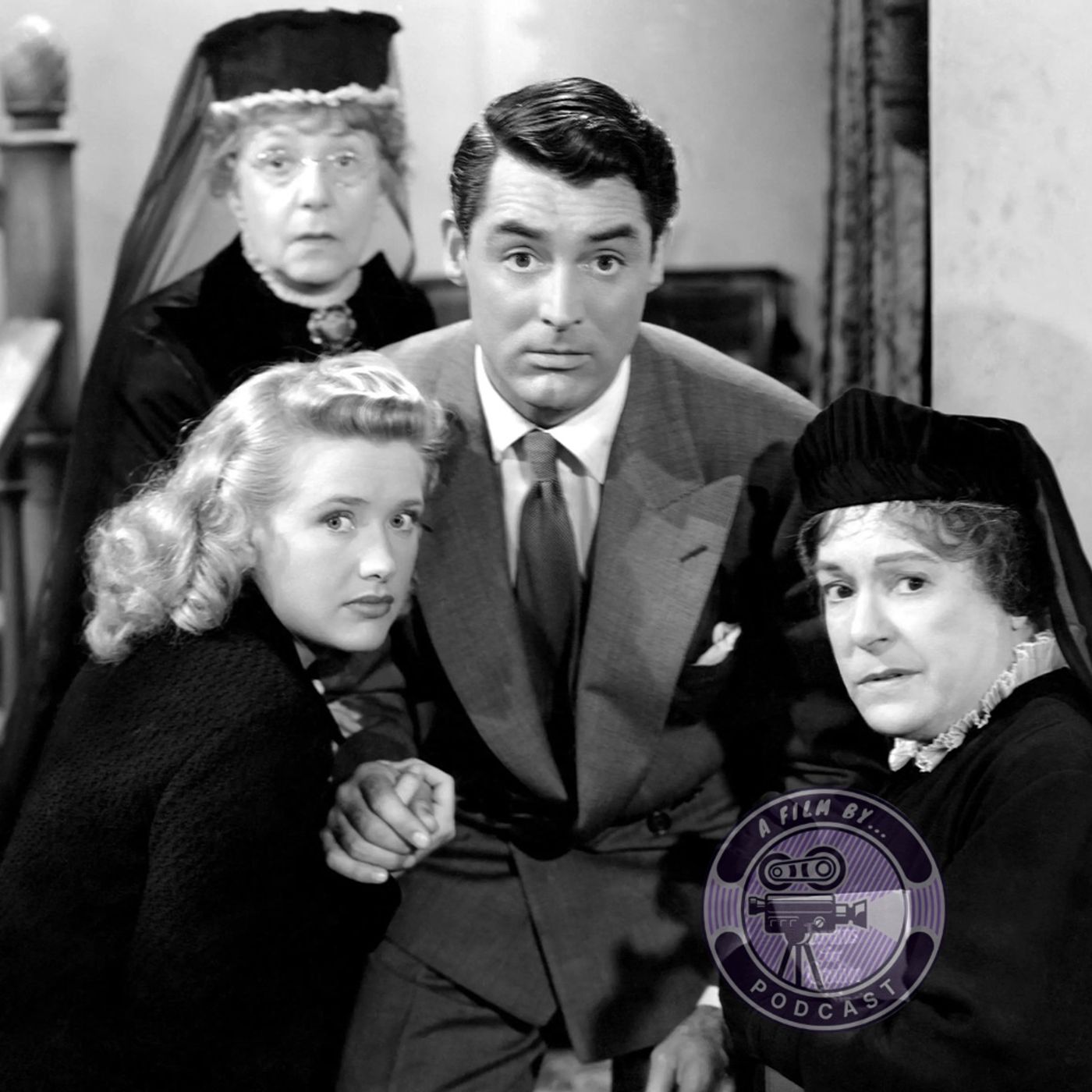
Frank Capra - Arsenic and Old Lace


 Apple Podcasts
 Spotify
 Goodpods
 Pandora
 Amazon Music
 iHeartRadio
 Castbox
 Deezer
 TuneIn
 Podcast Addict
 Podchaser
 Spreaker
 JioSaavn
 Castro
 RSS Feed
 Arsenic and Old Lace celebrates its 80th anniversary this week! "The Authority on the Golden Age of Cinema" Robert Burnett returns for an in-depth conversation about Frank Capra's macabre comedy!
For exclusive episodes and content, check out A Film By... Podcast on our Patreon with a FREE 7-day trial. You can also sign up as a free member!
Check out www.afilmbypodcast.com/ for more information.
Email us at afilmbypodcast@gmail.com with your questions, comments, and requests.
Find us on Instagram, X, and Facebook @afilmbypodcast.
This episode is sponsored by MaiRo & Co Dog Treat Bakery
0:00 This episode is brought to you by the Mayroe and Co. Dog Treat Bakery, a full service bakery for your dogs, providing classic treats, cookies, doughnuts, custom cakes, and more. Their treats are baked with only the highest quality, locally sourced ingredients. Baking just a pound of treats at a time ensures that their treats are the best and the ones your best friends deserve. Mayroe and Co. Dog Treat Bakery has been treating Cincinnati's dogs to tail wagon goodness since twenty twelve, and now they're available online at Mayroanco dot com. Today we're going to talk about a film by Frank Capra, his nineteen forty four crime comedy classic Arsenic and Old Lace.
1:15 This week, Arsenic and Old Lace celebrates its eightieth anniversary. Therefore, it's fitting that my guest today be an expert on the stage and screen of yesteryear. I like to think of him as the authority on the golden age of cinema. Earlier this year, he was a guest on our limited nineteen ninety six series when we talked about Billy Zane in The Phantom, and I think today's film is certainly in his Willhouse. Robert Burnette, Welcome back. Sir, Thank you so much for having me. I've been looking forward to this conversation today, and you were the only one I was like, this is It's got to be Robert that I talked to you about this this film. Now I understand you know we're talking about a movie nineteen forty four. So I know we've got some cinophiles that are listening to us and they probably have seen this. They own it, they love it.
2:07 I also know we have a group of people that probably are like what is arsenic and old lace? So for those that have not seen it, will the brief synopsis I would offer you is Mortimer Brewster, a Brooklyn theater critic and writer of books on the futility of marriage, risks his reputation after he decides to tie the knot moments before absconding on his honeymoon. He discovers the surprise of his life when he learns that his beloved maiden aunts Abby and Martha are serial murderers who target bachelor's Robert. This was actually this was a first time watch for me. Do you recall the first time you saw this film?
2:49 Truth can be told we're all good friends. This is the first time I watched it, and somehow what I thought I had seen it. It's like, I know the clips, i know the story, I'd read the play. You know. It's it's one of those things that's just kind of in our culture, you say, our Sniffle Old Lady date, the Little Old Lady, the alder Berry wine. You know, it's it's all known, if you know. But but once it started, I was like, Oh, to your god, I don't think I've actually seen all of this except for little excerpts in tributes to carry Grant or whomever. So it was a delight. I've watched it three times now in the last two weeks, so I'm catching up. Yeah, you and I were talking about Capra off Mike, you know, because he's got an extensive filmography, but you just you know, they're kind of he doesn't have a distinct style. Is that Is that fair to say?
3:39 That absolutely fair to say. Yeah. He would generally come up with what he wanted to do and do it, and usually it might even just be one take, uh, and then he would move on, you know. So uh, some actors loved it. Some actors would get frustrated because they wanted to do different takes for different things. But he also said he did it in part because then the studio couldn't mess with his films because he only had enough coverage to do what he wanted to do. He didn't give them a lot of shots to edit or you know, do reverse angles or anything like that. Very clever, very clever of him. One thing we were talking about, you know, because I told you like that, I you know, this was not what I was expecting, and you made the comment, You're like, yeah, well, it's not the typical Jimmy Stewart au Shuck's film that were used to from Frank Capra this one. Yeah, I know it's weird to say it's a breadth of fresh air given that it came out nineteen forty four, but it wasn't what I was expecting, and I thoroughly enjoyed this one.
4:45 Yeah, let's tell tactic and if Kapa wanted to make this movie because he did feel like he was getting stuck in a rut of kind of you know, flag waving Americana, you know, comedies with a little bit of drama, and when this came up to the studio, he thought it would be a great chance for him to just flex a little bit and try something different than what he was becoming kind of overly known for. Yeah, so the role, the lead role of Mortimer Brewster was intended for Bob Hope. He was under contract and unavailable at the time, and so we get Carry Grant. Robert your thoughts on Cary Grant in this film or in general.
5:25 Carry Grant is one of my favorite Golden Age stars because he's really versatile. I mean, he can do Hitchcock, he can do light comedy, he really just can do everything. And this film is it was super fun to watch because it was one of the last films where he really went with the physical comedy, some of the pratfalls and the double takes, which he started with early in his career, and in fact, prior to film, he was a circus acrobat and did all kinds of stunts and somersaults and things like that. So you see him in some of his early films with Hepburn. But by the time the forties came along, and of course, as well mentioned, this film came out three years after it was filmed, he was getting to the kind of the more mature, sophisticated Hitchcock hero or anti hero, and and kind of a different phase of his career. So it was fun to discover him making faces and doing double in triple takes and all that fun stuff. So I think, I think it's a great role for him. I'm glad they glad they got him. Bob Up would have been fine, But I think a little more, a little more one dimensional.
6:27 M h. Carry Grant in this role. Like as you said, I I reck I connect with him as the debonair Hitchcock lead. So to see him in this film and the physical comedy and the facial expressions, forgive me for saying it, Robert, but I almost felt like, is this what chevy Chase was watching to become chevy Chase? Because Yeah, watching carry Grant in this, I felt like I was watching Clark Griswold from the National Impuons movies. There's a real through line there because chevy Chase was not an unhandsome man. I mean he was not. He wasn't George Clooney, but but he was not like so many of our comic actors in old and new films are not going to be the boy who could the girl necessarily at the end of the film, but you can imagine it with Chevy Chase. So I think that makes the humor of them falling down and you know, taking pies in the face or whatever silly thing they're doing even funnier.
7:27 Absolutely, one thing I really was, I gotta respect Carry Grant for this. I was doing a little research on him. So his salary is in excess of one hundred thousand dollars for the film, and he donates most, if not all of it to various Allied wartime charities. We gotta remember, it's nineteen forty four, World War two is happening. So I really, I really respect him for doing the right thing with this money. I love that you love that, and he certainly didn't have to do it. The flip side of that story is two of the pictures he'd done back to back before this. He was the highest paid actor in Hollywood at that time, and his taxes were immense, and now throughout his career he was always very generous and gave back and did things that were not publicized. But part part of the idea of this give all the money away salary thing with this is it gave him tax credits.
8:27 So he was a shrewd, shrewd businessman throughout his life, which is partly why he was able. He was never assigned to one studio after he left Paramount in the early nineteen thirties. He was a freelance, which was almost unheard of in that era, but people were tied to with studio, could ask his own salary and really picked and chose what he can do, which is why so much of his filmography is we still know because he's you know, he's working with Catherine Hepburn, then he's working with Hitchcock, then he's working with Audrey Hepburn in some of those later films. I mean, he always was a top door star take commensurate to it. So so loved the charity, but it was also a smart business move its part as well.
9:10 Let's let's talk about his leading lady, Priscilla Laine plays Elaine Harper, his neighbor that he ultimately falls in love with. I gotta be honest, Robert, I I can't recover seeing her in another film from from this this era. You know, I know she's not a Hitchcock girl. I know, I just I've never seen she was. She was once. I think she was, what was it notorious? I can't remember when she was. She had a small part in one of the Hitchcocks. Okay Heims a delight though she is, and if you want to want to spend some time, its more time with her. The best movies she did she did three movies. It was kind of an early early uh you know, success with lots of sequels. The first one was called Four Daughters, and it's about four young women. Part of the stunt the movie was the studio had hired her and two of her sisters, who were all very young and talented and mostly just photogenic, and so they put them in this movie called uh, well sorry, four Daughters, I said, sisters.
10:13 I think it's four daughters, and they played four sisters, uh somebody else with the four sister It was a huge boss office sests, and it was just success. It was just you know, they're they're they're dating, and their travails and and and falling in love and adventures and all this. It was such a huge money maker for its studio that they brought them back the next year for four Wives, and then then they brought them back the next year for four mothers and yeah, I mean so franchise. They had to do it in that order because it was the forties. They couldn't have mothers before wives. That would have been you know, a thing. But no, but they're they're they're charming, charming films. They're they're kind of middle middleweight, middle brow, studio fair from from the forties.
10:57 But she's good in all of them. And and then I think she just kind of stepped away from it because she never quite got top billing, but she certainly worked a lot when they needed a pretty blonde. Yeah this, and I don't know, I just I thought that was unusual that this was kind of like her last big, big role. You know, she does a couple, she has a handful of films after this, and then, like you said, she kind of faded, faded from the limelight. I think that's a shame, because I loved her in this. I thought she was she was just fantastic. There were a lot of them in that era because there was a constant, you know, search for some the new face or the new name or the new star, and so they brought out so many young men and women in the late thirties or early forties especially and during the war years too, and they just a lot of them walked away from it or you know, did didn't love it, or just didn't click with the audiences. And I'm looking. Yeah, her film for Hitchcock was Saboteur, which was filmed after this film we're talking about, but came out a couple of years before.
12:03 Yeah, I know, I know you mentioned that they you know this this is released in nineteen forty four, it was actually shot three years before. We'll get into that when we when we talk about the film's background. And obviously we've got three three actors here that I don't want to step on, you know, I know you've got some great stuff to tell us about the the the origin of this film and where where it comes from. But Josephine Hall as Abby, she's one of the one of the old maid Aunts. I you know, we we know, we'll just you know, just not to keep people in suspense. This is obviously this is a stage production that becomes a film. She's she's in the stage production, correct.
12:45 Yeah, absolutely, both both both the sisters, uh Teina Daria and Josephine Hole both both recreated their parts for the film, which is what's unusual then in this still unusual? Now all right, well we'll hold off on on on the stage talk for just a minute. But uh, watching these two bounce bounce around the set, I know these women, these I know the these are my aunts, like I you know, I had, I had, I grew up with these women. So this was was really fun to just watch them until you until the big reveal that, oh wait, they're serial killers. Let me be clear, my aunts did not murder anybody. But I mean, did you actually ever checked the basement.
13:27 I never checked the basement. Now never expected you never would have suspected these ladies either, you know. So yeah, Well it's because they're just so they're so they're so endearing, you know, even when even when they explained to carry Grant what they're doing and why they're doing it, they're very dismissive about it, like it's not a big deal. Well, and I think that that's part of the charm of this film, and so much of the humor is how dead pan, no pun intended they are about everything. It just like, oh when we plais in their line with cyanide and oh would you like some cake, deer? It's kind of everything is kind of just just you know, nothing is pushed, nothing, it is shocking, it's just and so I think their their delivery is just so matter of fact that it makes it that much more funny than if there had been a big secret for a big, big reveal or you know, a big tight close up on you know, Justine Hoole's face. It's it's not it's just like, oh, past as salt and we killed another one today, both kind of yeah, part of the conversation.
14:30 And it it brings the humor out. So well, it does, it absolutely does. Uh, you can't talk about the humor of this film without talking about John Alexander, who's playing Teddy. This guy is off the charts and doing a bit that I think some people might perceive it could get tiring for some people, but I gotta tell you, his antics did not get old with me at all. I loved him from the first, his first scene to his final scene. He's a wild man, he was, and he was the other actor who came from the Broadway play. They brought him over from Broadway because he was just so indelible, because yeah, he could get it annoying really fast. His character and his stick. But he just so delightful and funny himself that you don't mind it. And he actually played the role of Teddy on and off till I think through the nineteen sixties, like when he died. I mean, it was like his bread and butter. He played many other roles. He'd done some other films too, but he did every time they needed Teddy for revival or you know, a show anywhere in the country, he would show up and charge right up those stairs. You know.
15:43 Yeah, the idea that this you know, he's obviously he's mentally ill. He believes himself to be President Roosevelt, Theodore Roosevelt. I think he might be the best performance in the film because when he is just listening to another another actor, or he's reacting to something that's being said to him, just everything he's doing with his body language and his his his face. I believe that he believes he is Roosevelt. He's doing such an amazing work here. Especially they give him the wiremrim glasses and they give him a mustache. But he doesn't know even look like Roosevelt. Really, he doesn't try and bully, he said, he doesn't try and look like him. He doesn't try and sound like him, and I love the absurdity of him was saying things like, oh, that's why I don't recognize you. I haven't met you yet.
16:36 I don't meet you until I So it's not even like I mean, he believes he's Roosevelt, but it's this very chill hear way where he kind of like has read all the books and just can kind of cherry pick what he wanted to do. There was a line in the play that was fantastic that got left out of the film because they thought it would have been dated, and with the three year delay it would have been more dated. One of the cops, I think it's the newer, younger cop says, oh, he thinks he's Roosevelt. Why would why would anyone want to be FDR? And the other cop says, well, nobody would want to be him. He's he's Teddy Roosevelt. And that line did not survive the play. It got got cut out for the film version, but it was a little little FDR bashing back in the day from Broadway.
17:22 I'll tell you watching this too, because I saw this a couple of times, and watching this performance, I was thinking, like what modern actor would just chew the scenery in this role, And Nathan Lane came to mind. See, I thought you'd say that when you started off. I see, I kind of disagree, because I think part of what makes what makes this guy so funny is he's he underplays same thing with with our our our two Maiden ants. He isn't trying to be wacky and over the top. He's just this nice guy who thinks he's Roosevelt and he's not. He never pushes it, He never, you know, is kind of milking it or winking at the audience. He is a very realistic portrayal in the kind of bubble of a nineteen forties movie. But I think funny if Nathan Lane is Nathan Lane is always so over the top. And I think that, I mean, I think Robin Williams, who I think you know, has already played or already did play. Yeah. Yeah, But Robin Williams could have pulled it off because he knew when to rein it in. And I don't think Nathan Lane has like anything lower than eleven on his dial for performances.
18:35 So love him, love you, Nathan, but I think he wouldn't have had the nuance or and he would have thrown the tone off. All right, that's an interesting take this movie. It takes place on the afternoon of Halloween, and it's got the set designs a little spooky without going overboard, obviously, but it is not without its creepy characters. So tell me what you thought about Peter Lorie as Doctor Einstein. Oh loved Peter Lourieu. He is an unsung, unsung hero of film. He just is so strange and so again in this. I mean, he could be menacing. If you've ever seen m his kind of breakthrough thing where he plays a serial killer, creepy, creepy, creepy, but he could play humor realiantly. And I thought his line reading is in this were fantastic. He could be menacing, you could.
19:33 You could see his fear of you know, the car of off want to be but his humor. The scene where he where he and Roosevelt are going down to the basement to see Panama in the basement and uh, Laurie turns and goes bom voyage and it did. It's hilarious and it's not necessarily a funny line, but he just made it funny. So I think it's great, and he he brings that that cachet because he was always, you known at this point for being kind of othered and kind of creepy and kind of off putting, so it fits for his character. But I think he plays the humor really well, which makes him kind of lovable almost even though he's with this psychopathic maniac.
20:17 Well. And the thing is, I think my favorite scene with Peter Lourie is at the end when the police captain is in the background talking to the people at the sanitarium and he's like, all right, the description of the of the accomplice, and Peter Laurie's standing there, he's inches from the door. He knows he's caught, and the guy is just giving these physical descriptions and every time he's you know, five foot three, you know, speaks with a German accent, Like every time he says something, Peter Lourie kind of shrinks a little bit and winces a little bit. Yeah, and then they're like, oh, this is the doctor that's on the papers. And then the second he knew, he realizes that he's off, got free, and he hits the door. I gotta be honest, I was rooting for him to get away. I wanted I wanted him to get away. He's he's a villain in the in the piece, but he he's just he's he's so fun.
21:11 Well. That the beauty for me of old films in general. And I'll drop a few more names later, but I love character actors. And Laurie was a star in Europe early in the Silent Era, in the early thirties. When he came to America, he was always a character actor. I mean, good Heavens, he was in Casablanca and all those other films as well. They're so well known, and he'd become kind of a cultural thing where people like, they know his voice, they know what he looks like. Even after all these years, he still you know, known. But but he was so versatile, and I think I think in this film in particular, I'm sure when he came on screen, as audiences would with other actors in this film, they like, oh, it's him, and they already kind of know, Okay, probably gonna be humorous, it's probably gonna be maybe a little of cob It's gonna be you know, and uh. And that's kind of the beauty of character actors. Is to come on and you're just like, you know what you're getting and it makes you happy.
22:06 Well, definitely not humorous, but definitely Macobb is Raymond Massey playing Jonathan Brewster. Yeah, wow, this is the the you know when we keep talking about the Karloff look alike, which I thought was clever with the film's writing. This guy was absolutely he was. He was creepy on to like level ten. Yeah, and it's so fun because this movie starts off and you don't really know what you're getting with that point was baseball scene, and then then we get into the Brewster house and it's kind of this dienectic comedy with Terry Grant and the girlfriend and the wacky ants, and then all of a sudden, it takes this right turn and we're like, we've got a body hidden in the window seat and then all then then you know, so it's it's it's shifting from from light comedy to kind of mystery to this to that. And then he shows up. Yeah, Jonathan shows up, and it's almost like horror slash noir all of a sudden, which and and tonally it all works though the scene where he as the one sister is showing the other where she hid the body. Uh, he burst through the windows. I mean it's one of those like gasp out loud, you know, scares and and there's some wonderful Kiaro's hero and kind of noir shots later where he and Laurie are moving another body because there's lots of bodies and it's just all shadows and silhouettes and darkness and sound and so different from maybe what you were expecting at the beginning of the film. But Capra and and and the cast
23:39 pulled off where you don't notice these really weird shifts in moods or tone. It all kind of comes across as one one, one big take with lots of layers. That's that moment you you just mentioned where he burst through the window. I mean I I kind of jumped a little bit on my couch. I could fully believe that that was the moment in uh theaters in nineteen forty four where popcorn is flying through the air because people weren't. Ready for it. So yeah, it was great. But then you know Massey who I only really know him besides this film for Abraham Lincoln, because he played Lincoln very famously and won prizes and it was kind of his thing. But he does humor too. The line the line where he meets Teddy, and Teddy says, I'm Teddy Roosevelt, and his character says, I'm would Row Wilson go to bed, deadpan and funny and just so sharply delivered. So Massey, it was kind of a thankless part, but he even gets a few jokes out of it, which I thought was nice.
24:42 Robert, let's take a quick break and when we return, I know you've got some interesting conversation about the creation of this film or there welcome back. We are talking about Frank Capra's Arsenic and Old Lace. Robert, I know you know quite a bit about how this film came to be. What can you tell us about Arsenic and Old Lace. It has a really interesting background and a little bit of mystery to it, just like in the film itself, and it is still a modern day classic. Still performed a lot, and it was one of the first big, big Broadway successes of that kind of horror mystery comedy that we saw years later in the movie and play Sleuth in Death Trap, which was a player in the film.
25:38 It's a great genre. It's one of my favorites. But this was one of the first, one of the earliest ones. Gas Light was before it, when it was still called Angel Street in the in the theater. It ran for years, but it was not funny. Gaslight is is a lot of things. It's not a laugh riot. This dis managed to meld the humor with the shocks and thrills the audiences love. Now. Kesterer Ring is a footnote in theater history because he wrote lots of things, and this is the only thing he's known for, probably because he just mostly wasn't a very good writer. He was a hack. He wanted to write plays, he wanted to be famous. He ground them out like sausages, and most of them just weren't great, and initially this one wasn't either. Now, he had not really done a lot of comedy prior to this. He mostly wrote traumas and thrillers and things, and so he thought he kind of pulled on the Villian idea of that kind of humor and sticks. So there was a character.
26:39 There were several more mad characters in the Brewster family. And because he was trying to rip off, you can't take it with you. The wacky family claimed to come out a few years before, but so he had one of the mad characters would fall on the ground and bite the floor and we're all like a three stooges after anytime anybody said the word pickles, so of course, and that was like the height of his humor, was you know, one of the ants would say, oh, would you care for some more pickles? And then this character would drop to the floor and spin around and go whoo and like fite things. You know, that was his humor. He was not quite a sophisticated as this. He also had this weird kind of political streak where his version of this play and it exists in manuscript. I've never been able to get a copy, but I'd love to read it. His version of this play was very political in that the it was ostensibly about the old, rich white ruling class versus the up and coming immigrants and poor people and what modern America was becoming. And so he was going to write thiscathing takedown of how if you are rich and powerful, you could just murder people and hide them in your basement and it wouldn't matter if you were one of the old families and one of the rich people. But here's all these new younger peopleople so so that their name was Brewster. And in the play it's mentioned that a Brewster came over in the Mayflower. And so there was all this stuff about that.
28:10 The two cops that we meet early in the film, Uh, one of them in the play was was Jewish, and they changed him to Irish for this this ersion. But and so there was quite a bit about the Brewster family was like taken aback. Why a Jewish policeman. We didn't know that was possible? And are you sure he's met for our neighborhood? And I mean it was he was trying to be very very you know, modernistic in his but but but the idea of the ants killing people and bearing them in the basement was an intriguing idea, and in fact he got it from a real life incident that had happened several years years earlier. There was a woman who was burying people and killing them and then burying them, uh, and got away with it for years and it was finally discovered. But so he write this play. He's had a bunch of other plays that have run a week or two on Broadway and kind of bomb and the producers Russell Kraus and Howard Lindsay get a hold of this and they look it over and they can see the bones of it, and they realize it need to be funny, not a social indictment.
29:17 And so they came to an agreement with him. And it's a long story, but they basically came to an agreement with him where they said, we'll produce it, We'll let you keep your name on it, so you'll get the royalties and the credit. We're going to rewrite the whole thing. And so they basically did. They rewrote almost the entire play. What you hear now is like ten percent Kessing dialogue, and everything else is Prows and Lindsay. And they had a great track record. I mean, they wrote anything Goes with Cole Porter in the thirties. They were working all the way up through the Sound of Music in the nineteen fifties. They wrote musicals, they wrote plays, They were writers mainly also producers. They were a crack team.
29:58 They got ahold of his kind of half baked idea and turned it into what we saw today. Now my understanding now, now my understanding is part of this deal that the producers are working out with the stage production, is that you cannot release the film until we've finished our our run. Yeah, I was. It's wildly popular, right, I. Would come into that. Yeah that that was so. Yeah, the play gets on, it's been rewritten, it's it's been cast tremendously. With Josephine Hall and Ginadare who we see in the film, and with the actor playing Teddy Roosevelt. He comes, he's in the play, and Boris Karloff plays the part that was played by Raymond Matthews. So Boris Karloff plays a man who looks a lot like Boris Karloff.
30:48 I love I love that. And the play one of the things that Kroleson Lindsay added to it that makes it really special, and they got rid of most of it for the film, which rightly so. It was very kind of meta before meta was a thing. So all through the play, there's only one line of it they keep in the film, but they talk about, gee, if this were a play, this is where the part where this happens, and they mentioned it in the film when Carrie Grant gets tied up with the extension cord or the like. Yeah. Yeah, But but throughout the play Uh, the the Grant character. The Mortimer is not a best selling author about a book about being anti marriage. He is just a dramatic critic.
31:32 So there's all these little zings about, well, this is ridiculous, you can't hide somebody in the window box in a play. No one would believe that, you know, and things like that that were the kind of meta references that audiences then would have laughed at the whole thing about, like just like Boris Karloff was hilariously funny, because at that it was. So let me ask you this, Robert, ye, if we've got if we've got you know, we've got three of the main stars from the the production, the stage production, they're in the film. Why why isn't Boris Karloff playing Jonathan Brewster. That's the deal. The play was a huge success, it was It ran ultimately for four years and then was in stock. It's been revived forever. They bought the film rights, as often happened Kraleston Lindsay, the ostensible producers of the play who actually did write it too, sold the film rights.
32:29 And it was a big hit. No one thought Chestering was going to have a hit. No one thought this kind of weird o tre thing about murdering ants was going to be a big hit. It hit just right on Broadway. It was a huge success. So the deal was worked out that they could have some of the cast for eight weeks. That was it. They could shoot the film for eight weeks. So the two Ants, yeah, the two It was troublesome. Later the Two Ants and Teddy get flown to Hollywood. They have eight weeks to film go and the writer was the film could not be released until the play close and everyone thought, well, great, we're filming it in late forty one, it'll come out in summer of forty two. The play ran for almost four years. Ultimately they finally relented and in forty three they let it come. They let the film come out, even though they play was still running. But by that point they had tours going but no. The reason Carlofs stayed was they needed to have at least one name to keep the Broadway production going. With the rest of the cast gone, audiencely would not have wanted to go see this Broadway smash. A couple months after it opened with none of the stars of the play in it, and Gina Dare and Josephine hol were big names in theater at that time. The play was a smash hit, so Carloff. The deal was that Carloff would stay and do the play while the rest of them came out to California the film. Carloff was also an investor in the play, and so that was part of the thing too, is they were like, well, if you you leave too,
34:01 that's gonna probably lose money. It might even close. But you're Borrows Karloff, You're the biggest name because you're a movie star. You stay in. The play will run for the eight weeks, they'll all come back, It'll all be fine. And in fact that the royalties from the play and the residuals he got from being a producer on it, Carloff was basically set for life, which is why he did not do a lot of film work in the forties and fifties because he had all the money he needed from this. But yeah, so they he made he made. He made the right call then, because it's I gotta imagine, if you're Boris Karloff, It's like, I'm either going to lose money by walking away from this stage performance, or I'm gonna lose money from not being in this Hollywood picture.
34:45 But it sounds like he made the right where he made the right call. Yeah, he with nobody's pool because yeah, I mean, the film would have paid him X amount of dollars and he would have got that money and it would have been done. The play is still being produced. I expect his estate is probably still getting ten cents every time my high school does our snickel old lace. You know, so good for him. Do you know the funny story about what happened when the play went on tour? No, but please tell me. I will tell you this. So the play was a big hit, as as often happens with hit Broadway shows then and now, it went on the road. So they took it to Chicago and it went all over the country, and Carlos stayed with the New York productions. As that's what I was saying earlier. It ran for ultimately for four years. The movie came out a couple of years in it was dwindling, but it was still popular. At that point, Carloff was not in it. It was different cast, but it was still popular on Broadway. But they sent out a tour on the road and Initially the tour had the two sisters that were so well known from it, and Carloff did not want to do the tour. I forget if he was getting married or just whatever it was.
35:48 He didn't want to, you know, do two months here, two months there. So they decide, in a bit of fun stunt casting, they will get Bela Lugosi to play after Jonathan for the tour. He was a big name draw. Everybody knew Bogosi's name, and they did, in fact change the script to say, oh, a man who looks like Bela Lagosi, which I thought was kind of funny. I guess early on, early on in the run, one of the two elderly ladies, because she'd done the show for hundreds of performances, she would occasionally say something about Boris Carloff and usually at that point, Lagosi would just basically turn and stare out at the audience, which is like, you know what the hell face, and it would get a huge laugh. But there was a debate about whether leaving in the carlaf reference or or to take you know, deliberately uh. They chose not to, but and then the ghostie left, and then later on Eric bon Stroheim, the the director who's best known to us today from Sunset Boulevard where he played Max the Butler to Crazy Norman Desmond von Stroheim did it, and at that point it was an actor who looked like Eric won Stroheim, So they kept changing the text to whoever bit the thing, and again it brought out that kind of meta joke of yes, it looks like him, it is him. For the film, they decided to stay with Karloff, even though he was not in it. They had to get permission from Universal Studios to do the makeup though, because of
37:22 course Boris Karloff did not look like frankent Dyne. He portrayed him beautifully, but there was a lot of Jack Dwan's makeup on there, and a lot of moody lighting and all that. They didn't want the actor to necessarily look massy, to look like, you know, man on the street Boris Karloff. They wanted to look like Frankendin's monster. So there were a lot of negotiations with Universal Studios about how much forehead and what shape head and how much you know of this and that, and they ultimately came to some kind of compromise where there's a lot of scars and a few few appliances, but not a whole bunch. But yeah, I love how tho I love how they I love how they explained that away with Peter Lourie's character being like this plastic surgeon who is working to you know, disfigure his face so he's not recognizable since you're on the run. That is brilliant.
38:11 That is that is from the play as well itself. That was kept. They made some smart choices adapting this from this date to screen, and uh, primarily they they beefed up the rules of Mortimer carry Grant and uh Priscilla Lane's character the fiancee and then and the wife towards the end, because if you're gonna have carry Grant, you want to use him more. Uh So the entire scene at the beginning, whether at the marriage registry, uh and hiding and all of that because he's the noted bachelor and all of this, and several of the scenes where Grant and Priscilla Lane are running around the tree out in the cemetery and chasing each other and kissing and whatnot. They build a lot of that up to give both of them more to do. Uh, because they had carry grant. The play is just only set in the house. There's one set, nothing else. So they did they made some nice changes to open it up a little bit. That being said, I have to dog on the baseball scene at the beginning.
39:19 I don't need it. They were, no, we. Absolutely don't understand it. Traditionally, when you bring theater to film, you open it up, they call it. And it's because most plays have one set or two sets. In this case, it literally was one set the whole night. And to make it more filmmaxed, they want to take you other places and move around a little bit. We have some contemporary filmmakers who can do amazing things in one room or one set. It's usually kind of a twitterive force. But back then they wanted to like get outside a little bit, do a little bit of stuff. And Capra being Capra, said well Brooklyn, like nobody knows anything about Brooklyn except their baseball team. So they divide. It was all Capra, the scriptwriter didn't even do it. They found some stock footage and they devised this whole thing was set up of here we are in Brooklyn and then meanwhile coast the river. Here's what's happening at the brewster house. I think it's kind of clumsy and kind of lame, and it doesn't even have a payoff, Like I kept waiting for a baseball comes through the window later or something, so.
40:22 The payoff for me. And I thought, if we filmed this whole Brooklyn Dodgers uh set up just for this one line, it's that was it was kind of a waste. But at the end, when the when the ants are ready to you know, they're willingly being committed, uh to go to what is it Happy Dale Asylunce the one the one makes a statement, well, this neighborhood hasn't been the same since that Pennant thing, you know, and she's referencing the Brooklyn Dodgers winning winning the World Series. But it's like, that's a long stretch to get to, you know, to to land that that that joke, and I'm with you. I I think you cut the entire Brooklyn Dodgers thing at the beginning.
41:02 And I don't know if we even need the marriage license scene either, except it does give us a chat to meet Carrie Grant and meet for Solwan because to play is ostensibly the sitters are the main characters Yea and Mortimer is kind of the normal one the audience can connect to and who gives us our exposition. But he's not the star by any means. I'll tell you. So you mentioned the Dodger scene, I'll give you one that it was. It bothered me a little bit. And I know I'm nitpicking here because I'm assuming that in the if you see this live, if you see a you know, stage performance, it probably works really well. But there's that moment where the lights are out and we're just listening to things happening. Yeah, I think it went a little long in the film and it got a little a little frustrating. If I'm being honest.
41:55 I understand why we're doing it because I love the set design, like the fact that they built this house like every room in detail, and this isn't just like set, you know, just like a you know sets that are going to roll away. I love the setting of this house, but I just that that that that moment where everyone's kind of stumbling around the dark and you're just listening to people's voices and you're hearing things land and crash. I was like, okay, we can let's let's speed this up a little bit. I think, yeah, it's funny about that house too, because it was such a great set that they kept it for years and I forget now, but it was used in another classic film and they either like burn it down or tear it down on film, but the house was the house set was used again later because it was such a great set.
42:43 I don't have to look that up. I'd love to see the movie. Though, I am, I am, I'm pulling it up now. It was George Washington Slept Here, which is a fun comedy with Jack Benny about he and his wife buying a old colonial home. It's kind of a hot mess and all this, and yeah, George Wathington's Left Here came out in forty two, so filmed a year later, and then they also you did in another film after that, so the studio system works for that. I also did mentioning the studio system because I do love it so much, those old movies. I got such a kick out of this movie. In this scene at the marriage registrar seeing Charles Lane, he was one of the two reporters, the fella with the red glasses kind of bolding head. Where do I know him for you you know him from everything.
43:30 He made over two hundred and fifty films. Yeah, he worked pretty much steadily from the early nineteen thirties up until the seventies. He lived to be over one hundred and one years old. He was on I Love Lucy and he transitioned to TV. So if you ever watch I Love Lucy or Make Room for Daddy or any of those fifties sitcoms, he did those. He was never a star, he never he never had more than a few lines, but he always would play the salar puss and he was the night desk editor, or he was the restaurant manager, or he he was, you know, the judge at the trial. If you look into filmography, I mean he went doing no lie like twenty to thirty films a year for the studios and just and so like.
44:16 But as soon as I saw him, I'm like, it makes you made me smile, and I'm like, oh, it's him. I love that about old movies where you get to see Edward Everett Horton, who in this one plays the asylum director, and these characters come out and you know what you're gonna get. They're gonna do their bit. They're gonna do their their sour puss thing or their fussy thing, or their whatever, their whatever, their their stick is. They're gonna do it, and you're gonna love it, and it's it's so fun to kind of see those kind of recurring, recurring actors. So I knew I was in good hands when I saw him. Well, we are good hand. We are in good hands with the sponsors you're about to listen to. Uh, We're gonna take a quick break, and when we get back, I'm gonna tell you a few things about Frank Capra, and then Robert is gonna give us his recommendation on which Capra films we should be watching. We'll be back, Welcome back. It is time to talk about Frank Capra. Robert, I know that you know these things, but for our listeners, I got two things and an interesting quote from mister Capra.
45:20 This one. Let's start off with something a little, a little humorous. So when Frank Capra was nominated for his first Best Director Oscar in nineteen thirty three, a movie called Lady for a Day, the presenter was Cowboy star Will Rogers, who opens the envelope and says, come and get it, Frank, Well, Capra was halfway down the aisle to the stage before he realized it was meant for Frank Lloyd, who directed Cavalcade. So a little bit of an embarrassing moment for Frank Capra at the capsule. I love my old movies. No one ever needed to watch Cavalcade to us it is. Yeah, it was the wrong the wrong winner. Sorry, sorry other Frank. But Capra made up. But though, did I think he got what four Best Director wins all together for the Oscars?
46:14 So I believe you're right. Yeah, So that that kind of amazing. So I guess I guess he could let ones this time. Yeah, tell you what's also amazing. So obviously this film is in production. When the Japanese attacked Pearl Harbor on December twelfth, nineteen forty one, with a week to go before he was done editing this picture, Frank Capra enlisted in the US Army Signal Corps as a major. You know, a lot of a lot of our Hollywood stars, Hollywood directors, they're signing up, They're they're going to join the fight. But he received an extension on his order to report for active duty in mid January so he could finish editing the picture. He stayed to complete post production and then reported on February eleventh, nineteen forty two, this would be his last film, his last feature film until It's a Wonderful Life in nineteen forty six. Yeah, and speaking about the appeal of directing a film like Arsenic and Old Lace, Capra said, the film is no great document to save the world, no worries about whether John Doe should or should not jump. It's just good old fashioned theater and Robert, as you know. He would go on to admit that making the film was the first time he had enjoyed directing since making It happened one night. Yeah, Robert, He's He's got fifty nine credits to his to his filmography.
47:45 I know we don't have time to talk about all of them, but I do want to mention a couple to get the Robert Burnett take, so that our listeners who are discovering Frank Caepra for the first time or rediscovering Frank Capra, they'll know which one to check out based on your recommendations. I'm gonna jump ahead, if that's okay with you, sir. I'm gonna jump ahead, because I know he does. He does a lot of silent films in the twenties. Can we just start. Let's start with nineteen thirty four. It Happened One Night. This is a classic. This is a pre code comedy. It is hilarious. We've got Clark Gable and Quadette Colbert. It's kind of a road picture. It was a template for so many other other movies and those kind of mismatched pairings, you know, all the way up through Pretty Women, Pretty Woman with Richard Gear and Julie Roberts, all the kind of mismatched couple thrown together and look what happens and they fall in love. This is one of the first and one of the best. It was considered pre code because it was kind of scandalous. The real fun fact about this film is that Clark Gable appears in his undershirt and that was shocked, shocking, shocking. There's also a scene where they are in a train compartment and they have to change out of their wet clothes and she's on one side of I have a little line across the compartment with some sheets hanging on it, and she's getting undressed one one side and he getting undressed
49:16 on the other and you know, get the smelling salts because this is practically pornography for nineteen thirty four. So yeah, but it holds up. It is absolutely sharp and funny. I think it's Colbert's best film. And she wasn't really known for her comedy. It's a shame because she was great in this. And this is one of the earliest films that Clark Gable broke out of just being the hunky leading man opposite a female star and said his career moving to where we would end up gone with the wind a few years later. Kind of his persona and his charm were honed in this film. Capra, as I mentioned before we started recording, is not one of my favorite directors, but gosh, he could get great performances out of some of these stars and kind of give them signature roles. And it happened one night for both Copet and Gable. Is a signature film. Well, we're seeing.
50:10 Your thoughts on mister Deed's Goes to Town nineteen thirty six place by Adam Sandler. No scratch that, Gary Cooper. I know we got that terrible remake with with Sandler, but mister them. Confused all the time. I mean, you think of Adam Sandler, you immediately think or Gary Cooper. They're interchangeable. Yeah, and one's like six ' four, you know, broad shouldered and all this, and the other one is Adam Sandler. Yeah, this is kind of the first of one of the kind of Americicana things. I think you could have subbed out at this point. You could have subbed out Cooper for Jimmy Stewart in this film. It is a nice chance to see Jean Arthur, who is really not known today at all, but she worked with Coup Bir she worked with Carry Grant in a couple of films. Had kind of a tragic life. But it's a fun film, but it is kind of the beginning of what later became known as Caprakorn in Hollywood, these kind of corny flag wave in a Shuxi Americana films. This one, though, is it's fun to watch, but it's not one of my super favorites. But it's kind of where he hits his stride as the Frank Capra that we think of when we think of a Frank Capra movie. So yeah, it's a fun one to watch, but I don't think it's a fun one necessarily to have.
51:41 To rewatch, all right, The nineteen thirty seven Lost Horizon. This is a minor classic of the era, based on a very famous book, got made into a horrible movie musical in the nineteen seventies that gave me one of my favorite bitch equips of all time with this musical had George Kennedy in it and leave Olman and people that should not have been a musical. Bert Baccarack of all the sixty seventies pop hits wrote the score and the equip that I just treasured about this. At the Academy Award, someone asked Bett Middler about lots of Yzon and she said, I never miss a live Almond musical. Almond, of course known for her intense Bergmann dramas and very heady artistic things. But this lotter Rizon is actually not bad.
52:34 And Ronald Coleman, again not as well known today, gives a very strong performance. It's a great adaption of the book. If you like Edward ever at Horton and Art nicol Old Lace, he shows up in this one as well, playing basically the same character he will play for his forty five year career, the kind of diithering, nervous, you know, guy. But it's it's it's a really nice adaption. The only kind of flaw on this one really is it's set in this sort of mountainous Himalayan thing, and the backdrops and the sets are kind of cheesy, certainly by what we're used to today. But a solid film again, kind of a solid B picture of the era and one of Kapa's better known, better known movies.
53:21 Well, he's starting to hit his stride where he's about to crank out, like one a year, it seems now nineteen thirty eight. You can't take it with you. Here's Geane Arthur again and Jimmy Stewart and so we're starting to really, I really get in the groove. This is also based on our Broadway play, like our nicol Old Lace was, and the play is a classic. The film is a classic, just kind of mad cap, crazy family and their shenanigans, but great, great cast. Everybody down the line is a solid performer and lots of great names from the nineteen thirties. So if you're like me, you got me. Lionel Barrymore is in this and Mish hour, very young Anne Miller, who later became a cap dancing thing for the nineteen fifties with Gene Kelly Spring Byington.
54:08 All these kind of faces you will know if you watch thirties movies, appear in it. And it's it's really solid. It's funny, it's screwball. It's a kind of about a wacky family and all their different shenanigans. Stuart being introduced in the family through a love interest is with the trope at the time, but very solid. Definitely one of Capra's best. I think you can't talk about Capra's best without having his next feature, nineteen thirty nine's mister Smith goes to Washington. In the conversation right. Right, and here's Jean Arthur again. You can see that Capra had his stock company, he had people he liked, of course Jimmy Stewart. Then we add in Claude Rains in the mix and some other people. Yeah, this is not only a great Capra film, like it definitely a great American film.
54:57 This is a Americana right, Yeah. Absolutely. And the very famous speech that that Jimmy Stewart gives to the Senate gets in every AFI list of Best Speeches and Best Film Moments and all of this. And what's funny about it is it was a big, big success at the box office, and it was won some awards, although not as many as it was nominated for. Was nominated for a bunch of Oscars, uh just one for the original Story, but is now on every top hundred list you see. This film is up there. Later on in his career, Jimmy Stewart like despised this film because he thought he was He thought the movie was capricorn, and he thought that he was unbelievable in it. He thought his performance was not great. But I think that Jimmy underestimates himself. This is a really great movie.
55:56 I disagree with him on that. It's it's fantastic film. Yeah, well, I think it came back to haunt him. You know, when you have a career that ranges from Westerns to musicals to Hitchcock to be you know, known at your Lifetime Achievement Award for this quip and then also wonderful life and probably probably rear window, you know, he's like he has more to offer than just that. All right, I don't know about this next one because I've never seen it, but tell me your thoughts on nineteen forty one's Meet John Doe. Well, I'm for it. Barbara Stanwick is another great actress of her era that is not a common name now like she should be. Normally. She played like tough broads and newspaper gals and you know, these kind of big shoulder pad women. But she was great in comedies, and this one is another political comedy drama comedy drama like the last several have been. But Stanwick is great in this.
56:54 I think After Ball of Fire is probably her best performance because I think she was a better comedian, and then she was a tough gal, which was kind of how she got shoehorned. But this is a great film. And then Gary Cooper again is back. His little stock company of people show up again. The only downside of this one is after you've seen some of the earlier films we talked about, it starts feeling like Kapa is going back to the well one time too many. Now, Now that being said, this is also from nineteen forty one. The world is it war, America is coming out of the Great Depression. There's a lot of stuff going on, so I think maybe some patriotism and some even jingoistic ra ra America. You know, we may have our problem, but we're the best country in the world. Cheer it might be needed out there for audiences. They certainly did well at the box office. But of this, and mitter Smith goes to Washington. If you have to watch one go with mister Smith.
57:57 Well, I know, he cranks out several uncredited small shorts and then we've been talking about Arsenic and old lace this hour, which comes out nineteen forty four, and then back to a lot of you know, this is I'm assuming this is his work during World War Two where he's doing a lot more of these uncredited shorts. You know, we got titles like War Comes to America and here is Germany and your Job in Germany. But when he gets back home, now it's nineteen forty six and he does his probably his most memorable film, right talking about It's a Wonderful Life. Yeah, everybody's seen this movie. If you haven't seen it, you should see it. I think it's got flaws. I think for me, the tone is very uneven, and people remember it it's this warm, magical Christmas movie and oh dear god, it is not.
58:55 Anything but that. I think when you're younger, when you're young, you don't think about what it's really going on with George Bailey. But yeah, the fact is this is a very dark story about a man who's ready to take his own life and needs needs a guardian angel to show him, well, here's here's why white life is worth living. It's you know, when you when you become an adult, I think especially, and you start to see the movie for what it really is. It's it's a little it's a lot more depressing, it's a lot darker. It's still adult. You're wrong. It's still a great film tho. It's still a great film with a great message. But wow. Yeah, it's interesting because Stewart also served in the military for several years. A lot of the Hollywood stars did, and directors like Capra. Uh and the way he got pitched this by Capra because he didn't want to do any more Capra stuff because he felt like he just had taken that path. I'm looking at IMDb and Charles Lane, my my reporter from the first film with the real estate salesman in this movie. Of course he's in this movie. Anyway.
59:55 The pitch was from Capra to why why Stuart should do it and why Stewart kind of the performance he did was what we would call now like PTSD, like post traumatic stress, you know, where it was this idea of, well, your character is is suicidal and and you know, draw on what you saw in the war and and all the lives that were locked and all the kind of stuff. So it isn't it isn't in the text of the movie necessarily, but but it was in the subtext, and it was why Stewart decided to come back and do this because he and Kapra both served both knew that, you know, America is still the best country in the world, but we have some issues. And the war was a big, big, long you know, cost a lot of lives, cost a lot of money, set the country back. So the film does take a darker turn. But Stewart had to be talked into playing playing his character because George Bailey was not something he wanted to do. Especially for Capra. He thought it was going to be more, not not a romp exactly, but a little more. And it just between the two of them it kind of got darker and darker.
1:01:04 Well, let's have the let's Head the Other Way Away from the Darkness. Nineteen forty eight, Spencer Tracy Catherine Hepburn, State of the Union. Yeah, Capra was a director to hire on Higher. He did the scripts they gave him. This is not their best movie. I don't think it's his best movie either. It does have the young Angela Lansbury in it. They didn't know what to do with her back then, so she's kind of went from movie to movie. Tracy and Hepburn are Tracy and Hepburn as always. The film is well done, but it is not one of their better films. It's just kind of kind of perfunctory, kind of assembly line ish. It's well made. If you liked them, well, we're seeing you get to see the young angel Lansbury, you get to see Charles Lane again. But this is low on my list of Hepburn Tracy films for sure.
1:01:57 Okay, well, let's enter the nineteen fifty He teams up with Bing Crosby and riding High. I have not seen this movie. You'd think I would. I like being a lot, but I did not see that one, so I can't say nothing about it. We'll move on. How about nineteen fifty one, he's back with being again with Here Comes the Groom. Utterly forgettable. I say that utterly favable. I saw it and I literally do not remember anything about it at all. It was just a studio filler. As far as I'm concerned, I'm glancing glancing at the movie. If folks are going, Nope, don't remember a thing about this movie.
1:02:41 I love the way you said that. I could I could just see like critics are not raving, you know, utterly forgettable. Robert Burnett, Docking Base seventy seven. Yeah, I hate, I hate to sell sell it short, but yeah, in fact, if you would not mentioned it, I would never even have remembered that this movie existed. And I love my fifties musicals, but this is not one that I am a fan of. Yeah, So he does over the next Over the next couple of years, he does a couple of TV movies. He's he's kind of fading away from the from the big, big tentpole films. Nineteen sixty one, he does a movie called Pocket full of Miracles. Are you familiar with that one, Robert, Oh, guy Davis, Yeah, it.
1:03:25 Is another one that is not good. Oh, okay, they went back. Well, they went back to David Runyon short stories and took a couple of his short stories. He's best known today, was a hugely popular writer in the twenties and thirties of kind of there was a whole language they called run Yannies because his characters were all card sharks and mobsters and showgirls and things and all the kind of catchy, zippy slang they would use. But he tried once in a while to write warm hearted things. This was one. It was based on his story called Apple Annie and another story called Madame Lagimp And it's it's just we and kind of unwatchable. Betty Davis plays this sweet old apple seller whose daughter falls in love and there's a wedding and she had to get herself out of her apple cellar rags and be the mother of the bride, and it just it's all. All the worst excesses of nineteen fifties films that are bad are in this. If you are a fan of character actors, we do get like Ellen forby Grandma Walton is in this movie. Peter Fox early in his career as a very small part in this movie. My favorite, though Edward ever at Horton is back. I loved him and very very young, and Margaret swivels in for a few minutes and is I remember right, she's a friend of the bride. But so
1:04:55 it's kind of this crazy lots of people in it, but it just trying so dang hard to be warm hearted that you kind of just can't stand it. The the ad line was you have to see it to believe it, and I'm not going to disagree with that. Well you weren't. You weren't selling me on it, so you said that, and Margaret was going to swivel in so I might check it out. But Roberts first pictures given, Given this filmography, I gotta ask you, and I'm gonna put you on the spot here two part question. What is Frank Capra's best film? And what is your favorite Frank Capra film. I'm gonna say his best film in the sense that it is probably the most representative as well is going to be Mister Deeds Goes to Town. But my favorite is a two way tie. Now, thank you for writing mean tonight, Urs nicol old Lace and it happened one night I hadn't If I hadn't done this pod, I would have said it happened one night, but Arsnick is really funny and I really enjoyed watching it, so it's on my lift as well.
1:06:04 Okay, what did you what did you catch Arsenic and Old Lace? Do you have a copy of this or did you did you stream something? I got the Criterion Collection DVD from the library. As we often say on docu Base seventy seven, physical media is better, so I had a beautiful pristine print from Criterion Collection and there was some nice bonus features on it as well. Normally I don't listen to audio commentary because it's not my favorite thing always, but this one is great. There's a guy who wrote a whole book about Arsenickel Old Lace and his journey from play to film to you know, Staple, and he decides he does like character voices, so when he's talking about Carry Grant, he tells the stories with a Carry Grant voice, and he uses a Boris Carlov voice at one point, Peter Lorie.
1:06:53 He's not a good mimic or anything, mind you, but it's certainly made for very fascinating listening. It's just kind of dry. Author is trying to entertain us with Hollywood impersonations. Well, I for one did not expect the zany ride that I was taken on. But for a story involving serial murderers, escape maniacs, and a seller full of bodies, it's absolutely charming. Check it out the next time you want to take the old Hollywood approach to your movie night. And I think this is a fun one for Fall or for Halloween. Wouldn't you agree, Robert Oh? Absolutely? Yeah. Well, listeners, what do you think of arsenic and old lace? Let us know on social media. You'll find us on Facebook, Instagram, and x. You can check out a Film by Podcast dot com for film and TV articles and our entire library, which is streaming free on the platform of your choice.
1:07:46 As always, you can write to us at a Film by Podcast at gmail dot com with your questions, comments and concerns. We may just read your response on the show and send you some a film by swag. On Friday, are limited series of Film at forty five returns with special guest Jason Colvin of the Shirley You Can't Be Serious podcast. Jason joins us to celebrate the forty fifth anniversary of The Jerk, starring Steve Martin in one of his most memorable roles. Speaking of memorable Robert, it's always great to hear from you on an episode of Docing Based seventy seven, and it's an absolute pleasure to have you join us. I hope you're I hope you're gonna come back.
1:08:27 I really do oh anytime, absolutely well. Speaking of docu Based seventy seven, anything coming up that you can share with us, anything you're doing. Yes, we've got two episodes I'm gonna be on, as well as of course many others that I am not on, so way that as you will. But the Yeah, we're doing a top seven favorite Walt Disney World things. It's gonna be very contentious. I'm sure we've got some special guests and a lot of opinions will be had on that one, so it should be good fun. And then I'm especially looking forward to an episode I'll be hosting that'll be dropping in November. I believe it is favorite song by a fictional band. So if you are into Spinal Tap, or you are into the Archeese or the Partridge Family, if you are into that thing, you do any of those movies or TV shows, whether it is a pretend band or a pretend singer singing songs. We're gonna pick those terrific songs and count them down for you, So it should be fascinating to hear what we are able to pull out of that kind of box, within a box of fictional fictional Robert.
1:09:34 I'm gonna tell you real quick, because I know you're a big fan of Billy Zane like I am. I gotta shout out a song called Power of the Night from nineteen eighty six when Billy Zane was in Critters, the fictional band an awesome song called Power of the Night. So check that when I made I may a spot on my list. I'm writing that down. Well, and here's the other thing. I can't you. I can't let you leave because I definitely want to hear can you. Can you tell our audience a little bit about Mayro and Co. Yeah. May Row and Co is our dog treat bakery business. We named it after our first three dogs, Mazie, Rosie and Coco, So may Row and Co. In hindsight, we never would have picked such an unusual name. We thought it was catchy. No one knows what it is, but it is Mayro and Co. We sell dog treats and really anything you can find in a bakery for people, we make it for dogs. We do waffles, we do custom birthday cakes and Gotcha Day cakes, but we're best known for our cookies and our classic treats. You can find those at Red Dog Pet Resorts around town here in Cincinnati. And I'm excited to announce that we have just joined Jungle Gyms, which is super well known here in the Cincinnati area but kind of known all around the country. Is a wonderful tourist stop if you're heading on our way. So we've just joined with them. We've been doing it for gosh about ten years now, and love the people we meet and all the fun dogs we get to give treats to.
1:11:04 What about the website, because like that's where I first saw you guys, and like I just on the way, what do you got for me? Well? Thank you? Mayrowanco dot com. That's m A I R O A N d c O dot com. If you have a furry friend that could use a very delicious and nutritious treat, check out Mayro and co. I. Actually, there'll be a link to the website in the show notes, so check those out and they'll take you right to UH Mayro and Co. Again, Robert, thank you, and UH to those of you listening to us each week, following us on social media, and subscribing to our Patreon, we thank you.