Joel Schumacher - Falling Down


 Apple Podcasts
 Spotify
 Goodpods
 Pandora
 Amazon Music
 iHeartRadio
 Castbox
 Deezer
 TuneIn
 Podcast Addict
 Podchaser
 Spreaker
 JioSaavn
 Castro
 RSS Feed
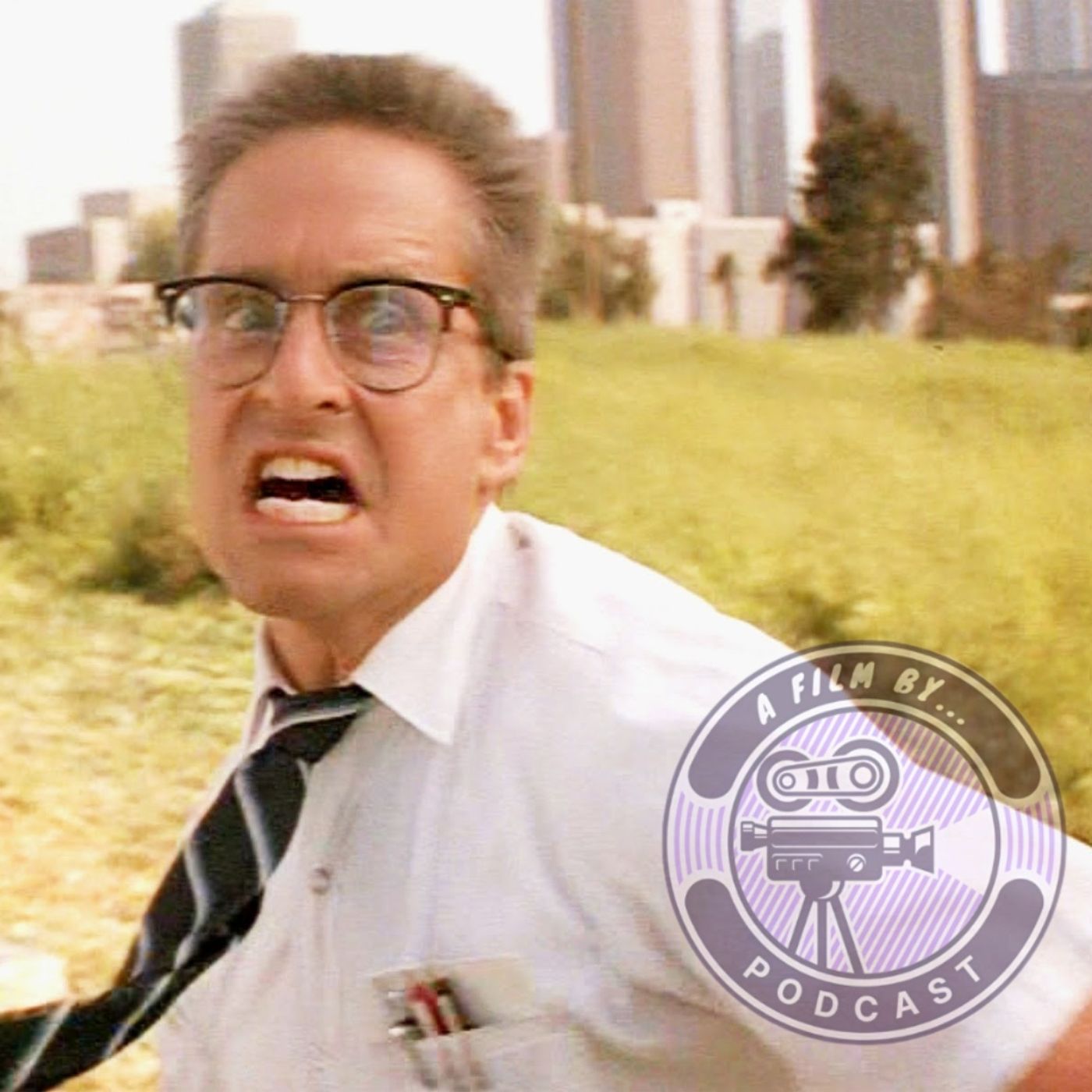
 Summer temperatures aren't the only thing on the rise this week. Jeff and Brad discuss Michael Douglas boiling over in the film he feels is his best performance, Joel Schumacher's Falling Down!
For exclusive episodes and content, check out A Film By... Podcast on our Patreon with a FREE 7-day trial. You can also sign up as a free member!
Check out www.afilmbypodcast.com/ for more information.
Email us at afilmbypodcast@gmail.com with your questions, comments, and requests.
Find us on Instagram, X, and Facebook @afilmbypodcast.
0:00 Jeff, are you economically viable. At this stage of my life? I am fortunate enough to say that I do believe I am economically viable. Well, I have no idea if I'm economically but I can tell you that's not economically viable. That is William Foster, and he is pissed off about it. But he's also the subject of this episode of a film by featuring Joel Schumacher's Falling Down, just standing up for my rights as a consumer. Welcome to the second episode of a film Buy.
0:55 I'm Brad Kozo and I am Jeff Johnson. And we were talking about the nineteen ninety three film Falling Down. Brad, tell me what what do you think Falling Downs about? I think falling Down and I think later on we will go back to the title itself is basically about a man who is just feels like he's been treated unfairly in life and he finally snaps. You know, he's going through personal things and this is his attack basically on an establishment. You know, he becomes a vigilante and it's you know, you know, his interpretation of how he sees the world.
1:39 That's interesting see and I definitely agree with you. I kind of feel like it's a great character study about a broken individual that in some ways evolves into almost an apex predator. Yeah, but at the same time devolves as a human. And the decisions he makes, the encounters that he has as he tries to get home, says a lot about just how far gone he is. I think, you know, and you know, when it all comes down to it, he just wants to be at his safe place. His safe sanctuary is at home, you know, and he says it throughout the film. You know, I just want to go home. He wants to be in his safe atmosphere where he knows that he's loved and taken care of, and he just can't get that, and you know it basically suffers a mental breakdown.
2:35 You know. The interesting thing though, is his safe place, as you as you call it, it's a fantasy. It doesn't exist, Nope. You know, when you hear the name Joel Schumacher, what kind of thoughts come up about his movies? Like you see a movie and it comes out and then the first thing it says is a film by Joel Schumacher. Do you have any kind of ex expectations of what you might see, you know, because this guy's kind. Of a flip flopper my expectation. When I hear Joel Schumacher, I immediately think fun summer movie. Oh yeah, I mean, I mean Batman and Robin Batman Forever, the Lost Boys that you know, I think, And you're absolutely right. He does have some amazing work his his old some of his earlier films, Santamo's Fire. Yeah, he did the Client, I think. Is that correct? Yeah, he's He's definitely done some some really great work. But I immediately think Joel Schumacher, Oh, we're gonna have a fun time.
3:41 Yeah. What I think of his He's great at crazy what if situations, situations that a lot of people don't think of. You know, when you think of you know, you go Lost Boys, vampires Okay, that's one thing, but vampires by teenagers enjoyed killing. Oh creepy. I mean the synopsis for Flatliners. What would death be like? You know, falling down? You know what if a guy takes the thing? I mean, he does a lot of great what ifs. And he is a good director. Yeah, he likes to throw out a like someone says, what if in a crazy situation? And I feel like Joe Schaumacher would be like, I'm gonna do a movie like that. I'm gonna do an entire movie that takes place in a phone booth and call it phone Booth.
4:26 What If? What If? Yeah? Yeah, what if the batsuit had nipples on it? Yeah? Called Joe Schumacher. Let's get him in here. Yeah. I mean he's I think he's a great what if director? You know, talk a little bit about Michael Douglas. Yes, at this point, up until ninety three, Douglas was kind of considered that leading man, very attractive, romantic, sexy. After this film, he kind of feel like he left all that behind him. He went into a different phase of acting starting with this film, and it's continued on till present day.
5:07 I almost I almost wonder if it's if it happens. But right before this film though, you know, Douglas and I think this was Ah. This is in several interviews that I that I got to hear with Michael Douglas, he he feels that a lot of his earlier work he is the he's not the leading man. He is the leading male character, and a lot of his a lot of his things, but he he claims that as a producer, you know, that's his that's his trade first and foremost before actor and yeah, and which obviously he's done some great stuff as a producer. You know one flew over the cuckoos Nest. For example, he really had to act.
5:48 He never really did. He chose to act. Yeah, but he he made a great comment that when he's looking at movies, he doesn't look at him as an actor. He looks at him as a producer and asked himself, will this be a good film? Can I make this a good film? So he's never really concerned with, oh, this is a good role for me. So uh, he you know, when you think about his his role in Romancing the Stone or possibly Basic Instinct or. You know, he's he's very cool. He's cool. But you know what was that with with Glenn Close attraction Fatal Attraction. Yeah, So when you think about some of his earlier work that he's well known for, he's he might be the male lead, but the female lead is the star of all those movies, you know, and his character kind of reacts to those people in those situations. So he's kind of taken like the back seat in a way. And I don't think it's until he gets the Academy Award for Wall Street playing Gordon Gecko, where he truly gets what Douglas calls a showy role, which is something where you're like, hey, this is something I can really show off on, and he wanted more of that. So, you know, I think that's one of the things that attracted him to Falling Down.
7:18 Yeah, and well, he himself considers Falling Down his best performance out of all of his films. Really, I did not know that. Yeah, and his father, Spartacus himself believes that this is the best performance of all of his films. You never disagree with Spartacus, No, So I don't know. I'd have to think about everything that I've seen Douglas in, you know, right off top of my head, I'm thinking, like, I love him in The War of the Roses that I mean, kind of a psychopath in that to some extent, but but again a broken individual, you. Know, a taking chance type of role. Yeah, was War the Roses. It was not a happy type of film.
8:04 You know, these are two terrible people, but you know you pulled it off great. You're talking about divorce in that movie, which is a just a terrible thing for any family to have to endure. Yeah, and War the Roses is hilarious. It's just a fun it's a it's a fun, dark comedy. I think now, what I think is it was such a chance taker for him in this role. Now, I'm not going to say like all the people that were considered for the role, but the people they considered for the role were more like dead on. You know, dead on would be Jack Nicholson or Ed Harris, Robert de Niro, Nick Nolty definitely. I mean, you know that's very like, oh, well, yeah, we can see the angry guy. You know, this was Jack t Colt. You know, this was Nick the smooth cut from a basic instinct turning into an angry man.
8:58 And I think that is what you know makes him such an odd but great. Choice for this Well, you're absolutely right. It's it's all about his look. Michael Douglas is very unassuming as a threat. And when you take that idea and then you put him in a pair of black slacks and a white button down short sleeve shirt with at the tie and the glasses and that military crew cut he's got. Yeah, I wouldn't say he looks very I wouldn't say he looks any more threatening than like that that asshole science teacher you had in eighth grade who just wouldn't let you get away with anything, you know.
9:40 I mean, this film came out in nineteen ninety three, and at that time I was sixteen years old. But I knew when I saw the trailer to this that Michael Douglas is trying to do something different than he usually does. Absolutely, you know, it was like, Okay, this guy's trying to do something a little edgy, and I respected that even then. So Brett, can I can we talk about the opening of this mass? Okay? One one thing that I just feel Joel Schumacher did expertly was these uh, these tight shots while he's in the car, while while uh foster a ka defense he's sitting in his car. It's it's definitely a ship box of a car. Uh. And then you get the you get these quick cuts of like, you know, the the A C doesn't work, the the the window trying to roll down the window. He can't get that, there's a menacing you know, fly in the in the thing. And as he looks around sitting in this shitty traffic. You just you just feel the claustrophobia, You feel that that trapped feeling where, yeah, the anxiety building up, you just want to get out, you know, and and looking around us, he's again these these are almost like smash cuts where you're seeing some of these clichemper stickers on past cars.
11:01 Yeah, all negative sayings. Yeah, very cynical, very negative. It just paints a really good picture of this is a terrible situation. Life is not working out the way I want it to. This is not this is not the American dream, you know. And I think that, you know, and to know that he's already you know, he's already broken before this movie starts. And that idea of him snapping right from the get go, I think, is it just sets the stage for a great film. Well, I think even and you know, as I look through the film and the stages that he goes through, even when he gets out of the car, you know, like he makes the decision like, Okay, having a fly in your car stuck in traffic is one of the most annoying fucking things there possibly is, And at first he tries to swipe it, but then he makes the decision I'm going to kill this fly. You are dead fly.
11:58 And he gets out of the car. But still he's not at the point of no return yet. You know, he's just a guy that's I can't do the traffic anymore. You know, he's not done anything really bad yet. So Schumacher, he talks about the opening of the of the film on the commentary if you pick up the Blu ray disc and you get the audio commentary, he kind of talks about that desire to just leave your car, but he he kind of gets off on a weird tangent about how your vehicle is kind of your identity and for someone to just abandon their their vehicle, which you know they're they're most likely paying for still there.
12:39 It's they're still in debt on something that signifies who they are, you know, kind of like their status, and for someone to just willingly give that up and walk away from it. He's basically saying, now you understand, this guy is on a road that he cannot turn back from. He's he's he's already he's already snapped, and this is just the beginning. So, uh, I thought it was I thought it was kind of a weird thing. That that Schumacher talked about with the identity of the car. But you know, when you think about someone doing that, they are they're they're giving up on on the life that they actually had. Yeah, there's no there's no going back.
13:19 I don't think that decision is very hard for him because you know, you know, he says later on, you know, this is a man that makes missiles for a living. He protects America from you know, enemies, and his reward is a piece of shit car that doesn't have any air conditioning. Well to and and more so, that was his identity. That's that's who he was. Again. You know, this character is is is economically viable. At one point, he's he's a defense contractor. He's this is this is back in the Cold War era, and what he's doing matters. He's doing he's doing his part to protect America.
14:02 And when he feels he's doing the right. Thing, he's Yeah, this is a guy that has done he's played by the rules of his whole life. He's done the right thing, and all of a sudden, the Cold War ends and he's not needed anymore. So he los He loses his job, he loses his family, and what what he What's what's left? You know? What he What's what's a man do when he feels that he's worked hard for the American dream and and to find that there's nothing there for him. Yeah, And as you say, and like you know, the car being an identity, I think leading the car is his process of he very slowly peels layers of his old self off of him. By leaving the car, He's peeled the first layer. Yeah. I mentioned earlier I used the term apex predator. Uh.
14:47 And really, I mean when you think about how he transitions throughout this film, you know, the the anxious stress Sladen, you know, guy the guy does. Guy's got a pocket pocket protector in his UH in the shirt pocket of his UH of his shirt. And when he tries to make a call to his ex wife, he doesn't even have the courage to say anything. He just can't do it right. Well, you know. And I for those for the people listening that haven't actually seen this film yet, I don't want to. I don't want to paint the wrong picture. We talked about how this guy you know, had a had a job making you know, he's a defense contractor for the for the United States and he's trying to get the American dream and father and husband and all this.
15:33 I don't want to paint the picture that this is a guy that was a likable guy. And I think right right from the get go, uh in this scene with the Korean grocer, you kind of understand that he's he's he's kind of an asshole. I mean, as much as I'm as much as I love his rampage through l A, I don't know, I feel like even even there's even a little bit of racism and how he treats Michael Paul Chan's you know character with the whole you know, you come to my country. You know, you can't speak my language. My country has given your country how many? How much money? Yeah, which, by the way, I think that's one of the funniest moments in the entire movie. This isn't This isn't really a comedy. But but when that when when mister Kim says how much that look on his face where he goes I don't know, but it's probably a lot. You know, that just goes to show like, you know, you've got those people out there that that want to weighs those kinds of arguments like do you know you have any idea how this does this? And when you call them on their bullshit and they're like, I don't know, actually, you.
16:45 Know, And I think once he starts tearing up the store, you know, he gets satisfaction at it, He enjoys it. He starts to grow right here. And a fun, fun little thing about that, Chan, Chan and Douglas rehearsed the entire scene, uh for for quite some time. They spent a long long amount of time on that day rehearsing it before Schumacher would even roll camera, because they had to do this in one take, according to Michael Paul Chan, because of the damage he does to this store. The idea of trying, yeah, the idea of trying to set everything back up and put everything back in place, it was it was just me too costly. So they worked it out. They you know, even like the struggle they have over the over the ball bat, all all choreographed ahead of time, and and and Chan painted a really really good picture of Douglas and how Douglas kind of led the choreography and said, hey, let's let's let's do this the right way. Let's do it the safe way, let's uh and let's have some fun with it. And you can tell like it's a it's an intense situation.
17:56 But I for the two actors doing something like this, they had to have a good time. Yeah, And when he leaves the convenience store, he's still is not at the point of no return. He still could say, well, you know, the guy did pull a bat on me and I took it from him, and I better start so I mean, yeah, a little damage. He's charged with a crime of like assault, but you know he's not like fully in yet. Then he goes to sit down at gang Land, as Robert de baul calls. It, well, and I think an interesting thing about this is this is where you can argue about the theme of territoriality. You could argue that in the grocery store, that's where you get your first taste of it, because Michael Douglas is my country, my language. But then you you segue where he's he's over in Gangland and he's sitting on the on the stoop where these two uh, these two guys show up and now they're territorial and you know, hey, you're trespassing. This is private property, and you have. You can't in fault them. I mean, yeah, they're they're pieces of ship. But at the same time, you can't really fault them because this is this is someone that is not part of their neighborhood. It's they're not it's not part of their society. Who is trespassed and they're they're in you know, Uh, Michael Douglas is in in their territory. Yeah, and they and they don't
19:27 like that just like just as much as like And he even makes the comment, you know, I get it. I you know, I wouldn't want you guys in my neighborhood either. Yeah. He puts human logic into it and understands where they're coming from until they want to take the. Break case he does. And uh. And I think one of the more recent times I saw the whole, the whole concept of territoriality that everyone in this film has, all the characters that he encounters on uh, on his on his journey, as. It were, Robert ll prinogas you know, cop question is worth you know, he's he's sacrificing his career by taking an early retirement to make his grieving wife, you know, from their dead child. You know, happy.
20:15 Well, you know too, I feel terrible for Duval's character because his his wife is an absolute emotional disaster. She's they are grieving the loss of their child, but she's also going through menopause, she's losing her she's making some major changes, and she's not dealing well with it. And on top of that, Pentagrass is not a He's not a he's not the hero cop he is. He's definitely ridiculed. He's not respected by his peers. He's definitely not respected by his captain. Yeah, I mean, in a lot of ways, I think that he mirrors Michael Douglas's. Character, where absolutely we're.
20:55 Talking about two guys that just don't get the respect that they feel they deserve and and and Robert Duval's characters case, Absolutely he does deserve that that respect. But I don't know, I almost feel like they're they're they're mirror mirror image in a way. Absolutely, you know, he he's done everything right. And you know, when you know they're talking about the thing with SIDS, you know that happens to infants, you know, and he even says, you know she was you know, she was a healthy child at this point, why it's very you know, what has he done except try to, you know, be a good police officer? Yeah? Again, you know, what does he have if he doesn't have the police force? You know that that that's it.
21:41 And I want to talk about Barbara Hershey's Beth. Okay, I don't like Beth. You don't like Beth. I don't like Beth. Hold on, hold on, hold on, Yeah, Barbara Hershey's ex wife character, Beth. She he's uh, she was a victim. You know, they don't they don't. Yeah, well, they don't come out and say in the film, and when she's talking to the police officers later, it's never it's not that that Michael Douglas's character beat her, but he was very I think there's some some intimidation, some emotional neglect, and you can tell just in the movie she talks about him having violent tendencies, even though he never did anything.
22:31 She saw it. And when even when they talked to the to his mother, when they're they're at his mother's house and you know, investigating, you get the sense that anyone that knows this guy has been walking on eggshells their entire existence around him because they're terrified of him. He is a time bomb waiting to go off. Yeah, but doesn't. But why don't what why don't you like Beth's. Because she, like you said, she can't give an exact you know, situation where he full on threat her. You know, she has a restraining order against him because he gets mad. Sometimes I think that's just maybe a little too far. How about a Hey, will she need to go to therapy or you need to take anger management classes? A restraining order? It's a little harsh. I think.
23:16 I think you need everything you need to know about their Their marriage sums up in the ten seconds you see of that video he's watching towards the end of the movie where it's like the little girl's birthday party party and he's videotaping and the girl's crying because she doesn't want to get on the little horse, uh horse ride or whatever it was. Yeah, and his again, his fantasy of the perfect life is getting up ended just in that moment, and he's snapped. He's like, put her on the goddamn horse. And that that that that tight shot of Barbara Hershey's face in the video, you could see she's terrified, she's upset, she's terrified. I can't believe you don't like her. I just didn't see enough evidence to constitute a restraining order. Well, you know, he he does lose it eventually, but at that point I don't know if he deserved her restrain anymore.
24:08 I would say there was probably, you know, again thinking beyond the scope of the movie, there was probably some stuff going on in the relationship that warranted him being away, you know, from them. And you know, for to her credit, Beth, you know, she even she defiantly even tells him when he does start talking on the phone, you know, hey, you can't come here. You know, I pay the rent on this house. Now I'm doing I'm taking care of things. Does actually say she's paying the rent? She does, She absolutely does. Okay, Then that changes my opinion about something, because they live in one of the prime real estates of Los Angeles.
24:49 This is Santa Monica, right. Venice in walking distance to the to the beach and the pier. I mean, if she's paying the rent, she must you extremely well for herself, or he's his alimony checks are gigantic. I have no idea. Well he's there are there are no alimony checks because he doesn't have a job. Remember he's been laid off, he's he has he has no employment. Yeah, when he's sitting in Gangland, you can see he uses the classifieds that he's he circled jobs. He's you get the you get the idea, he's been on the job hunt for some time. I didn't see that. I didn't the the newspaper he uses to stuff his shoe.
25:31 That hole in his shoe, and by the way, can we can we talk about that for a split second. It's a great shot, Don't get me wrong. I like shol Schoemacher's that that close shot where you the close up of the shoe with the hole and you see Michael Douglas's eye What the fuck happened to his shoe? To cause? I mean, I mean, I would assume that a fifty caliber machine gun put around through that thing, because it's like you could you could easily drop a golf ball through at I don't know what he stepped on or stepped in or what happened, but that's one hell of a hole in that shoe. But anyway, regardless, he stuffs it with the newspaper, and the newspaper that he uses is the classified ads where he circled job at applications.
26:15 Yeah, and then you have Rachel and I hope I'm saying this right, Tiktin, I could from total recall, Total recall, you know a couple other things. You know, first, when I first saw this movie, you know, back when it came out, I kind of thought that her character was a little bit of a throwaway. But I realize now she's she's parentagraphs is conscious. You know, I think her performance in this movie a very underrated performance in a in a slightly underrated film. But I think she tells you a lot about the relationship just in just in her her physicality around around Robert Duval. You can see that they have definitely had a long, a long partnership. You know, I kind of get the idea that she as a rookie that was sidled up with him, she learned a lot from him.
27:04 And you know, they've got whether whether it's a father daughter bond or just a friend a friendship type bond, brother sister whatever you want to call it. Yeah, they're they're definitely this is like his work wife. You know, she he's he's the work husband, and uh, she's definitely not happy to be losing him especially, Uh, do you remember the guy that they kind of infer that he is being is gonna become her new partner? That I mean, the guy's a total douchebag. He's and they never can tell, like, is that going to be your partner? Is that her boyfriend? No, well, I don't think it's I don't think it's a boyfriend. I think it's I think it's going to be her new partner. Or and the guy, I almost feel like Joel Schumacher told this guy, I know, no, no offense to the guy that played the role, because you don't want to like him. You're not supposed to like this guy. But I don't know. It's almost like Joel Schumacher pulled him aside and said, hey, listen, I want you to channel every dickhead role that Bill Paxton did in the eighties and kind of to try to try to emulate that, because that's every time I watch the movie, I'm like, this is the poor man's Bill Paxton trying to be extra douchey. Because we talked about, you know how how printed gast And and Foster kind of mirror each other. Okay, so we talked about there's a hint of racism in their encounter, but you can almost argue that there's a hint of it in h printed Gast's first encounter with with him, because he when he sits down, uh, you know, chance character is very excited,
28:38 he's very anxious, and he's speaking, you know, he speaks at Korean and printer I guess looks at at his his fellow detective, who's who's Asian? He says, what's he saying? And the guy point like, point blank says, well, I don't know because I'm not Korean, I'm Japanese. And and and I think I feel like And there's like that quick shot of Deval's reaction to that, kind of kind of dismissive in a way like almost like well, yeah, okay, fine, yeah, but that's not right, that's not cool, you know. I mean, but that confirms your point of them being basically mirror opposites of each other, you know, yeah, yeah, they're they're almost the same.
29:23 Yeah. And where we're where Douglas's character is more aggressive about it, more in your face about it. I'm not I don't I don't feel like Robert Duval's character is inherently racist or or discriminatory, and I think it's just ignorance. Yeah, but that's where we were in nineteen ninety two, that's. Where we're we're you could argue, we're still there. Yeah, and so yeah, go to the drive line. So love this moment. I'm guessing that some by some pulp fiction divine intervention, he is missed by all the bullets from the gang members.
30:04 So they are it's either some kind of divine intervention or they took the Imperial Stormtrooper class of how to shoot because they fucking miss They hit everything else except him. Well, to their credit, these are these are just these are street guys. They they obviously have never been into the range because you're right, Uh, they hit pretty much everything but him. But this is not like a movie. This is not like a movie trope where the lead character just happened to get missed. This happens a lot in uh in drive by shootings, you know, you see a lot of collateral damage. And I think it was even the screenwriter Abbie row Smith who who kind of said, uh, you know, I wish these guys would just take some lessons so they could hit the target and not hit the innocent bices that are that are nearby.
31:02 And he does. They do hit into some bystanders, and that s they do. I mean, they just they mow down like three or four people. And I love the fact that he doesn't even react in the scene. He doesn't even turn as, he doesn't even turn around. It's he's he's oblivious to it. And I think in another director's hands, they may not have done that. I think in Schumacher's hand, he's very unapologetically like, yeah, there's gonna be some innocent bystanders killed. Yeah, you know, it's because that because that's what happens in these types of situations. Well again, as as Michael Douglas's character devolves into this this uh tragedy of a figure, Yeah, when you when you watch the film, I don't know, I don't know about about uh about you. Well, I would believe that.
31:47 I believe it's the same with you and most normal people. If you were in that situation and you were were missed and you saw people lying down, screaming and shot, would think you would react, and you would you would go to those people and try and help and what's going on? How can I help? He walks right past them there, and I think that's a great moment for his character to show he's no longer concerned about society and the people up in society. So at the drive by he gets the guns, but in a way, he still has not done anything completely wrong to where he would be arrested and put the jail forever. Then he goes into the Whami Burger.
32:36 Now he picks up, he picks up like a gem bag full of assault weapons. Yes, just like pure luck. But he goes to the way. Now this seems a little bit more lighthearted. You know, no one's hurt. Everyone has been in this situation. Everyone. It is an attack on false marketing, which we have all fell victim to. You know, it's a fun scene of more of Hey, I would have loved to say the exact same thing. I can't tell you how many times I've been in a Chick fil A just just craving that little chicken biscuit, that little breakfast chicken biscuit, and I'm two minutes late or I'm four minutes late, and I'm like fuck, yeah, man, I know how he feels when he wants his breakfast at Wimbiburger.
33:25 Well, I mean in that scene, he is speaking for the general public. He is and and you know, you know you've been in that situation. We've also you and I, both in retail, have been in the on the on the other side and where that where the manager. Rick is like, you know, that's our policy, and you know, Douglas is like, hey, haven't you ever heard the customers is always right? He's like, yeah, hey, I'm sorry. Yeah, you know you you you appreciate it. If you've never worked in fast food or you've never worked in retail, you don't see Rick as a as a hero in this moment. You just see him as a dick that's keeping your breakfast from you. But for all those people out there that have had the guy walk in and say, well I want the goddamn breakfast, you're just like a fuck off, dude, just get out.
34:19 Yeah. You know. So, I appreciate Rick as the manager of the Wemy Burger, but maybe his customer service could use some brushing up. Definitely could use corporate at Wamy Burger needs to get on him. That's that's the thing, you know, Michael. Nine times out of ten, Michael Douglas's character is just going to ask for the district manager or they're going to call the corporate office, and you know they're probably gonna get a Wamby Burger coupon or a free sandwich. But unfortunately for Rick, this is the day that Michael Douglas decides to pull out a bag full of assault weapons. Yeah, wrong day, And say, can I say something real quick, Brad, because I I know you, I know you like me. You're a Hitchcock fan. And I love the fact that the minute he gets any opposition at the counter, there's that close shot where he just drops the bag down. They don't know what they don't know what's in that bag, but the viewer does know what's in that bag. And you're like, oh my god, this is about to get very ugly because you've already at this point. You know, you saw what happened in the Korean grocery store, You've seen what happened with the gang bangers, and now this and you know it's coming. Yeah. When he pulls up, Yeah.
35:38 And before he goes into Frederick Forrest's shop, he comes across actor Vonnie Curtis Hall, who is outside of a bag protesting with signs saying that he is not economically viable. And when you look at Bondie Curtis Hall, he is dressed full on the exact same way that Wills is dressed. The white tie, even the tie is the same, the. Shirt, the same white shirt. Yeah, they're the same people again. And this is this is a very important moment in the film. It's such a small scene and it's such a small role, but it's so important because it shows it proves the point. This is not just a problem for Michael Douglas's character. This, this is a problem for America because the middle class, you know, at this point in time, after the Cold War, as then as we enter the nineties, the middle class is slowly disappearing. The rich are getting are becoming super rich, and the people that are that are that are poor become you know, the ones that are just barely hanging on the middle.
36:46 The middle class starts to erase in the early nineties. And this guy, this guy you know who again, he did everything right. He he has a job, he works, and he's told, you know, by the bank, sorry, we can't give you a loan, you're not economically viable. And he doesn't have a bag full of assault weapons he doesn't have a ball bat. What he does have is his right to protest, and that's even that's short lived. Yes, this is the guy that does it the right way to get his voice heard and to try to make change, and it doesn't last long. Yeah. And then Schumacher ups the the the the intensity.
37:27 This shot plus store guy. Oh wow, but what what's that? What's the guy's name? The actor's name, Frederick Forrest, Frederick for What have we seen him in? Well, you get a little new little reunion of Apocalypse Now because he is chef from Apocalypse Now, as is sorry d Ball is kil so many Apocalypse Now reunion even though they don't share anything, they don't. Share the scene. But that's that's a shame. I was trying to figure out where I knew him from. Oh man, this guy and you know say what you will? Yeah, the Korean grocer. Grocer. He he could have been a little nicer. Yeah, but he's not a bad person and he suffers the consequences. And I and I do like the fact that as Michael Douglas continues his trek across Los Angeles to get to his ex wife's home, some of the characters are getting it as his As his behavior escalates, the characters that he comes into contact with escalate.
38:28 You know, we're not gonna feel bad about about a couple of gang bangers getting shot that that we're trying to rob him and trying to trying to murder him, to kill him. Yeah, and uh, and we're not gonna feel We're definitely not gonna feel bad about this army surplus store guy because he is man. He is a piece of ship. And I'd say a very uncomfortable thing to watch with, not just I mean the situation itself, but you know, the language being used, the the threats to know that there is you know, Jesus, you know these this kind of person could be out there. This person is out there, this person there's a lot of this person out and.
39:10 You know, once again, the lines of communication are you know, cross wrongly? You know? You know he did I'm like you and Michael Dougs, No, you are not like me. He said, What's He says something in along lines of and I'm paraphrasing, but I am an American citizen and you are a sick asshole or sick sick something. Sick degeneratorazi ASSHOLEI Nazi Yah. Yeah, well, I mean the guys, you know, you have the you have the homosexual couple that's just minding their own business, are looking through the store. He antagonizes them, he provokes them, causes a situation, and you get the idea just on his his his fascination with Michael Douglas's character.
39:57 When he walks in, you know, he's been listening to the police, the police scanner radio, so he's been following Douglas's character all morning. He's been you know, he's he's putting the pieces together, kind of like how Printagas puts the pieces together later. But you know, he he just assumes and he says some really some really shitty things he assumes, like the the Wammi Burger's full of you know, full of people he doesn't care for. He thinks Michael Douglas is like his his hero, and. He believes that Michael Douglas is the start of some sort of race war in this man's mind. Yeah. Absolutely.
40:37 When he does kill Frederick Forrest, Yeah, then is when he becomes the point of no return. That's when the switch goes off, because I think I think he takes I think he takes this guy's admiration and this guy's Hey, me and you were the same, you know, think about it. Uh, I think he's see I think he takes offense to that, and and I think that's what that's where his turning point is where he you know, he he's hurt people before leading up to this, he's he's hurt people. He's shot one person, uh, non fatally, of course, But this is this is where I think he hits his point of no return because he he murders the guy.
41:21 Yeah, he is no longer will foster. He is defense. Yeah, defense he and you know, he calls Beth and he tells her he is not He's out of his body right now. He is not. He has checked out of reality. Yeah. And again we talked about how in the beginning of the movie he's calling her, can't say a word, and then the next time he calls her, he's like, he's, hey, I just want to come home and give her her birthday gift. And she's very she stands her ground. You can't come here. I'll call the police. But now after after murdering the guy, he takes on a whole new creepy persona like this is the point in the movie where I've been rooting for him, you know, to some extent.
42:09 I like what I'm seeing. Even when he murders the neo Nazi, I'm like, yeah, fuck that guy, because he's a piece of shit, you know. But it's that next scene where he makes that menacing phone call to his ex wife and kind of starts talking about how he's passed the point in a return like the astronauts on the other side of the Moon, and he has that absolutely terrifying moment where you know, she's like, hey, you know, I've got the cops here now, and he's like, oh, put him on. And then even he was that veiled threat where he says, hey, did you know in some countries in South America it's still legal to kill your wife if she offends you. He's gone. At that point.
42:53 He is now the bad guy. He's a villain. And Douglas says in that conversation on the Blu Ray that he feels that the movie has no protagonists. I think he is the protagonist. But up until this point. Then the roles switched to Pernagas I mean, and he yeah, he flips, He's not you know, you know, how you hear stories of people like, you know, when they were being attacked or like I just put myself out of my body. Yeah, you know, and I feel that's exactly what you know he is doing right now. He's he's just locking out everything and not like checked into reality. Good the highway construction. Who hasn't wanted to do this?
43:37 Oh again, you're cheering for him because how many times have you been on the on the highway and you got it, there's that fifty five mile an hour zone, it's down the one lane and you're like, there's not a fucking thing wrong with this road. And yeah, and he I think the guy, uh, you know, absolutely makes perfect sense when Michael Douglas is like, I know what you're doing. If you don't spend enough money this year in your budget, you won't get the same amount of money. That's hey, that's how business works. Do you know how inflation works? Because defense does? Defense does, and you know if you're gonna if you're gonna screw it up and then you're actually gonna fix something for that, he's got.
44:21 The baka is. I mean, this is where Schumacher does play it safe. No one is actually hurt in the Bazuka explosion, you know there are people right next to where you know it blows up, innocent, you know, construction workers. But you know you cannot. I don't think you can have anybody be hurt in that scene. The rest of the movie doesn't work if somebody is hurting. It, it doesn't. And you know, it's funny because there's there's a larger people out there that that do see This film almost like a dark comedy in some ways. And I think this scene definitely the points to that, because here's a guy who pulls out a rocket launcher and everyone panics. He has no idea how to use it.
45:10 And I love the fact that the kid comes up on the bicycle and he's like, oh, you got to pull that back. Oh that's right here, you know. And this is because it's the video game generation. This kid knows it. I mean probably so yeah, And I love that. I love the kid's innocence where he's like, where where the cameras at? What? What? What kind of movie you're making? You know? He he the kid just assumes that he's on a he's on a film set. I think that's hilarious. I mean, it is l a yeah, and again it's it is la so it tracks. It does make sense. Yah. You know, let's let's talk about printagas for for a quip minute. I like the fact that Pendergrass starts to come around. You know, he starts connecting the dots between the incidents and you know, starts to track it down, and you see like his confidence growing. You see his I don't want to say his manhood storing, but he's he's coming, he's he's he's becoming alive. Yeah, and uh.
46:07 Yeah, it's very exciting for him to be a cop again, you know, to do something worthwhile. He's he's finding worth in his life again. Absolutely, and you know he's he's taking control again of his situation where I mean he's even taken abuse from his wife where she's on the phone in the earlier scenes where she's bawling him out on the phone, and then by the end when she tries it, he puts he kind of he kind of stands his ground and says, hey, shut up, Yeah, I'll be home. When I'm home, I want dinner on the table. And you know that that little that that little grin that that Duvall does after that phone call I just I love it. It's it's fun. I love when Duval is giddy. Anytime he's giddy, you know, scenes in like Days of Thunder where he's just like giddy and laughing and being goofy. Any anytime Rever balls like giddy, it's it's hilarious. Oh yeah, but yeah, I mean he he's getting more excited, you know, by by screaming defense underneath the you know, at the traffic stop, and he knows, and he's just getting more and more, you know, the film is speeding up. It's getting a little bit more faster pace at this point.
47:13 Yeah. Now let me, I gotta I got a question for you. Let's talk about an alternate timeline. Okay, so keep keep Michael Douglas the same character, right, Uh, what happens now? Think about how this movie escalates. It starts off in the with the fight with the Korean, the Korean grocer, where he he gets the bat, and then from from there he fights with the gang guy, the gang members, where he acquires the knife and then he gets you know, his second encounter, he gets the guns, and then he he continues to escalate when he leaves the army surplus store. He's in full on fatigues. You know, he's got his combat boots on. And so my question to you, in an alternate timeline where the grocer gives him change, Yeah, let's assume he goes home, you know, because if he does, if that situation doesn't happen, the rest of the movie doesn't happen. Right, So you got to wonder what does he do when he gets home? Well, I'm sorry, what does he do when he gets to his ex wife's house.
48:27 I mean, at that point, he's a ticking time bomb. I think things would have gone sour even if he wouldn't have gone to the convenience store and gotten the bat he. I mean, he's not mentally stable at this point. He's hurting inside. But you know, he's a ticking time bomb. He was bound to go off eventually. So in no reality, does does this guy have redemption? Okay, all right? Interesting, go ahead? Yeah, And you know, and you know he goes to the pier in full on or not to the pier, but when he goes to the house in venice, you know, he's he's going after he's going after that.
49:09 I think he's made the decision at this point that maybe maybe in the beginning of the film when he's when he's stuck in his car, he doesn't know what he's gonna do. But I think by at this point he's on a course. He knows he's you can clearly see, well maybe not clearly, but in my opinion, uh, the stage is set for a murder suicide. He's gonna kill he's gonna kill his wife, his ex wife, he's gonna kill his daughter, and then he's gonna he's gonna kill himself. I mean that's kind of how I see it. You know, there's a great uh foreshadowing with the squirt gun early on, you know, kind of again and again it's like, look at this, this is this is gonna come back. This is gonna come back. And you know, when he's finally at the pier, you know, uh, Pendergast, you know, says to him, oh, I know what you're gonna do. You were gonna to kill your wife and your child, and you were gonna kill yourself and take the easy way out.
50:05 Yeah. And you know at that, even before Pintograss it reveals himself, you can see he is absolutely gone at this point because he is in fantasy mode. He walks up to her with a big smile, throws his arms around her, gives her a hug, he kisses her, and she's terrified and he's like, what, I can't see my wife. I can't see my little. Girl disappear her favorite place. Yeah, he's no longer in reality at that point. He's he's in his fantasy world and with the reveal of Pintograss, that's that's where it all comes crashing down, and he's got to make a choice, I think at that point.
50:47 And I like how scho Schumacher directs the scene because you know he doesn't give an Oh, Michael Dougas's character is, you know, somewhat he kind of deserved to do that, you know, full on. Rob Jubald tells him because you were lied to. Hey, they lie every day, you know, they say, like, hey, life has its ups and downs. And that brings me to the title of the film, falling Down. You know they talk about the London bridges falling down all the time. Yeah in the movie, Yeahgras does. Both Prendigrass and Will Foster are in the process of their down face. They're falling down now, Prendigas does the right thing and gets back up.
51:35 Yeah, finds redemption. Defense never gets back up. And if he was able to get back up from falling down, he would see that there is, you know, some redemption. But he's not able to do that. He's not able to get back up. He stays down the entire time. I think one of the one of the things you gotta give him credit though, and and what makes him such a dangerous individual is the fact that he did have a plan. You know, he was going to go take care of his family and and live that fantasy world in his life and in his head, uh, for as long as he was going to be alive. But he immediately switches gears and finds the way that he can do something right for his family with the insurance money. Yeah.
52:19 When when he when he he more or less he he he calls out printed Gas and says, I got a gun, you know, let's draw. And you know, you know, Printagas doesn't want to do. I mean, Printagas already has the gun on him and uh, just that moment when when he he pulls for it. I love the fact that they Schumacher thinks to put that that that shot in where uh printer Gast wipes his face. Yeah, and because that that moment, that that happy moment that Michael Douglas's character has where he says, what a gotcha? Yeah, you know he dies. He I feel like he dies happy knowing that he he won the showdown and more importantly, he provided for He finally provided for his family. His wife and his ex wife and his little girl are going to be provided for because you know, he's dead and the insurance money is going to be there for him.
53:11 So which brings me to that question of did he need to die? Yes? Okay, so and I you know, Robert y Vall's character does does what any good person what definitely what any good cops is going to do in this situation, and say, you know, hey, you got a lot to live for. You know, you don't want to watch a little girl grow up. And Douglas immediately is like from the from prison bars, nah, I don't think so yeah, so and again he's in prison. Nothing's good. He can't do anything for the family. Then, so I think he makes I don't want to say he makes the sacrifice like a heroic sacrifice. I just think he takes the the best option he has, it's the only option, and that it's his only option at that point. It's his only option to give his family something. Yeah. If he can't, if he can't have them with him forever, which I think would have been his murder suicide's plan, then he can at least provide for them forever if he if he chooses to die.
54:22 You know, I mean, this is a man that makes missiles for a living. Yeah. I mean the psychological, you know, effect that can have on someone is you know, it can really definitely mess up somebody's. He's an all or nothing individual. Yeah, And I mean, so the basis of the film is that it's not a I don't believe this film cannot be made today. You don't think so? No, no way. Tell me why. Well, with putting aside what is actually going on in the country right now so pre pandemic, I still don't think he can make this today.
55:05 You know. It's funny you say that, though, because in the audio commentary they talk about how this was a very risky play for Warner Brothers. It had been passed over several times, Schumacher knowing that in his own words, quote unquote begs for the job because he knows he can make a great film and because he's friends with with Michael Douglas. I think he I think Douglas was his producer on one of one or more films of his Douglas. He goes, he goes to Douglas's house in Santa Barbara because Douglas at this point had had made They had had the idea that he's gonna take a year or two off from from working. And he sells him on the idea, and Douglas likes it so much he foregoes his and he know they know they were on a shoe string budget and the company, the Warner Brothers, doesn't really isn't really willing to give them a whole lot to do this because it's so risk He Michael Douglas works for Scale on this movie. I didn't know that for going his normal fee, he works for Scale, and that that gives them the ability to to do a lot of the shoot the shots that they do.
56:17 And you know, he kind of he kind of bumped the budget up, so to speak, by by taking less money. Yeah, because it was because it was a risky thing, Like you said, it'd be risky to make it now, Well it was risky in nineteen ninety two ninety ninety three to do it as well. And they had to stop filming because of the first La riots. The LA riots were going on. Yeah, yeah, so, and I remember that as the movie came out and being like, you know, it was like, wow, did they film this as the riots are going on? Because you know, thinking back, you know, it was wow, it's around the same time. Yeah, yeah, it was. They had to shut down for a few for a little while to let that kind of stuff pass by. This movie probably a product of its time, probably doesn't get made by.
57:02 It's a risky movie. It's a very risky movie. Not for just ninety two, but I think just in general. And you know, that's the reason that we do we do this podcast is to let people know that, yeah, they're these great directors, but they've got some movies that they kind of put all in are that need just as much attention as some of their big, big hits. You know, I don't want to glamorize the violence of this film, but you're can you make this movie today? Probably not? Could this be an absolutely kick ass video game? You better believe it. I would buy the Falling Down video game in a second, just. For the Whamy Burger scene. Basically, yeah, but it's you know, it's I guess you would almost say it's a little bit of a taboo or touchy subject type of film because of, like I said, the violence in it, the racial profiling, the stereotype typical profiling. You know, there's a lot in there that is picked at to where you say, yeah, there are some people like this, but not everybody.
58:10 Well, yeah, you're right. This movie is a checklist of hot button topics. Yes, and it and it. It checks the whole box. It checks every box. You know, is is every person that's on a golf course a mean, rich old man who. Yes, I'm kidding. No, I'm kidding. I would never say that. But yeah, that you know, it's just it's just elements. It's like, okay, this is just one element and plain and simple. The fact is like, this is not what should have been done. This is just one man's uh response. It's it may not be the right response, it's definitely not, but it's just his response and they're showing that. And I think that's what makes the film such a risky take.
58:56 Because it's not a happy film. You know, it's a movie with action in it, but it's not an action adventure movie with a hero you know, triumphing you know, over evil. It's a it's a different type of film. Yeah, and you know you mentioned the golf the golfers. Uh, I mean the one golfer he's he's a nice guy. The other one's he's a total cock. But uh we again with the whole territoriality. That guy, why the fuck do I pay my dues? He's on my golf course. Uh. You know when Michael Douglas is trying to cut across the golf course and the guy takes a shot at him with a with a titleist. You know, again, everyone in this movie that hasn't that has an encounter is very territorial of of their area. Whether it's a whether it's a street in a you know in Gangland, whether it's a grocery store, whether it's a golf course. Everyone, everyone's trying to protect what they feel is theirs.
59:54 Yes, absolutely, and you know that's irrelevant just as much today as it was in nineteen each other. Yeah, and now my question to you is could this be made as a Western. You're not gonna believe this, And I was kind of I was kind of hoping that you were gonna ask this question. I know you're a fan of the genre. As it turns out, I'm gonna okay. So let me first off say yes. And the main reason I'm saying yes is because I'm just gonna go ahead and agree with Joel Schumacher. So in the audio commentary, Joel Schumacher and I'm listening to this, I'm thinking, Oh, Brad's gonna love this. Joel Schumacher calls this movie a Western akin to something along the lines of High Noon, because you've got you've got a villain tearing up the town and the old sheriff has to have one last showdown before hanging up his guns. And I think that's the perfect analogy of what Falling Down is. Between these two guys, Foster Uh and printed Gast, they are on a collision course with each other, and it's almost like a race to to the end to see who's gonna win, Who's who's gonna claim their manhood, who's gonna get Uh, Who's gonna get that American dream that they feel they're entitled to.
1:01:17 So yeah, I I absolutely can. I could. I could see falling down as a west. Let me ask you a question, uh, as we wrap up Michael Douglas one of the best lines that he has, and you know, it's in every trailer. It's uh, it's on some of the you know and back in the back in the day when it's playing at the theater. You you'd see it on some of the playbills. He asked, He point blank asks print a gast Am, I the bad guy? And he says it with such confusion and and heartbreak in his voice because to this point he's assumed he is the good guy for the whole movie. Now, my question to you is, given the fact that he does a lot of things that we we secretly want to do in everyday life, is he the bad guy?
1:02:05 Brad A little bit of yes and no. I mean, his intentions I think are in the right mode, but his actions are in the wrong mode. He has a good motive of we need to make you know, he just basically wants to make the world a safe, better place. But his actions that he takes to get those or what is wrong and that constitutes of making him the bad guy. I still believe he is the protagonist of the film because I feel after that, when he learns that I am I'm the bad guy. He you know, the job of the protagonist is to overcome something or to learn something. He and I believe that the character of Wolf Foster did learn something and at that point he is no longer defense. He's back to Wilf Foster when he makes that sacrifice for his family. Okay, okay, but I mean it's and I mean I think it's just a it's a different film. You know, it's it's not your normal everyday film. You know, it's you know, and it's got you know, it does have funny You're right, it does have funny moments in It's got funny lines.
1:03:14 It's a serious. Movie, closing thoughts, breads, closing thoughts. I mean this, even though I don't know how well the film did for Joel Schumacher, but it definitely gave him his next I mean, his next string of films were you know, The Client, Batman, Forever, Time to Kill Batman and Robin string of films that were hits. I like Joel Schumacher. I like what he is done with movies. He goes from lighthearted Santamo's Fire to Horror like Lost Boys. You know, he can go back and forth. So and I don't know if this film would have been the same in anyone else's hands.
1:03:55 Your thoughts, well, you know, you you kind of talked about it a little bit, but you know how well this this film did. So you're talking about twenty five million dollar budget that's estimated, of course, and it does it does just over forty million, that's its gross. So is a success for Schumacher? I think no when it came out, But this is one of those movies that that definitely achieved cult status, definitely definitely got him some respect, you know, among his peers and in the in the industry, because, as you said, he does move on to get some very large jobs. He you know, he takes over the Batman franchise from Tim Burton. He's got the client he so he does some great things. Yeah.
1:04:46 Do you think he's done? Do I think he's done? Well, you know, we talked about this with Ridley Scott. First off, I'll say I don't want him to be done. Yeah, But at the same time, you know, you gotta you gotta think about it. At this point, he's he's eighty one years old. Okay, Oh, I didn't know he was that. Yeah, Schumacher born in nineteen thirty nine. So, and he hasn't done anything. And since twenty thirteen he did a I don't know if you're familiar with the House of Cards. Yeah, that was. The most recent thing. I saw a couple episodes of that.
1:05:29 Yeah. So do I think he's got something left? He's been on a seven year break. I would question probably if he's if he's doing anything else. I would like to see him do something else. I don't know, if you I mean, let's talk, you know, think about it real quick. Well, you know, this guy's done the block the superhero blockbuster. He's done the the hot top the hot the hot topic or hot button topic film like Falling Down and A Time to Kill He he's done the feel good stuff. He's done the creepy stuff with flat Liners and The Lost Boys. So my question to you, Brad, he makes one more movie, what genre do you want to see him tackle?
1:06:11 I would like to see him do something to where if I another crazy what if type of film? What if type film? So like like a crazy what if? You know? Flatliners is a crazy what if you know the plot to the Time to Kill is you know, is murder justified? If it's two people that sexually molested your daughter? You know these are hot, like you said, hot topics to talk about. I would like to see something like that. Crazy what if for you? Yeah? What what if? And I know this is crazy? What if? He does a follow up? He does a sequel to his nineteen eighty three feature DC Cab with Mister T. And yeah, let's get let's get Beauty and mister T back together for a DC Cab.
1:07:00 To you, you wouldn't need that? Crazy enough? Is that crazy enough for you? That's crazy enough to where you could say, don't even write a script, just let them go, Just let them go and do their thing. You know what I would I would watch it. I'm I'm not ashamed to say that. All Right, we're wrapping up a film by podcast with Joel Schumacher's nineteen ninety three film Falling Down. We'll be back on the next episode, and thanks everybody for listening. We'll talk to you guys, See you next time.