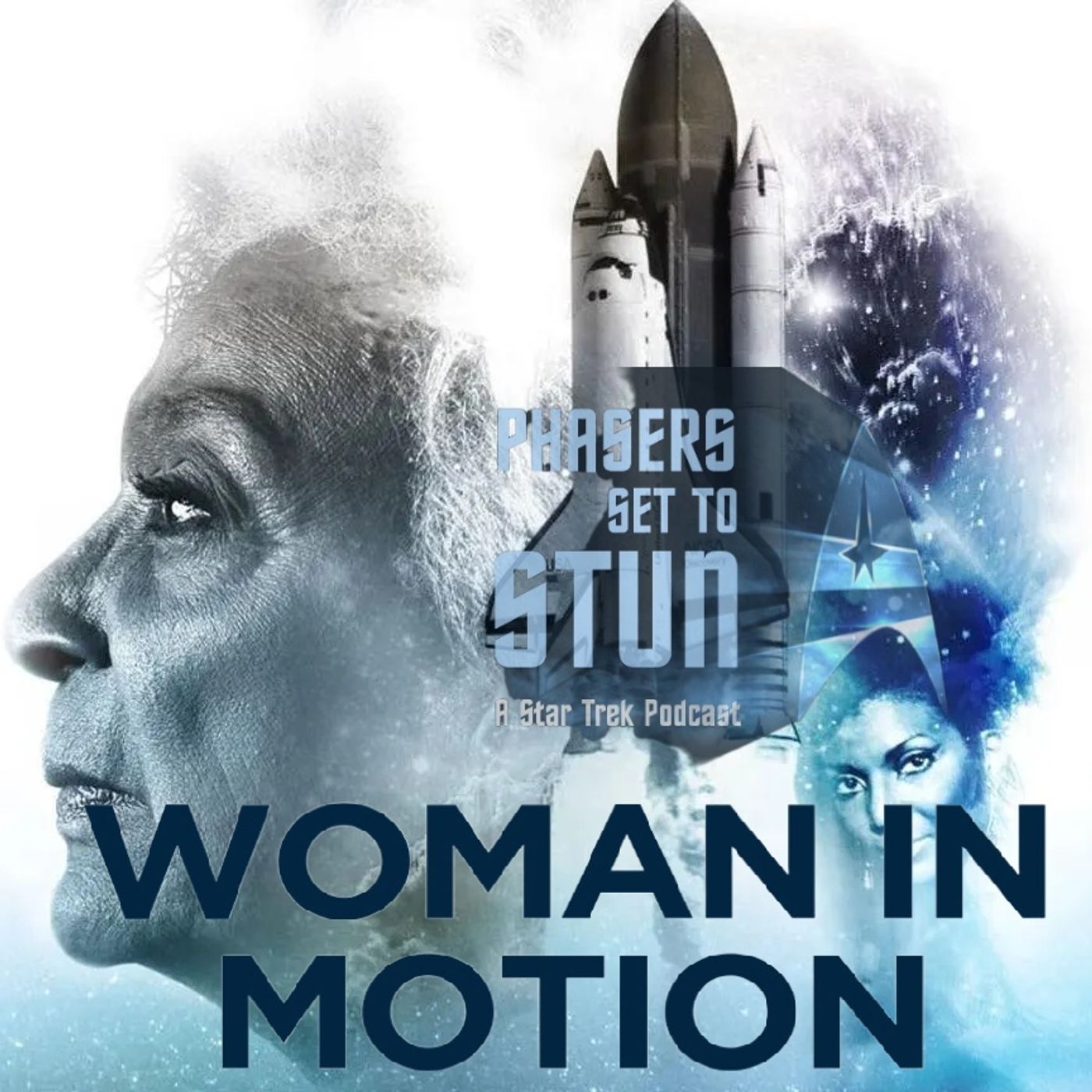
Phasers Set To Stun: Woman In Motion


 Apple Podcasts
 Spotify
 Goodpods
 Pandora
 Amazon Music
 iHeartRadio
 Castbox
 Deezer
 TuneIn
 Podcast Addict
 Podchaser
 Spreaker
 JioSaavn
 Castro
 RSS Feed
 On "Phasers Set To Stun," we recognize the popularity of all things Star Trek, with a look at television shows, animation, movies, and much more! To celebrate Women's History Month, our crew welcomes A Film By... Podcast cohost, Amber Lewis, to the bridge. Get set for a discussion about an inspirational documentary about Nichelle Nichols, who played a pivotal role in diversifying NASA's astronaut corps with her campaign to recruit women and minorities! Woman In Motion is a must-see for all Trek fans!
For exclusive episodes and content, send some latinum to our Patreon here! You can sign up for a FREE 7-day trial, or sign up for a free membership to get limited access!
Check out www.afilmbypodcast.com/ for more information.
Email us at afilmbypodcast@gmail.com with your questions, comments, and requests.
Find us on X Twitter, Instagram, and Facebook @afilmbypodcast.
0:01 Space the Final Frontier. Join us for a bold conversation our prime directive to recap our favorite Star Trek shows, both new and old, to engage in debate about all things Trek. Prepare to energize with Phasers Set to Stunt. Hello everyone, and welcome back to Phasers Set to Stun.
0:43 In this ongoing series from a film by podcast, we continue to show our love for every quadrant of the expanding Star Trek universe by covering television, animation, movies, directors, and much more. Plot in the course, as always, is your core track crew. I'm Scott Hoffmann, I'm David Burns and. And for today's mission, we're also joined by fellow Trek fan and one of our favorite voices on our favorite podcasts, Amber Lewis. Welcome, Ehra, Thank you, it's exciting to be here. Yes, welcome on board. In this episode, we're taking a look at an outstanding Trek focused documentary that goes beyond the fiction and fandom to talk about the influence and impact of an icon.
1:24 We're talking about Woman in Motion, a film about the life of the legendary Michelle Nichols and the remaking of NASA released in twenty nineteen, written by Joe Millan, John McCall, Benjamin Krupp and directed by Todd Thompson. This features a lot of different perspectives, including Michelle Nichols herself from various points in time. Alrius, everybody, h let's break this down. There's no spoiler alert because if you want to see this documentary, just go and see it. Dave, why don't you give us a summary of what this movie. Is all about? An inspiring story about Michelle Nichols, who is not only Lieutenant o' horror culture icon, but also does something that many are not aware of. It is someone who changed the space program forever. Michelle takes on the enormous task to launch a national campaign for NASA to recruit eight thousand of the best and brightest, becoming someone who leads the charge to bring women and minorities into the space program.
2:18 This film surprised me oh so much, and I'd love to hear from everybody on that. I knew that I was going to learn some interesting things, but I had no idea what I was in for. Amber. What was your first reaction to see in this Well? I had to watch it a couple of times because my first reaction was how many times I cried throughout it? It was surprisingly emotional, But just the richness of her life just you know, her early life was something I didn't know anything about, so that was fascinating. And then just seeing someone who found themselves in a position to have a voice and to use that voice, and who wasn't afraid to stand up and say, you know, where are my people? What are you guys doing? Yeah, was just just amazing to me. She's just fascinating.
3:08 Yeah. I mean, on the surface, you know, just reading the box of it, so to speak, it might seem like it's the life and times of Michelle Nichols and that she was involved in the NASA Space program. It is so much more than that, you way, way much more And I love to your point of the fact that we get this rich story that tells us so much more about her. Dave, what was your first reaction? Well, I didn't know any of this. Surprisingly, as a big of a star Trek fan I am. I had no clue that the show had done all of this. I knew I knew that, you know, going back to her history and stuff like that, and her you know, meeting Gene Ron Berry. I knew a lot of that stuff, and I.
3:49 Knew that, you know, she came up with the name Ahura, But what she did for the NASA program, I guess I've been on an island somewhere by myself because I wasn't aware of everything that she did to change that program. And I was just enthralled by this, this film, this documentary, and just like Amber said, how rich her life was. And one of the things that really struck me hard is. When how proud her father was of her and said that you're you're you're going to make a difference in this world. You're going to be my actor. And you know, she. Made that as a child that she wanted to make a difference in the in the world, and she didn't think she was going to be able to do that. But did she ever do it? And she even convinced that that she did finally realize that she made a difference, And my god, did she ever make it, not just in the program, but everything else that she was for the minorities and women, all that kind of things.
4:40 It's a fascinating documentary, it really is. Wayne. What about you? Well, I did know about it, but of course you know, we were like really really young when that happens, so I didn't know about it at the time. But I think I learned about her in the whole bit with NASA back in the early ninety or not late nineties. I believe it was through magazines, but not in the in depth that this documentary went to. But I love how it went not only into her background, you know, her time with Duke Ellington, her acting career, not just Star Trek, because that's a lot of stuff that I didn't know that. I mean I only knew through like little facts that I had seen on the internet, but to actually hear the voice from her, which brings me to my Probably the one point that I'm glad about the most is that I'm glad that they made this documentary while she was still alive. Yeah, absolutely, yes, so that she had input and she got to see this, because seeing her on this documentary was the highlight of it.
5:42 I mean, she's such a fascinating one. Well, I think it's important for women and for black women to stand up and say these are the things I did not, you know, not to like kind of hide behind the modesty that we're all told we're supposed to to have and the humility and it's bragging and whatever like. But to stand up and say no, I did that, she. Didn't get much recognition. I mean, can any of you remember hearing or seeing about this. The reason I knew about it was, and this is very obscure, as back in the late nineties, I was buying old issues of Starlog magazine from back the souventies and they had some ride ups. But other than that, I've not seen anything until this documentary was starting to be made. So you know, it's glad. I'm glad she's able to get that recognition.
6:33 Now. Yeah, well we get to see her present day as of you know, when it was made, obviously, but it's so seamlessly kind of woven through the different times in her life when she's kind of reflecting about what she had done. They did a great job of bulling forward archive audio, archive video that kind of goes through her life, her perspective from different points in her life. But yeah, she was. She was captivating to listen to when she was talking about all the things that she had done. And yeah, it's it's a it's a critical documentary to have even exist. Obviously, if you're a Star Trek fan, It's it's mind blowing to see how much of an influence this continues to have today. But specifically Michelle herself, we already knew she was incredible, just didn't know to what depth. There were a lot of interesting things to learn in this one amber.
7:36 What were some of the things that stood out to you, Things that you kind of discovered that you hadn't known before. I was so young when the Shuttle program began that it was all about the excitement of the Shuttle program, and you know, we were getting this new vehicle to take us into space. So I didn't really know a lot about the problems that they had recruiting and this sort of irony that you know, Nachelle Nichols starts talking to these potential candidates and they were like, they're not gonna hire us, Like why would we apply because NASA does not care? And so fighting through that, and you know the moment when she she told NASA like, if I go to all this trouble and you only hire white men like you and I are going to have a serious problem and it's going to be very public.
8:28 Was just fascinating to me that she would stand up and say that, because that was kind of the attitude, was like they didn't want minorities, they didn't want women. And when they turned around and said, hey, listen, we'll take anybody, you know, they didn't believe them. It exploded, Yes, like it blossomed into so much more, like she recruited what it went. From in eight Yeah, in eight months. I wrote this down because it just blew me away. In eight months, NASA had only gotten one thousand, five hundred applications, one hundred were women, thirty five were minorities. After Michelle Nichols did her campaign, they had eight thousand applications, one thousand, six hundred and forty nine were women, over a thousand were minority. And she did that in four months.
9:20 Yea and half the four months. Yeah, yeah, that's what blew my mind that you know, it seems like something that would take years and years, but four months is just amazing what she did well. And it was her integrity, Like she told NASA, I'm not going to be your mascot and just stand up and make a stump speech that you write for me, like I will do it myself and speak from my truth. And that's how we're going to do this, if we're going to do it. Yeah, that was one of my favorite quotes, Like when she was talking about that idea of making sure that it wasn't seen as a gimmick, when she said, oh, no, not me. They'll laugh at you if you pick me, and that person's not if they hear you speak for five minutes. Wow, And it's it's true. Like everything that she poured into her character, Dave, you mentioned that she not only named her, but she when she was having that first reading and wanted to know more about the character of Spock, assuming that that was you know, is that a character that I'm reading for? And they said, well, no, you're reading for somebody else who hasn't been named yet, her or whatever it is, and she's like, but I still need to know about Spock. I still need to know more about this, right. So she was even then kind of opening up what they would what they would do with the character and taking so much control over it and nothing that bled over into the influence that she had on the on Nasa and the outside world to help drive this stuff forward. There were some things that you learned in this So the biggest the biggest.
10:52 Thing that I learned that I thought was very fascinating was her wanting to put in her resignation for Star Trek because she got tired of the whole Haley Frequencies open and that that you know, she was, she was exhausted of it, and that's not why she took that role. She wanted to be something bigger on that bridge. And I get it, I truly do. And it was the whole doctor Martin Luther King's story when they said that someone you have a guesser who wants to meet you, and she basically was like, I don't want to meet your body. I don't want to see anybody. And then she she turned to find out who it was and the fact that he told her that that's the Star Trek is the only show that he let his children watch, and well, she said, well, I just, you know, kind of resigned playing a horror and he basically stopped her from doing that and and told her the reasons, you know, you don't understand the effect you're having, even just being on that bridge and saying those Haleing frequencies open, the effects you're having on the minorities, on black people. You don't understand what that's doing. You know, she went back and decided to stay there, and she never regretted it.
11:54 Well, and to that point, the fact that she instead of leaving the show, she again even further and said, look at the influence that I'm having. Look at the opportunity that this is to so many people, especially the doctor Martin Luther King Junior. Right. I love the writer that said, you know, she may not be saying a lot, but the minute that Ahura says, excuse me, captain, like everybody shuts up and listens to what she has to say, and just that is a powerful thing. Absolutely yeah. Well, and you know it expands that role too of communications officer, right like it it may have been something that was written out if it hadn't been for the way that she approached it and the way that she dug into what it could do. And we're seeing that impact today with one of our favorite characters on Strange New Worlds. He continues to be exceedingly important. I love the fact that in that meeting we learned not only how much of that, how much doctor King knew that it was important to people in general into moving diversity forward and getting people into the program that needed to be there, but also you know, giving people the confidence and the voice to say like I can be seen, I can be heard, and I have a place. But it's also so important to his family. Like I thought it was interesting how we heard from was it his son, Yes,
13:24 that had said we didn't really have a lot of time with them, but TV times Star Trek was important, and it's like, that's deeply personal, and I could just imagine like the way that she talked about that and said like he kind of stopped and froze and got very serious and he was like, wait a second, You've got to stay on board. That's give me goosebumps. But yeah, I love that. Well. A lot of the stories, the Star Trek stories are are pretty much common knowledge to anyone that's followed her and known from her toxic conventions and stuff. But what I learned, what I found most interesting, was know Michelle Nichols herself and how much of a strong personality she has.
14:06 Her impact on the Space Shuttle program was just huge, and it's it's a lot due to what type of woman she is. You know, she she's not just an actress. You know, she's She's got a lot of strength to her personality and I'm certain that's why they chose her. And just listening to her talk. About everything that she did, you know, everything that she required uh NASA to to give her for this, it's just absolutely amazing. I mean, she dedicated herself to the cause. She gave up her career. It put it completely on pause right then. You know, she she even successfully piloted the space of the shuttle simulator. You know, she she didn't want to just be a spokesperson, you know, a figurehead and you know, an actress that's that's just you know, being there there their model. She wanted to actually be involved in it and find out exactly what you know, was needed, what was being asked. I just I just love that story and I love her. I mean, just listening to her is a highlight of this documentary that any Star Trek fan should watch this for.
15:21 Yeah, I mean, like, it's interesting you mentioned her putting her career on pause. She had aspirations of being a dancer and a singer, and she was no slouch with that because she was performing with Duke Ellington and even from then knew that she wanted to be in control of who she was going to be and not letting anybody else tell her what that was going to be. That's that blows me away. And hearing her sing is phenomenal. Oh but a voice that was amazing, Yes, oh god. And I love how when she was looking to leave Star Trek, you know, you don't realize she of course didn't realize what she was in when she was in it, and it was like, this was a job, it was no longer a fulfilling job. I'm gonna go find another job, as you know performers do. And she was like fine with that and had so many other.
16:15 Things she could have done. M Yeah, well I didn't even know that she had her own company called Women in Motion, I know, and that that was an essential part of her involvement with NASA, was to say, like, I'm going to do it under my company, and I'm going to have some control on the influence. I'm not going to be somebody who just gets up and speaks for you. I'm not going to be a prop That really really surprised me. It was great to hear. One Thing's for sure. If you don't know this story and you watched this documentary, for the first time like I did, but I still always appreciated the character Horror and Michelle Nicholas what she's done. But you will not look at a Horror differently. You will look at Horror differently going forward. You'll see how strong she is, how powerful she is in the place that she has on that bridge, and you will look at her like, Okay, you belong there. I would like to have seen her be a captain overship now after the documentary, for sure.
17:07 What about question? Yes, oh god, that's a missed opportunity. Yes, And let's talk about some moments that surprised us. What were some that. Stood out to you. I think the one thing that just really kind of blew me away was kind of jumping ahead to the end where they showed the pictures of like, this is what the world was like when she started, and this is what the world is like now. And it's a very simple way to end the documentary, but it was just beautiful. You know, they didn't talk about it a lot, but they talked about you know, when she first started her career in Chicago. You know, she went to this specific hotel as a performer because that was one of the few places that black people could perform or they would let you in, you know, and even when she was on Star Trek, it was still, Yeah, the country was still incredibly segregated, and you know, just seeing where that started and then the imagery of you know, the progression socially was beautiful and that and now you know the hands she had in that, Yeah.
18:19 It's so much of a direct direct connection, right, Like she was board of directors what was it, board of directors in the National Space Institute, YEP, got so many different honors for what she had done. And hearing the voices from so many people that are not only leaders in the space program, but people who started because she opened that door. I love how many different people we heard from in this documentary. I think it's great that we heard from Walter Knig and Michael Dorn, George Takai and so many different people connected with the Star Trek, but also so many different astronauts and leaders of programs that are continuing to keep the program moving forward.
19:07 Dave, what about you? So mine's kind of a twofold here, and it's going to lead into me the moment of what hit hard for this. So when we get to that question. You already going to know what I'm going to say this. This documentary really put a lot of things into perspective for me, for the Space program in general, but for Nichelle's involvement in all of it, the friends that she made working, you know, for NASA, and not only what she did, but you know her. I didn't make the connection when she was talking about how she became good friends with Judy Residentt, and I didn't make the connection yet that Judy was on the Challenger. And when I got to that part of the Challenger, I knew. I knew it was coming, and I was bracing myself, getting ready for it, because you know, to this day, and I'm sure a lot of us can remember where we were when this happened. I was in the line a middle school. I know exactly where what I was doing when this occurred. And when we got to this point, I knew I was gonna start getting upset. And then when Nachelle starts talking about and she had to stop and she said, I don't know if I can do this, and then she proceeded on to talk a little bit more about it and then losing Judy on the Challenger, and then She basically had to stop the interview because she was just so emotionally upset that I lost it.
20:29 To when she started crying. I started crying because the effect that not only had on her, but the effect it had all of us at that time and still to this date, it does. Yeah, Yeah, it's gonna be kind of hard to talk about this. And I was in was it fourth or fifth grade? I think it's fourth grade, Yeah, fourth grade. Remember sitting in the classroom and seeing that. We've talked about this in several different moments throughout the Phases podcast, but this one puts a really unique perspective on that because growing up I didn't know a lot of the other astronauts. I was aware of the teacher going up into space, but the backstory of so many others. The we could just get right into it, because I'm sure it won't Yeah, sure it's going to bleed together emotionally.
21:22 This is kind of a similar kind of thing. But earlier in the documentary when she sees all of those recruits on the stage with equal footing and she said, these are my children. We didn't talk about things. I'm gonna take a minute. Good. Yeah, when you see them first walk into the shuttle Bay as like the new Recruits, and it's just a general shot of the group and they focus, you know, on different people, and you see Judie Resnick standing there, and you see Ellison on Azuka standing there, and Ron McNair and they're all there and you know what's coming.
22:05 And I mean I started crying watching this documentary. The doctor Martin Luther King's story was not a story that I knew, So when I was listening to that, I fell apart. And then I pulled it together. You know, and then. Like the minute we started into this section, you know, I started crying and I didn't stop until the end of the documentary because it was just so powerful. And my son walked in and he was like, you know, I never really got it, but this was kind of your generation's nine to eleven, Like this isn't something you ever get over, true. And I said no. He's like, I'm not joking that, I'm being serious, and I said, no, it's it's not something you ever get over.
22:50 Being twelve years old and you know, living this for so many months and there was so much excitement and then watching you know, it unfold and seeing her connection to it, you know, like you were saying, Scott was just it was just devastating. Yeah, saying that, It's like seeing her children up on stage, right, and then you go to that tragedy. I mean, can you imagine if you're responsible for recruiting people and getting them into those positions, something that was so hard to do because and now they didn't want anything to do with it until you come along and you make that difference, You challenge them, and you get those people in there, and then some of them.
23:32 Lose their lives. Can you imagine emotionally think about that, how you would react when something like that happened. I just can't imagine it. And for her to break down like she did there, I understand. I mean so many years you know that happened in eighty six, right, yeah, happened in eighty six. You know you look back and I mean this document is done in twenty twenty one, if I remember correctly, nineteen with twenty nineteen, nineteen, okay, twenty nineteen, So I mean, look, how many years have passed. But that doesn't leave you at ever. You know, you know people tell you, you know, it gets better when you lose people, but no, it really doesn't. It just you learn to live with it.
24:15 But when you start talking about it and remembering those times you have with those people when you were responsible for having them in those positions, you've got to relive it again. So for instance, seeing the show break up like that, I get it. Yeah, well, and she had such a strong connection to every one of those lives that she touched. Yeah, And the next segment where it shows kind of moving forward from that and the struggles to do so but the need to keep pushing forward, and how much of an influence she continued to have on that is amazing. Like thinking about at the time, which movie was coming out, right, all this time around.
24:59 Four they dedicated at the beginning to the crew, and so yeah, you get that gut four is like, for a long time was my favorite, but you get that gut punch it starts. We already gotten into the credits yet, right. But just thinking about that moment in canon and how much more she continued to do with the franchise and how much more she was doing with the program. She was very busy, to say the least. But the beauty of you know, hearing Dick Scobie's daughters talk about you know, her mom saying to Vice President Bush, like, don't let this end the program, like it has to go on, and then seeing that moment when Discovery launched was just beautiful.
25:48 Yeah. Yeah. When were some other moments that surprised you or hitch you kind of heart emotionally for in a positive way or in a you know, a gut punch. Well, yeah, I mean, I've my experience was very similar to David's, and that part of the document was probably the hardest to watch for me, because you know, I have such vivid memories too. I was in the library at Study Hall at the time when when it happened, and it was such a huge event, historical event that happened on I mean, everybody had their TV's on at the top every school, so we all saw it, and I remember clearly, you know, watching it and hearing her talk about it. Hearing anyone talk is rough because it brings back a lot of a lot of shock memories to me. But so I I'm glad that they included this in there, because I wasn't sure if they would.
26:43 I wasn't really sure, But I'm glad that they included this in here because it's it's important in the history of space travel, in the history of NASA, it's important to include in the history of Michelle Nichols. Very important. But you know, one of the another thing besides that too, the wealth of footage and behind the scenes clips that they had in this documentary was incredibly impressive. Yes, I'm so glad sim documentaries. You know, I wasn't sure if they'd have access to all this. You know, you have all the rights and stuff that you'd have to get, but they got it and it you know, the more you put of that, the better your documentary is. And you know, the photos of her early year clips from the TV show that she did, The Lieutenants. That's a series that I've always heard of, but I've never seen any episodes. I've always wanted to, and seeing her on that those clips was was fantastic. You know, the Star Trek footage and then all that priceless film and photos and the nice little the little real that they did with her back in the seventies from NASA. I loved seeing that stuff and I'm so glad that they were allowed to include that in there because it really enriches this documentary and and helps you understand Michelle Nichols in a new life.
28:01 Yeah, it took me way way way back. I mean before I was born, way back. But to see her with that footage and to see early days of her at places like conventions, back when they were even starting the conventions we've been to tons right, And do. You like some of the first ones was weird, yes. Yes, yes. But the fact that that kind of intersects with her meeting the director of Science at NASA in nineteen seventy five at a Star Trek convention as a moment that kind of sets her future in NASA in motion was awesome to see And I had no idea there's that kind of connection.
28:41 Yeah, you know, David, you know, you and I have been to so many different Star Trek conventions and we've always heard these stories. You know, the people will come up and say, you know, oh you affected my life so much, you know, you help me do this. We've heard the stories of where people would. Come up to like Diforce, Kelly or or you know, any of them say, you know, I became a doctor because I watched you on Star Trek, or became you know, an astronaut or an engineer because I watched you know, James Dowing and and but here we all those people can say, you know, I became astronauts, I became part of the Space Shuttle program because of Michelle Nichols, you know, and here we actually get to see the footage, see the impact, rather than just just hear these little stories that we hear at the conventions. You know, they're not just actors. You know, when you join Star Trek, you go from just being an actor and you become part of the culture. And I know a lot of these realize a lot of people realize that some of them don't realize it when they become it. Some of the times it gets it scares them. But now you know, here here is this document was a great example of how you know, she really affected a lot of people's lives.
29:51 It really puts things into perspective, doesn't it. Because you're right, Wayne, I remember how many conversations we heard of that very situation. But I I think even Nachelle was kind of you know when they asked her to do this, because she kind of felt at first that a horror wasn't really you know, big enough. You know, I don't know if big enough would be the right thing to say here, But I don't think she felt like, why were they why were they coming for her, you know, to help with this, until she realized what they were doing, and then she realized they're putting her into position to really use this to her advantage. So when you look at that whole perspective, you're right, it really does make it very eye opening, is what it is. Well, we didn't live through that part, you know. Back then, you know, let me say, early seventies or so, Star Trek was just a TV show, yep, and you know, all of them thought it was just a TV show as a job that they did for.
30:40 Three years and left. And around that time, what was it, early seventy four, seventy five, whenever they showed that convention appearance. That was the beginning of the Star Trek phenomenon, which we, you know, we were too young to remember. Although we did remember the Star Wars one, you don't remember the Star Trek. You know. And seeing that footage was great because you know, there are a lot of people that remember that. You know, it's it's just fantastic to watch. Well, and to your point, with her influence from being on the show. You know, May Jamison talks about watching Uhura and being like inspired you know by that. We over at Docking Bay, we did an episode on the movie Hidden Figures, and she talked about May Jemison talked about the book and talked about the movie and said how much different her life would have been if that had existed when she was a child, if she had known about Catherine Johnson when she was a child, and that representation being important. So she didn't have the real figure, but she had Ahura to inspire her, you know, which is just they go hand in hand. That's just such a beautiful thing.
31:49 Yeah. Well, and like I said, so many times when people will say you had this impact on me, you had that m picked on me, and they different people kind of respond that in different ways. That there is one moment, I forget the name of the person that was talking about. Somebody had said I heard Michelle Nichols talking on TV saying you can be part of this program, You're a part of this and he is like, I know that everybody thinks that they were talking to them, but she was really talking to me. She was talking to me. There's so much of that. I think Trek has an interesting, unique legacy in the world in the US for having so much history and so many different people kind of relate to somebody who's coming on new to trek to somebody who has been through it for so long, letting them know how much of an influence and how much of reach this kind of this series, this franchise can have on somebody's life. Like it's not just an interesting show or an interesting story that you follow. It's giving somebody an opportunity to see themselves in more than they are or more than they think they can be at the time, and using that to move them forward. That's the crux of this documentary that I think is just so beautiful as you're seeing that directly in action, Like
33:19 aspects of the Space program would not be there if not for a communications officer who thought she was going to quit at some point, but decided to move it so much and turned it into so much more. I think it's amazing. All Right, Well, we've talked a lot about the amazing things that we learned, the things that we loved in this documentary. Let's take a equimick break when we come back. Let's talk about why we think fans should not miss Woman in Motion. All right, we're back. We've hit on this a lot in everything that we've been saying, but let's start to talk about if we had to convince a fan for whatever reason that didn't know that they should watch this, why would a fan love to see this documentary? Andy, We're I'll go to your first.
34:05 For me, I think it comes down to there's a lot of ways in which people want to be supportive and don't really know how. So, like, it's Women's History Month, and you know, I would love to support women's history, but I don't really know anything about it. Well, it starts with learn as much as you can about someone you're a fan of, you know, and you'll be surprised at what they contributed to the world. So you're a Star Trek fan. You think you know about Michelle Nichols and her contribution because she was the first African American female to be featured on a television program. But there's so much more. Her story is so much richer, And the more you learn you know, the more inspired you are.
35:01 And then that leads you to, well, who is this woman you know, Judy Resnick that she's talking about, who is you know Sally Ride. I know she was the first woman in space, but I don't know anything else about her, you know, and that it just opens up so many other doors you can just go down this great rabbit hole. Yeah, it's one that I want to. I mean, I watched it on my own because you know, I wanted to get ready for the show and wanted to be able to, you know, chat with everybody about it. But as soon as I finished, I was like, I really need to watch this with my with my sons, with my wife, Like they would love to see this documentary.
35:42 They don't all have the same connection to or her that I do, but I think it's possible they would when they see when they kind of get it. You know, there's some sometimes when it's kind of like you've got fans with family who aren't necessarily fans or the im into it as much as we are. This is absolutely a story that you'd want to share with them to say what it means. I think this documentary gets it. Dave, what about you? Well, I kind of mentioned it earlier, like I didn't know anything about this until I watched this documentary. And how are you going to learn if you don't you know, take the time to watch something like this and learn about these people and to learn about Michelle and what she accomplished in itself is just absolutely amazing. And like I said, I am never ever going to look at a horror again the same I'm not because I see her as this powerful woman who is on this bridge as for communications.
36:38 But everyone looks to her. Because she is a strong Black woman. Who deserves to be where she is. And I'm so glad that she stayed, and everybody is glad that she stayed because she made such a difference in everything that she did, the accomplishment she had with NASA, with the minority groups, with women, everything has just been enthralling to learn. And this documented itself just blew my mind away. But let's be willing to make that change. That's what she's teaching us, you know, to be someone that makes a difference, even if you think it's silly and insignificant, because one day that may become something that is significant and huge.
37:20 You don't know. You know, if you see a kid who says something like that, you know, encourage them, you know, show them something like this to say, hey, she had a dream when she was a kid, and look what she freaking did. This documentary should be seen by anybody who loves Star Trek. Yeah, I think it gives you a whole new perspective on Michelle Nichols and the character of Ahura. I mean it changes the way I'm going to look at her portrayal of a heah but the character again on strange New Worlds that I think is echoing and continuing what Michelle had started, not only with that character, but with the series. And what it can do, the potential for it. I love it. It's not gonna take much to convince any Star Trek fan to watch us. You know, it's got Michelle Nichols.
38:05 It's partially about Star Trek. They're gonna watch this, But this documentary goes beyond that. It's really it's so informative and people who have no connection to Star Trek should really sit down and watch this because, you know, Michelle Nichols is a phenomenal lady that has done so much for not only Star Trek fans, but for you know the world. It's itself, and and you know it's I wish I had a chance to meet her. You know, now after seeing this even more so. But you know this, this really touches into a small footnote note of actual history that I think anyone that watches us will will enjoy and it'll you know, inform them. It's just it's a great documentary for for anyone. I mean, there's there's so many different parts to it, you know, not only just the NASA stuff, but her perseverance or her backstory, you know, her desire to bring minorities and women, you know, into the forefront of NASA. There's just so much to this documentary that people can take from it that I was pleasantly shocked at how much I enjoyed this. I knew I would, but I really really enjoyed this documentary and I know for a fact that I'll see it again.
39:30 Yeah. I went into this knowing that I would learn more about Michelle Nichols and the Space program, but I didn't know how much it would how much it would hit home. Obviously, it was emotionally hard hitting for some of the things that we had had mentioned, but knowing how much she had had done with something that could have just been dismissed as I'm doing a space TV show for a couple of years, and it became so much more right a time when it was Westerns and it was it was off the air for a while until there was a movie, and possibly even forgotten. Frankly, I mean, it was in syndication for a long time, but it could have died on the vine way back when. And knowing how much more she had done, how much more she had made it meaningful to people, and knowing what it could do was amazing. I love seeing the richness of her life and learning about her her passion for singing and dancing, on top of what she had done for NASA.
40:39 Even kind of culminating, there's almost like a blinking you'll miss it or if you you know, hit the if you follow the prompt, you'll miss it. There's kind of a mid credit scene where she sings fly Me to the Moon, kind of a recent recording. Oh god, she's still got the pipes to hit it? Yes, do. It's amazing. So, I mean, if you're a fan of any of the series, Original Series, Next Generation, Strange New Worlds, anything along the lines, I think it's important to watch this movie not only to hear about this incredible woman and her role in history, but the impact that we understand that this franchise can have. I think it's amazing and I'm glad that it's.
41:20 Out there, even even fans of history, fans of the Space Program. You need to watch this documentary. All right? And Brandy final thoughts on Woman in Motion, No. I think we hit it all. I do love you were talking about the history, like the television history of Roden Berry doing that show The Lieutenants and that episode not airing because it was an African American story during segregated time, and so he creates Star Trek to like tell the stories he wants to tell in this subversive way.
42:02 I get it past the network. I just was like, oh, that's good. I like that so much. Well, crew, I appreciate you coming on to talk about this one. I'm very glad that we chose to to cover it too, because it brings it to the top of the queue. So as always, thank you Amber for joining us. Yes, it was so much fun. Thanks David Wayne. As usual, I want to captain a horror show. Yes, I'd like to see that too. Yeah, that would be fantastic. I mean we get how much more of a strange New World's after this? Like what you hears of it or two more years after this one.
42:45 I mean there's always room. There's a lot of in between there we could cover. I absolutely love her character now I always did, but this one just man so much more knocked it out of the park for me. Epitomize as a communication officer, that's the person that's supposed to be helping people talk and communicate and connect. This just makes it so much more. It does. As always, thanks to our listeners for joining us. Healing frequencies are always open for you to share your thoughts and questions on Facebook, Instagram, and your fait favorite social channels. Email us at a film by Podcast at gmail dot com, find us online at a film by podcast dot com, and if you're looking for more exclusive content and swag, send some latinm our way through Patreon. See you next time for another episode on Phaser's Set to Sun