Sydney Pollack - Out of Africa

 Apple Podcasts
 Spotify
 Goodpods
 Pandora
 Amazon Music
 iHeartRadio
 Castbox
 Deezer
 TuneIn
 Podcast Addict
 Podchaser
 Spreaker
 JioSaavn
 Castro
 RSS Feed
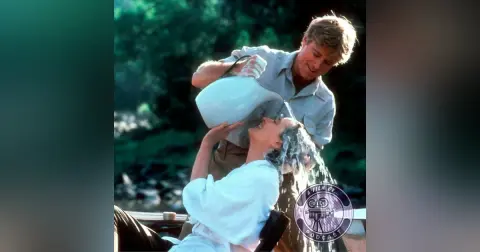
 Following our Robert Redford tribute episode, we couldn't pass up the opportunity to dive into one of his movies that was mentioned, especially as it celebrates it's 40th anniversary. Amber and Andrew discuss the beauty of the African plains, the surrounding dangers, and the romanticism of hair washing in Sydney Pollack's superb 1985 drama, Out of Africa!
Head over to our Patreon and get started with a FREE 7-day trial. We've got plenty of exclusive content and episodes that you'll only find there! You can also sign up as a free member!
Check out our YouTube Channel and subscribe now!
www.afilmbypodcast.com/ for more information.
Email us at afilmbypodcast@gmail.com with your questions, comments, and requests.
Find us on Instagram, X, and Facebook @afilmbypodcast.
0:00 Andrew. If you were free to go off and have an adventure in a wild part of the world, where would you go? That is so hard to say. There's so many beautiful places, especially as an animal lover. A part of me things like Northern Canada or Alaska. I goanna se bears, but I think there's a part of me that always is drawn to North Africa. It's beautiful, it's wild, it's interesting, it's different culture, it's different everything. And I mean, who doesn't want to see lions, right right? I like the African thing, but I want to do it like in the time period of this maybe, like like the nineteen tens, nineteen twenties, So I need a time machine as well as a plane ticket. But we kind of have something in common because for me, I love polar bears. I always have They're my favorite animal.
0:51 So you can go to this town. Called Churchill in Manitoba, Canada and do like a polar bear excursion, and I would love to do that. So it's it's funny that you mentioned that. I actually, about an hour ago, was just listening to a podcast about a polar bear attack in Churchill, and it was in twenty thirteen on Halloween, so that's why they were doing it this month. But yeah, it's They also covered the lions of Tsavo, which is the wonderful vol killer movie The Darkness. Yeah, it's about that. So they've covered a lot of real animal attacks. It's a phenomenal podcast called Tooth and Claw. But I just listened about Churchill and was already thinking, hey, we should go there, right.
1:36 I thought it was a little bit safer than that, But. But polar bears are always a little bit. Of a right there, an apex predator, what are you gonna do? But every time they mentioned Zavo in this movie, like, I. Got a chill. Yeah. Yeah, and they mentioned it several times. Yeah, all right, Well, speaking of wild parts of the world, we tonight are going to be talking about a film by Sydney Pollock celebrating its fortieth anniversary, his nineteen eighty five classic Out of Africa. Welcome to the Film By Podcast.
2:35 I'm Amber Lewis. And I am Andrew Blakeley. And so we have a little bit of a different film choice for our listeners on this episode. We usually do underrated films, but this is definitely a classic. It won seven Academy Awards. But if you listened to our tribute to Robert Redford last month, we learned that Andrew had never seen Out of Africa, while I myself have seen it dozens of times. So we thought it would be fun to cover this film from like two different perspectives. Yeah, I'm so glad that you mentioned it too, because this is one of those movies when I was growing up, I never would have watched. They looked boring. Obviously it's not I know that now, but I think you know, as a kid, when you see these kind of movies, it's like Legends of the follow or something like that, where you know, as an eight year old, you're like, please, no, I don't want to watch that. But now as an adult, I can definitely appreciate a lot more.
3:35 Well, and I can remember when it came out. It was everywhere, like you heard the soundtrack on television every two minutes because the trailer was showing, and you know, it won so many awards that it was all anybody was talking about, so you kind of got beat into submission with it. It was like, watch this movie because that's all anybody's talking about. Well, and I obviously missed that train you know, because I wasn't born for a few years. Right, So let's kick things off talking about Sidney Pollock, the director of this movie, who I just adore. I love it when he would pop up in one of his movies.
4:15 It was just such a treat. He's one of those rare directors that had as many or more acting credits as he had directing credits. Yeah. I kind of think of him first as an actor, and I you know, obviously he's made amazing movies. But I think in I picture his face, I picture him on the screen. But I love that the you know Redford as well. You know, he has obviously has some great directing credits. I think, you know, if you've got an eye for film, if you understand character and you understand story, why not do both? And clearly he's got the talent for it. This is a beautiful, beautiful film. Yeah, absolutely so. Some facts about some fun facts about Sidney Pollack. He was mentored by Bert Lancaster. Oh he Pollock began his career as an actor, but after Burt Lancaster observed him coaching child actors on the set of the movie The Young Savages, he said to Pollock, why are you horsing around trying to be an actor? You should be a director. And then he arranged for Pollock to start like directing episodes of TV dramas and from.
5:26 There he would call him. Lancaster would call him to do like uncredited work on a picture if he was having trouble and like a scene wasn't working or he wasn't communicating with the director, well he'd be like, hey, kid, come work on this movie. For a couple of days. Yeah, it doesn't really get much better than that, and you have the hands on practice at the hands of one of the greats. Like that's fortunate. Yeah, and it worked. Like I love Burt Lancaster, but I love him a little bit more now. But it like fits his personality though too. Yeah, he was definitely a character. I think, you know, it makes sense that he would, you know, be I don't want to say breaking the mold, but just like, yeah, having fun with it, like, yeah, come on, try this out. I think I think you got to die for it. You know. He doesn't seem like a stuffed shirt type.
6:08 Yeah. Yeah. Another fact about Sidney Pollock, he believed his creative relationship with Robert Redford to be the most. Important of his career. From nineteen sixty six to nineteen ninety they made seven films together, and he said, we did films in our thirties, in our forties and our fifties. I've grown old with him. Yeah. I did not realize how many they had done together until like I was watching this and obviously I'm, you know, pulling up Pollocks, you know, his filmography, and I was just like, oh, Redford, Redford, Redford, which I get it. I mean, if you got that kind of talent, you got that kind of working relationship, Like clearly they understood each other. That's I love seeing that. You love seeing one a great director, Like I know you're a huge Nolan fan. Obviously he's got his favorites he goes back to. I love seeing that because you know it, if you can find somebody that can help fulfill your vision, why wouldn't you keep going back to them?
7:02 You know, yes, yes, And I think it just I don't know, somehow it makes the movies more interesting when you know that, like this director has their little cast that they always go back to that well, you know, and are able to use them in interesting ways. They don't always cast them as the same person every time, and. It works like the same with a composers as well. If you're using the same composer for every one of your films. That collaboration isn't just good because you know what you're going to get, but it's also you guys can play into each other's strengths or support each other's weaknesses, and I think that you both grow and become better and the art becomes better as a result. Yes, absolutely, I totally agree.
7:45 The last fun fact that I have he was an accomplished jazz pianist and an avid pilot. I did not know that he doesn't seem like a jazz. Guy well or like, I don't know, he's so he seems very kinetic. So to do something that's relatively you know, insular where you're sitting at a piano just like the plain thing kind of makes sense. But oh yeah, yeah, that that makes perfect sense. I mean, especially when you watch this movie. Like I wouldn't say flying is narratively huge part of it, but it is obviously one that they took a lot of of joy and filming, and they understood that the beauty of the getting to fly over the African continent. It was just beautiful, like.
8:32 Kenny's beautiful country. So yes, they really showed that well. And I love that they used that old gypsy moth like those early planes are just beautiful. Oh yeah, yeah, my brother his email address is still staggering because we just love biplanes growing up. They're they're the open cockpit like I've always I've always wanted to fly in one, unfortunately never have yet. But it's just so beautiful, so fun on it's so romantic. Yes, well, and also kind of it reminds me of my dad liked to drive a stick because he felt like it was really driving more than just kind of holding onto the wheel in an automatic.
9:16 And I feel like it would be that. Way in the open cockpit too, like you're you're really flying. Yeah, you're feeling it, you know. It's it's art as much as it is science. I like that. Yeah. And then the quote that I picked, I just picked it because my dad's from Indiana and Sydney Pollocket was from Indiana. He said, I'm from Indiana. If I get it, everyone gets it. I just thought that was great. Maybe maybe that's why I love Kurt Vonnegut so much. He was he was a Hoosier as well, and you know, he's some some of the most relatable works. So they make good stuff. They tell it like it is. Yeah, all right, so let's get to actually talking about this film. Like I said, it won seven Academy Awards for Best Picture, Best Director, Adapted Screenplay, Cinematography, Original Score, Sound, and Art Direction. Andrew I'm gonna give us a little synopsis.
10:13 It's very short and sweet. In twentieth century colonial Kenya, a Danish baroness plantation owner has a passionate love affair with a free spirited big game hunter. Simple direct and to the point, I feel like that barely encompasses how much of this movie, Like what all this movie is. I mean, I don't feel like Redford really becomes a major part of it until maybe two a third of the way through. Oh at least, Yeah, it's it's to me, it feels much more like the romance of it is more of the poetic romance of Africa. Like their love is obviously the driving narrative feature, but like this movie was made to celebrate colonial Africa, you know, and what it was and what was taken from them, and just celebrate the land. And I think that's why why Redford's character of Dennis is is such a good character, because he really leans into the romance of this doesn't belong to us, you know, we're just passing through and the freedom and the wild nature that comes with that.
11:19 He's such a great like inroad for us, especially, you know, us as white people who like, I don't know about you. I've never been to Kenya. I love their coffee. That's really the main thing I know about them. So it's a really good in for us to have a character like him kind of walk us through that. Absolutely. Let's take a quick break and then when we come back, we're going to dig into the cast and crew. Okay, so first and foremost Out of Africa is one hundred percent Meryl Street. Oh yeah, as Karen Blixon. She like is in almost every scene. Yeah. I hadn't thought about it, but you're right, they're really.
12:00 There's a couple, like you've talked about, there's some transition periods as time passes where you're just looking at the beauty of Africa, and then there's like two conversations I think between Brarr and Dennis that she's not involved in, and I think she's in every other scene. Yeah, I think I can think of one between Dennis and Barkley when he's when he's sick, and that's about it. But yeah, she's on screen for three straight hours basically, and it's I mean, it's Meryl Streep, so of course she nails it. Like you don't really have to say that. If there's anybody that you can count on carry a movie, it's Meryl absolutely. I mean, sometimes, you know, I run hat and cold with her.
12:41 I either love her or she gets on my nerves. But this, this is a performance that I feel like and I feel like part of it is the accent, but I feel like she just disappears completely. Yeah, the opening when she starts, so I you know, I watches the first time blind, you know, other than you telling me to watch it and knowing that there was a romantic hair washing scene, I knew nothing. So when she comes on and you hear that Danish accent, I was like, oh no, Like I hate a fake, forced accent. It kills me. But she nails it, and it feels so natural coming from her that I honestly forgot about it pretty quickly, which I mean that's hard to do because again I'm not usually a fi.
13:23 Well, and like, Danish isn't something you hear often. You know, you hear people do British accents or different you know, regions of America or whatever, but you know, Danish is not one that I that I hear that often, So that could be a little off putting if you're you know, not a fan. So I'm glad that it was grading on you. Maybe that's why it wasn't so bad, because like you know, when they do British, you can hear when they do it wrong, or when they do Southern you can hear when that doesn't sound right. I couldn't tell you if she screwed up Danish because I don't know enough Danish people, so right, I think. It was mesmerizing. I and her voice is a little deeper too, Like it was just completely interesting to me.
14:08 But I kind of like when you have a. Movie like this and your lead focus truly does carry the movie, like this is her story, this is her movie, Like you really don't care about anybody else. You want to know what's happening through her eyes. So I kind of like that. Do you feel like it's too much or no? I think a lot of actors could let this fall short, or a lot of directors could maybe let the character stay stagnant. But I think because her growth throughout the movie is she's constantly changing and learning and doing, and so you're curious about what's going to happen next. You know, it's not like she's just an observer. She really is changing constantly throughout the movie. And so, yeah, like you said, it's super engaging and for three hours, that's that's not easy to do.
14:58 Yeah, But I I do love that arc that she has where she starts out and she's almost a colonialist, like she's really trying to make it. You know. Even Finchatten says to her, like, isn't this Denmark? Because she's got her househut set up just like she was at home, you know, and she brought probably everything she owned. She has so much stuff. Yeah, And then over time you watch, is that all just kind of falls away? And it's so interesting the way she embraces just this wild country. Yeah, and it changes her for the better in so many ways. Like at the beginning, you know, the driving force for her to go to Africa was to marry, to be a baroness, to use her money and her wealth for title and you know, status, and by the end of it, she's using her status for good. She's using her status to help and she doesn't really care necessarily about the title as much. She doesn't care about those things. She wants to help the people who are on her land. She wants all these things, and so she's still powerful. Even at the beginning. She's very self assured, she's very confident, which I love, but her intentions shift entirely.
16:11 And I also love that they don't make that necessarily Finchatton's doing, like he definitely helps, and they definitely build off of each other, but it's something she just develops naturally throughout it. There was no like Savior that convinced her or anything like that, you know what I mean. Yes, yes, well, And I love this time period as well, where you've got this marriage of you know, we're using kerosene lanterns, but then we also have now we're starting to get cars and you know, that mashup of old and new technology. And I love that period in part because everything was so new, Like she just went to this place, you know, there was hardly any kind of community there when she got there, and the bravery that it would take to be like, I'm gonna go start a farm, let's see what happens. It just blows my mind.
17:09 Yeah, especially with the likes of her her husband Broer, who I think, you know, I was kind of doing a deep dive on these people because this is based on a true story. I'm of the opinion that I think the real Broer was gay and this was sort of a a not necessarily lavender marriage. But you know, they're marrying for status or anything, like they were still they were best friends even after they got divorced, Like they got along. He just really wasn't interested in having a wife, and so I think this is one of the situations where like he was her gay friend and they married to help, you know, build each other up. That doesn't come through in the movie, But that's my theory. Obviously we'll never know if it's true or not. But right, yeah, like you said, though, they both moved this area, and that's wild, that's that's insane, that's an insane thing to do.
17:53 But she immediately steps up, she knows her shit, She takes over, she takes control of this farm. And coffee farms are no joke. They are a lot of work and they require a lot of maintenance, and she doesn't know anything about it out of the gate, so she's got to learn all this stuff on the fly. And that's that's badass. Well, and it doesn't really come through in the movie, but that farm that she was on was like six thousand acres and she had like eight hundred CCUO laborers working on that farm. Like it was not some little, you know, meager little farm. It was like a straight up plantation. Yeah, And I mean, you need that, especially at that time, to be profitable in the coffee industry. But it can be a really good investment, but can be a really dangerous investment, as we obviously learn, not usually just from fire.
18:46 There's a lot of things that can go wrong. But I love that. I love that as the option for her, because clearly, as soon as there was work to be done, she rolled up her sleeves and did it. And I just think that's, you know, especially as a lady around the turn of this venture who was raised in money and married into a being a baroness, she was not afraid to get her hands dirty. And I love that. Yeah, And it's such a contrast between her and Broer, because he immediately says like, I don't want to be I don't want to have cows. You have to stay with them all the time. Yeah, like Coffee Planet, it grows. I don't need to be there, you know. And he clearly just wants to, you know, kind of be a deletant and go hunt and do whatever and drink with his buddies.
19:29 And yeah, he's such a great contrast to to Redford's character because both of them clearly want their freedom and their independence, but how they go about that is so wildly different, and what that means for the people around them is so different. And that's why I love that clearly she has fondness for both of them. She still cares about Broer even after their divorce. But I think she was also very independent, and so were they, and that's why they're all kind of swirling around each other. They love their freedom and where else can you find that freedom? But in a place like this. Absolutely Now you said that you didn't like, you know, fake accents. So so. Sydney Pollock casts Robert Redford as Dennis Finnchatten, who was a British aristocrat, and they actually shot a few takes with Redford doing a British accent, which I cannot, dear god even imagine what it sounded like. And then Pollock was like, yeah, we're not doing that, just a normal and.
20:31 We don't want a Keanu Reeves. We don't want a Keanu Reeves situation here. I mean, can you imagine, Like he's great in this movie, but Robert Redford's always Robert Redford to a certain extent. Yeah, And I think he's perfect for this in that role. Like it's it's not relevant whether or not he's British or American. I think. No, I don't think imagine. Because they're all still white colin colonizers. They're all white colonialists in North Africa. It doesn't matter which one of the you know, white colonial countries they're coming from. It's the same general narrative. So but yeah, I've never I kind of think, I've never heard Robert Redford do a British accent. And I don't know that I would be able to tolerate it if he tried.
21:20 No, I mean he does. He does something interesting with his voice in this to make it, I don't know, a little different, but it's it's definitely not you know, like Downton Abbey or anything like that. Thank the Lord. Meryl Streep said that, uh. Sidney Pollock asked her, like, give me like the one line that this movie is what to you is like if you had to say it in a sentence, what is this movie? And she said, it's about a woman whose lover is more beautiful than she is. I mean, Meryl Streep is a very, very beautiful lady, and. She's I don't think ever been more beautiful than she is in this Oh there's. A couple of times her hair is pretty rough.
22:02 I don't know. I like that though. I love she arrives at Lake Natron and she's like covered in dirt and just looks like a wreck. That is that is a badass scene for sure. But yeah, Redford's hair was always so on poiant. I was like, there's no way he's been living out in the bush like Safari, leaving Safaris and he comes back with that perfect like yeah swoop of golden hair like no, I'm sorry, that doesn't happen, and. Like his white smile, like his teeth are always brushed. And he's always clean shaven, like he's just. He's an obnoxiously good looking man. Yes, how much? And maybe it's just me, but how much did you love for aw?
22:47 I didn't think much at first. I thought of him just maybe as an opportunity to show that the Baroness was a decent person and whatnot, you know. And then as it develops, like and you start to see because his actings really subtle, like he's not doing anything particularly over the top. So by the end of it, when you start to kind of see through that, I loved his character. By the end of it was he was so cool. I kind of want to watch it again to start to see more of what he's doing with it. Because some of those actors, I think they very intentionally played it very straight things because they're they're servants of white people in the I think nineteen thirteen. Yeah, yeah, they're not going to be doing a whole lot. They're not going to be overacting and emotional in front of these people. They have to keep the mask on. So I want to watch it again with a closer eye on him, because it wasn't un till the end that I appreciate.
23:30 Yeah, that's the only time that I cry in this movie is when she says goodbye to him. Oh that is it does. When she says I want to hear you say my name like that just breaks me every time. I love that. And he actually I was surprised because they hired a lot of Cocudia that were descendants of the people that Karen knew when she was there, so I thought maybe perhaps he was, you know, a relative of the real Ferrah or something. But no, this guy is actually a really he had like a pretty decent filmography. He was in The Believers, Ali Outbreak and Tears of the Sun.
24:17 Oh damn, Yeah, that's that guy's got a resume. This was not his only, you know, thing that he did. I was so impressed. The other thing that impressed me was. The character of Felicity, who is the young woman. I loved her too. She's not in it very much. She befriends Karen, and then later she's the subject of her argument with Dennis that kind of starts there they're falling out. She's based on a real person who was still alive when they wrote the script, so. They couldn't like. Interesting. Yeah, it was a. Woman named Beryl Markham who was just as fascinating as Karen Brooked and like she grew up in Kenya.
25:03 She was the first person to. Fly solo from England to North America, from east to west, and then she wrote her own best selling memoir about it that no lesson. Ernest Hemingway said to a friend, have you read this book, because it's really good. This woman can write. That's awesome. And I especially love that because she's such this like young, sweet, like I want to learn and I want to grow character. So to kind of learn that character does grow up and become a badass in her own right is fantastic. And then we also get some fun little appearances. Did you recognize anybody in the supporting cast? I did so about halfway through, Like I was constantly watching his character Delamere trying to figure out it was driving me nuts, and it's it's I don't know if it's pronounced Michael, go go guff Okay, but it's it's Alfred.
25:59 It's Alfred Anyworths and from. We were like halfway through the movie and. Liam was like, yeah, because he's not on screen a whole lot. He has plenty of scenes, like you get enough time to really get to know his character a bit, but he's not on screen a whole lots. Every time I'd get a glimpse and he'd be gone, I was like, no, show him more. I need to figure out who that is. Well, and he's a little bit younger, he doesn't have the glasses. You know, so some really nice long hair. You know. It's a very very different character. Yeah, so it's just enough different that. Yeah, it was such a challenge. And then Barkley, when Dennis goes to visit him when he's ill, we meet his companion, played by the supermodel actress Emon.
26:44 Oh. Yeah, I picture her much older because that's how I always saw so I don't think I would have recognized her. Yeah, she this was very early on in her career. Yeah, and of course she's you know, all made up and African garbs, so not as easily recognizable as she was. On like the Runway, but gorgeous still nonetheless. Right, You're like, well, I can't blame Berkley for hooking up with her, working izz. If you're gonna die, it is a good place to do it. Right, So, like we said, The screenplay is based on Karen Blixon's memoir, which she wrote under the pen name Isaac Denson. And it also incorporates material from other sources, like one of her other books and then like a couple of biographies about her.
27:32 I love that. They filmed in the actual locations where she lived. Yeah, it would have sucked if they didn't. I think, not just tonally, like obviously you get a real feel for Africa, and you get a real feel for the people and the surrounding nature of it, but also like, I'm a firm believer if you're gonna tell your story based on a true story, based on a real person, authenticity key. I hate when they say based on a true story. Like years ago, I remember sitting down talking about American Gangster and just how much I hated it. I was like, I don't care how good of a movie you think it is, that saying it's based on a true story ruins it for me because it's so far from the truth. Whereas sometimes you have to have some creative licenses or simplify a story. But the fact that they put that effort in to make it really about Karen Blixen and really what she went through, I think bleeds into everything else in the movie, and you can feel that so areas that they did tweak something or maybe simplify the storyline or shorten this become irrelevant because you're really trying to show who this person was. Yeah.
28:40 I was so pleasantly surprised when I started looking up. I kind of was win saying, looking up, like truth versus fiction? How real is this movie? And what I found was it was stuff like you see her with this. I think it's like a Irish wolf found or something throughout the movie this of hers and it was like, well, they were actually Scottish deerhounds and she had. Three Yeah, exactly. Okay, look and that's. Where we have to stretch to to say it's not one hundred percent accurate, then I'm okay with it exactly. So yeah, I love that, especially for if you're gonna be basing off someone's memoirs, like come on that that's the whole point of the story, you know.
29:23 Yes, the behind the scenes of this is just fascinating to watch because you're seeing photographs. Of course, of the real people. And then like the I can't remember the young man's name, but. The young man who she fixes his leg and he becomes her cook. Like they talked to the they talked to the real. Guy who's now like an old man in this interview and he's like, yeah, she hadn't fixed my leg, I would have died. Oh it's so sweet. Yeah, and he just ran a this thing about her, and you're like, crab, it's.
30:03 A real guy. Well. I love hearing anecdote. You know. I love hearing that too, because my first instinct and I did the same thing. I always whenever I'm watching a true story movie, I'm always like looking at how true it is? Watching this when I kind of got the feeling like, oh, they're making her seem like way better, Like, oh, she wants to help the Africans because this movie was made in the eighties and we recognize how shitty things were that then, but like, no, she really did. You know by the end of her her time that she really was trying to advocate for these people. And I think that's really really cool. So to hear that, you know, even little stories like that aren't just a narrative way of showing that, oh no, she's one of the nice ones, Like it actually is true. I think that's awesome. Yes, I also love that with a little bit of Hollywood magic, the fact that they were really there, Like Meryl Streep talks about how like they were sleeping intense when they were doing some of the filming and like you hear a lion.
31:00 Just out there somewhere, you know. And then like one night she woke up and she heard this noise and she looked out and there were two hippos fighting like ten feet from her tent. No, no, thank you, I know, said I don't want to go to Africa, but no, I remember. There's a couple of times some amazing shots of animals in this week. Some great. Obviously, some of it they edited around, like when the lines get shot, you can tell they did some clever editing to make sure that it was safe. Wall also, yes, still very believable. But there's one point where they're by the water and they see two hippos in the water and they're just standing there. Its supposed to beautiful and idea like I'm like, if I see hippos in the water, I'm out of there, Like I'm not going to stand by that water's edge. No.
31:45 Well, but that was real, and she said, like the hair washing scene is so romantic, and she's like I was terrified the whole time because if you get in between. They told him, if you get in between. A hippo and water or a hippo and their child, like they'll just eat you. Like there's no warning shot, there's nothing, like, they just eat you. And that's than lions. I saw a video of a hippo grabbing a lion and throwing it like a rag doll like they were to be messed with. Oh my god, that's terrifying. Yeah, so you know, the lions are already scary enough, but yeah, if I see hippos, I'm bugging out for sure.
32:26 Well, and then there are several scenes with lions and the one, like you said, the lions are supposed to be like actively attacking them, which obviously you can't do. But there's. A scene where the lion it uh, invades her camp and is trying to kill the ox and she's trying to like she's got a bull weapon. She's trying to get this lion away from this ox. And that was real, Like these were California, Hollywood lions that they ship to Africa, which I think is hilarious. They ship to Africa to make this movie. But the lion was tethered by one leg so that it couldn't actually get to her.
33:11 Yeah, But then the other scene. Where she the first time, she just like decides, Oh, I'm just gonna go riding in the savannah like by myself and it'll be fine. A lion starts to approach her. And Finch hat and arrives and she's terrified and she's like, shoot it because it's coming towards her, and he's like, well, let's just give her a second. She's already had breakfast. Just stand still, she's probably not. Going to attack. And that whole time, that lion was not tethered to anything, and the trainer was behind Meryll like enticing it with food, and Meryl was like, they said it would just go for the food, and it wouldn't go for me. So I was supposed to just stand still, and that's what I did and it worked out well.
34:00 Luckily she's supposed to be acting terrified, so she felt that it's. Only well imagine, like I just I don't know. Oh. I mentioned the podcast I Love about this earlier Tooth and Claw. They talk a lot about lion attacks and whatnot and what to do. So it's funny listening to this and him saying, well, if you turn a run, like that's how they decide who they're going to attack, which is what the animal experts say as well. So like I'm watching it going, I mean, what are you's saying is true as I understand it. I wouldn't want to be the one testing that theory, but I do think it's it's it's really cool that we can do that, that we have the ability to train these animals. But at the same time, yeah, I don't want to be near a lion. There's certain animals that I want a good distance between, right.
34:42 I love the scene when they're on Safari and they come upon these these lions that have just made a kill and they're like, Okay, we're just going to back up real slow and hope. That they don't see us. And what I love about it is that they're just walking along and like all of a sudden, there they are, and I this is this is my like suburban white girl comparison. But my only comparison to this is when we went to Animal Kingdom at Disney World. You'd go on the safari and they stopped the tram and the guide said, okay, now look to your right and there's just grass and he says, you see that tree and we're like yeah, and he says, okay, come down like ten feet and like right freaking there was a family of cheetah like and you could totally see. I had no idea they were there. It took me a minute, even with him telling us where to look, before I saw them. And you could see how you'd just be walking out there and just step on one and then that's the story of you.
35:48 Yeah, lines especially, I mean, they're they're such great pack hunters, they're such they're so smart about it. It's funny you mentioned that. I'm literally wearing my Everest shirt from a kingdom right now. So we were just there last week and yeah, we're looking at the tigers and there was one just napping up against the glass, and that just the sheer size of this thing. And I mean tigers are just slightly larger than most normal African lines, but still like gigantic. So the thought of you know, anything that size or that much muscular literature that could sneak up on you, right or you could stumble across it. Yeah, I would want to have a gun handy, that's for sure. Absolutely, And you know, our enthusiasm for for all of this realism, really, I think is what makes this movie work.
36:34 There were a lot of criticisms that it was too long, it. Was too slow, you know. Uh, I can see that kind of drags. But honestly, I think if you start kind of getting tired of the relationships between these people, then you have this beautiful scenery to look at, and you take a little break and then you come back and you see what the people are doing, you know, and I like the pacing of it. I think it works really well. Yeah. The reason it works for me is because this movie, like a lot of like biopics or memoir based movies, is not really narrative driven. This one is a love letter to Africa. It is a love letter to North Africa, to this region in Kenya. There's so many just beautiful shots.
37:22 They really relish in those ones where Dennis is flying over and the camera just hangs on it and you see animals running or just long shots of the wild buffalo out there and whatnot, and it's it's gorgeous. So it's like, that's really what we're watching here. You don't need to rush that, you just need to kind of sit in it. And that's that's the beauty. That's why that area, that that wild open area is so great. It's sometimes quiet, sometimes peaceful, sometimes scary, but you don't rush it. This isn't like a fast paced what happens next, what happens next kind of movie. Well, and I like that. You know, they do start, they do transition from you know, being on her back and with wagons and stuff too, you know, having trucks and things to get you know, out on safari to these locations where they want to go hunting. But I like that this idea of you know, Borer tells her when she first arrives. She says, I want to see my house, and he says, well, very change clothes and put on something comfortable because it's a two hour ride. And you know the fact that just the great distances in between things and you really are kind of living with the land and with the people that are a part of this land. You know, it's it's not there for your convenience.
38:45 Yeah, the movie kind of reminds you of that every once in a while, if you forget it that you get out there with those animals or you get out there. I think about it when you see shots of them flying in that beautiful plane. He's just landing in the grass. You can't do that in most places. You can't just land a plane wherever the hell you feel like it. But they're in the middle of nowhere, you know, there's nothing, and the wildness of it is what makes it special and what makes it magical. And I think it's cool because it would be scary when you first get there, if you're if you're in her shoes, you know, when you first get that's very overwhelmingble But the time she leaves, you can just you can feel her sadness leaving it, and I get it. That's I think how I would feel as well.
39:27 Heartbreaking when she leaves, absolutely heart right. But you know, one of the scariest scenes for me, and it really they kind of just roll over it. They don't make a big deal out of it. But I am terrified of baboons. I think they are horrific animals, Like they scare the daylights out of me. And so when she when she first gets there and her you know, the guy that's running the farm, the day to day operations of the farm is kind of taking her around and showing her the fields and kind of talking about how much they're going to plant and that and the other. There's baboons just like all over the place, and you know, there's workers scaring him off, and he's like, yeah, they're gonna eat your dog too, so you might want to watch out for that.
40:10 And I'm like, no, no, no, I don't want to just walk out in my backyard and there they are. No, no, And you know, you're. So focused on the lions you forget that, like there's black mamba's there. There's all kinds of stuff that wants to kill you there. Oh yeah, yeah, not for me. I'll go on a nice safari. But it's also I think it's comforting when the people that have lived there for you know, millennia, so you're like, oh, this is just how we handle it. Like if they say that, I'd be like, all right, cool, Like if you're comfortable sitting here, I'm comfortables in here, but like, don't leave too far from my side. Yeah, just stay with me. All right. Let's talk about some noteworthy scenes and if if there's a pivotal moment in this movie, my absolute favorite seat, I don't think it's a pivotal mine, but My favorite scene is that hair washing scene, Like it to me is like absolutely so romantic. I can't breathe when you saw it, were you like, really this is a check thing?
41:13 Or did you get it? No? I get it because they haven't really like neither of them have admitted really their their feelings for each other. They're both kind of still playing that game where he's clearly trying to woo her, but they both know that she's married and. Well, and she's straight upset, like, I am not sleeping with you on this trip, pal y. Is that why I'm going with you? Yeah? And he plays it so slow and so confident. I mean, you know, I get anybody that's wooed by Robert Redford, but also him him reciting the rhyme of the Ancient Mariner. It's I love that poem. I actually, when looking at fun facts about this, a section of the Rhyme of the Ancient Mariner is actually on finch Hatton's Great So that was sort of a nod to him as well, which I think is beautiful. So I get it. Not necessarily my thing hair washing. I don't think it's gonna do it for me, but I see where you're coming from and I get why that one stands out in your mind for sure. O.
42:15 Good, I'm glad you didn't like roll your eyes. What was What were some noteworthy scenes for you? There are two, the first of which is when she rides out to the delivery supply during wartime. Yes, that for me is the pivotal moment. That is where she completely changes. It's such an adventure. The fact that she was willing. To do it and she had fun, like but you know, she's like, it was actually pretty great. It was very challenging, but it was awesome. So that, like, I think that is definitely the pivotal one. That's the one that really sets her character up for the rest of the movie.
42:56 And it's bad ass, Like when she gets there and all the guys are like, I told you to send somebody else, It's like fuck off, you know what I mean? Right? Yeah, So that was phenomenal. But I think the one that's gonna stick with me is actually the I guess you could call it a fight that that she and Dennis have near the end of the movie when he says Felicity wants to join him, you know, on his next safari and they're going back and forth, because it's one of those scenes where, like, I love his character. I think his character is the type of person I envisioned when I was, you know, like a late teen, early twenties, Like that's who I want to be free. Nothing's gonna tie me down. And I get where he's coming from, and I get what he's saying by like, I don't want you to take my freedom, but I also don't want to take care is like weird, you know, I want to take this day by day. But I also get where she's coming from saying I want to be valued. You know, I want to being with me has a cost because I'm worth it, you know what I mean. And I want somebody to choose that. I think they both have such great points, and they clearly love each other, and I think that that made it really heartbreaking but also kind of beautiful that they're both just fully honest with each other, and so, you know, it was a really really cool scene. I think from an actor's standpoint, they both played it really well, and so that's the one that I think will probably stick with me the most. But yeah, that her delivering supplies is easily the most important part of the film.
44:15 Yeah, I think that that argument is so brilliantly written because kind of like you said, like neither one is really wrong. Yeah, and that is what makes this movie for me. I have a really hard time with the way we were, Like it's a very romantic movie. There's a lot to love there, but I cannot get past he is such a rat bastard in that movie, Like I cannot get over it, and it just like I can't stand a minute. So to have him be kind of a similar character, but it's like the edges are softened, and this is a guy that like I can understand his point.
44:59 He's still wrong, but I understand what he's saying. But I don't think he's wrong because he's choosing what's what he wants for him and if it doesn't work for her, that's fine. And I think that's how. Well I mean to the other. Yeah, he was very honest, and he's the thing that she loves about him is that he's like he is this romantic, almost mythical figure that is completely free and he's a free spirit like Africa itself. Like that's what she loves about him, and he has to come to it honestly to say like, I'm choosing this, not your telling me I have to choose this, because when she says like you have to and he says, you don't understand the effect that language has on me. All right, Like I got goosebumps because again, both of them, I think have a great point, but I get where he's coming from, like saying I have to do this, like you don't get to tell me what to do, Like I'm not. You can't have me the same way you can't have Africa. It's not yours. You're just passing through.
45:50 So it's it's such a great scene. Yeah, and it gave me goosebumps. But yeah, let's talk a little bit more about the trip to Lake Natron. That was a sixty five mile excursion that she went on. Oh, I mean, like, holy crap, and you know, with all these wagons and oxen and she does at one hundred percent now where she's going. And what I love about it is the balls on this woman to like be like I'm just gonna take it. But then like there's parts of it where she's scared. She's like, you know, I might have gotten us lost, and I don't really know what to do about that, and you know where she's sleeping in a tent because you know that's what women do. And then she hears the lions kind of just vocalizing out in the savannah, and she comes out and sleeps with the men next to the fire. She's like, forget it, I don't even care.
46:52 I'm sleeping on the ground as close se flames as I can get. You know, I just like it. And like you said, when she comes riding into that army camp and RR says, you changed your hair? I yeah, And it's a great opportunity where you kind of learned the way that the African like idea of God is. You know when I love the scene after the lion has killed the the buffalo or the ox rather, and he says, you know you were you're you're sad. You don't get the ox. The lion's hungry, he doesn't get the ox. The wagon's heavy and it doesn't get the ox. And I forget exactly his exact language about it, but it's several times it comes up where's they're just like God is good. Like the place is burning down, They're like, God is good, right, what are you gonna do? God?
47:45 God's testing us. I guess that's what it is. But it's always this very positive mentality of it. And I think that's a fun time for them to show that, because when she says, uh, you know, I think we may be lost, he just goes, oh God is good. Yeah, that's that's all. That's his only response. It's like, what are you gonna do? Yeah? Exactly. There's a story she went flying with with Dennis one time and they landed, you know, on her property, and one of the cuckoo you came up and said, did you see God? And she said no, no, we didn't fly that high. And he looked at Dennis and he said, well, are you gonna fly high enough to see God? And Dennis is like, no, you can't. You can't do that, like, you can't fly that high. And he's like, then.
48:30 What's the point He turned out offed away. I was like, oh my god, that's such a great thing. There are so many great moments where they kind of show the limitations of the colonial thinking, like when the she's talking about teaching them to read, which, like I do think is a good thing. I think reading is a valuable skill. But when the chief finally says the taller kids can read too. She's like, yet reading super valuable and he's like, you guys can read, what's that done for you? And then just walks away. It's so good. There's several times where like the native populations just like, you guys think you're better than us, and you're just not. It's not, We're just different. That's fine, you know, I think obviously Dennis explains it the best, but it's I love that it's a recurring theme throughout this, like you think you're better than us, but knock it off.
49:16 We didn't ask for your help. I love when he says, did they ask to learn to read? Though? Yeah? I mean as a teacher, I love that she taught them, you know, she arranged for them to learn to read. But he does have a point, yeah, yeah, yeah, one hundred percent. And all of those British are just every time she goes into town, like it just I know it's done to show like the passage of time and kind of how she was an outsider even among her community, her own community. But oh my god, they just every single one of them are assholes. Like they just turned my stomach every time she goes to that club and I hate it. I know you're supposed to love it.
49:57 But when she arrives in uh Mambasa, yes, thank you. When she arrives in Mombasa, she goes to this British club, this gentleman's club. She's looking for bra because they're getting married that day. And she goes into. The bar and the men are like horrified that a woman has even just walked into the room, and they throw her out because women aren't allowed in there. And then at the end, like it's supposed to be like honorific, like they invite her in and buy her a drink, and I'm like, fuck you. Like they did the bear fucking minimum she's allowed in the room.
50:40 Oh yeah, yeah, it's it's rough, and especially I mean that it does a really good job of not centering itself around the sexism or the colonialism or any of those things, while also keeping those themes running throughout it and highlighting that they're here, they're present and the relevant. But that's not what the story's about, you know what I mean? Yes, yes, absolutely, all right, we're gonna take one more break and then we're gonna come back and wrap things up. All right, So we have been talking about Sidney Pollock's romantic, super romantic love Letter to Africa classic film Out of Africa, Andrew, if someone hadn't seen this movie like you, they watch it for the first time and now they want to watch more Sidney Pollock movies.
51:32 What are you gonna send them to next? Well, after our last conversation where we talked to Robert Redford, I added this to my list, but I also added our friend Jeff Johnson's almost namesake Jeremiah Johnson, and absolutely loved that, So I've absolutely got to put that on the list for sure. It is a beautiful movie, obviously also Redford. The other one is Tutsi, which we talked about as well. Yeah, I know you and I have talked about your love for that movie, so I assume they would be on your lists. Yes, in my opinion, it is one of There are a handful of movies that are perfect movies, and that is one of them. And the other one is it's an older film. It's I don't know if it's his first or one of his first. But did you ever see They Shoot Horses?
52:18 Don't They? No? Is that Jane fond It? Yeah? Yeah, it's sixty nine. I think is when it came out, so it's definitely older, but it's a phenomenal movie. It's about it takes place in the Great Depression. It's essentially trying to think how to phrase it. It's like a tragedy, I guess, but a bunch of people doing a dancing competition, trying to earn money and just being taken advantage of during the Great Depression. It's really sad. It's definitely very tragic, but it's an interesting story. It's interesting way of showing the story, and I think you see a lot of what makes Pollock's movies great later on in it. So I wouldn't necessarily say it's best, but I think if you want to learn who Sidney Pollock is is a it's definitely one worth watching.
53:03 I'm definitely gonna have to give that a try because it's one of those I just kind of passed over, didn't really think about. So I will add that to my list. Yeah, just be Ready to be Depressed. Though it's not exactly a happy movie, right. I mean, but sometimes those are good stories though, Yeah, Oh for sure. So my list is I had tittsy on there. Because obviously it's just it's just. So good and I mean, for nothing else watch it for Bill Murray alone, Like he is so funny in that movie. Like I have seen it a million times and I laugh hysterically every time. I also put the firm on there.
53:44 Good choice. Yeah, it's one of the few movies that's just as good as the book and makes a few changes that I kind of think make the story a little better. So and has a spectac cast, and I. Think that's something that Sydney Park is really good at, is taking like a big cast of really powerful people and showcasing all of their best things without having anybody overshadow anybody else. Yeah. I've never read the book, so I can't speak to it to that, but yeah, it's a phenomenal film. I would definitely recommend that Tam. Oh my god. When the book came out, like it was one of those we call it like an airport book, like everybody in the airport had a copy, and I was on the edge of my seat, Like I loved that book.
54:36 I it was one of those stay up till three in the morning to finish kind of things. So I was really impressed when the movie came out and it was just as good. And then the other one I picked was Three Days of the Condor, which you and I have talked about Captain America, Winter Soldier and how much we love like the seventies, you know, spionage kind of thing, and this is one hundred percent that only just not Captain America. I mean it's Robert Redford though. So yeah, oh my gosh, he was just he was in America. He was Captain America before we had the MCU.
55:16 Yes, absolutely, So do you recommend out of Africa? Like is this? Yes? And no, I don't think like a lot of the other movies you've talked about that, I'm like, oh, you got to see this, you got to see this. This one is an acquired taste. It's like a you know, a fancy wine. If you want to appreciate it. Absolutely if you love Africa, if you love adventure and romance, and I don't mean romance in the like two people falling in love sense, although that is a thing here, but like more the the romantic idea of adventure, and if you like the idea that you know Hemingway writes about things like that, That's what this movie is. And it is slow, it is from a pacing standpoint, not going to have you on the edge of your seat. But if you want to take some time and just really appreciate a nice work of art, then yeah, I would recommend this, but I wouldn't just put a blanket statement.
56:10 Oh you got to see out of Africa, you know what I mean? Yeah, I agree. I like what you said about it being like a fine wine, like take some SIPs, sit with it a while. You got definitely have to be in the mood. Yeah. This isn't like a like a Michael Bay you know, shot gutting a beer kind of thing. Like this is a whole other. Ball game, not even a little bit. But it is beautiful. Yeah. Yeah. If you're a completionist and you know you want to watch all of Robert Rudford's movies, you know, especially after we did our episode, it's definitely worth your time. Like like I said, the way we were, like, I love it, but I can't watch it, like it's just it's too much where I would definitely push this one over that one.
56:57 Yeah, And it is funny that you know that this one came up from our tribute to Redford because I only specifically watched Ghost in the Darkness because of our tribute to Val Kilmer. So apparently I'm just going to keep watching movies about Tsavo every time we lose a talent. Yep, you're being called back to Africa this movie. I bought a copy off of Prime. I bought a digital copy. It's been off and on streaming on Netflix though, so you know, if you're not really into spending the money, just keep an eye out. It'll come back around again. Yeah. I don't know that you would recommend this one is a bye unless you really really do love it.
57:40 This isn't the kind of thing that you're going to pop in all the time. I feel like this isn't an every year kind of watch type thing for me at least. Well, I feel like I watch it enough that I was like, ah, buy it. But the one thing I will say, you know I mentioned earlier YouTube has a behind the scenes, like a thirty minute making of kind of documentary and it's really good. So if you watch the movie and you enjoy it, it's really neat to see the real places. Talk to historians that you know, know more about Karen Bluxen's life and her writing, and you get interviews Like I said, you get interviews with like people that really knew her and that you just saw in the movie.
58:23 You know, that's all very fascinating. Yeah, and then you also get like the good, you know, movie making stuff along with it. So, listeners, what do you think about of Africa? Have you seen it? Where does it rank on your list of love stories? Let us know on social media on Facebook, Instagram, and x check. Out feel about the hair washing scene. I want to hear your right like, it's. One hundred percent sexy. I'm just saying he all he had to do is just bend down and smoocher. That's why you had to get the digital copy because you would have worn out the vhs. Yes, run it back again.
59:03 Uh. Please check out wwwfilmbypodcast dot com for film and TV articles and our entire library streaming free. Write to us at a film by podcast at gmail dot com with your questions, comments and concerns. We may just read your response on the show and send you some of film by swag. And to all of you listening to the show, following us on social media, and subscribing to our Patreon, well, thank you.