Filmmaker Stimson Snead
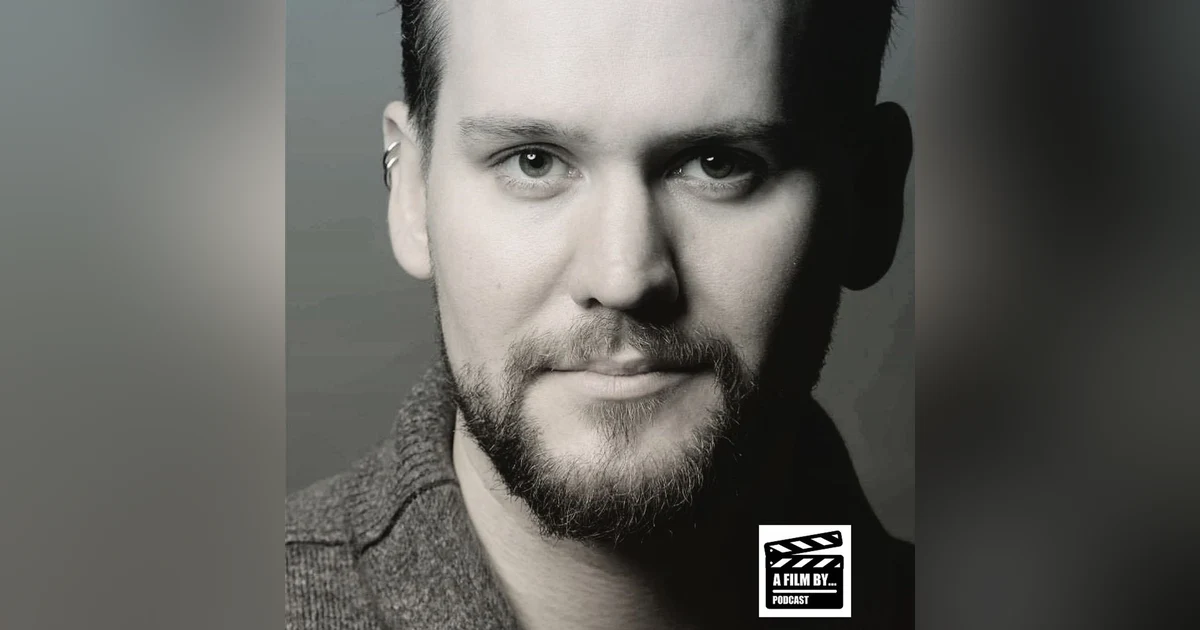
On this special episode, Jeff and Brad speak with filmmaker Stimson Snead about his amazing, award-winning film Spirt: A Martian Story, and get the inside story on how his hilarious sci-fi short TIm Travers & the Time Traveler's Paradox became his...

 Apple Podcasts

 Spotify

 Goodpods

 Pandora

 Amazon Music

 iHeartRadio

 Castbox

 Deezer

 TuneIn

 Podcast Addict

 Podchaser

 Spreaker

 JioSaavn

 Castro

 RSS Feed
You can learn more about Stimson Snead at www.stimsonsnead.com.
Check out www.afilmbypodcast.com for more information, and www.patreon.com/afilmbypodcast to get exclusive content!
The month of May is Mystery Swag Month! Get your FREE swag when you follow us on Facebook and drop a comment on what you thought about this episode! Don't delay!
Email us at afilmbypodcast@gmail.com with your questions, comments, and requests.
Find us on Twitter, Instagram, and Facebook @afilmbypodcast.
0:00 Brad, We're gonna jump right into it. We have the privilege of speaking with a filmmaker today. We are going to be talking with filmmaker Stempson Snead.
0:43 Hello everybody, and welcome back to a Film by podcast. I'm Jeff Johnson. I am Brad Kozo, and we are very happy and very fortunate to introduce filmmaker Stempson Sneed to the show. Stempson, welcome and how are you. I'm doing well. Good to see you, guys, Brad, Jeff, thanks for being here. Absolutely, yeah, absolutely, it is a pleasure, sir. Let's let's jump into it. Stempson. My first question for you would be, you know, how did you get your start in the business. I was quite literally born into it, but I was not born into the NEPO side, although I really wish I had, like that would have made things so much easier. My parents were both actors in the Seattle area stage actors. They met in shows. I grew up in green rooms and backstage at stuff all around the Seattle area, and it was I got As I got older, my parents retired from acting. My dad moved into radio, so I'd be hanging out of radio stations. He eventually would be working in weather and news, so I'd be hanging around in TV stations, usually playing with my Ninja turtles. Meanwhile, my mom was a composer and songwriter, so she always kept one foot in that world. So I was born into the theater side of things with long, deep roots in Seattle. So naturally I decided to, you know, take it to La where I would have zero family connections or any leg up whatsoever. Because that's what we call smart business moves. That's a kin to you, Brad,
2:16 and it gave you though by doing it, it's such a young age, you already knew so many things that were already ready to go as you came out here had been some kind of benefit, though I would say it was a lot of benefit in knowing how to speak the language of the art form being raised on films. It was a zero benefit in terms of the business side. The actual corporate world of film is so far removed from the world of theater, certainly the world of theater in Seattle and local small community theaters. They are too fundamentally different businesses and business models, right down to how they pay for things, how they sell things, even the way they try to engage with the audience beyond the obvious difference of live versus a screen.
3:06 Yeah, So in that regard it was useless, But in terms of understanding the language of the art that that came very easily. Yeah. Able to snuff out a lot of bs right away, also able to fake a lot of bs right away. Yeah, yeah, absolutely. Now, when it comes to filmmakers, you know which filmmakers inspired you? I think that's one of those questions where anybody who's immersed in the arts, that's that's a question that's going to change constantly, because the people that you were impressed by changes as stuff comes and goes. As a kid, surprising no one for being raised in theater, the stuff I was most drawn to was the most for lack of a better word, theatrical of the storytelling techniques. And this was of course at the ages where I didn't even know who these filmmakers were.
3:54 I just like their stuff. Like most young kids, I was really into timber work because of the performative nature of it, the abstract nature of it. Sonenberg for the exact same reason as Tim Burton Julie Taymor. Although I was far too young to have even the slightest comprehension of the sheer depth of her work. Although as I got older that was something I came to enjoy. And then as you get older and in the film you start understanding the writing side, You get into your Finchers and your Tarantinos, and you start to find a style of things. Yeah, you start. That's what's interesting there. If I were to pick any filmmaker who I feel particularly just obsessed with right now, ah, yes, to be Robert Eckers. Just everything he does seems to have a combination of being wildly different and wildly entertaining.
4:45 My favorite of his work so far by far being The Lighthouse, if only because it seems like it's actually playing against the trope of the artsy indie movie. The trailers for that film are so serious, and it's not until you watch it is a serious movie. But it's not until you watch it that you realize it's one of the funniest damn things you've ever seen. Yeah, and you can't take your eyes off of it exactly. Yeah. Yeah, Like, even if you're at a point where you're like, I don't know where this film is going, I cannot stop watching these two men. I have to know if they're going to kill each other or what you know. But it's that's why I say it's so enticing. And even The Northman, I feel, being a kind of a simple, straightforward story makes it so different because of that kind of look. I'm go ahead, Well, he uses the look to lean into the classical nature of it. The thing about The Northman is how surprisingly classical the story is. It's the delivery of it that is so fascinating. And I think one of the reasons I'm just so drawn to this particular director right now is because of how different their work is.
5:58 As far as the other way to phrase the question what filmmakers influence you? At least when I hear it, it's often who do you most wish to imitate? And the answer to that is absolutely nobody, right to me, the goal should always be to try to find a voice that's new and distinct in your own. Now, naturally, you're always going to be taking bits and pieces of other things you like. Tarantino is the perfect example of someone who has a distinct voice but borrows relentlessly from his jeans. Yeah, but he still turned that into something distinctly his own. Paymore is among the few people where I really can't cite something that feels like she was drawing influence of it. It just seems so fundamentally her own in its very nature.
6:44 And because of the grand scale of the look of these films, I'm gonna guess that you are a big supporter of seeing these films on a theater screen because of being able to take in every little piece. Yeah, I mean, like Julie Tamar's, I think our films are like paintings almost, you know, And then the other ones that you said, like Burton and obviously Robert Eggers, that these are films you need to experience on the big screen. I have nothing against the small screen, but what I think a lot of times gets lost in the conversation is filming for a small screen versus filming for a large screen is who entirely different creative choices. I value the large screen because of that detail work. Because sometimes there is a joke that you can put into the margins in the feature I just came off of right now, there's a whole scene where the joke is that you shouldn't actually be paying attention to what's going on in the foreground. You need to be paying attention at a small get that's happening at the background. That's quite funny and silly and setting up something for later. But if you were watching that scene on an iPhone or even a computer screen, I don't think the joke would read at all. Right, and so well, I have nothing against the small screen. I think the large screen. It is an experiential difference. Yeah, and that's why it needs to be protected. Yeah, you guys have talked about some you guys have just talked about some great directors. I want
8:16 to talk about the director now. So let's let's get into Spirit a Martian story. This is. This is distributed by the the Aldrin Family Foundation. Who I know, our NASA friends, they're they're gonna know, Hey, that's Buzz Aldrin. That's a polyto eleven. So Stimpson, let's let's let's talk a little bit about this this project. This started so long ago. I'm assuming you guys are big fans of the magnificent web comic XKCT. I am familiar with that one. Yes, it is fantastic. Years ago, when the Spirit Rover died, he put out a one page comic that personified the Rover as feeling bad and wanting to go home. It absolutely cut me to my gut. And because Random Maholland releases his work into the public domain under the Creative Commons ACT, I decided to adapt a short film. And this was back in my mid twenties. I got a bunch of friends together, we pitched a bunch of ideas, we planned how we would do this, and then we failed miserably and never made it. It was sort of a wound in my side. So many years later, when my career is starting to do better, I'm starting to get access to much more funding.
9:26 I'm starting to get ACT. I've now established a team of people who aren't simply my friends, but are collaborators and true coworkers with whom you can have great creative work. I decided I wanted to revisit this project, but taking it leaps and bounce further than I had ever intended to. Originally, in the original version, it would bid him like a stick figure drawing of the rover or like a bad two D animation. This time, I decided to go back and make it a full CG creation shot in real life settings. As a replacement for Mars and Loaded with actual history about the real Rover, expanded into about a fifteen minute film so that it could be an educational piece for kids, and if possible, see if I could even get one of the folks involved at the original mission to put some context in it for more educational purposes. And as I was putting this new version of it together, that's when I heard about their NPR about the Oldron Foundation, which immediately made my ears go ooh, because I don't like putting my stuff on YouTube.
10:28 Nothing against it. It is really undervalued how much of a business it is the folks on YouTube, and I respect it, but it's not my business, and I don't want to create a film in which I'm basically hoping to get lucky and someone would notice it. So the moment I heard about the Oldron Foundation, which goes to schools across America, they show videos, they do these huge maps of Mars that kids can walk through in the class, this was like, that's the way to get this in front of my target audience kids and get them excited about it. Reached out, got them on the phone in relatively short order, and before we'd even filmed the thing, we had already had a soft committal for how we were going to distribute it. It would have to It was always going to have to remain nonprofit because I was adapting from the Creative Commons comic. So this to me was a win win because I always assumed it would be just kind of a financial wash.
11:18 And then got the team together, went out, filmed it, got Gabe con got a guy named Jay Ricatinue to film it with me. Did a pretty much shot for shot recreation of the original comic, expanded over fifteen minutes worth of additional shots. Got Gabe Conroy, who used to work for Sin Sours and does a lot of the effects for all the commercials you'll see for a SpaceX. Anytime you see like the CG stuff from SpaceX, that's Gabe. He came in, built the fully rendered version of our new Rover, rebuilt its face to have a little bit more of a human of motion to it, and then as the final step to make sure this would land as hard as possible emotionally we need. We decided we needed a world class actor, and rather than reaching out to one of my friends, all of whom are very talented people, by the way, I decided we should take this that extra step and get the best voice over actor in the world, Terror Strong, who came in knocked it out without barely breaking a sweat, and it all turned out wonderfully, like Sperrit. Aside from taking too long to do, you know, a good decade from the time I originally thought about doing it kind of just went way too easy. I can't complain.
12:26 Well, I'm so happy that you did revisit this project because when I watched it, it gave off like a Sunday night, wonderful World of Disney vibe to me, especially with Steve how you have him introducing it. Let's talk a little bit about Steve Squires and Tara. How was it working with Steve Squires? It was a dream, but it was very last minute. We had already finished the film. At that point I had kind of just I had always knew I'd wanted to work with someone involved with the project. The actual commander of the entire scientific side of it was not the person I expected to get by any stretch of measure. And as we were getting ready to give it to the altern Foundation, they pointed out that because it was very abstracted, in spite of the educational elements, it would be useful to get somebody involved from the original project, from the original mission to help put that in context. So when I reached out to Steve, the film was basically done and he was very on the fence about doing it. According to him, what made the decision for him was when he showed it to his young daughter and she loved it. So she is the one who got Steve Squires involved. He came out, We recorded his stuff at about a day.
13:46 You could tell he's done fifty million interviews as I don't think I've ever done less directly in my life. It was Steve Squires and I was also there that day. Well, okay, now Tara Strong, we're talking she's got over six hundred acting credits, and we're talking iconic Marvel going Strong. Yeah, I iconic Marvel characters, DC characters, Disney characters. Was she always the goal? Like we gotta get Tara or were you just were you just blown away when they said, hey, Tara Strong's coming in. At this level of filmmaking, when you're this deep into the indie scene, you don't get to die on any hills casting wise, so very rarely do you get a first or second, third, or fourth choice. You have a short list and you approach the folks. Tara was on that short list of about five people, and it was a kind of easy negotiating process. It was very straightforward with through the casting director's agents. Once she took a look at the project, she was all in and she came in and was just incredibly fun to work with. Now, the fun thing when you mentioned all the stuff from her career is she has been doing this so long that when you meet her in person, without even thinking about it, she will be randomly slipping into various characters from the course of your career as you're talking to her.
15:09 If you say something that that mildly annoys her, you'll hear a little bit of Raven coming out. You mentioned something that makes her laugh, and you'll hear the bubbles laugh. It is actually surreal when you've grown up of these characters, because it's like, in the course of a five minute conversation, I'm just sort of pinpointing folks as I go Wow. And the thing with her performance in this she gives She gives spirit, a little bit of sash, she gives it definitely the emotional depth as you said, this is this is educational, it's very entertaining. Was it always your intention to make it have such a to elicit an emotional response? Because that's what I got out of it. I mean, I started, I was heartbroken for a minute. You know, one hundred percent. One of those filmmakers I should have mentioned earlier for having a big influence on me is probably the biggest influence of my childhood is Gone Bluth. I am a firm believer that a kids film needs to traumatize kids along the way. But I'm not trying to do a ha ha ha, let's traumatize kids. No. I mean, seriously, kids have a much greater threshold than film than most people these days.
16:25 Give them credit for now. You shouldn't be out to horrify them with violence and gore. But they can handle real, significant ideas and real grief, and that's part of the balancing act. I think that it's something we have gotten much worse apped in film. Paradoxically, we've gotten much better at it in kids television. Hid's television these days has so much more teeth than your average kids film, and I think that's impressive and wonderful. So no, with spirit. Part of what drew me to this comic in the first place was the fact that it broke my heart at the end, I changed the ending from the comic. You'll notice I do actually give the film a happy ending, but only after we still kill her. Yeah, it's like I still want the depressive edding, but then we get a little bit of happy at the end. But so it was always a part of that, and I think that's something we should all aspire to. Kids need to cry more.
17:18 It's help yeah grow, It helps him grow, right, Yeah, I just I love it because she's spunky. You know, she's like, hey, I'm still here feeling a little ignored. And then you know when she that that that moment where at the end where she's like, I did a good job for Earth, no for Mars, and she it's like the acceptance of spirit, like this is where I'm at and this is what's going to be. And then yeah, like you said, I I knew it was coming. You know, I still wasn't emotionally ready for it, but I knew it was coming. And then and then you give us that little uplifting in where you know, like with the home line, Oh, it was perfect man, it's just it's a fantastic It's an absolutely fantastic short. This win's best Science Fiction Short, correct, it did for a couple different vessels. Raw Science Festival is the one that stood out most in my mind for that because it's the only festival out there that I'm aware of that's judged all by sciences. And this was right at This was right before the pandemic, I think, when that hits. So I did not get to go to that festival in person, but I think for Spirit that was among my personal favorite the awards or award nominations we got it. Also, while it did not win awards at Boston Sci Fi, it ended up taking me to Boston Sci Fi where it got screened in front of an Ava Green film, which I'm spacing on now, the one about her is an astronaut and that well, that might be worth revisiting this conversation later on because Spirit was directly this festival, Boston Sci Fi was directly responsible for the creation of the film
18:48 that came after Spirit. Brad, I know you are a huge fan of the time traveling genre when it comes to sci fi films. So when we had the opportunity to speak with Stenson. I knew you were gonna love this, So Stepson, we got to talk about this incredible situation where your your other short, tim Travers and the time Traveler's Paradox. You know, we're talking about an incredible short and it's becoming a feature length film. So has become has become a feature length film? Yes, past tense. Thank you for correcting me. Before we get into it, Can we just talk a little bit about Samuel Dunning because this guy is incredible, Like, where where has he been? Uh? He's a male model. He's a male model of the East Coast, and I hate that. I hate that. With five of my being tall, good looking, in great shape, phenomenal actor, runway model, does multiple um History Channel documentaries playing historical figures from the nineteen twenties and stuff like that. And I meet this guy at a film festival that was screened and he was doing a film called Rick and Ruby about an alcoholic vampire starring himself, and it was screened quite naturally alongside Spirit because when you think kids friendly film about a happy talking robot, let's put that next to the one with the vampire drinking people's blood and making love to the
20:21 stump and I'm not exaggerating. Oh my god, Oh I gotta see this good Ruby. You need to see Rick and Ruby. We will definitely put that on the watch list. Yeah, this guy. Are two films and there is some technical speech being done, I mean, flowing through this guy's mouth without any stuttering, without you know, many mumbling, clear, very very clear of what he's saying. Confusing, but clear. So I mean it did a great job with that. I really pushed back at the term technobabble. I know you didn't use that term, but some folks will describe that way because technobabble is the star trek. Let's make up a thing and then make a metaphor thing. The stuff in Tim Travers is describing all real theory. Now, the big caveat is that all that theory demonstrably proves time travel is not possible, and we do it anyway. But the stuff he's talking about is real. Sam is on the record for the by the way, as having done the short, having done the feature, and according to him, he still doesn't have a damn clue what he's saying in either.
21:36 He's just saying it with confidence, and he's a really good actor, but he is on the record that he has the faintest idea what he's saying. Well, I think the thing about time travel when you talk about it, I mean, it's been used so many movies, and it is my achilles here. You know, Werewolves, Batman movies and time travel movies. And I just recently watched Somewhere in Time just because it was about time travel, and the guy told me it was really good. It was based out where Richard mathis a novel, so I watched it. You don't really have to buy what they're saying about time travel. You have to be in on it from the get go because it's been done so many different ways, from if you have the Marvel films, in the Back to the Future films, things like Time cop and even in Somewhere in Time, you know everything is done in How did you miss Primer in that list? Oh yeah, okay, Primer. But it was like, you have to put your brain in that right away. So, like I said, his stuff is very confusing, but I bought into it because I had already accepted this is the way we're going with time travel in this feature. And if you do that, you have fun because I for a second. I started to try to follow what he's saying, and it hurt my head, and I was like, and I paused it, and I went back and I was like, just enjoy the film, go into it. It's kind of like what I think.
23:07 Remember, Like Austin Powers says, He's like and he's like, starts explaining the time travel thing, and he's like, he is, why don't you just sit back and enjoy the show? And he looks at it. Yes, please, you know, don't try to explain it, and you don't need to have to explain it, but it and it works so well with it. I always think of the best explanations in the episode of Red Dwarf when they travel back in time and they try like four times to explain it to this one character using various metaphors or quantum mechanics and particles until one of them just goes, it's a doorway to the past. It's like, oh, I magic door. Why didn't you say? Yeah? I gotta tell you. The the practical effects and the visual effects in this short are awesome, Like, you know, let's let's talk a little bit about that, because I'm assuming you know, the main the main set piece the machine itself.
24:04 Yes, can you tell us a little bit about the you know it farely killed several men? Yeah, yeah, that thing. So to those who haven't seen the short which I'm presuming is the overwhelming majority of the listeners right now, the time Machine is a twenty four foot tall, triangular pyramid like monolith of lights running up the side, nearly jet black. Where to walk into the pass. Because the time machine only goes back in time one minute, there's literally an entrance door and an exit door. You walk out the entrance door, and you come out one minute in the past. That's how the time Machine works because it's all about testing the classic thought experiment, the time traveler's paradox. What happens if you kill a younger version of yourself from one minute ago, and it functions like a hallway pyramid so that you can stand in front of the exit side through the energy, then look through the entrance side, see your younger self and shoot him. I didn't see that coming. Yeah, yeah, neither did Tim, And as I saw that, I just said, no, that doesn't work, and then he goes, oh, so it's a failure. You know, I won't disappear into dust, you know, by killing my younger self. You know, so, I mean immediately he like, you know how everybody tries to be like I'm gonna I'm gonna catch this. Just I was looking at your effects and I saw zero flaws in your effects between you know, fifty tims.
25:38 Well, okay, so you've got multiple tims. You've got you've got massive gunshot wounds, you've got you've got Tim's exploding. When you were writing this, I mean, are you writing this knowing like, hey, I the CGI, it's gonna be there, I can do this. Or was this something like after the fact where you're like, let's have some fun now that we you know, we got some fun. For something like this, you have to go in with very careful planning, and it helps to have a good sense of who you're working with. So I worked with two studios predominantly for the effects on Tim Travers. The production studio is north By Northwest and Washington State. You may have heard of a product that there is called c Nation. That's all them as well as Black. The Netflix spent off Black Summer. So they were our set construction team. They were all of our crew and for the effects using the same people that worked with on North By Northwest. We used Jason McKee of Mode Effects, who's doing a lot of the digitals, and then we outsourced some of that to another gal down down in La Jacqueline Chesson, who was focusing all the split screen and the rotoscoping.
26:44 We basically had three layers of effects on it. We had the stuff that was so easy I could do it, and that was your standard split screen effect. We had stuff that required true rodo so painting stuff out, that's when Jacqueline would be involved. And for the really extreme stuff like when chunks, heads are getting ripped off, stuff like that, that's when we would go to Jason McKee and with all of his experience from z Nation, ripping chunks off of people and zombies is their bread and butter. So that was how we had to plant. And that was one of those films where it was storyboarded out, shot for shot for shot beginning to end, so it was very carefully planned film. My question is when you were approaching this right away, did you have to check all your effects first before you started writing the script or did you start writing the script and said, I don't care if I can't find somebody that can do this visual wise, I'm writing it anyway, or do you check first? You always got to write the best story first, and then once you have your best story, then you figure out what your resources are and you adapt accordingly. There are several things that we did adapt accordingly, Like one effect we could not do in the original script. The original depiction of God at the end, or at least the entity that Tim Travers turns into, was going to be a doctor Manhattan style thing. So a digital body, perfect sculpted kind of in glowing that was not feasible. So we decided to go with taking his character's costume,
28:15 which is all dark tones, and doing literally an invert on it. So now it's an identical costume to his normal look, but it's all in white, right down to him now being albino and having white hair. So that was I gotta go back. Yeah, oh yeah, it's an identical costume. I'll tell you. One of the things I love about it that I wasn't expecting was the dark comedy element because the violence plays like an evil dead two uh type of field to no one of my all time favorite directors, God, I was terrible at answering that Sam Raving we yeah, we we. I got a chance to talk to Sam a couple of weeks back, so I've had evil dead on the brain, but watching this, I was like, holy, like this is over the top and he's not holding back on some of these shots. Like you know, so when you're setting out writing this, do you find it easy to write? Because I know, I know lots of writers have they can write anything, but when it comes to comedy, it's it's hard to do. Like is this something that that just falls naturally or or do you feel like you know, I'm going to write this. I think it's funny, and I wonder if other people think it's funny for me. I can't not write comedy now. Whether or not it's good comedy is a very very debatable question, But I can't resist doing things that make myself laugh. I just I truly cannot help myself now.
29:38 Like I said, it's a big question if it makes anybody else laugh, but I really can't resist doing that. And that's not the same thing as saying I write nothing but comedy. I think I have always found overly serious storytelling to be kind of the the Nati year of pretentious for me, simply because that isn't an accurate reflection of how human beings behave. Life is funny. The most horrific things that can befall people are funny. One of the main coping mechanisms that human beings use to cope with trauma is to laugh at it, to laugh at their own trauma, which is a different thing from having somebody else laugh at your trauma, but the use of humor as a defense negatism, and a protection tool and a healing tool that is essential to the human experience, to the point where when I find traumatic storytelling where nobody is able to have a sense of humor or at least a sense of irony, it pulls me out of the story because this does not feel like an accurate presentation of humans. Yeah, Good Fellas, what they do in it is terrible, but the movie is hilarious exactly. And that's one of the things I like to do in my own stuff is I'm not going for theater to the absurd comedy, but i am going for something that is not pretending.
30:55 This isn't absurd and the character should be aware of it, but not in the wink at the audience fourth wall meta thing, but in the same way that when absurd things are happening to me in my day, I'm not churning to some invisible camera and laughing at it. But I'm still cognizant of when an absurd situation is befalling me. Right, Because it seems to me as if Tim, being so straightforward at the beginning and almost not even ready to realize that this might work, and seeing that he is able to travel through time, he almost loses it. You know, his mind chanic can't handle this much. You know, it's almost like he flips up because the more and more he gets kind of more insane. Do you agree. I don't think he's getting more insane, but he's not. But he is surprising himself. What part of what inspired Tim Travers to me is the idea of a character in a time travel movie who thinks scientifically that in and of itself could support a narrative. Tim functions on an if than system. If this works, then it implies this Therefore, I can test it with this and I'm going to repeat the experiment, And much of the film is him doing just that, and the big surprise for him is how much it keeps not making sense because every logic says this shouldn't work, and somehow is. And so his whole arc of a character is trying to figure out why is it
32:29 working when it shouldn't and seeing how far we can get in how deep into that we can get. But I really wanted to make a story about a character who really does think scientifically. Well, even with like the little the comedy aspect, I appreciate the small things you did. I'm watching the closing credits sequence and there's like there's like twenty two Samuel Dunning, you know, because he's he's he's all these Tims and he's the god Tim. And I just cracked up because, like you, you don't see that in close and credits, and I just I appreciated that you made that one little last comedic jab at it. Oh yeah, you gotta have a sense of hearing with these things. So I have a question. You had to name every one of them yeeah, oh yeah, and well they had to be named in It's not a joke. It's not a joke we put into the credits to keep track of it while filming it. We had to name them. They are individually listed in the physical script of that film, so you know who is who. And one of the big reasons for that is one of the things we have is a sort of a personality drift. They're they're not parallel universe Tims because it's time travel. It's not a brick and Morty parallel universe.
33:35 So they are all the identical person However, the more time they spend in each other's company, there's going to be a drift. And one of the things Sam was doing is really keeping tracks scene to scene. Who is who? Who is the Tim that is the most shit upon Tim? Who is the Tim that's going to start being the bully and the belligerent one, who's going to step into a leadership role? And when something happens to that particular leader after they go the other way through the machine, who immediately takes over for that? They're all yeah, so each one of those. That's not a joke we made up for the credits. It was just like we did the work, We're just gonna put it in there for lack of a reason. Not too well again, this guy, he's incredible. Um, next question for you, Stimpson, You've got he said, he had a question for us. Yeah, so you guys seem to have clain a lot of attention to this film, and speaking of having a sense of humor, sometimes I like to get a little mean with some of the stuff to the audience. So I gotta ask you both the question where did the football come from? I have it in my notes that was gonna be the final question I ask you. Like I'm sitting there, I was like, wait a minute, where did the football come from? Like, because he's yeah, if you follow no seriously, where the football come from? I? Yeah, it does because the logic that he used didn't make sense, so it doesn't have to make sense. Yeah, I'm not going to answer it.
35:07 There is actually a definitive answer to the question where did the football come from? Although it's answered better in the feature film. My request, even if it's even if it's better answered in the feature I want to hear about it on your audio commentary on the on the four K Blu ray when when this thing comes out, you know, because that's what that's gonna be one of those those things where people are like, wait, where where because it's funny, But at the same time, I was like, wait, hold one who threw the football? Where did it come from? I will it kind of makes the short, Okay, I'll answer the question for the short. It is a different answer for the feature because I put so much time making sure that as hard as the logic and the short is to follow, it is one hundred percent there. And and I wanted to reward people who pay that level of attention by having all the logic makes sense internally. And then it kind of the last second, and for really no reason other than to be a troll, I decided to break it. The football is there because it disproves every theory the film presents. Okay, the film presents four major theories at the beginning for how this could be working, and the football is one hundred percent not compatible with any of them. It is there because I am a massive troll. I love it. We changed an answer for the film. There's actually a much better answer to the feature. Will we see Tim out and about? If you can answer that, how do you mean
36:38 he does go outdoors in the future film? Yes, I want to see that. I want to see Tim experience the outside world while already doing some time travel. I love that. Oh yeah, you even see what a little bit of Tim's love life looks like when he tries to make relationships work. You see how he tries to promote himself. Tim Travers does something unspeakable. He goes on a podcast. Yes, So one question I've got was it always the intention to take this, this incredible short and go feature length because you've got you've got this, You've got spirit like, okay, so how what's the genesis there? How does this? How does this happen? So? I had a completely different feature I was gearing up to do called Tree Street, about this group of kids on a Halloween, and we had already booked out the studio with north By Northwest, we had worked out the shooting time, and because this was going to be my first feature with an actual sizeable budget for a first feature, a few at the time well known actors who were attached to it and working with a very reputable studio. It occurred to me that I'd be going into that feature as basically the least experienced person on set. And I didn't like that because all of my work prior to that, even though I've been doing film fifteen years, has been in supporting roles. It's producing on other people's projects. It was frequently coming in on a lot of shorts, on a lot of web series. Everything I worked on was on a much different production value than the Tree Street feature was going to be, and that's what initiated the idea to do Tim Travers.
38:08 It was a script that had already been at the back of my head. I had already met sam by them, and I knew that if I did this film, it had to be Samuel Dunning who played this character. And so I decided, I'm going to do this short, but as though it were a feature film with a full production, professional union crew behind it, a full team, a full studio, We're all just going to ignore the fact that it's a short and not a feature. That's what Tim Travers was worn out of, and I had so much fun with it that as I was gearing up to do the feature the following year, the Tree Street Feature, I decided to do another short in the same production value with Tim Travers, and I got the idea that what if I do an anthology that way, if something goes wrong with the Tree Street feature, I have these big budget shorts I've been doing, and I would only need to do two more and it would be fairly financially affordable to do and then something, And so we did lab Rats, which came out really well. It's still in post production as well at the moment, so it's not out for a few more months yet. And then just as we're finishing lab Rats and we're about to go into Tree Street, it turns out that our financiers were a lot of scumbags. I can't name a lot of names. I can't name names right now, but the fallout has been deep and bloodthirsty, and we were left and we were left hanging. All these people had already put aside time to do the production. There was studio space waiting, there was a tax incentive ready to go. And I kind of realized in this moment that if I was ever going to do a feature on my own without big outside financiers,
39:40 I will never have a better chance and opportunity than right now, not a year from now, not six months from now, right now. And because of how well the Tim Travers short had done, that was as close to a market test as I was ever going to get. So if I'm going to invest my own money, if I'm going to take this kind of risk. It's going to be the short that I consider the best thing I've done to date, which is Tim Travers. So Tim Travers was never intended for a feature, but I called up Sam Dunning. We talked a lot about what the arc of this character would need to be because one of the jokes of the short is that he doesn't have an art He is fundamentally unchanged at the end of that film, and that doesn't which is fine for a twenty minute film, but that's not fine for a nearly two hour feature production.
40:24 So we need to figure out who Tim Travers is and what is a story about him using the same framework as the original that would sustain it. So I started writing. We had a rough draft about a month later, and I kid you not two months from the time we finished the rough draft, we were rolling on day one of production. That was not even ninety days from the time that the decision was made who do a feature, and that that feature would be at Tim Travers, no script existing too, rolling camera ninety days. That's unbelievable. I mean, yeah, so, and so is your cast. Because we know Samuel Dunning's coming back as Tim Travers, and we know we're definitely going to see a much larger look at this world because you've got Danny Trio playing uh, and I don't want to give away you tell me if I'm if I shouldn't be saying certain things. But we know he's the leader of a mercenary army. Um, that's a big spoiler.
41:22 He plays a gentleman named Royce. What happens with Royce I can't go into. But it's Danny Trejo doing his ray hoo patented treho. Okay, how about Joel McHale playing a conspiracy theory radio host. You you mentioned Tim was gonna be on a podcast. Is this okay? So no offense intended, gentleman, but he is a hard parody of a lot of a lot of good podcasters and radio hosts out there. I bad. I'm sure that we will find that part hires. Trust me. Yeah, everyone will find that part of hilarious. Joe McHale is one of those actors where Tom sometimes you just shut up and let him, Yeah, just let him go with it, like occasionally you remind him that there's a script. But well there's there's two other incredible performers. You've got. Um that I wanted you know about one at length. I can name the other, but I can't tell you what they do. Okay, so let's let's talk about someone that we absolutely love. Is Keith David. Yes, yes, indeed and Keith.
42:28 So going back to that hole, the speed we put this together, we cast Keith David maybe seventy two hours before he was on set. Wow, holy that we had an entire backup cast for every one of these celebrity characters. And Keith David was cast seventy two hours in advance. Like it was so late in the game that I still paid the other actor just for the time they had put aside for the role. So you're about it's like you're using like your theater background. You've got a cast in place just in case the Yeah, understanding, that's that's that's brilliant. Uh. Now, let's talk about Felicia Day. Anything you can, you can mention about Felicia Day, and oh, I can talk all about Felicia. I can't tell you who Keith David plays, but I gotta say when he walks in and start and his first he's such a gentleman and a dignified man, just exactly what you would expect from him, and then when he walks on the set, from the first words out of his mouth, when he is in character and he's putting his full volume behind it, I physically took a step. It startled me so badly. That man can shake the foundations of a building.
43:39 I can genuinely say I would be terrified to have him angry at me. He is so intimidating, and I mean, we love him and like everything he does. Obviously we're huge carpenter fans, so the thing and they live, you know, did you get to talk to him about any of that? I tried not to go into that with him. He and I went out to dinner afterwards with Felicia Day and our producer and we all just had a good time just sitting around and chatting. Again, the thing about him that's so off, that's so startling, is he has such an intensity off camera, and the moment he's off he is a very quiet, soft spoken, almost grandfatherly quality to him. It's just a he is a wonderfully nice and easy and get along with human being, which is part of what makes that transition when he switches on camera, so suddenly like oh yeah, well, I even find his voice intimidating, like when the voice over work he does for DC's The New Frontier at the beginning. Oh, it's just impressive.
44:42 So the surreal moment I had with him was so we get it confirmed that we're actually getting him for the film and he's going to be on set in three days. And as I'm driving home from filming that day, because we were already about halfway through filming when this happened, so he calls me that evening just to chat, and I have one of those moments where after we chat for about twenty minutes, I just randomly put was up next on my TV to watch and it was that season finale of Rick and Morty that he was in. It's like it was off the phone with this man twenty minutes ago. It was so strange. Wow. The other person, though I wanted to go into length, is Felicia, because Felicia plays Delilah.
45:23 Delilah is the long suffering producer to Joel McHale's podcaster. Oh perfect, and the joy of getting decass Felicia and where she is having so much fun is her character is as far from sweet as humanly possible. Basically, She is a nihilistic, world hating degenerate who delights in making her boss's day worse and is attracted to Tim Traver's solely on the grounds that he makes Joel look stupid. That is the sole focus. I am so pleased because I was I was worried when a couple producers or reading to the script, I was like, God, I hope these two end up together. And it's like this was written to be the most toxic couple that could come up with, like just the Tim Travers and Delilah. So Tim Travers and Felicia Day have several dates in the course of the film as they get to know each other because she provides kind of a nihilistic mirror to the Tim Travers character, of kind of a feedback enabling circle. And Felicia was having so much fun getting to just be so nasty on screen. Oh, this is gonna be This is gonna be great to see Tim sounds like they're perfect for each other. Yeah, now, you I know you wrapped this, uh not too long ago, you're deep in post any updates on how it's going with the post production.
46:51 Let's say, let me just replace this coffee with whiskey or something. Because we are nine days from our first test screening be finished. At it, we're doing a test screening and Spokane, everybody who has involved myself including is forbidden from showing up. Oh wait, this is gonna air after we've done the test screening. I'm absolutely sneaking in. Sorry. Yeah, it'll be long done by the time this airs. Sorry, I can give that away. Yeah, I snuck in absolutely to see the audience reaction. I think it's going to be a very painful night for me. Because the edit was put together by Jason McKee, who is fantastic. The edit looks great, but because the feature film relies but none of the effects are done, Like we have probably several scenes where every single shot has text appearing on screen describing what's happening in the background. Because so much of the feature, unlike the short, is trying to communicate visually as well as through dialogue that I genuinely think much of this is going to be incomprehensible to the audience. But my hope with this test screening, and this is what we're really testing for, is that they're laughing because, just like with the short film, what matters is that they follow the arc of this character and they're having a lot of fun and laughing with it. As far as following the actual logic of it, I will be truly shocked if people do, at least with the test skating. So tests like the really exciting yeah so, but a test skating like this is just to gauge, like, how's the chemistry with your
48:24 your actors? Like, dude, are the audiences warming up to them? Are they laughing? It's not like I don't need to see the giant you know device, I don't need to see this, So it's a you know, so there's benefit to a test skating like this, then oh yeah. If there's a lot of benefit, a lot of it. We just want to there's a lot of jokes. We just want to see how they land. We want to see how people feel about the pacing of some scenes. Right now. We've got right now, we've gone with a very organic to how it was filmed pacing so it doesn't feel artificially rushed in places. But the short did actually artificially rush a few scenes. So I'm wondering if you know, we'll come out of this being like, Okay, we do need to speed up this scene here or that one there, or maybe we need to slow this down so people have more time to just comprehend it. The testimers are a very useful thing if you can do it where where they can be painful, if if you're being very artsy FARTZI, which I am.
49:15 I am absolutely being self indulgent in artsy FARTZI, where there's a lot of feedback. You just I'll tell you this one way or the other. I'm going to be drinking that evening. Yeah. What I got, I think from this film is even if I think we'll get from the test screening, that I hope that you walk out with is this is a kind of film where you, as the audience member, get to put yourself in that position later on, get to ask yourself, what would I do? You know, I would I leave the person that I was with? You know, would I kill my other self? Would I get out a little bit? Would I team up with my other self? So you would get to leave with that experience, Because as soon as I was done, what do you think? I was thinking what would I do? Would I you what Tim did? Would I try something different? So I think if that is delivered.
50:05 Then you you've got them. I can confidently say that what would you do if there was a lot of other us gets very definitively answered in the feature film. It is, in fact the meat of the emotional arc we came up with for Tim Travers. Well, let's take a let's take a quick break, and when we get back we'll find out what's what's next for mister Snead. Absolutely, Hi, I'm dating the host of the docum Base seventy seven podcast. We talk about everything from Anthrax to the Muppets to West Side Story. All right, boys, buckle up because we have hit the bottom of the barrel, because he slaughters all the Tuscan Raiders. The fact that she stays by a side that that tells me everything I need to know about these women that write letters to serial killers in prison. You know, it makes it made sense, you know Moby Young Sad always dumped Tim.
51:06 That was the song. You know when you listen, Tim, did you have the volume on? The witches are definitely much more nightmare fuel, But the fact that they look like the Texas Chainsaw centerfolds mum if jancof Thatt is so awesome. He's hired to be cloned. Why the hell isn't he doing the job? He like my clients getting impatient. Well, you slack ass mother, whyon't you do it? You know you're just check us out on Apple podcast, Good Pods, pod Beam, or wherever you get your podcasts. Hey, this is Jason Colvin and the Surely Can't Be Serious Podcast. On our podcast, James D. Graves and I we break down movies of the eighties, nineties, even the seventies, and also music. We go track by track through albums. If you were an MTV watcher in the early eighties, you will definitely love our podcast. And if you enjoyed what I've said on this podcast, you definitely want to go over to the film by Patreon page because I'm coming back and we're going to do some great episodes over there. And we are back Brad. Before we talk about what Stimpson has coming up, the question I want to ask, you know, I want to cover because Tim Travers sounds so incredible. I want to know how did you come up with it? So this actually goes back to spirit. This is one of the great things about working in film, especially with film festivals and things tend to bleed one into the other. So while Spirit was on
52:37 the festival circuit, that's where I met Samuel Dunning. And this was a few weeks after Boston Sci Fi, when Spirit had screened there as well, and I already had the Tim Travers id in my head by the time I met sam What happened at Boston Sci Fi is they screened several time travel films and I won't name names because I want my fellow indie filmmakers to succeed. And I'm about to be very, very mean, because I really really hated these time travel movies, just eyes to them. And a friend of mine who was study who was studying over at MIT, came out. We talked about it a lot. We got very drunk. After she left, I started talking to a few other folks who happened to be at Boston Sci Fi who also work in particle physics. I reached out to a friend of mine that evening in one very drunken night, and then I don't remember the rest of the evening, but when I woke up the next morning, there was the outline for Tim Travers written on a napkin, which I then adapted into the script, figured out what I wanted the script to be and decided I don't know any actor who can make this. And a week later I met Sam and you just so you meet him at the panel and then you're like, yeah, this is this is my Tim. Yeah, this is Tim.
53:51 This is the guy. And then shelved it for several months because I decided that this would cost way too much money. And then that's when I realized I should do this before doing the feature film. But all these projects have a way of leading into each other, and so Whilston Sci Fi, if you're listening, you are directly responsible in a way for Tim Travers, which is good because they gave me a word for Tim Travers two years later, which was great. So they so they know what's coming, they know that they know good stuff's coming. Then, oh yeah, they'd be fans. And I'm a big fan of there. So why leads to the next, leads to the next, leads to the next, and oftentimes the creative, the creative he is getting inspired by the stuff you see there. It's I'm sad to say it, but Tim Travers was born very much of me watching other stuff and going well, shit, I can do this better.
54:37 Yeah, which is a very childish and teddy emotion but but sometimes necessary to give to make make something new. Right. So, yeah, while while you're working in post, I know you've got a couple exciting projects. Can Can we talk about a couple of them? Because there's two, two specifically that I'd like to talk about. Absolutely, I'm actually in post on two projects right now. Okay, Well, let's talk about the More Child novel by Eloise McGraw. The More Child, if you're familiar with it, and you're very lucky if you are, is a wonderful Newberry Award winning novel from the nineties about a changeling child. It's a book that I currently have the movie rights too, and we're shopping around the pitch to it to see if we can attach a screenwriter and see if we can get the thing funded.
55:25 It's a complete departure from the Tim Travers or lab rat style of film that I've been doing recently, and much more in line with spirit, the sort of thing that wants to do a kid's drama and really really wants to make them cry. If I can get it, and if I do my job right, hopefully the adults are crying real hard too. By the end, well, I mean because it is. It's a sad story. I mean, I would say it's an uplifting story, but it's it has a different set of messages for kids and adults that you don't see represented, and it's a message that resonates hard with me. I was an only child. I had divorced parents, and so I went back and forth on custody frequently between two different homes. One of the side now, I was a very lucky kid, and that both of my parents were absolutely wonderful, good people and did a great job. I mean, just look at the results. But the downside that sort of bohemian back and forth upbringing is I was never that height with any poor community. So I was a kid who was alone a lot of the time. More Child is a story about what it is to be a lonely kid, and it's moral, which to me feels groundbreakingly like perth shatteringly hard, because you don't see this is The answer is not you will find friends. The answer is you probably won't. The ending of the More Child is not about his character who finds community. In fact, the ending of the More Child is her reaching the demonstrable conclusion that she will not
57:00 She is something fundamentally different from the rest of the world around her and that will not change, and finding contentment and happiness within that and the few connections she does have. It is a deeply uplifting story and it is something that you don't hear cold and gotcha. So for me, it's a story that I will fight hard to get that thing made. Now, you're looking for a screenwriter. Ay, you never had the thought that you you'd adapted yourself and write it. Oh, I definitely had the thought. And my rights will eventually expire on this thing. So if I don't find someone in time, I will. I will out of your stubbornness do it. I'm just not convinced that my that my writing tone is right for it. If that makes sense, that makes sense. So we're shopping that around right now.
57:49 Okay, well, more make them cry. Make them cry. That's good. More on your writing and your your your tone. Let's talk about the Dogs. The Dogs was a screenplay I did years ago about an all female group of starfighters who steal a group of tactical warships and start their own pirate colony. It's about their two warring factions, and they are the in between that doesn't want to be pushed into either camp, basically forming a middle ground for all the people who are tired of being used as the battle fodder by the two ideological extremes of their Star Wars esque universe. And it was just so much fun. It got great feedback from all the studios I worked with, except for one see ween see little note that you will never ever sell this because it would cost over one hundred million dollars to film conservatively, so I decided to do it as a graphic novel instead. My literary agent, paul As Levine, is shopping it around right now and hopefully we're going to get a bite sometime later this year to see if we can get it out there as a graphic novel. The art was done by Marco Consentia and it is one hundred and eighty pages of awesome. Oh wow, I just got to find for me. Yeah, And you have to shift into a certain kind of mind to go from screenwriting to graphic novel writing. I mean, that's that's that's got to be a major shift to be like, all right, I gotta stay away from this. I got to concentrate more on this.
59:20 You know, was that tough or you know, was that an easy flow for you? Not as much as you'd think. A lot of it was actually free because it is fundamentally a different medium from film, so it's something where I could let certain scenes breathe more. I did decide fairly early on that I didn't want to try to pix this as like a six issue series, because I didn't want to fit it into that format. I wanted scenes to have a paycinge closer to the original script that would allow conversations to go on that didn't have to have a certain amounts of action to it, and so I could pace it all in building up to one epic battle. The joy of that sort of storytelling, especially as a graphic novel, is you can do a kind of detail that you can't get away within film, Like we were talking about earlier with the theatrical screen versus the big screen versus the small screen. Because the reader is reading at their own pace, it doesn't matter if an image is small, because they're always going to have time to find it. And sometimes it was really fascinating and I learned a lot because I got to work with this wonderful artist. And that's what was so gratifying for me about it. Anytime I've ever seen a visual of one of my stories, it's something I had to go out and film and shoot myself.
1:00:35 Right. This was the first time I had the experience of seeing a fully realized visual sci fi world based on my setting, where I still had the same kind of creative control that I would have as a director, as every single vehicle design, every character design, every world and environment was first approved by me through multiple sketches going back and forth between me and the artist. Yeah, and no one to say no to, you know, like, oh, we can't build that, you know, we can't. That costs too much money. No, not on paper. I really enjoy that part. Just let your imagination go wild. Then, oh yeah, I was addictive. If I want to do it again now, Brad, I don't want to get that book out there just so I can do it again.
1:01:16 Now, Brad, I know you've got a bit of a what if question for Stenson. I'm gonna ask mine first. So in the Vein of a In the Vein of a paradox, once Tim Travers becomes a massive success and once the dog the Dogs becomes a smash success. Oh, who who do we get next? Is it? Is it Simpson Seed the filmmaker? Is it Simpson Seed? Who's going to continue writing graphic novels? Like when you have an audience for both of them, that that puts you in demand, which which direction do you go? Both? They're not mutually exclusive, Yeah, the joy of the One of the downsides of working in film is unlike stuff like YouTuber, you're putting out to every week, You're lucky if you do a film every other year. That's a good year for folks doing features, short of the incredibly rarefied spielbirds who are doing one every year, So you get a lot of downtime in there. So as long as so, there's no reason these couldn't be mutually exclusive. What I would rather do as a creative is hone my skill with it a little bit better. I learned so much on Tim Tree Trevor's It was such a shock of the system doing that as a feature, right down the fact that I wasn't allowed to do the kind of precision prep on the feature that I was able to do in the short, purely because of the scale of what was being filmed.
1:02:37 Likewise, with The Dogs, a lot of that was me just very angry because I couldn't get this script pick cut up because of the production costs. Just stubbornly wanting to keep it as close to that narrative and as close to the story that meant something to me as possible, and not getting to compromise. If The Dogs gets out there and sold, I would want to compromise a little bit. I want to learn what I did right, what I did wrong. It deals with an all female cast, and as you guys might have noticed, I'm a little bit on the male side, and I would really want to hear how folks who enjoyed this book felt about that. I would want to be able to be responsive and in dialogue with that sort of audience. Likewise, for the next feature, I would want to explore another idea and also preferably have a lot more money for the next feature.
1:03:22 I would really like that one part especially Okay, that leads into my question. Like Jeff says, Tim Travers is a huge success. Now, your next feature can be any franchise that's existing at the moment that you could be a part of, big paycheck and more personal freedom. On future films. If that was to come to you, what franchise would you like to be a part of as director? Ah, that is a good question, really good question. Franchise specifically, Yes, it can go anywhere from Marvel to Star Wars, to Burn Too Fast to The Friday the Thirteenth to anything that's been made so many times. It's a franchise television included, I would, I would assume, right, Brad, Yeah, all right, Yeah, it definitely wouldn't be any of the big superhero franchises. Not to say I'm turning down the job should anyone be wondering, right, But I would want to do the sort of thing where I can get creative. I guess, if I were to pick any franchise at all, probably one of the plan of the Apes films, because they have been so consistently good and so consistently focused on letting the filmmakers explore an idea. I'm not sure what weird demon magic allowed those three movies that were so smart, so well made, and so well financed to keep getting their financing, but it did for some reason.
1:04:55 Yeah, yeah, they didn't seem to happen any of the issues of oversight and Timeline stream fandom issues that the other big franchises out there have right now, they just let the filmmakers do their thing, and the filmmakers delivered phenomenally. So yeah, if I could be a part of something like that, I would jump fast and frankly be intimidated to be in the company of those other directors. I'd like in a way that I would not be intimidated to be in the company of some other franchise directors. Well, there's another Planet of the Apes I know coming and it feels like they're going to continue that on and they're gonna need more directors. Matt Reeves is too busy with The Batman. They're gonna get more directors, So oh yeah, just putting it out there, absolutely, But yeah, Planet of the Apes. I would want to go Travers meets the Planet of the Apes, Yes, or I would rather get to do a tim another tim Driver's equel excellent, excellent, excellent, Stimpson, is there anything any other projects you want to kind of hint that before we wrap up? Or yes, okay, and it's the one that's coming out soonest and it's my poor middle child of film projects, poor lab rats. Okay, like tell us a little bit about lab Rats. So lab Rats is about an alien invasion, about the people who are abducted and experimented on from the perspective of two people who have been abducted in a giant ratcage, and the entire preface of the right down to a seven foot tall, fully functioning hamster wheel. Holy cow. It's about drug
1:06:30 dependency because the aliens keep them doped up, and as they try to figure out what the aliens are getting ready to do because the experimentations have stopped, until they have the horrible realization that the aliens want them to breed because their house pets. Nope, it's a short. It was going to be part of the same feature anthology that the original Tim Trapper's short would have been a part of as well, and it was the one that I had just come up off of with the same crew I was going to do the Tree Street feature on in just a few months when Tree Street fell through, and so poor lab Rats got completely abandoned in the middle of its post production, so we could jump into the Tim Travers feature with all the work that had to be done on that without warning, which is why it functionally got put on hold for the better part of seven months, and it's only been in the last two months or so that I've actually been focusing on the post production for lab Rats, picking up where I left off, while Tim Travers is also in post. But it's going to be ready for release in about two months, and it's going to be hopefully going to as many film festivals as will have it. It's My Poor middle It's my Poor middle Child short, and you'll have some playing in Los Angeles, I hope, absolutely, okay, because I'm out here. Yeah, I'll have it wherever they will have me.
1:07:48 The actors on it were great. Nicole Murrat was so much fun. She plays our drug adult gal, who is a Day one abductee, so she missed the whole invasion. She was so much fun that we brought her back in the feature film as Tim Traver's mother in flashbacks. Oh awesome. Oh yeah, you get a sense of what Tim the kid Tim was like. By the way, so you kind of had your own Stimpson's Need universe in a way. You have characters that are somewhat connected to other films, and it seems like in Someway, certainly in casting, I'm I'm not trying to do any sort of shared universe thing, if only because and you would know that, and Brad, you're in La right. Yeah, we've all heard various folks whose no one's ever heard of talking about their shared universe, and there's always a certain sense of, man, that's just sad. You're not even working with a big studio. It's like, just yeah, focus on just making a good film. But before you start talking about what your franchise legacy is going to be, there's a certain part before the horse element that is painfully cringey. If I ever got to do a shared universe, that would be a fun thought to experiment with. Right now, I just want to make some movies that are good. But that doesn't mean there can't be shared themes. And there's definitely a shared theme and tone between Tim Travers and lab Rats, to the point where if it had still been an anthology, I would have tried to high in the elements in the framing device.
1:09:20 So it was more than just so that there was an overlaping themes that's dead now because we're doing this. We did the Tim Travis feature instead, and it's whatever the kind of mode and feeling you are in as a director and writer at this time in your life. Yeah, which is very true. Tim Travers was very much a me angrily kind of wanting to show off and dig in my heels. Lab Rats was something that's much more leisurely paced, that's much more contemplative. It's, weirdly enough, it's funnier than Tim Travers in my opinion, but it's also much it's got longer bits that aren't funny, that are just about letting the characters go through what they're going through.
1:10:05 So it's got much more of a contemplative vibe to it. So I'm very excited for it because between doing that and then the feature, it's going to give me a nice little break from Tim Travers. Well, because Prevers is going to be in another eight months of visual effects posts. The amount of stuff that happens in this feature is nuts. Yeah, So so lab Rats will be a wonderful reprieve and a chance to reconnect with film festivals and hopefully drum up support for following projects. Excellent. Well, while while you're in post and while we're waiting to see the feature link, Tim Chavers, Brad and I have had the privilege of seeing Spirit and Tim Chavers, So, can you tell us where? Where can where can our audience where can they see these these shorts? Um? Can you? Can you tell us where?
1:10:53 You know? You're like social media? Like, where how do we how do we get to Simpson Seed in his work? Well, I've got good news and bad news to get to my work and just everything happening between the dogs, everything else that I do very easy. Stimpson sneed dot com. It has links to my Instagram, to my incredibly anemic Twitter that I'd make no effort to promote whatsoever. Don't follow me on Twitter. I'm terrible. I've got like eight followers, and I'm never going to give you any attention because I suck at that app. Instagram is the better place to find me and my website. As far as the films themselves, it's good news and bad news. The good news is Spirit is readily available where it always has been at the Aldrin Foundation site, and there's a link to it directly from my own website. Tim Travers on the other hand, because it's something we decided to churn into a feature, which means once the post production is done, this is going to be for sale to professional distributors to put out into the world. Kind of means we yanked the short from being publicly accessible, as the short will probably be sold with the feature as a special feature to go into the DVD. So and my hope is maybe in a year's time will put the short out again for free online just before the film is released, as a way to help promote it. But for the time being, it's going to continue minding its own business on It'll be minding its own business on my heart Drive, Brad. We we have an exclusive in that.
1:12:20 In that regard then it can always be something incredible special media or a special feature disc on the physical media Blu Ray four K copy. Tim Travis absolutely will be there, and there are scenes in the feature that we recreate scenes from the short, not just line for line, but shot for shot, using in some cases identical Compot compositions, but with our vastly bigger budgeted stage. That time machine in the short, you guys are so impressed by it nearly killed poor Vincent to Felix, the art department designer who built it, And I think I nearly gave the man an aneurysm when I called them up a year later. And said, hey, I need you to build did a second time, but this time even bigger. Oh wow that and he did, but this time he had two months to work out as opposed to three weeks. You know. The good news for him, though this movie becomes a big hit, he can make small ones, like we can get Tim Travers action figures right, Well, I'm actually thinking of because the crew and I have been playing with these already. We made a printable design of the time machine than anybody could throw into a three D printer. I don't have. Our editor has a painted one sitting on his desk so he can look at the time machine there. I've got a little six inch version of it at my plays back in La So yeah, we might there might be stuff like that we put out there for free so people can have their own three D time machine. Maybe we'll even put like a little Sam Dunning on the front of it. Yeah you got you gotta have a Sam a
1:13:50 Sam figure like, well, well it is Sam. I'm gonna wear the Tim Travers T shirt in the feature only once, so he has a very different costume in the feature film because Tim just to be more reflective of who Tim is as a character. Now. Yeah, but when he goes on the podcast with Joel McHale to promote himself, he is wearing not just the same shirt design, but the same shirt from the original film. So he is wearing that when he's on the podcast with Joel. Wait, you see little kids running around and there a little Tim Travers shirts. One of the best moments we had was when our liaison at Nevermore Film Festival, a great film festival out in Rawling. Our liaison came to meet Sam and I and they had printed out their own Tim Traver's shirt based on the one from the movie Nice. That is a nice Actually, if you look over my head in the video, you can see one of the from the feature. Yeah.
1:14:48 Yeah, Like I see, I've been I've been kind of spotting that and going is that like a is that like the official twenty seven by forty one sheet or is that something that we don't get to see, Like there's a profit of movie that's a prop from the movie. So Travers that in addition to me the movie logo, that's his personal logo for his company, Tim Travers Advanced Particle Solutions, LLC. And so it's just the busted up steel sign on the massive industrial compound that he owns. Not just a warehouse. He's got a forty acre compound in the feature film, and that's the sign on the gate that random kids have shot several times. Oh, and I made a point of keeping it. Yeah, now I know as Brad and I uh fly off the rails with merchandising T shirts and action figures for you. I guess my last question for you would be the h the audience, like, what kind of rating are you looking to get from for the feature length? Tim Travers? Is this gonna be a I had to ask based on the short and what we see, Like, you know, it just felt like it was going to be a good R rated sci fi comedy.
1:16:03 Is that that the that is that the intention aggressively? So this is a this is an adult adventure. You know, there's plenty of time travel films for kids, you know, let let let adults have this experience. Just like in the short, we do not tone down the violence of when he's doing his acts of time travel self harm. And it's worth remembering that because of the world is bigger, we get a larger sense of how he had made this machine work in the first place. I'll give a hint. Just like in Back to the Future, he did steal plutonium to power it. And there is at least two hitmen the film who are very confused by the multiple tim situation, but they still do their job. Yeah. Yeah, two hitmen you have. It's very funny. One of them is a completely incompetent hitmen so naturally and the and the other is the kind of guy who has a certain shall we say, is a much more dangerous, much more serious villain who has a certain shall we say machete as quality to him.
1:17:15 Say, no, yeah, for adults only. You know why adults are so obsessed with time travel movies because they're always thinking about going back to the past because they want to fix all the things they screwed up on Okay, oh yeah, that's why time travel is so entertaining tasks. Yeah, keens don't want to fix the past. They want to visit like aient Egypt. Yeah, they want to use it for tourism. Yeah. What have they done so far? Yeah? Yeah, well they haven't had time to screw anything up yet. That's, you know, one of the good parts. Yeah. You know, the film is very very r rated and there are several elements that I cannot talk about on this podcast to your audience that have nothing to do with violence. Well, Stimpson, we we gotta thank you so much for U for taking some time out of your schedule, uh to talk with us talk about these projects. Hopefully maybe we can get you back when you when you are able, when you are at Liberty to talk about some of these things, because, um, you know, I'm sure I can. I can speak for Brad when I say we've had We've had an excellent time. Oh yeah, I've sen this stuff with you. Feeling is mutual, guys, I've had a blast. All right, Well listen.
1:18:27 Uh. If you want to check out some more on Stepson Steed, please go to www dot Stepson sneed dot com. Find him on Instagram, find him on Twitter, where he will ignore you. Uh hey, we're we're one of your followers on Twitter, so I'll not being Uh yeah, that's great. Well then I'm hoping then on if you follow your Instagram or website, that there will be updates of Tim Travers eventually this will be coming out very soon. Where to see it, how to see it in what cities? I hope? Yep, yep, absolutely and hopefully it will.
1:19:09 And the ultimate goal for Tim Travers is to sell to a big enough distributor that you will be able to see it from pretty much anywhere. All Right, well, Stepson again, thank you so much and we look forward to talking with you again. Sir, absolutely, absolutely