A Film At 45: Apocalypse Now

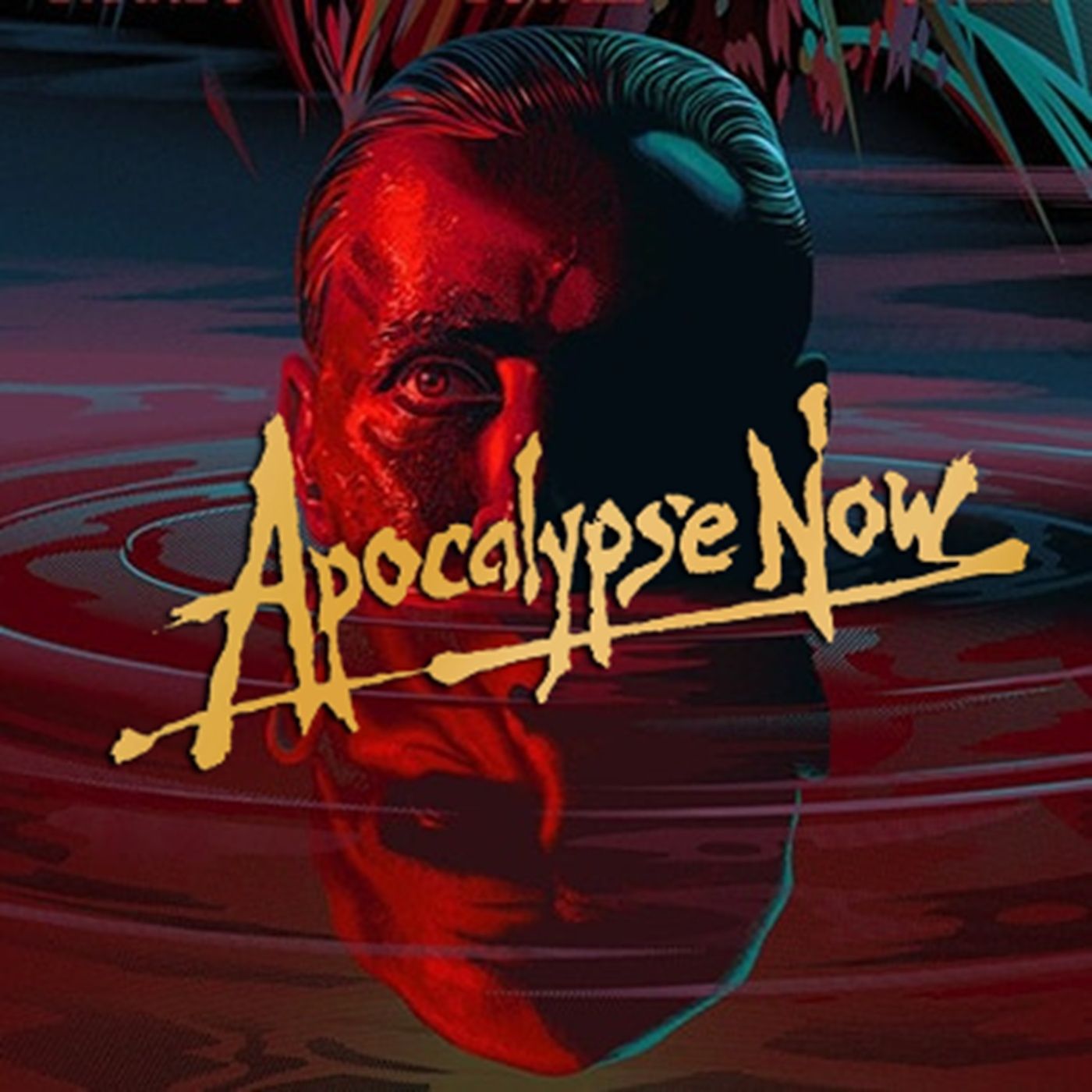
"I love the smell of napalm in the morning!" Our limited series, "A Film at 45" is back to celebrate the 45th anniversary of the films of 1979. We're dusting off the end of a decade that changed cinema forever, with a fresh look at modern classics...

 Apple Podcasts
 Spotify
 Goodpods
 Pandora
 Amazon Music
 iHeartRadio
 Castbox
 Deezer
 TuneIn
 Podcast Addict
 Podchaser
 Spreaker
 JioSaavn
 Castro
 RSS Feed
 Our limited series, "A Film at 45" is back to celebrate the 45th anniversary of the films of 1979. We're dusting off the end of a decade that changed cinema forever, with a fresh look at modern classics and hidden gems that we can't stop watching! On this episode, David and Scott take the long strange trip into Francis Ford Coppola's masterpiece, "Apocalypse Now."
For exclusive episodes and content, check out A Film By... Podcast on our Patreon with a FREE 7-day trial. You can also sign up as a free member!
Check out www.afilmbypodcast.com/ for more information.
Email us at afilmbypodcast@gmail.com with your questions, comments, and requests.
Find us on X Twitter, Instagram, and Facebook @afilmbypodcast.
0:00 Hello everyone, and welcome back to nineteen seventy nine. In a Film Buys limited series, A Film at forty five. I'm David Burns. And I'm Scott Hoffman, and as usual, we're dusting off the end of a decade that changed cinema forever with a fresh look at modern classics and hidden gems that we can't stop watching. In this episode, we're taking a long, strange strip into one of the most talked about movies of nineteen seventy nine, Apocalypse. Now. I love the smell of pipe palm in the morning. Your mission is to seed up the nung river in a Navy patrol board when you find the colonel infiltrateds team by whatever means available, and terminate the colonel's command.
0:45 Damen aasive. I'm a soldier, na Na palm son. Nothing else in the world smells like that. I love the smell of a palm in the morning. We knew discussing films from nineteen seventy nine would eventually lead us to this Vietnam epic film directed by Francis Ford Coppla, a film that truly is a cinematic masterpiece and should be seen by everyone at least once from its brilliant cinematography, its vivid direction, massive epic sets, casting performances, and of course it's revitalizing usage of music from the doors. It's time to dive into this truly one of a kind film that without question changed cinema forever. Scott, there is so much to talk about for this film, and I know we can't cover at all, but please enlighten our listeners and tell us what this film is about.
1:39 Sure so, this three hour epic is set in the heat of the Vietnam War, where Special Forces Colonel Kurtz is believed to have lost his mind, murdered several people, and amassed a small army of his own who believed that he's a demigod. To prevent further murder and destruction, the army recruits Captain Willard to infiltrate Kurtz's world and assassinate him. While the objective seems simple, the journey is far from it. Willard must travel through the strangest parts of the war while keeping hold of his own sanity, which had been pushed to the limits by the war. Before this classified A mission had even begun. Will he be able to tear Kurtz's world down before he becomes a part of it. We'll find out in this biggest movie of nineteen seventy nine. Is that fair to say, Dave?
2:21 It is? Yeah, I absolutely would say that. Scott. It's funny that you and I covered another Vietnam film from nineteen seventy eight with The Deer Hunter, and clearly that was a film with very heavy themes, just like this one that we are discussing today. Yeah. Absolutely, there's just so much in this one. And you know, this film, which starts off with that iconic shot, you know that we see the jungle and the napalm exploding and the music of from the Doors and stuff like that, you know we're already in hell, right, I mean, we clearly are seeing the main character suffering immediately, Captain Benjamin Willard, And you know, we just go deeper and deeper into the depths of hell as this movie just moves along.
3:05 We get to see all these horrors of war and what it's like for those who are fighting it. Yeah, it was a very smart I think you hit the nail on the head by saying it's a descent, right, It's very much going deeper and deeper into more and more uncharted territory, I would say, or what feels like it, at least for the viewer, the depths of what somebody can endure, all the all the horrors they have to experience in the journey of the horror, but you know, exploring the twists and turns of the psyche. It is very interesting that just a year after The Deer Hunter, which had its own exploration of the impacts of war and the impacts on people's minds, to have it completely set in Vietnam and taking a look at the the spectrum of things that can happen to somebody's mind in the Vnam War.
4:05 So this is loosely based off what the eighteen niney nine novella Heart of Darkness right by Joseph Conrad. Is that correct? Yeah, that's right, And I believe it was about the nineteenth century Congo and this obviously got converted to the Vietnam War, you know, obviously to make it for this film. I found a very interesting definition of this film online, Scott. I don't know who wrote it, so I would love to get credit whoever it is. If you listening to this and you say, hey, I wrote that. Thank you so much because I want to give you credit for this, because it is exactly what this film is about. Colonel Kilgore's Little Napoleon Complex is a reinforcement of the main theme of both the Heart of Darkness novel and the film that having power in chaotic circumstances can lead to delusions of grandeur, with Kurtz being the ultimate example. Along the way, will himself will have bouts of the same symptoms. Wow.
5:04 Interesting. That sums up this movie so well, at least in my opinion. Yeah, yeah, yeah, it's it's a very interesting. We don't see much of Kurtz at all, right until the very end, but it's all this build up. It's all of this you know, discussion about what he's done, the links that he's gone to. We even get sneak peeks into what effect he had on the UH on Willard's predecessor. Right when he gets that, he sees that piece of mail where it's just scrawled out like sell the kids, sell the house, sell everything. Yeah, it's it's shocking.
5:46 It is. So we don't get to see Kurtz's journey, but we see Willard's and his approach toward where Kurtz is it's a very interesting way about it. And here's you mentioned that about Kurtz. Obviously, Marlon Brando place Kurts has what fifteen minutes of screen time this whole film. Yeah, that I find very interesting about this, Scott is you and I had a very similar discussion about Alien, where the zenenomorphs was only in the movie what eight minutes or something like that, and only towards the end of the film. It's very similar to this movie. Complete opposite films, obviously, right, But it's funny that you have this huge actor, Marlon Brando, playing this huge villain and you really don't seem until what two and a half almost two hours and forty five minutes into this film, And but it works so well because you're hearing about Kurtz, You're you're getting a knowledge from other people about Kurts, You're you're you're diving into the mind of the main character of Willard, and he's learning about it as he's progressing through this story, and you're you're learning it too.
6:53 So by the time you get to that point, it's just like this huge introduction of this character. And so it's like it's a it's a big epic moment, right. Yeah, absolutely, And I mean, you know, it's I'd say it's easy to say that his presence by the time we meet him is monolithic. I think it's kind of an interesting happy accident that Marlon Brando had showed up to the set with more weight than they expected, to be kind, and so in response to that, they had coordinated certain shots so that he was cloaked in shadow. So even though you're meeting him, he's still kind of wrapped in that mystery the entire time. I think that was brilliant direction. I know it was to work around a problem, but I can't imagine that wasn't part of the original intent because he's so well built up. It's also interesting, this is the second movie we've seen with this big actor who is elevated to such a big presence in the movie, yet has very little screen time in it, similar to what we talked about with Superman in seventy eight exactly. He was part of the main draw for the producers to even fund the movie. It was Brando and Hackman, and he's barely in it. But I'd say in this one, it's it's definitely more of an iconic presence for Brando. Yeah, because of those directorial choices.
8:25 Yeah, to go back to you what you're saying about those shots that they chose to hide his weight, Dude, that worked so well. It added such a different dimension to that character and made him feel even darker, unintended of his character and in the depth that he's fallen into. It added so much to the fact that they had to do that. Okay, the film benefited because. Of it, right, right, And like you said, with aliens, like I think with alien I think I mentioned this in that episode. If I was in the theater in seventy nine, I can imagine myself scooting forward in my seat to try to see through the darkness. Yeah, they always had the alien cloak in the same kind of way.
9:07 I feel like it would draw them further in, even though there's not much of a shock factor to Kurtz himself as much as the you know, the island around himself that he had created, which was shockingly horrific, Yah, decorated with bodies and heads and people hanging from trees and oh good lord. Yeah, you know it's it's We are introduced to Willard here at the beginning of this film, and we see on how much obviously he is struggling mentally. Yeah, apparently Martin Sheen was really struggling mentally as well, And during those scenes in that hotel room, that was really him struggling mentally and got lost into his performance apparently. And when he broke that mirror, that was actually him breaking that mirror.
9:58 Yeah, on his thirty sixth birthday. Yeah, right, very very interesting. What do they call it? Character acting correct or method acting? Method acting? Yeah? Yeah, I know that. And Coppola is concerned, right, he's seeing this, but he's recognizing that it's a performance that works really well for this character. So I empathize with Martin for having gone through that, But I think the movie is better for that particular performance despite how it came about. Yeah, it absolutely is, because I mean that's somebody putting their real life into it and not realizing it, I guess in the moment and the fact that they just kept rolling and kept it going with again another benefit to this film that made it bigger and better than what it could have been. Right.
10:50 Well, And I mean, I'm sure you probably have something to touch on with this, but apparently it's not the only health concerns that she and had during production. Right, that's what I read about a near fatal heart attack that he had earlier that year, and he was worried that it would stop production, so he lied about it so that he suffered a heat stroke and until he came back to the set for certain scenes, his brother Joe filled in for him and provided the voiceovers for his character, which I never would have guessed. I would never have guessed that. I'm kind of curious about that, Like did he provide all the narration voiceover or just elements on it. I don't know, but it's interesting to.
11:35 Hear well if if he did some of it, he did half of it, you never know, because he sounds just like Martin. Sheen right exactly. It's crazy, but that the whole family, I mean, you know, we're gonna ge a little bit to talk about the impact of the film. You know, his son Charlie was obviously in another Vietnam movie, Platoon, that was done in nineteen eighty six. When I'm listening to the dialogue here in Apocalypse Now and I see Martin Sheen on screen, I can't. I gotta tell you, I got lost little bit that you am. I watching Charlie Sheen in Platoon, I. Felt like, yeah, well, and I see so much of Charlie.
12:19 I see so much of Emilio in him. This is such a youthful performance by Martin, obviously at that age, but it's it is fascinating, how you know the parallels between this and Platoon and the similarities with his sons. When we're on the topic of sons and heart or not heart issues, but traumatic experiences. Apparently Amelia was on set during some of the production, and so apparently Lawrence fishburn or Larry Fishburne as he's credited in this movie, saved a Elia from dying in quicksand during some downtime on the set. So it's a very for Martin's family.
13:07 This is a very dangerous movie. I'm glad they got through it. And also we also benefit because he caught the attention of Francis Ford Copa apparently because when he was casting for The Outsiders he remembered Emilio, he thought of. It, and how young he was there to actually remember that, you know, yes, obviously he did said something that he really made an impact on Francis Ford Coppola that says a lot right there. Well, another actor that I want to talk about for sure is obviously in his younger days, and of course that is Robert Duvall, who plays at Lieutenant Colonel Bill Kilgore. He to me again, he's like Marlon Brando, what fifteen minutes of screen time again in this film and got nominated for an Academy Award because of his role in this movie. But man, I gotta tell you, he was probably one of my favorite characters in this movie. I mean, I know, the dude was mad, and I know you know what he was doing in the war, but he still had a good side. He had a bad side. I don't know what the belief in this guy. But his introduction was incredible. The whole chaos of that scene. Man, I cannot imagine the choreographing of filming that scene where he comes in on the helicopter.
14:25 You got all of that chaos going on, you know, it was it was crazy. But his introduction definitely made an impact on me in this film for sure. Yeah, and it's again, it's kind of shocking to see him in such a youthful role, but you were used to seeing him in so much. We saw him last year an in vision of the Body Snatchers yep, the Preast on the Swing, I think it was that was kind of fun. But he has some of the most iconic scenes and it's definitely because of his delivery. It's then, you know, I love the smell of Apol in the morning, that's everywhere, that's that's that's not something you can separate from this movie, like absolutely associated with it. The same with the what is it the Flight of the Valkyries, the Right of the Valkyries, Yes, Right of the Valkyrie yep, yep.
15:16 Very iconic, and talk about the sprawling scale of this movie. To coordinate scenes like that is absolutely incredible, And he's very he has kind of a magnetic personality despite the fact that he's on another level of the spectrum of sanity that we're seeing on this as demonstrated by him kind of broadcasting that announcement to give him a board back, like just don't answer, keep your head done. But he's got a great energy that that's captivated and draws somebody in. So I feel like that's something that's an interesting parallel to Kurts, where it's somebody who can you know, bring so many people together rally, so many people are together around him, but he's not using his position in the best way.
16:02 Right. Yeah, yeah, here we go again, Scott, You and I talking a little bit about Harrison Ford once again. I know it's right playing Colonel Lucas. Surprise on the name, because we know why he's called Colonel Lucas. Apparently Ford was able to pick his own name, so he did it after George Lucas. Apparently very small role, but still very memorable. I mean, as soon as as soon as you hear his voice, you have made oh hate that's Harrison Ford. So it's just kind of funny. He always pops up in our conversations or movies that we are discussing. Scott, absolutely, Yeah, we were just talking about four Sten from Navarro, right just last year. I was shocked to see him in this movie. Very interesting. I was also shocked to see another fresh face, Larry fishburn Oh.
16:51 Yeah, Larry Fishburne, also known as Who's Scott Clean Queen? Yeah? Yeah, very interesting character. Yeah, very interesting in how much of a role that he had for somebody who was brand new to the Hollywood scene. Yeah right, I read that. He so apparently he played a seventeen year old, but he was fourteen when production began in seventy six. Couldn't tell it, no, not at all. But apparently filming took so long that he was actually seventeen when it finished. But still he's It's a I don't know whether to call it a minor role, but it's definitely a pivotal role. It is in the movie. Among those on the boat, I'd say he's one of the most important.
17:40 I would I would completely agree with that. And one of the most heartfelt moments of this entire film for me anyway, was and you know where I'm going with this is when he gets killed. Yeah, and he's listening to the recording from his mother. Man, that was rough as the record going. They realize that he is dead, and she's talking about that they're going to buy him a car when he comes home. They're going to help take care of him, you know, make sure he stays safe and stays away from the bullets. All of that's going on while we know he is now dead. Man, I got here. That was a real scene. That was a very rough scene. It was definitely unexpected, and it's even more poignant knowing that it was his Laurence Fishburne's actual mother that recorded that audio. I kind of wonder if missus fishburn knew what was going to happen in that scene, because if I was her, I would have a hard time getting through it. I don't wear that a couple of times.
18:37 Yeah. Absolutely, it just very a very major moment in the in the film. For at least you know that character, and for those who are on that boat with him, you're absolutely right. He didn't feel like a minor role at all, and he was really really important to that crew on that small boat. There's no doubt about that. Speaking of another small role on that boat is a man known as Frederick Forrest, who plays Jay Chief Hicks Scott. I was in a movie with him, really, Yeah. He played Sergeant mcspadden in John Frankenheimer's TV mini series Andersonville, which was filmed in nineteen ninety four. I was in that movie for the entire time of filming, and Frederick Forest had a major role in that movie. It's funny when I was on the set and watching him perform, I knew who he was. I knew what movie was from that was Apocalypse Now because it was such a big film. I already knew what I had, what I was watching in front of me perform. You know the experience I was getting in watching that. So yeah, I have that connection with mister Frederick Forest. He was a fantastic actor.
19:46 Well that's impressive. I will say that he had one of the most He again had that magnetic personality. Yeah, brings you in to him talking about his time as a chef and all this other kind of stuff. I had to wind the scene where his head is dropped spoilers where his I mean it's come out forty five years old. When his head is dropped into Willard's lap. I had to rewind a couple of times. He's like, did I just see what I thought I saw? That was shocking? Yeah, very great shocking. But yeah, it means that the whole film is shocking in so many places. And it's that's what makes this movie so special, right is because it's so epic and scope.
20:31 I know Francis Ford Coppola when he was directing this went through a lot of problems mentally. I believe he threatened suicide several times during making this film. I mean, you got to think how big this thing was. I mean, he even invested I think I want to say, seven or eight million dollars of his own money into this film because it was going over budget. So there was a lot going on that he was struggling with. And you got to think. My understanding is they didn't have a place to develop this film over there, so everything he was filming, he didn't see it. It was getting sent back over to the UUs to be processed, so he didn't see it until he came home to see exactly what they had filmed. Can you imagine.
21:18 No, not with this scope, no way. The pressure that man had to feel. I can understand why he was threatening suicide at times, because, my god, I can imagine going through. That well in the pressure. Like you said, I read that he had to put up his car, his house, and the profits from The Godfather is security to finish the film because of budget concerns. That would just that would stress me out. That would absolutely stress me out. I couldn't do that. I know. Kevin Costner is doing that now with The Horizon. You know. I don't know if I could do that. Man. I think one of the big rules out there is do not put your own money into a movie apparently is a rule, and some people don't learn that lesson.
22:03 Yeah, okay, it works for Kevin Smith. I'll just say it does. It works very well for Kevin Smith, works for love. But yeah, absolutely, well, let's move on through the lens Scott, and let's talk about somebody behind the scenes. There is so many facts about this movie that we can, Like I said, we could be here for hours discussing this movie, but what interesting things did you discover? So I was kind of shocked when we're talking about the production. The original intent was to spend just five months filling this and then stretched out into a year. Lots of problems with expensive sets being destroyed by weather. We talked before about Marlon Brando not only being physically different than they thought he would be, but being completely unprepared.
22:53 And I had read that Coppola had to read Hearts of Darkness to him to get him to understand what was happening at that talk about stressful situations. I can't imagine having to do that. Yeah, and I've heard so many stories and how difficult it was working with Marlon. I can't imagine having to work with him. He was good at what he did, don't get me wrong, but man, everything I've read about different movies and behind the scenes problems he has caused, you know, it's I can't imagine. Yeah, I imagine he may have had a contribution to people developing smoking habits, because if I'm on the side of this, or you know, I'm with him on Superman and I'm seeing him read from a diaper, ye, just to say on track, I'd be pacing to say the least.
23:39 Absolutely. Yeah. Well, apparently the United States military refused to lend any kind of military equipment to this film, I guess because of the order to kill Colonel Kurtz, so he actually had to borrow local military equipment to make this. He gets us completed, and if you saw all this stuff it's in this movie, that's impressive. Yeah, that's that's his own surplus warehouse. Yeah, please, jeez. And you're right, I mean, the scope of this when you look at these sets. This you know again, this is you know, before the day of CGI and some blue screen and green screen and stuff like. I mean, they did have it, but you weren't going to use it for a film like this. You use that stuff for like sci fi and those kind of things.
24:23 These kind of movies, you build the sets, you film it on location, and that's exactly what they did, and that's why it looks so epic in scope. Yeah. Well, and you had mentioned, you know, how long it took for it to be produced and how long it took for it to you know, the links they had to go to. Once he finally got that footage, he had to edit over a million feet of film. Wow, for this. I can't imagine that. And I hope he did that in swell bites because if I saw that, I'd probably turn around to walk up. Yeah. I think it was what three years to edit it? Does that sound right? Yeah?
25:04 That sounds right. Can you imagine? No? No, but worth it? Right? Oh yeah, we're given the end result we got absolutely. Absolutely worth it. But wow, that's off. Yeah. I mean I do a little short film and I'm I'm like freaking out at like editings, what little footage I have? I can imagine three years? Good lord, no way, no way. Yeah. Well, it paid off when it was released at the box office. It got over eighty million in the US one hundred million worldwide, not to mention what it's earned since then. It's been released, re released, it's discussed ad nauseum like it's definitely had an impact and influence that's lasted the test of time. Yeah. Absolutely, So I do want to call out John Milis, who wrote Apocalypse. Now. I know Jeff and I discussed in a film by Big Wednesday, a surf movie that was done in nineteen twenty six, John Miless. It's funny that we we talked about that surfboard. You know that Kilgore wanted back seeing those surfboards and stuff like that, and knowing that John Milis wrote this movie kind of you know, brought that impact to me, like, hey, we just discussed the movie that he wrote and directed about surfing.
26:11 That's pretty cool. Yeah'd be interesting to see all of his you know, a series of his movies with the spines each having a surfboard on them. Yeah, that would be pretty neat, wouldn't it. All Right, Dave, Well, I tell you what, We've said a lot about it already, but I know we've got a lot more to cover. So let's go ahead and take a break and I'm gonna come back. We'll get into let's score. It all right, everybody, welcome back, Scott. Let's talk about the score of this movie. I know this was done by that Carmen Coppola, the father of Francis Ford Copla. I know Francis had assistance on it as well, which I found kind of interesting, and I think they were looking at somebody else, but I guess they decided to keep it in house with a family.
26:52 Yeah, apparently, so I was. I had no idea that there's this family connection. I get need that. Carmine was Francis, Francis's father, also the father of Talia Shire. Yeah, we just talked about in a Rocket two episode. But apparently he's been involved in a lot of Coppola's work. He composed The Outsiders, contributed a lot to the Godfather movies, Black Stallion, to name a few, And I think the choice to bring him in was the right choice. I don't know if it was an obvious choice necessarily, but I think it's absolutely necessary to see his vision through.
27:40 You got to go with somebody you know and trust. Yeah. Absolutely. And you know, going back to talking about John Mileth a little bit with Big Wednesday, I know during our discussion and if you watch that film, it's got an epic soundtrack in that movie, and I know John Milith had the idea to bring the right of the Valkyrie into this movie. Apparently he's thought that it was gonna be too obvious, that he didn't want to put it in there, But I'm glad they did because that is one of the most memorable scenes from this movie. Absolutely well, and aside from the score, there's some significant needle drops and yes, as you mentioned before, with the doors, right yep, I had read that this was a significant contributor to renewed excitement and interest in the doors, and you can absolutely see why. Absolutely the end in the beginning is pitch perfect.
28:35 Yeah. Oh it suits this movie so beautifully, it really does, and nothing else would have worked. So I'm glad they utilize the doors for that because yeah, it's it's just fantastic. It fits perfect without question. I know there's like some other music in here with a Good Times roll susi Q. You hear him throughout the movie, more like on the radio stuff in the background, you know, those kind of things going on, but not the big the big artist that you would normally hear in movies like Platuna I think had a pretty big one where you hit a lot of music in the background and stuff like that, But this movie didn't need it. You already had a few things that we needed that worked so well in this movie.
29:18 Yeah. Well, at the same time, you know, I don't know much about preceding movies about Vietnam other than how we covered, but it seems like the incorporation of pop music kind of giving the Vietnam or a soundtrack is definitely something that reverberates and we see carrying through every war picture sentence, specifically with Vietnam. They're they're inseparable. Yeah, absolutely, absolutely. All right, Well, let's quote this, Scott find any interesting quotes out there. Yeah, I'll go back to a quote from Laurence Fishburg that I found interesting and how much of a turning point this was for him in his career. He said, Apocalypse Now was really the beginning of me thinking of myself as an artist. It was the beginning of my understanding of cinema, and it was the beginning of my understanding of the world. Because I was suddenly taken out of Brooklyn and I was in the Philippines, in the middle of Asia. I was in a place where most of the people looked like me, So it opened up a world of possibilities. My work of Francis on Apocalypse Now and all the films that did afterwards with him, The Cotton Glove, Rumblefish, Gardens of Stone really shaped me and formed me as an artist. I'm glad that he got that out of this movie because we benefit from it.
30:38 He's an amazing actor. What about you. Absolutely, So mine's kind of short and sweet, but it really speaks to Francis Ford Coppola and this film. So at the nineteen seventy nine Cannes Film Festival, Francis Ford Coppola said about the film, my film is not about Vietnam. It is Vietnam. Yeah, And when I saw that quote of like, that's all I need because that speaks volume to what we are discussing today, uh, with this film and with Francis Ford Coppola, because yeah, it isn't it is in fact Vietnam, Scott. Yeah, there's no two ways about that for sure. And as you mentioned that, it just brings to light, you know, taking the time machine back to when you're seeing this in the theater. It's nothing long after the end of the Vietnam War.
31:27 It isn't. You're right, So the people that may have gone to see this, especially if they're Vets, Like I can't imagine that experience for them or family members of vets going to that, And I thank them for their service and their their contribution there, right, but I can't imagine it at that time. We're watching it forty five years later and it still has an impact on us. I can't imagine what it meant to people at that time. See and you make you make a good point there too, Scott. For anybody who's watching it for the first time today, look at it what people would have looked at it through in nineteen seventy nine when this movie came out, Just as you said, Scott, we just got out of Vietnam practically, and so many things were changing in the seventies, not just cinema, but everything else, you know, politically and stuff like that was also moving in a completely different direction.
32:19 And to see the impact of just this film in itself again, I'm going to use the word the epic scope that this film has. It's such a huge impact for everybody. We are, so we have seen so many war movies over the years since this movie that it's almost commonplace anymore. You know to see you know, the destruction of a of a person's soul, a soldier soul who's work, you know, fighting in the war. But this movie was something different. This movie was something special when it came out in nineteen seventy nine, you know. And let's go ahead and talk about the impact. We'll come back to some of the whatifs, because I know there's a lot there to do, and we'll come back to the rewind. Let's talk about the impact of this movie, because I mean we're already talking about it right now.
33:03 What it did to cinema. You know, this thing was huge. I know we had The Deer Hunter the year before, but come on, Apocalypse Now was in a league of its own. Would you grief Scott? Absolutely? And I mean, you know, thinking about how war movies were presented before this, most times, if you're looking at like a World War two movie or something like that, there are a lot of instances where it's you know, the heroic nature of the protagonist in the movie that clearly has an objective and you're rooting for them, and you know, uh now that we're not I guess kind of supporting Willard as he's going through his journey, but it's definitely not something where it's seen as just an action movie. It's seeing the impact of war, the deeper meaning of war and how it can have effects. That's spread out in a lot of different ways. And I think this and Deer Hunter had important influences on coming back to Vietnam often. Yeah, it's a topic that was pursued a lot in cinema, like you mentioned Platoon to name a few, But I think it helps to raise awareness of the human experience of having to go through that, and I hope it raised people's awareness to the impact
34:35 has had on veterans and their families and how much we need to be respectful of that and appreciate what they had to go through. And it's going back to what we talked about, you know, going deeper and deeper into hell. You know, you've got Willard, who we already see is struggling to begin of this movie, and then we progress with the story, we learn his mission that he has to go you know, kill Kurts, assassinate him, and then he goes off to find Kilgore, who's got the helicopters, who's going to take him further into you know, the war, what's going on? And we see more and more of Vietnam, the destruction of it, of people getting killed, innocent people get let's talk about the you know the scene where they find those innocent people who are in the boat. They pull them up to check on them, and you know, they think they they're hiding something, you know, and then they just shoot all of them because the girl takes off running and she was just going to go save her dog. You know, she was only concerned about her puppy who she had hidden and was just trying to protect it. And then they all just go and kill these innocent people. You just get different levels of the hell as you move along in this movie until you get to that final layer where Willard meets Kurtz and you've already lost so many people along the way. I mean, even the oddball scenes with the playmates, you know, you got that's going on because you know, the soldiers need something to look at.
36:04 And I know that's not the correct way of saying it, but you know what I mean, because you know, we definitely want to respect everybody, but you know, in Vietnam, soldiers, you know you want something there to you know, to at least appease their mind of what's going on to the horrors of the war. But then you have the other piece of that too. When they were in the helicopter, they exchanged fuel or times with the girls, which to me is one of the most awkward scenes in this movie inside that helicopter with those playmates. I struggled watching that scene. Scott. I don't know about you, but it just felt so weird. Yeah, there's definitely, in my opinion, nothing sexual about it. Yeah, it's very much about you know. I mean, even though Chef is, you know, taking off his pants, and there's just different ways that they're they're interacting with them and you can see that it's it's not it may be partially about sex, but it's not all about that. It's not necessarily romantic either. It's it's almost, ah, I don't know, it's like scientific observation or something like that, trying to look at how they're interacting with each other. It's a it's another look into what they're going through. And as you said, it's not necessarily like I mean, they are objectified when they're dancing around on the platform, but when
37:36 the soldiers get time with them, they're spending that time trying to make human connection right, but they're just going about it in very awkward ways, very unexpected ways, especially with all the birds. Like what was that? But but very very interesting. It's also like something you said reminded me of kind of the journey that Willard is taking toward Kurtz when he meets Scott Glenn, Oh, yeah, as his predecessor that was sent to complete. The same mission but ended up joining him. Joining Kurts. The thought process that Willard must be going through to say, like, as I get closer and closer to Kurtz, will I be able to do what I need to do? What am I going to find when I get there? Am I destined to have the same fate as Scott Glenn's character? All of that wrapped up in what he experiences when he finally gets there has got to be mind boggling what he was going through there.
38:44 Yeah, and you see just all of this discussion that just boiling for when you talk about this movie more and more. There's so many layers to this film that if you just watch it, the journey of Willard and the people he's with on his mission, it just it really it's like an onion man. You start stripping away all these layers and you get deeper and deeper into the core, you know, to you know, to get to the end of this movie. It's really a neat thing to watch unravel, which is why this movie is such a masterpiece. Yeah, and that's definitely one that needs to be watched, right. Yeah, if you're a casual movie fan, I understand it's a three hour investment. A lot of these epic movies three hour investments. But for for movie fans specifically, it feels like it's required reading. It's definitely not pleasant, so buckle up when you go to watch it. But I can see why it's considered to be an essential movie to watch.
39:43 Right, absolutely, All right, Scot, let's talk with some about the what ifs. There's a lot of them in this movie. I don't know if we had to get them all covered, but what did you uncover? Well, some some different people that were considered for Willard, uh. The first choice apparently was Steve McQueen, who didn't want to leave in America for a long time. And apparently al pat you know, and Flinney's Food agreed because they also turned down the role. Yeah, Jack Nicholson, Robert Redford, and James Kahn were offered either Kurtz or Willard. There's a bunch of big names right there. That's a lot of big names.
40:23 What about you? What did you find so? One of the things I found it interesting, I didn't know George Lucas was originally set to direct this film. Neither. I did not either. When I read them, I'm like what? And then apparently he dropped out, you know the the I guess he had an initial plan to shoot the movie as a fake documentary on location in South Vietnam, and I guess the movie just didn't progress far enough. And I guess with him backing out and everything, I guess it costs some friction between him and Francis Ford Coppola my understanding, and George Lucas he's been admits that this is the point where he lost his good friendship with Francis Ford Copla was because of this movie. I'm glad we got Francis for Copa, not George Lucas. No offense, but I don't know what we would have gotten if we had George.
41:13 I think we're I think we're better for it because as a result of that, we get Coppola's version of Apocalypse. Now we get Lucas being able to do Star Wars. So obviously everything benefits aside from the friendship, which is which is shame to hear. Right, Yeah, no, absolutely, I know one time too. Wasn't Orphan Wells attached to this film somewhere? The role Kurts? Was it Kirts? I think he was offered. That would have been That. Would have been interesting. I would have wanted to see it cast in the same way that it would be very interesting to see an absolutely bald Orson Wells. Yeah, in that role.
41:54 That's right, But so many different in so many weird things I suppose could have happened with all the different But as big as the movie is and was, I'm not surprised to see all these names that were at all. Yeah, all right, well, Dave, let's take another quick break, as we have to in many epic kind of discussions. We'll take a little bit of a break and when we come back we'll get into the rewind. All right, everybody, welcome back. Let's rewind and talk about a little bit more of this film. Any likes or dislikes that we may have scott any likes dislikes. I know there's a lot alike about this film, but who knows. What do you got? Well, some interesting things that you hadn't discussed yet. I thought the scene gathering mangoes with Chef was a great conversation, Yes, because it seemed like it was even though it resulted in something very dangerous with the tiger attack, it felt like a great connection moment for them to be able to get into the depth a chef as a side character.
43:00 But at the same time, it just felt like it was that constant tension that leads to them saying never get off the boat. But I thought that was it was a good scene to add. Yeah, and he even he said don't get off the boat. Don't get off the boat. Absolutely, I'll repeat it. So, yeah, I wouldn't get off the boat, that's for sure. What about you? So there's so much to like about this movie. One of the biggest things I told you was kil Gore's introduction. I absolutely love that movie. That scene. I loved it, loved it, loved it. And it's funny too because I'm going to connect it to something Star Wars, which is George Lucas. If you've seen any of the animated the Clone Wars, it really had that vibe. Oh that's interesting with.
43:40 Everything that was going on in the background. You got you got a ship coming down, with the commander coming out, moving into the action of what's going on, and meeting people into talking about them as you know, the helicopter leaves in the background, all the kind of things. You can see it right of what happens in the Clone Wars. You know, I know it's a weird connection because we're talking about Vietnam, and but you know, it really had that that vibe. But so much going on in the background. And speaking of that, one of the things I found very interesting is apparently they had to redoub almost all the dialogue, which makes sense because think about what's going on in that background, the helicopters, all the noise, so they had I think they had redoub almost the entire film when it came to those kind of scenes. I can't imagine having to go through that because you couldn't hear them. There's no way that could have been audible with those helicopters coming in like that and leaving no way.
44:28 Yeah. Yeah, at the same at the same time you lose maybe that the ambient noise with them. But it's yes, yeah, it was a good call because if we lost any of that dialogue, I think that would have changed this movie for sure. Oh it would have been devastating to it. There's there's no doubt about that. So one of the another thing that I a couple of things I want to talk about here with with the rewind. One of those is the very okay so in the in the Deer Hunter, remember our discussion, we said that, you know, the beginning felt so long, so slow, and we kind of struggled with a little bit, right, yep, I feel this movie has the opposite problem. I felt the ending was kind of long. I understand a lots going on, and we're discussing about the different layers and stuff like that. I just felt the whole ending piece where he's already met Kurts and it's all drawn out. I understand we're trying to go through maybe seeing some more madness going on within Willard's head, but it just felt a lot of that was drawn out. In my opinion. I could even see, like the French scene, you know what I'm talking about.
45:36 I couldn'ven see that scene could have been cut? In my opinion, that's me. I don't want to pick on it, but you just what I'm saying. I do. And it's interesting to bring that up because I forgot to do that. It was even in the movie. But I remember when watching it this time to prep for this episode thinking what a hell of a time for somebody to go get popcorn? Yeah, Like, can you imagine, like you get up before they're on the plantation and then you come back and you're like, what how'd they get? Is this a dream sequence? How they end up in this house? Very jarring? And I think when you mentioned like the end scene, I agree it did seem kind of drawn out, and it seemed like the ending that I had seen felt somewhat anti climactic with all the build up that we had. But knowing that that end scene had to do a lot because it wasn't just about like, Okay, how can he get close enough to kill Kurtz and then how does he get out without getting killed?
46:39 Right? It also had to answer the question, so what does he have over the people around him? What his endeared them to consider him to be a DemoGod? What exactly is it? So you have to spend that time learning how different people are seeing him with the Hopper's character, the different kind of methods he has, the the attitudes of the people around him. There's a lot to unpack there. But it did feel like, after that long on the boat, when is this guy gonna die? Exactly? Yeah? Yeah, but you're right. I mean there's a lot to unpack.
47:20 You've got this whole journey to get to him. You can't just do it quickly because then you would feel cheated, right, right, So I understand some of that as well. I just maybe it may it could have been done a little bit differently, but but then that's just me. It's funny that you mentioned Dennis Hopper though, too, do what a weird character? Oh my god, I mean considering how much we've seen of Dennis Hopper since then, Yeah, that seems like, sure, yeah, that's Dennis Hopper. Okay, we get it now. But yeah, very interesting that that Hopper and Brando had some uh some clashes on the set, and then there was genuine and anger from Brando to Hopper. So a great performance, I think, but definitely.
48:09 Definitely Field, yeah, absolutely, And then the other piece is I guess they really slaughtered that water buffalo. Yeah, that was real, dude. That was hard to watch after knowing that, very hard. It was hard to watch during that. Yeah, yeah, even if that's fake that yeah yeah. Oh my goodness, I just can't imagine that actually happening. I know. The only other time I know a real animal was killed on the set was the original Friday the thirteenth, the Snake. They actually chopped the head of the snake off and they weren't supposed to. But then this one, this one takes the cake, because goodness. It's very visceral. It's a lot of build up because there's all the ceremony that precedes the act, and then when you see it, it's kind of like, well, I'm off burgers for a while. That's that's me a stick.
49:01 And there's another scene that that kind of surprised me because it almost seemed like a red herring scene. And I'm thinking of the USO okay platform that they write up on had kind of a thunderdome vibe in my opinion, with all the lights and all this other kind of stuff when they were rolling up to that and I first saw the movie, I was thinking, oh, well, this is Kurtzland. Yeah, this is where he is, because it's like, you know, in the middle of all this giant bright lights that looks like Coney Island. So that was kind of a jarring scene to see at the beginning, and it made it seem even longer because they was like, well that's not him. Oh man, we still have a long way to.
49:45 Go, and you look like how far are we into this movie already? Yeah, I check that. Watch Yeah? Absolutely no, All right, Scott, where did you watch? Is that? So? I know it's available on a lot of platforms right now to rent. I highly recommend seeing it on blue RAYSI get into special features. I personally saw it on a platform called Plex okay, yeah, which is running it for free right now. You have to endure some ads which come at unfortunate times, but if you're feeling budget constraints, I would recommend that, or, as I always do, go to the library. Just go ahead and get that physical copy and see it the way it was intended.
50:26 Yeah, what about you? Absolutely so I actually ended up watching it on Plex as well. I thought I had owned a copy of this film, and I've looked everywhere for it and I can't find it, so, which is really irritates because I'm pretty sure I owned it. Where'd it go? I don't know. Maybe it's in Jeff's library now. Maybe he took it for me as for spite for for keeping the other movie from him for so long. I don't know. He's holding it to get his happy Gilmoark back. Exactly, so I'll to keep looking for me. I ended up watching it on Plex as well, just like you did. So yeah, all right, so well as always, I want to thank our listeners and for listening in on us and I'm discussing Apocalypse now. It is a pretty epic movie. If you've not seen it, definitely go check it out because it deserves to be seen by everybody at least once.
51:10 Because I will defend that it is a cinematic masterpiece. There's no doubt in my mind. Absolutely. Yeah. I'm glad we had to just talk about it. Me too. So if you want to reach us, you can find us at www dot a film by podcast dot com. You can reach us at a film by podcast at gmail dot com, a film by a Podcast on Facebook, Instagram, and Twitter. Until our film reels start rolling again, go out, watch something new, watch something different, and who knows what you will discover next. Thanks everyone,