A Film at 45 - Invasion of the Body Snatchers
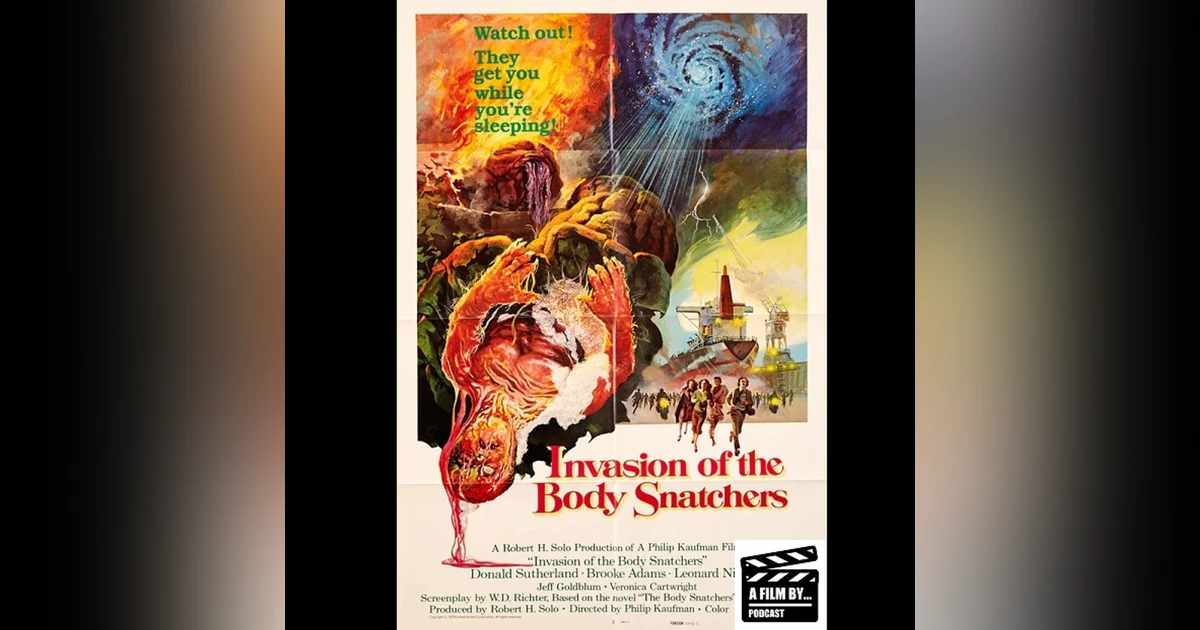
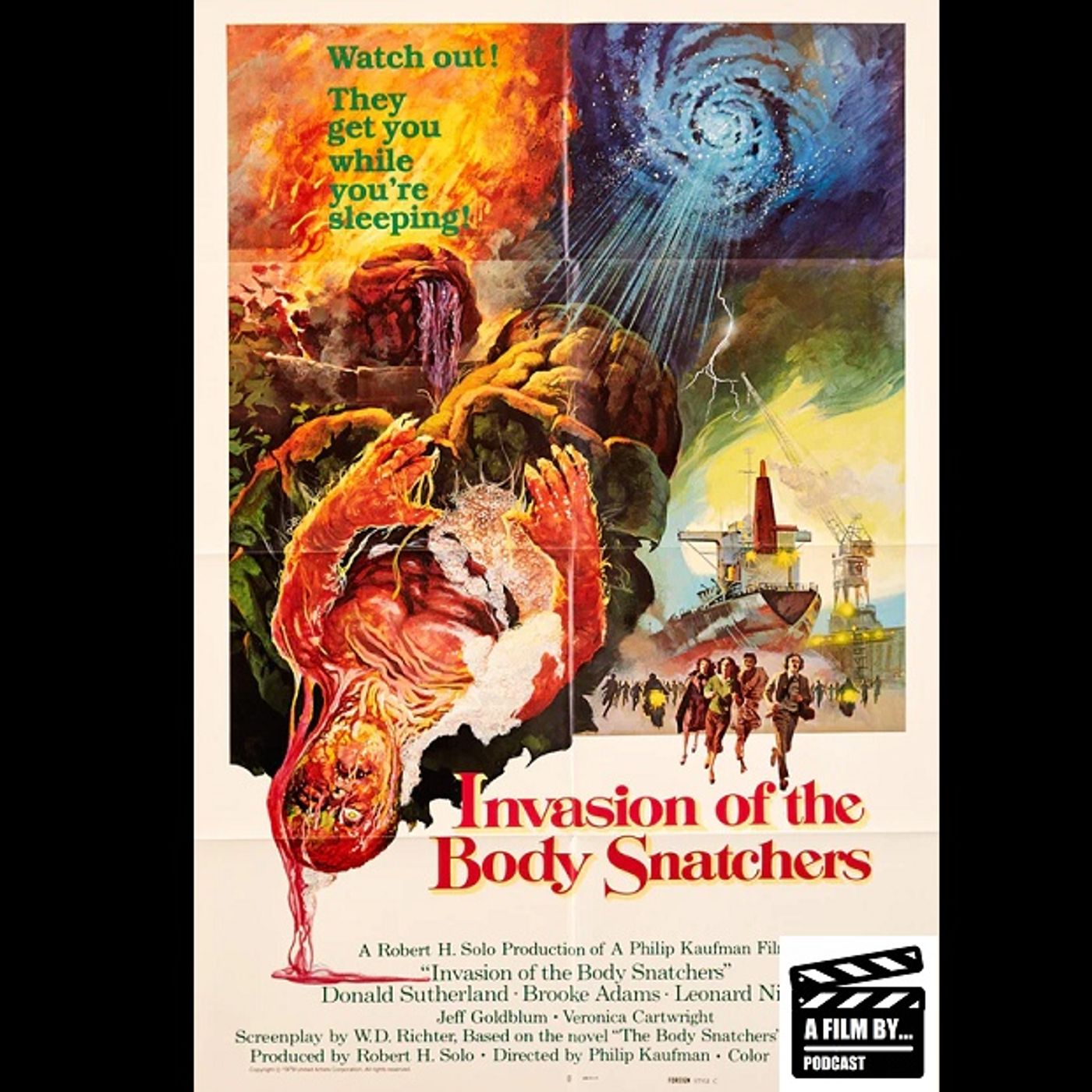
Get some sleep...
Join David Burns and Scott Hoffman as they celebrate the 45th anniversary of some of the most memorable films of 1978. This week, they're discussing Philip Kaufman's sci-fi horror remake Invasion of the Body Snatchers, starring...

 Apple Podcasts

 Spotify

 Goodpods

 Pandora

 Amazon Music

 iHeartRadio

 Castbox

 Deezer

 TuneIn

 Podcast Addict

 Podchaser

 Spreaker

 JioSaavn

 Castro

 RSS Feed
Join David Burns and Scott Hoffman as they celebrate the 45th anniversary of some of the most memorable films of 1978. This week, they're discussing Philip Kaufman's sci-fi horror remake Invasion of the Body Snatchers, starring Donald Sutherland, Brooke Adams, and Jeff Goldblum.
Check us out at www.afilmbypodcast.com
Email us at afilmbypodcast@gmail.com
Find us on Twitter, Instagram, and Facebook @afilmbypodcast
0:00 Hello everyone, and welcome back to the year nineteen seventy eight in a film by Limited Series A Film at forty five. I am David Burns and I'm Scott Hoffman, and once again you're joining us to dust off the end of a decade that changed cinema forever with a fresh look at modern classics and hidden gems that we can't stop watching even forty five years after their debut. In this episode, we're showing some love to the scary side of seventy eight with psychological sci fi classic Invasion of the Body Snatchers. How do you know my name? I didn't tell you my name? Something terrible. They're coming and one of us might be next. They're already here. They're already here.
1:03 We have an evasion on our hands, and they could be lurking in anyone. What I like about this? This is considered by some critics to be one of the best remakes in film history. Did you know that? Yeah? I've been hearing that a lot and looking into this and yeah, absolutely see why I've I haven't seen this before watching for this. This is one of the first movies that I watched for this podcast, and I've probably seen it like five times since then. It's just fantastic. It's so good. And for those who don't know this, you know, this movie came out the original came out in nineteen fifty six, which I have not seen, Scott, did you see it? I have not seen it except for that classic you know, Kevin McCarthy close up at the end, right, which we get the similar stuff with Donald Sutherland. No, no, no, but we'll talk about it. We'll get there, we'll get out there.
1:57 But yeah, and it's also based off a novel by Jack Finney, which you know, I haven't read the book either, but just by what I have seen in the nineteen seventy version, I really do want to go back and revisit, or not revisit, but see the nineteen fifty six version and maybe even pick up the book, you know, Yep, yep. So I would say we'll probably due for another remake of this movie, yeah, which will be interesting because it and we can talk about that in a little bit, but you know, it kind of captures a different sense of psychological paranoia in the different decades that it comes out in, right, Yeah, absolutely, I would agree with that. So Scott, I know there's quite a few people who probably have not seen Invasion on the Body Snatchers. How would you describe this to them? An insidious threat is growing in nineteen seventy eight San Francisco, and the danger maybe everyone around you. At first, the person sleeping next to you just seems a little odd. You think it's all in your head, until you notice a subtle change in someone else.
2:54 Then everyone seems different. But have they always been this way? By the time you're realize you're not the only one seeing this, that comforting thought becomes a terrifying realization. You're not alone. It's everywhere, It's everyone. It's a paranoid sense of panic that you can't escape because there's no one nowhere to run from the invasion of the Body Snatchers. Now, it's likely that even if you haven't seen any of the movies, you probably understand the idea. It's the whole pod people right, people being replaced. In this remake of the nineteen fifty six classic, the threat comes in the form of microscopic spores that drift on solar winds from the desolate wastelands of space to Earth as a seemingly innocent invasive species of plant life. They grow into tiny pods that become human sized cocoons, where they hatch perfect replicas of humans designed to replace us, consume the planet, and move on to the next one. It's a sci fi classic that pulls you in wraps its tendrils around you and never let's go. So let's start getting into it and talk about all the aspects of this crazy, weird, kind of chilling movie. It really is chilling.
4:03 I mean, this movie starts off with you know, kind of you know, calm, and you're trying to figure out where this film is going to go. I mean, we meet Matthew Binnell who's played by Donald Sutherland. He's a health department worker and he visits the that that restaurant where you know, everyone's like giving him that dirty look because coming in and investigating their kitchen. Yeah, and he finds what is it, the the rat turd in the soup, Yeah, the ret turd caper um. And what I find really so funny about that scene is, you know, later on, you know, he makes that was a phone call to Elizabeth. I believe it was to say that the guy got really mad at him, so he threw like the bottle of champagne or wine or whatever that is windshield and broke the windshield. And later and later on we see him driving the car with the broken windshield, which I found hysterical, yes, and very clever. It wasn't until a couple like this one of those movies where there's layers to it and you start noticing things in every viewing. M Yeah, let's let's get back to the windshield in just a minute. But like getting to getting what you were saying, like it's a health inspector. Like you assume that the kind of the title character, kind of a hero of the movie is going to be like a you know, a detective or something like that. Nope, this is the guy that comes into restaurants and when he sees things out of order, he can shut them down, he can have a letter send.
5:30 He seems to really not like this restaurant. I don't know what he has against Henri, but he's really got it on for him. Yeah, so's he's investigating these restaurants, finding these things and you know, looking for little subtle clues all around. But he's not the first one that starts to notice it. Like you said, he makes a phone call to a friend of his. I guess more of a I don't know if it's more of a colleague than a friend. Maybe a little bit of both. But we're a little bit of a girlfriend too, leaning towards that. Yeah, yeah, but you know they're both into kind of, you know, looking a little bit closer and looking behind the scenes at things. And the person he calls, Elizabeth drisco Will played by Brook Adams, is one of the first people we see that starts to notice something a little bit different because her boyfriend, Jeffrey Beyonce maybe starts acting a little strange, and she carries a lot of the kind of dramatic paranoia weight in this one, because she seems like something is off. But it's not just like he seems like he might be cheating or he might be you know that means something inappropriate, but it's more like he seems like he's very different. Yeah, I mean, it's it's her that pulls Matthew into this, and you know, I mean you really look at it and you see Matthew as like the main character, but it's
7:03 Elizabeth actually, who you know, uncovers all this and pulls him into all of this, right, right, and starts kind of yeah, starts starts looking at things a little bit differently and very quickly starts getting into a little bit of panic. And then Matthew has to try to call him her down and say, like, listen, you've you've been stressed. I'm sure it's nothing wrong. Like let me get you to talk to a psychologist friend of mine, um, doctor David Kibner, who played doctor Kidner Leonard die boy Um in his It's not his cinematic debut because he's he's already been in several productions, obviously best known for mister spock Ye on the original Star Trek series, but this is a year before he brings Spock back to the big screen for Star Trek the movie, Right. And I think it's funny is he actually took on this role in Philip Kaufman, who directed this, even said he tried to bring any more into this to kind of break that typecasting that he had as Spok. But even when he becomes the you know, the pod person later, he really does seem to be Spok again, right, right, kind of that emotionless Ben, because that's one of the things about the pod people is that they they inherently don't have any emotion, which,
8:33 as they kind of describe later in the film, it's kind of like the one difference between them. They're replicating humans in every way, You're still you, but it's not you. It's a replica of you that doesn't have any emotions. But they also kind of act with emotion. They can, you know, turn it on and play the part and all this other kind of stuff. But inherently it's it's not necessarily even like a mustache twirling um, you know, vengeful takeover um. They just simply drift here and just want to take us over and consume the planet. I mean, that's all right, exactly, that's not at all, Scott, not at all. One of the things too, that I love about this movie is did you notice the garbage trucks? Yes? How how subtle that is in the background.
9:20 And if you're really not paying attention, because I mean, you know, your focus should be on the characters and their dialogue as the cameras moving along following them, and if you're not paying attention, you won't catch that. Their garbage trucks are always at the location of someone who has turned into one of the pod people. Right. I really loved that, and it happens quite a few times throughout the movie. Yeah, and that's that's something that um, you know on initial watches of it when you first see so the first person that you see that's that's kind of replaced is um is Jeffrey the boyfriend. And let me start by saying, obviously, spoiler warning, it's it's a seventy eight movie. You hide your chance. However, I will say, um, if you're listening to this podcast, if you're a fan of what we're saying, and you haven't seen this movie yet, do yourself a favor and don't watch the trailer. Yeah, don't put this up at all, because there is a there's an ending scene that has a big spoiler, and I'll just get out of the way, just like, just trust us and go watch the movie because I really want to talk about the ending.
10:35 But I went into this having seen that ending scene as like the iconic scene, and it was like I was waiting for it to happen. So if you like spoiler free things, go ahead and crack this open and then come back to us and hear about the rest. Right, getting back to those garbage trucks, the first time that we see that. So Jeffrey is taking garbage out to this garbage truck and like, you know, bringing garbage out to them, and you're kind of wondering what's going on. Subsequent viewings you see that those garbage trucks never actually have any garbage in them. Nope, it's always this gray, whispy fabric material that's people exactly. It's all that's left of them is this husky stuff, which is kind of gross for Jeffrey in that first scene that he stuffs his old body into a garbage kid and takes it out to them. But yeah, those garbage structure all over the place, and it's just taking away the people. So even that they're in that first scene, it's not the it's not a bunch of garbage, and he takes that whispy stuff out, it's a garbage truck that's full of it. So by the time we see our first replacement, it's already pretty persuvasive, and it just goes to show you the intelligence of these aliens.
11:48 Do they know what people that need to take over in order to make this happen? Right, right, right right? It just adds that again another layer as you mentioned earlier to this film. You don't really catch on to that until a little bit lately. Oh wow, okay, I get it. That's pretty that's pretty neat, right, And how quickly it happens, Yeah right, I mean really quick. I was kind of surprised by that. I would think that, you know, with this thing being based on plants and all these things needing time to grow, I would think it would take quite a while for this to happen. Apparently not. No, not that they can kind of replace you overnight while you sleep, exactly. So just to talk a little bit further about some of the casts, We've already mentioned Donald Sutherland and Brook Adams and Leonard Emoy, but we also have Jeff Goldbloom in this movie. I'm very young Jeff Goldbloom proto Proto Brundle, as we've talked about in nineteen eighty six to Fly. This is the first time he's getting into a remake of one of these black and white sci fi classics and really turning it on its head and becoming so much more. It's it's fascinating meeting him for the first time in that party. Is the frustrated writer you get this Obsession book. Yeah. Yeah, oh yes he does.
13:07 Man, I'd love to see when he just finally just got disturbed just through that book in a yeah. Man, yeah so cool. But then Um playing his wife Veronica Cartwright, who plays Nancy Um. One of the things I love about Veronica and when you meet her in this and later on what happens towards the end when she's like freaking out. She's really good as an actress of just getting really upset and having those great facial expressions and just you know, completely flipping out. You know. When I when I saw that, I'm like, I know, I've seen that somewhere else. And clearly it was a year later that she would play Lambert an Alien. Yeah, you know, where she does a similar thing where you know, she starts crying and freaking out and she just does a great job. I see why she got the role in Alien because of this. Yeah, And I mean at first it seems very reminiscent of Um Alien because there's kind of you know, that that freak out. Like you said, she does a great job of that, and I felt like in this one, it's one of the things that kind of pulls you into it because she's she's not somebody who is just beside herself and crumbling in this panic. She's ready to do something about it. She's got a plan, she wants to do something to to kind of combat the threat that she's kind of facing her. But she's she's giving
14:37 kind of a voice to the paranoia and the panic that everybody's feeling, right, and that helps to kind of pull the audience in a little bit too, Like it's not just being replaced, it's it's not knowing who the person next to you really is, right and how much they're changing that. The first time that we see that kind of panic is in the bathhouse or in the Moldhouse run by the Belichicks, and she she's looking for her husband, peels back the sheet and there's this weird, kind of gooey, kind of tendril covered body. Yeah, yeah, that she doesn't recognize too much at first, but then just within a scene, it slowly begins to take on more and more of a resemblance to her husband, right, Yeah, And her reactions to that are just, I don't know, it's very it's very emotionally charged, and it's very quick to kind of draw you into that panic sense of how how creepy this would really be in real life to see.
15:45 Oh yeah, and then the casting director did a wonderful job of everything everyone she poured into this movie. And for those who listened to the limited series nineteen eighty six, we discussed run a cart right in another film, Flight in the Navigator. Yeah yeah, I forgot about that. Yeah, absolutely, And for somebody like um Nancy Belichick to react this way to a pod person, you know that, it's it's it's got to be pretty gross to see in real layer. She's in that in that bath house that she has to run, she's helped the rather large gentleman get out of the mud pip and walk into the shower and then do that slapping massage thing. I mean, she's got a pretty good tolerance for weird and you know, yeah, what a complete opposite of a husband and wife on what they do, you know, like their reactions to it. Yeah, yeah, it's it's just I mean, it's just just to make the way. I guess it makes you realize that their characters and how they react differently. So I guessing that's, you know, again just one of those layers again that we've talked about how this movie just builds on all that and each Chara just it's so in depth if you really dig into this movie. Yeah, yeah, And Jack definitely has that. From the first moment you read him. He's like a very stream of consciousness kind of guy, Like you can't stop him talking even though Matthew's on the phone and he's like talking in the background. You have
17:18 that weird fun house beer in the background that kind of distorts him and gives you the you know, skyscraper gold bloom face. When he meets the pod replacement of himself, it's a little bit more of like a scientific fascination or I was right, look at what's happening right, kind of reaction. I think it's a it's a very clever scene with the nosebleed to pops his mind. Ye, like he gets he gets hit in the head, hit in the nose, which causes the nosebleed, and then as they come back into the room they see that the pod person's nose is also bleeding. And there's a lot of like subtle weirdness, like the fact that he's when he's looking at that pod and as it's becoming more and more developed and more of a replacement for him. You see that his lips are a little dry, just a little bit like you haven't warned Chapstick in a while, right, and then it's a little bit more like there's dried glue all over his face or whatever. You see him kind of drying out. Uh, it is.
18:26 It is so another you know, we've mentioned this actor last week or last podcast when we were at House of Plastic when we're talking about Piranha, Kevin McCarthy, who was in the original, the nineteen fifty sixth version, and this he has a small role, but kind of unusual and important role as the they're saying the running man. Yeah, you know where he runs into Matthew and Elizabeth who are in his car basically like pounding on the window of the driver side, you know, saying you're next. You know, basically they are already here, and he takes off running and then gets hit by a car. Yeah yeah, And and not only hit by a car, but then um kind of chased by a crowd of random people, right, yeah. And that's one of the kind of fun things about this is that they throw in so many random people and they put them in outfits or I guess costumes that that show you that it's kind of like, all right, so this guy that went screaming down the street is being chased by a bunch of people that are kind of dressed for business. They're in suits and whatever.
19:36 But then there's a construction worker and a baker and a piece of livery guy and like a bunch of random people that are running after this guy that gets hit in the street and then just kind of standing over him staring at him. Yeah, and they're just like, what is going on? Why are all these people doing this? And why are they just standing there looking at it. They're not screaming, they're not you know, kind of like hey, look at that, right. It's just hands of that creepiness level of this movie. Yeah, you know, just just so disturbing fact that you can't you can't really see his face too well, and kind of getting back to that cracked windshield, which was a very clever kind of plot device visually because you can't quite make out his features. You know who he is, because eventually he goes to the side window and you're able to see his face pretty clearly. But I feel like it's that whole. You know, Matthew and Elizabeth constantly having this kind of slightly distorted, slightly splintered view of the world in front of him, right, and the director did it on purpose. Yeah. If you notice, it happens quite a bit throughout the movie. You mentioned the mirror with Jeff Goldblum's character, you know, within that scene, if you notice, there's quite other scenes where characters are like like looking through a window or looking through some kind of glass. There's even the scene in the Dry Cleaning where the wife had already been taken over and she kind of like when she's like walking away in the husband saying, that's
21:07 not my wife. Right, she's looking through like that those plastic like shingle things that are like hanging down, She's like looking through them. I believe the director did all of that on purpose. Did like that Juck suppose of you know, you don't know who who's who, who's changing, you know, who's the creatures, who's not those kind of things. You're absolutely right, Scott, Yeah, and it's just kind of um. It didn't really come to mind until I was watching them drive at night and the light, you know, as they're driving out a dark street, and it's a city street, so they've got a bunch of lights like stoplights and you know, street lights and signs and whatever, and each one of those different lights are getting caught in the cracks of that splintered windshield. So you're kind of like seeing these lights move along those lines. So it's just distortion that's connected and that spreads and kind of changes everything around them, so that that one little thing that cracked windshield really became interesting to me. The more I watch this movie and those of those kind of scenes, that is really unique. You know. I love it when directors do that kind of stuff and you don't catch it at first, and then when you go back and watch it again, they're like, oh, I see what he did there. That is really neat right, and different uses of light, Like there's the scene where Matthew comes to check on Elizabeth because he can't get her on the phone, and he's a little bit more convinced that something is wrong and something's going on, so he sneaks into their house. There's this great scene where he's hiding
22:41 in a closet. Do you remember this scene, Yeah, I know exactly what's talking about. And he steps into the light and there's this undercast of light yep, that lights his face up, and it looks so much like Kiev in The Lost Boys. It does, absolutely, it does. You're right. It really brought me back to that, like there's something men thing just about, like the a certain look that both of them can give. Yeah, but in that scene, it's it's not meant to be like making the audience scared of of Matthew. It's more to kind of give this kind of sinister air to what's going on. Yeah. And Philip Philip Comman did a really good job throughout the movie and stuff like that. I mean, he always had like very unusual camera angles, camera movements when things were going on. And one of the scenes that in particular that I want to talk about is when Matthew and Elizabeth get away from when they're being chased, remember, and they're off on that street, and then all of a sudden, like the camera angles are just on people's feet. Yeah. You see them talking about yeah, and like you're you're watching, like you know, them slowly walking away and they're trying to like blend in as as they're moving.
23:52 And then all you know, when the cameras on the the people's feet. All of a sudden, you see them like slowing up, stopping, turning around, and then they start going towards Matthew and Elizabeth like they're going after them. And now, yeah, I just I just that added so much stress, so much attention to that scene. That's something so simple, but man it added another layer. Yeah, yeah, yeah, And they use that device a lot, which is very clever because you can reuse extras like crazy, absolutely, so it's very efficient. There's another scene that I heard them talk about in the documentary. They're kind of the behind the scenes you know features on the DVD. The scene where Matthew is trying to confront Jeffrey after he's seen Elizabeth's duplicate in the greenhouse okay, where they're back at his place, right, Yeah. So apparently to shoot that scene, it's a very small, very confined space, that room in that apartment with that greenhouse kind of space next to it, So in instead of trying to set up a bunch of different camera angles, they actually took the cinematographer and had him stand there in all black with the camera kind of handheld. So you see this very interesting kind of like pan back and forth within the scenes to the different characters as they're saying their dialogue. Wow, And they did this great job of just pretending that he wasn't there, and you get these interesting like
25:26 close ups of Jeffrey's face and you get zooms into Belichick, and it really helps to accentuate that kind of panicky paranoia, that idea that everybody around you is changed, and it just it does such a great job in that scene. And once I knew about that extra layer, it made me so much more interested in that scene and how they would have shot it and how it wasn't really just kind of a convenience, kind of an efficiency of shots for helping to kind of like accentuate that. A similar kind of thing when they were shooting some of the street scenes with Donald Sutherland, it was just him walking with the cinematographer with kind of them. They had the camera in a bag, so there wasn't extras. They were just literally walking around in the in the streets of San Francisco, and without that, it's it's a very clever use of kind of like people having that aloof kind of look every day.
26:32 They're not necessarily trying to be pod people they're actually just that's how people look, so it's harder to find who's the replacement exactly. You know that that when you mentioned that, the scene where Donald Thrilling was just wandering around the streets and stuff like that and the cameraman's just following him, you know, that was one of my favorite scenes of this movie, um, because it's when he's calling trying to get a hold of somebody, and it keeps going back and forth between him walking around and you know, calling and trying to get somebody to you know, to let him nderstand that something's going on. Yeah, I love that because you know, with the camerangles, with the sound effects, with you know, him talking on the phone, is just added so much more tension to something that would not normally be so stressful, but it is to your audience, and it adds to this movie, yeah, on the content that we're dealing with, you know. Um, So yeah, I completely agree with that. That's one of my favorite scenes.
27:25 So it's really cool that you taught you mentioned that, Yeah, and I mean, you know, just you're bringing up the telephone is a very interesting seventies device to this. You know, obviously it's you know, here comes Old Man River kind of time. But um, but the technology at the time, having the phones where it's just the corded landline that you have to get to that that um, that's that sound of a phone that's left off the hook. Yeah, that really annoying sound. Or that they using this to kind of add to that, Um, the scenes a little bit more panic because I don't know about you, but that sound makes me it's like a hearing a crying baby or something. Yea, do something about it.
28:15 Yeah, Um, but the number of times that Matthew is getting on the phone to try to, um, you know, address the situation and getting in touch with anybody that might be able to help. UM. I love the fact that the first time he tries to use it with Jeff Goldblum, he's like, don't give them. Don't give him your name, Matthew. Don't that's that's how they get you. That's talking about the police, not even the pod people. But he's just kind of like, no, don't give them your name. Don't ever do that. Don't you know that? And then later on in the movie a great turn on that when he calls basically the equivalent of nine on one and he says all right, mister Bennett, all right, all right on somebody. He's like, I didn't tell you my name, and yeah, right, and that's so cool.
29:02 Yeah. Oh, it's hard to describe it, but you know, it's it's it's a really clever use of that device. It really is just knowing how how hard it is to really get a hold of somebody in nineteen seventy eight. If you're in that situation, you did some help. It's it's not easy. No, not at all, not at all. Well, I do you want to mention a couple of other small cameos that we saw in this movie. The original director of the nineteen fifty six version, Don Siegel, within this movie. Yes, he played the taxi driver who was driving around Matthew and Elizabeth in the movie. I thought that was really cool. Yes, and had a very interesting role in the When you you know this is a rewatch movie, This is a really one where you're kind of like watch it once just to get the idea of, you know, watching the movie and then start to notice some things like the fact that Donald Sutherland and Brooke Adams, their look of kind of heightened work was genuine because Don Siegel needed glasses and couldn't see too well, and they were a little worried, like, don we're gonna be okay. We're actually driving on the actual streets of San Francisco, are we right? Be okay here? Because I can't see can't see it all. And he has one of those I think he has a great line where he's like type h h, like there's two of them, and he's like, yeah, they're in the back, like it's even the taxi driver. Ye. But they're great at faking it and letting you know that, you know they're they're already here, They've already taken
30:33 over. It's already too late by the time you notice it. Yep. And the other cameo is at the beginning of this movie Robert Duvall, which is one of the most unusual scenes in this movie. But when you go back and read what the director talks about about that scene, and I did not know this, um. He claims that the priest played by Robert Duvall on that swing is the very first pod person, which is why you get that really weird camera angle with him as he's watching like the kids and stuff like that. Yeah, I didn't know that because when it goes to that really weird camera angle, you're like, what what is going on? Why are we seeing this? Is this for a priest a creep or something?
31:19 Right, But the director explains that that was actually the very first pod person and that's why they did that, which I thought was pretty cool. Interesting. Yeah, and it's somebody that seems like it seems odd, but you could probably understand why it's happening, right. It might just be that he's he's there with kids, it's you know, at the school where he has involved or whatever. But he's just constantly looking over you know, he did the scene for free. He just happened to be there, and yeah, and um, but no, that's that's an interesting angle, Like somebody in that kind of position of trust and of access to a lot of people and a lot of people that probably wouldn't think much of anything about getting a you know, a weird looking flower from a priest exactly, and the ability to take them over. I guess that makes a lot of sense given to the first time you see that garbage truck it's full of whispy human garbage. Yeah, again, just shows you the intelligence of these aliens, right, And it's almost like a do you get a sense that it's like a hive mind?
32:27 I do, yeah, yeah kind of thing. Yeah. I was kind of back and forth on that because on the one hand, if they were a hive mind, they'd be able to sense the people that weren't part of it, and there'd be a little bit more kind of telepathic communication between them. True. But on the other hand, when the when Kidner is kind of describing themselves, he's like, we've been around for thousands of years, and you know, they all seem to kind of operate with maybe more like a collectiveness rum, and they all communicate with these really chilling screams.
33:07 Oh my gosh, helse that they have that just goes through you. Man, when you hear that, oh my gosh, terrifying. Yeah, it pulled me back to the uh any fans of Batman, the animated series who probably recognize the man bat scream, Yeah, absolutely, very similar to this, but um, even the use of it. You know, when they have that scream, the actor opens their mouth as why as they possibly can and points with this big scream. That's another one of those noises you want to kind of get away from, right and you just want to make it stop you, which is all the You know, that's a great segue into the one of the geniuses of this movie. Oh my gosh, Yes, Ben Burt. Wow, sound technician extraordinariir uh. You know, everyone one who knows Ben Burt gonna know he has connected a lot with Lucas film Yeah, did Star Wars Indiana Jones sound effects. And he's even the one who came up what didn't come up with but found the Wilhelm scream. Yes, yes, and use that a lot in Lucas Films stuff throughout the years.
34:15 But yes, what a brilliant man when it comes to sound and using it and creating it in movies. What he did in this film was just phenomenal. Scott, I know one of one of another one of my favorite scenes is when we get to see the pods actually turning into somebody. And the scene I'm talking about is when Matthew and his friends are at his place and they fall asleep and we get to see Matthew getting turned into one of the pot one of the pod people. The sound effects that Ben Burt came up with there, did you what did he use there? Do you know?
34:57 So his wife was pregnant, and he used a lot of ultrasound, a lot of sounds from his from her ultrasound. His own unborn child makes a debut in this movie, used for the heartbeat, but then there's a lot of I remember hearing one of the you know, the Pine the Scenes featurettes about um. He wanted to focus on a lot of sounds that were related to birth, right, something that's pretty constant, ye, something that's that's familiar. He used a lot of sounds of babies that are kind of you know, when they're kind of waking up and having that first like you know, kind of moaning sound, kind of pleading sound. Taking those kind of things and slowing them down so it's familiar enough to seem like you recognize what it is, but just turned in a little bit of a creepy way enough to make it very very unsettling and give so much more. I feel like it gives more texture to the scene and to the effect. You know, it's not just kind of the squishing, but kind of that that slow moaning sound when they're kind of like, um, they're first waking up, right and kind of shaking to life, and that kind of UM. I don't know how to even describe it. That whoooo yeah kind of sound that sounds about right. Sure, we'll go with that. Yeah, I'm no sound
36:27 doesn't. But you know, just the genius of that art form to be able to take subtle things you hear in real life and notice that there are ways to turn it in little little ways and turn it into something else entirely and make it sound like it's definitely something that's not of this earth. Yeah, just go back a little bit about the screams that the pot people go, I believe didn't he use a pig squeal? Yeah? To to pull that off. The dude is a genius. If you don't have anything about him Ben Burt, but he's a genius. But another layer, just talking about the sound. The sound, Let's go back to the fact that, like when this movie starts, you get more of a natural sound of like birds, chirping, crickets, those kind of things. But all of a sudden as the film progresses, that stuff fades away and you turn more into mechanical sounds, sirens, garbage trucks, you know, even go garbage cans and stuff like that. That then burt you throughout the movie to just set you on edge and you may not realize that's what's going on. But again, if you've seen this, go back and watch it again. They do such a brilliant job with the sound effects that blend in with the score of the movie that it puts you on edge because you don't realize it, but the sound bothers you as it should. Right. That is just so unique.
37:55 Man. Yeah, and not in ways that are menacing or sinister, but just things that are kind of calling for urgent attention. Exactly. Yeah, it's it's it's it really is a brilliant movie when you break it down and look at the and I'm gonna keep using it again because you brought it up. The different layers of this film. It's just so unique and just you don't usually see that in a sci fi film or horror film, but this one has it and it is loaded with it. You No, it just goes to show you what a fantastic job. And you know, let's talk about it a little bit. The guy who directed this, um, Philip Kaufman. You know, he does such a good job with this film. Um, I don't let's just talk a little bit about his background.
38:36 He actually went to the University of Chicago and Harvard Law School. Who turn turns into a screenwriter and film director. Kind of a turn of what he was going to school. Four But hey, um, I believe he won a big award, the Cans Film for his nineteen sixty five film Goldstein in the sixty four sixty four. I did not know this fact, Scott. This is the first time I realized this. I did not know he wrote The Outlaw Josie Wales. Yeah, I did not know that. Yeah, he's got a lot of interesting writing credits that go into a lot of Indiana Jones. Yeah, that story. Yeah. I did not know that either until I started digging into, like, holy crap, and he adapted the right stuff. The Unbearable Lightness of Being and The Rising and Rising Sun.
39:23 He adapted those. I know he directed the right stuff too. But I'm like, man, I did not realize the filmograph the credits this guy has. But he's like loaded, man. Yeah, yeah, and it's like you said, layers, Yeah, just watch it for the movie itself. But then dig into how connected this movie is to so many other things. Exactly incredible. And did you know he was supposed to direct a Star Trek movie in the seven Yeah, he and I guess that's where he got his connected with Leonard Nimoy. I'm I'm supposed, which is why Lennimoy is in this movie. Um yeah, he'd actually already was like working on his ripped. He was going to be directing it, and then Paramount just pulled the plug from him and said, never mind, we're not going to do it.
40:07 Um. So, I wonder what we would have got from Philip Kaufman in a Star Trek movie. I just wonder what that would have been about. Yeah, that'd be interesting to see. It would be interesting if we could get that story. Yeah, that's just told in another medium. You know, obviously there's a lot that we can't do with casting and whatnot. Right, if we saw an animated version of that, yes, right, yes, like Star Wars Visions does, right, that would be very interesting to see. I would love to see that. You know, you're onto something there, Scott, somebody do it. Whoever's listening to this, go find that and let's let's figured out. Because I wouldn't see it and maybe send a check. That would be that wouldn't be too bad. Sum So yeah, kind of getting into um the menace that he's able to subtly add to this, you know what he's able to do with everyday things like making plants menacing, because that's essentially where it starts, and it does something like, you know, water on a leaf shouldn't be all that threatening, but it absolutely is. There's a lot of scenes where you see ferns all over the place, like when Matthew is sneaking back into the house and it's kind of like, why should I be worried about the plants are everywhere? Yeah, all over the place. And he does such a great job of just kind of like sprinkling in little subtle elements like that. Yeah, it would.
41:36 You see the pedigree of what he's done, and you understand the nuance that he brings to every one of these features in so many different ways. It's it's it's fascinating, it really is. And what's also fascinating, you know, we've mentioned this a lot before. We mentioned in the Liminu series of nineteen eighty six. We've mentioned practically everything that we do when we're talking about older films, but you know, the practical effects that are in this movie that we see throughout the movie. You know, they again just add another depth, another layer to this movie because you know, I know CGI has its place. You know, I've mentioned this before another podcasts that we have done, but man, I'm telling you, nothing beats a physical, practical effect that you can pull off on screen. Nothing. Nothing can.
42:20 And what I found unique too, is that that very opening shot when you see like the alien the creatures that apparently that only costs like twelve dollars to create, but that they did like they used like some material from an art store and put it into like a big vat of like a what solution and just reversed the film is all they did. Yeah, Yeah, looks which is fascinating because I've heard I've tried to dig into like what exactly it was, because it does have that kind of like, um, it almost looks like cellular. It looks like something you'd be seeing through a microscope, right, But nobody seems to want to say what that stuff was. We found stuff in in our supply store. We don't know what it was. We just had a bat of it. Um. But yeah, and the um the tendrils on the leaves. When I finally heard what they did, it was like Oh, well, I guess that's kind of obvious, but it doesn't look obvious so well crafted, so it's basically just reverse photography. Tendrils were already there. They sprinkled the you know, the water and kind of the goo on them, and then just pulled the tendrils back through the back of the leaf like that when you're seeing its like there's this chunk of goo that shouldn't be there, um, like somebody's hawkda lugie on a leaf, um, and all of a sudden, these little tendrils kind of kind of reach out from it. Yeah, and they stayed very true to that idea
43:52 of um. Obviously, the plot that they're hatching is sinister, right, but the methods that they do to achieve that are not overtly threatening. It's these very subtle, wispy kind of it's almost like hairs that are reaching out to grab somebody. But it makes it so threatening, like in that scene that you mentioned with Donald's otherland sleeping on the patio and those hairs start to kind of reach for his arm and kind of crawl up it. I know, right, I got chills right now thinking about it. It's crazy, and the how they did it. It's We've talked about this several times.
44:32 It's not necessarily that you can you know, you can see the wires or you can understand how they did it, but the way they do it, the way they kind of build that entire scenario, gets you so into it that you're not looking for it. And that's the trick. Yep. It's not hiding the wires. It's getting people to not care about it and still get sucked into the magic of it, which they absolutely do with this, Oh, absolutely they do. Um. Let's talk about another one of the effects that I think both of us were really creeped out about, and that's the dog, Scott, you want to talk about that a little bit, the bundle dog. Yeah. So. And another interesting connection that surprised me with this one. Um. So, there's a banjo player, um who plays in the park pretty often, and he has this dog that's his buddy, and he sits there playing the banjo in the park and at one point Donald Sutherland stops by and you know, gives Harry a couple of dollars or something like that. Um. The banjo playing happening in the scene is performed by Grateful Dead frontman Jerry Garcia yep, Um, I guess it's a song called going down the Road feeling Bad, and he's just you don't recognize it.
45:54 It's just this jaunty little dinging. Um. It's one of the a few scenes where there seems to be a little bit of I don't know if they were going for humor, but it actually seems like a funny moment that almost takes out for a second unless you take a breath, because apparently when Harry falls asleep in the park next to his dog, I guess there's kind of a malfunction in the pod. Can't tell between the two. Yeah, And it creates this this little dog that has a person's head, right creepy And I think it it's creepy enough because when it walks up, and who is it that notices it? Isn't it Veronica Cartwrights character, I believe, so Fellow Yeah, yeah, I remember. Yeah. So they're all in with the pod people and they're trying to be subtle and not getting noticed.
46:50 So they're saying, don't show any emotion. So what should happen to saunter up to them? But this dog with a man's head that not only walks up and licks its own face, which I thought was a nice little, nice little thing. But there's like banjo music playing, so was that was that part of the scene, like they wanted to play that music, so you were associating like this is Harry the banjo player or was it such a pod malfunction that it's spoken banjo? I like that version better, Scott, let's go with that way, right. It's just kinda like, so why did the pod people decide to keep this this little guy around? Like, right, is his job to just walk up to people and be like, hey, come chase me. I'm a dog speaks banjo and has a man's head. So weird, but I love Brendle Dog. It's a great little moment. Yeah, and it catches you off guard. I don't care if you've not seen this movie, you're gonna be like, whoa where did that just come from? Yeah, because there's nothing else they're doing in this that that's trying to be funny, No at all, no nothing, and no one kind of comes out of nowhere. Yeah, you know, any to that. They might have just done that just to catch the characters off guard too. You know, you know you've got this weird thing that comes out of nowhere. Because you're right, they're trying to blend in right there.
48:08 So what other way can you do to throw off your characters in a in an area that they're they're trying to keep calm if it's just throw something crazy and whacky like that at them? Right So wait, because they've already seen quite a lot that's disturbing enough, So how when you ratch that up exactly? Bundle dog? Um. Yeah, And the effect of seeing um the pod people hatch U when they're when they're not formed yet, that's that's horrifying. But then's the you're making. You're reminding me of the scene where um Matthew is is holding um Elizabeth as she's turning into more of the husk.
48:54 Yeah, there's a lot of a lot of staging to that where you see her face get more and more dried out. Ben Burt does a great job of having those kind of like chunky, kind of crumbling sounds, and at one point it almost seems like they have some I'm sure it's like a fishing wire or something like that that's pulling at her face. Yea, of distorting it and making it look very painful and then she just breaks down into nothing like oh yeah, it's like it's it's such a tactile kind of horror, which is interesting. You've got that connection with Jeff Goldbloom and The Fly, which again is one of those kind of I don't know if would you quite call this body horror maybe I kind of. I mean it's because it's so familiar. I don't know, it's just so tactile and if somebody gross things that happen, yeah, yeah, but very cleverly well done. It is it really is is um so I Again, let's let's talk a little bit about the score itself. Denny Zeitlin, who did the score for this movie.
50:05 He's an accomplished American jazz pianist and this is his only motion picture that he ever composed in his entire career. Really yeah, I don't know why he was picked for this movie. I'm assuming Philip Coaufinman maybe had hurt him and just basically talked him in it. Hey, I got a job for you, buddy, if you want to, if you want to try it outright, But with this being his first movie he ever composed, I thought he did an incredible job of giving us a level of creepiness just in his music yeah. Yeah, and the arrangement of the music yea, knowing when when to leave it out and when to add it in. Yeah. I started to hear it so much more toward the end of the movie, when there's that panic when they're being chased, when it's you know, yep, they're under the gun. A great and clever use of amazing grace on the bagpipes, yes, which was used in the Wrath of khn Yeah for Spox funeral, I might add, yeah, Yeah, but it's that there's kind of this sense of false hope, like I used. I'm used to hearing that being played because of Wrath of Condom, used to being associated with funerals, yep. But in this one they kind of turn it into this sense of hope because he's hearing it, he's thinking, Oh, that's the ships, we can get up on the ships. We're free, Yeah, and then notices that they're hauling a crate full of you know, those human sized pods under the ship, and he's just like, oh no, so you know that. It's kind of that that song then comes back into that familiar
51:37 context of kind of like you know an ending. Yeah, very well done, very very clever use of knowing when to use song and when to just let silence fill the air exactly, and you know some of the chasing scenes that to add tension, you know, he just used very strange music most situations, you know, like like hitting instruments, you know, really oddly. Um and and mixing that in with Ben Burt's sound just they blended extremely well and just made you want to be on the edge of your seat. Just uncomfortable. Yeah, yeah, very disquieting. Yeah, just brilliant, brilliant. And another thing that I love too is there's no music at the end when it when it ends, it just goes to quiet for the credits.
52:28 Yeah. I thought that was unique because to me, it made me feel again uncomfortable, because it's like it gives you that time to like, now I need to think in process what just happened, what I just watched, and what's next for the world. Right, and that now that you're mentioning it, let's you know another spoiler warning. Yeah, let's talk about the iconic the iconic scene. Ye, go ahead, So um, at the at the very ends, you know, And I didn't catch this until later, but so so Matthew is turned at the very end. There's a he's hiding at one point and somebody comes by with a flashlight and it kind of the light fills the screen, but you don't know what's happening, and you cut to Matthew just kind of being out in the world in a trench coat, and at first, especially with the way Donald Tulland has carried that character the whole way, you can't quite tell if he's been turned. But you've been following him with this sense of trust so long that you assume that he hasn't, that he's just there existing in the world. He's cutting out a news clipping and he's he's learned how to kind of blend in with them, and he's kind of walking through the streets and eventually kind of turns the corner and happens to catch Nancy's I and you see her kind of you know, she's also seeming like she's had a chance to blend in. She was
54:00 the first one to figure out how to how to do that, how to pull those emotions down, and she's so overjoyed to see Matthew that she calls him out and she has that great look of you know, hope and joy on her face that Veronica Cartwright generally felt because she thought that what was happening was what we thought was happening, that Matthew was fine, but he's not. Then he opens his mouth, he tilts his head back, points at her and has that terrifying like pig squeal scream, and the camera zooms way into his you know, amazing mustache face follows into his mouth and goes completely black for a silent. Roller credits her reaction in that scene, knowing that it was you know, it's not just that it was genuine surprise, but how she is expertly turns that into accentuated shock and horror. Yeah, you know that there's kind of she's like, what that's oh God, now that's who I have to be, and just shakes her head in that way and it's just like screaming. I feel so bad for Nancy in that moment, especially knowing that Nancy has gotten as far as she has. Yeah, I mean think how long she's been probably wandering around by herself, trying to blend in and keeping her emotions away, to only have find somebody that fee she thinks she finally found somebody and had that carpet ripped out from underneath her.
55:24 Yeah, it's such a It's such an amazing ending of the movie. And I can understand why it appears in so many trailers and spots and whatever, but I think it's kind of a shame that that's happened, because it would be great to keep that as a surprise for a first time viewer. I know that I found myself kind of waiting for that scene to happen here. Yeah, but even though I knew it was coming, I was like, oh, that was a surprise twist. Yeah, very well done. It was. It really was very well done. So did you find any quotes for this movie from anybody? I found so many but great things that people had to say from those featurets, from those documentaries. I just wasn't able to capture them. But there's there's a lot of people that have a lot of respect for the cinematography, the direction that I think and the sound design is so amazing for this movie. If you're a fan in the slightest of Star Wars, of of sci fi, this is really one that you owe yourself to give it a watch. Yeah. So I actually found one from from Philip Kaufman himself talking about this movie. Um, he said, I thought, well, this doesn't have to be a remake as such, it can be a new envisioning. That was a variation on a theme. He said this on the film's fortieth anniversary. The first change to anticipate was filming in color. The second was changing location to San Francisco. He said, could it happen in the city I love the most, the city with the most advanced progressive therapies, politics, and so forth. What would happen in
56:59 a place like that if the pods landed there and that element of podness was spread. So that's why he moved the I guess the original nineteen fifty sixth version took place like out in the country and like a small town kind of thing, and so he decided to move it to San Francisco, which really makes sense to me because it gives it that more world global epic feeling to it, you know, because it's San Francisco's connected so much to the world that if they invade there, there's no matter, no telling where they're going to go at that point. Yeah, yeah, you know, that was a great choice, and I'd love to see. I know that there's been several remakes of this since then. Yea, I think a lot of people agree that this is this is pretty Um, this is the lead. Oh absolutely versions of it. Obviously the original is very iconic, but this is the one that stands out. And I can absolutely see why I'd be interested to see a modern take on this. Yeah, you know, given what we've all had to go through with with COVID and and you know, technology wise, a certain sense of detachment to one another as much a people connected.
58:10 To see what they would do in modern day would be very interesting, especially if this became like a mini series or something like that. I think that'd be very interesting. Yeah, I do too. So let's rewind and talk about some of our favorite scenes and stuff like that. So any favorite scenes, Scott, um, So, two that come to mind, Well, one that comes to mind is just a scene, um is the introduction of m Leonard Nimoy and Jeff Goldbloom at that party, all the way through to the moment when Elizabeth is driven home. Um, there's so much that they do there, with the reflection in the mirror, with you know, introducing Goldbloom's kind of frantic view on things um introducing um doctor Kimner as somebody who has a lot of reach and a lot of influence with this book party and being seen by so many as this um psychiatrist that's there to help them in this role of this this occupation where a lot of people would trust him.
59:19 That's an easy way for him to kind of um kind of infest and kind of spread the invasion. But there's the scene where he grabs Jack and yells at him yeah, and he's like Belichick and he kind of like whips him around and he grabs him by the collar, and it's just like, oh jeez, all right, gone boy. Um. Just that dynamic that they established between the two of that kind of you know, this this role of trust and this guy who's not buying it and is kind of seeing through his his BS. I think it's a great introduction. Yeah, what about you. I've talked a little bit of a couple of the scenes that I absolutely love. One of those is when Matthew was walking around town. You're getting those odd angles with that unusual score as he keeps taking the phone calls when he's trying to warn everybody what was going on. I just love how, you know, you feel what Matthew is feeling as an audience where you're confused, You're you're you're freaking out because you're trying to feel with this character's feeling and warning everybody and no one's wanting to listen to you or are you able to believe the person that's on the other end of that phone. You know, you're feeling all that frustration, fear, stress, all at the same time. You know that's added from the cameraman's work, that's from the director of you know, directing, and what Donald Southerlone was able to pull off in that performance. So much going on in that scene that you can't
1:00:52 help but feel the tension, in the stress of what's going on. So, you know, kudos to everybody who is involved with that scene. Um, But clearly the other one is the iconic scene at the very end with Donald with Donald Suthern. You know, we've already talked about that, so we don't even need to go in depth with that again. Um, but you just can't get around that iconic shot. You just can't. Yeah, you know, I do want to point out one other thing that we didn't talk about Philip Kaufman actually had a cameo in this movie. Did you know that? I remember hearing about this. What was the scene? It was when Donald Suthern was in the phone booth and he's on the phone. That guy comes up and taps up on the window. Oh yeah, yeah, that's Philip Kaufman. Interesting yep. I love when they do that. I love when they sneak in there and themselves into it. Yeah. Um, what's your favorite hatching? Favorite hatching? I have to go with Matthew I when you know he fell asleep by yea in the balcony and you get that that it's coming out of the pod. I have to go at that one.
1:01:52 I thought that one was just freaking brilliant. It was very uncomfortable to watch, but yet at the same time you don't want to like divert your eyes from the screen because it's done so well. But then with with Bert's sound effects that everything added to it and the music, years is like, oh my god, he should I be watching this? I feel still uncomfortable. Yeah, yeah, that was fantastic. Um. Donald Sutherland adds a little bit to it where he has his eyes kind of rolling back in his head. Yes, but just slightly open as he's asleep, so you can kind of see the transfer. You see the speed at which this is happening. You see that they're you know, all they really need is to be in proximity and m the moment of pause that he has when he's you know, he ushers everybody out. He's like, go get out of here.
1:02:42 I'll be right there. And he goes back with the gardening tool and he's ready to you know, take them out, and he has a hard time doing it. Yeah, he pauses, right, He's like, he sees Elizabeth's face and he's like, I can't do this, and then even sees his own and he's like again. Subsequent viewings, at first it seems like, well, I'm going to have a hard time doing this because I recognize myself so much, so can I do that? But then also noting that there's probably some kind of connection that he has to that pod replica at the time, that probably makes it a little bit more difficult. It'd be like, you know, amputating an arm or something like that. Right, kind of getting out of the bear trap kind of situation. Very well done.
1:03:24 I'm very very squishy, kind of moment there. I would probably say the one that I found most interesting on rewatches was Jeff Goldbloom's hatching because of some of the other subtle elements that they used, like when he how he's feeling very parched, and he's just like, I need I need to lay down. I need to lay down here, I need to guess some water. I'm very dry. Can I go? Can I go? Lay down? And then as he's falling asleep, his replica wakes up and scares Rotic car rate and she freaks out. She's like, it's eyes opened, you know, you have to get back in here. It's eyes just open. This is a nice level. And then as soon as Jeff Goblum wakes up, the replica falls back asleep. So I just thought that was very I don't know, it's hard to find the right words to just say clever for the it's clever, you're right, yeah, but it's it's very well done, and um, it just it draws you into not only how quickly that can happen, but kindada the method that it happens, right, and it kind of pulls you in with a little bit of scientific interest too, because you kind of want to know a little bit more about how it's happening, but you don't want to get close to it because it's super gross. Exactly.
1:04:48 Yeah. Again, just you know, another one of those layers again using hate. You keep using that phrase, but it's true with this movie. It really is very nique. All right, God, go ahead, go ahead. Well I have another question. Yeah, so, um letter Nimoy, known for the iconic you know, mister Spock, um has become kind of this trusted character, right, which I think is very well used for the character that he has. Like culturally, I think when we were watching this movie, we just want to trust Spock because why not. Um. But he's had more than one turn as a villain, So I know I can ask this of you. I can ask this of you and probably not anybody else in the world. But I'd like to know which is the better Nimoy villain, Doctor Kimner or Galvatron. Oh, good question, Scott.
1:05:43 That's that's a replacements. Yes, both are replacements. Both are very good villains. Um. You know, I've got to go with one of my first loves. I gotta give it to Galvatron. Yeah, and Transformers the movie. Uh yeah, just because you know he's really replacing Megatron, and you know he kills Megatron. Yeah, so I gotta give it to Almatron. Yep. Well, what I love about that character is that there's so much anger coming out of that character that we don't really ever hear from Leonard Nimoy. And a lot of the characters are a lot of the ones that we associating with, So to see him really kind of let loose with that side, I think is an amazing side to that and makes it a very different kind of villain. I would normally agree, but I think in this case, after seeing this one, I'm going with Kimner. Oh okay, because I don't know when he was actually replaced. This is true for the party because you know, he might be using that moment to kind of, you know, draw everybody in, but he's not handing out little flowers and pods to everybody, which is probably what he would be doing. But he the whole way through he uses that idea of trust, and Leonard Nimoy, I think, has one of those voices that's very calming, very soothing, has a great baseline to it, yep. And and he absolutely uses that to his advantage to pull people in to kind of give that chase. Aside
1:07:16 from that, just the the facial expressions that he's able to explore in the range that he's able to explore to kind of a sinister end, especially when he's trapped in the meat locker and you see him how to like open his mouth and get that scream go to it. I don't know. I think he does. He does a great villain m It makes me want to go and check out more of his work and see where else we'd see him take that kind of sinister turn. That's a good way of looking at it. I didn't think of it that way, but you're right, that gives it a whole other level of creepiness there of the fact that when did he get taken over by the pot people? You don't you don't know. They never show it right, right, Well, even when you mentioned about Robert Daval being the first crazy like they're they're not. They're not twirling their mustaches, they're not, you know, they're not even like his speech where he's like, you know, um, we're not trying to hurt you. This is like the next step in evolution, right, you know, you'll simply become this thing, and it makes me think about, like, what was their ultimate plan do they you know, Um, it'd be interesting to see maybe even like a spoof of it, like after they take over. It's like, yeah, well we stopped all that Greenhouse effect that you guys were worried about. We got ahead of that and eventually we got hold of emotions.
1:08:36 So I don't know, maybe thinks maybe it's a good reason to go and read the book. Maybe they explain more exactly, you know. So definitely an opportunity to go pick up a book and read and see what the author had intended for them. Yeah, yeah, where did you catch this one? Um? I actually watched this on each Bo Max. Yeah where I got it? Yeah? Same here yeah, HBO Max. I'm glad that they had it. I'm glad that they're given that kind of spotlight. So a lot of you know, subscribers can access it. I know, it's on a lot of other platforms like Amazon Prime and and whatnot. Um.
1:09:16 Well, one of the other ways I was able to catch more of this movie was by going through the local library. There's a lot of DVDs, blue rays, um, a lot of harder to find movies like Near dark UM is one that seems like it's almost impossible to find UM on any streaming platform. You can reserve a lot of these movies to local library, just look them up. A lot of places can put them on hold, even deliver them to your local branch, and you just go pick it up and give it a watch. UM for somebody like Dayton Johnson of the Ducum Base seventy seven podcast. UM, it's one of those situations where physical media is better and gives you a little bit more access to some behind the scene of secrets. I would have never I completely forgot of using the library for something like this. But that's a great idea of Scott. Well done. Yeah, I've got way too many hours, too many movies. Well but before we get we've in this, let's talk a little bit about the impact of this film. And you know, we really have talked about a lot of it already. One of the things is, you know what Ben Bird has done. We know he already worked with Star Wars, you know, because this was in seventy eight, but you know, just his impact on the sound industry that he would show throughout the eighties and nineties and on, and what he would do for that part of the industry, but just this in general, what this movie did for sci fi films. You and I were
1:10:49 in a conversation for the limited series nineteen eighty six about another movie that was remade, and that is Invaders from Marsh. We talked with Jazz. Yeah, you know, this is a very similar situation that we see in this movie, you know, except this time it was you know, more of a country town like the original Invasion of the Body Snatchers was, um, you know, but a very similar film. You know, we get to see a lot more science fiction. You know. I want to say, you know, the fifties were obviously loaded with sci fi, classic sci fi, I might add, um, so seeing this resurgeon of newer movie Star Wars obviously had a big hand in that, but clearly this one did too. Yeah. Yeah, I think it definitely cemented the um the validity of remaking some of those those classics from the fifties, Knowing that in the seventies there was a lot of kind of you know, retro nostalgia for that time period. We've already talked about things like Greece, but that carried it through into the eighties, and it not only shows how it can be profitable, but can can give another another way of seeing the story. Another reimagining of it, which we saw in Invaders of Mars is great. Like that one totally took me by surprise because I was just expecting, like, oh, it's going to be kind of a fifties movie, so it'll be a little bit campy. Yeah, but they really take it into that, you know, extra layer of sinister that is that is so well done. The Fly
1:12:20 is an amazing example of that. Like I think when people think of the Fly, they're they're not really thinking of the black and white, They're thinking that Jeff Goldblum. Yeah, and this is another one of them. Um So yeah, I love seeing when when things like this come around. Yeah, same with me. Well all right, well I want to thank all of our listeners out there for joining us to listen to what Scott and I have to say. Um So, coming up next for a film buy, they have Scott Coopers out of the furnace, Scott, what's up next for us? I think we're getting in another aspect of the seventh the scary side of the seventies with Dawn of the Dead. Yeah, which is a very fun movie, very hard to find. But George Romero's Dawn of the Dead Get Back to the Mall with the gray faced zombies. Yep. Can't wait to be talking about that one. So I just want to say if you want to leave a comment, discuss what's next, or even half suggestions, you can find us at www dot a film by podcast dot com, a film by podcast at gmail dot com, a film by podcast on Facebook, Twitter, and Instagram. Until our film real start rolling again, go out watch something new, watch something different, and who knows what you would discover next. Thanks everyone, Thanks everybody, See you next time.