A Film at 45: Kramer vs. Kramer

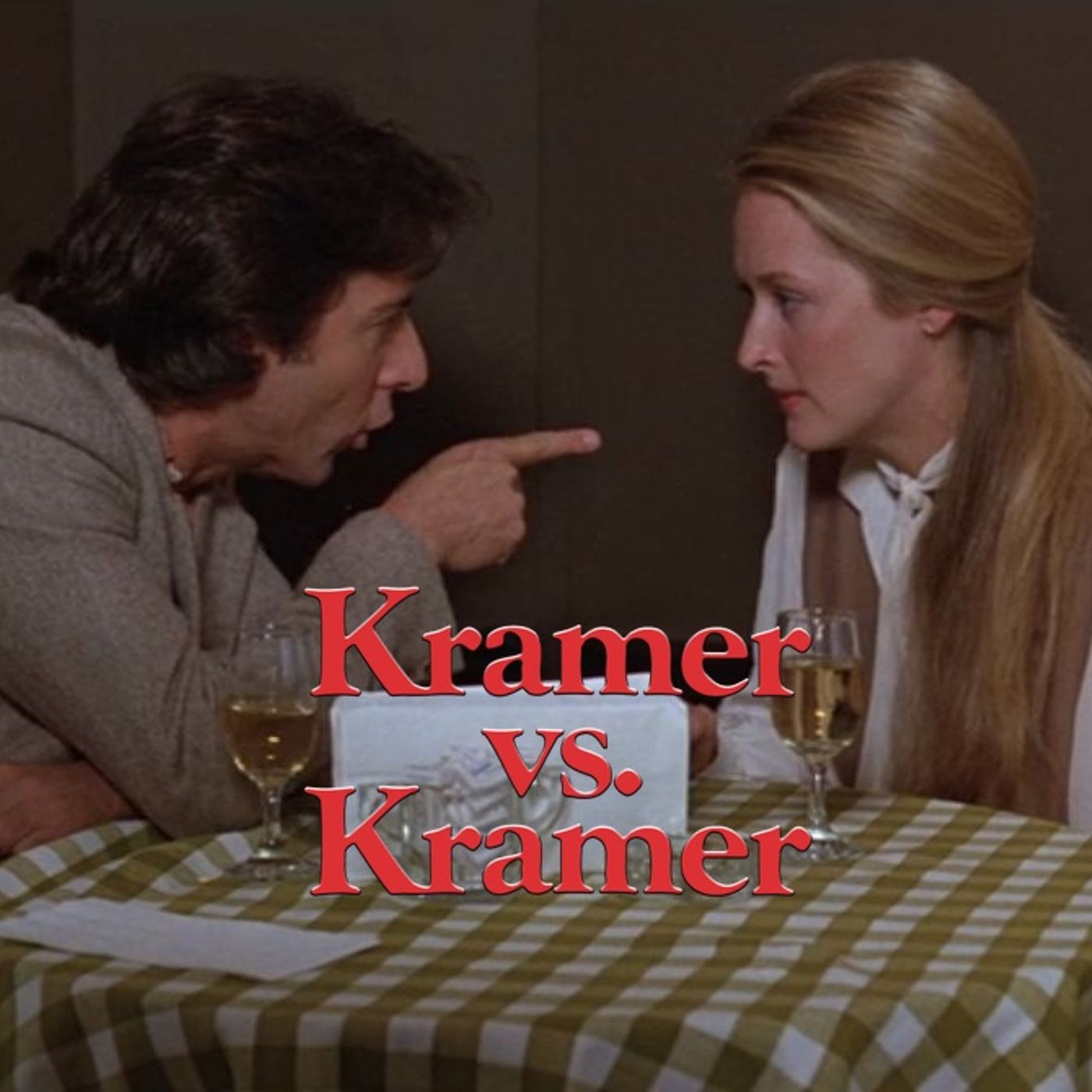
"I was his mommy for five and a half years. And Ted took over that role for 18 months." Our limited series, "A Film at 45" is back to celebrate the 45th anniversary of the films of 1979! We're dusting off the end of a decade that changed cinema...

 Apple Podcasts
 Spotify
 Goodpods
 Pandora
 Amazon Music
 iHeartRadio
 Castbox
 Deezer
 TuneIn
 Podcast Addict
 Podchaser
 Spreaker
 JioSaavn
 Castro
 RSS Feed
 Our limited series, "A Film at 45" is back to celebrate the 45th anniversary of the films of 1979! We're dusting off the end of a decade that changed cinema forever, with a fresh look at modern classics and hidden gems that we can't stop watching! Amber joins Scott for a conversation about the complexities of divorce, the emotional trauma of custody battles, and the personal growth that results with the powerful drama, Kramer vs. Kramer.
For exclusive episodes and content, check out A Film By... Podcast on our Patreon with a FREE 7-day trial. You can also sign up as a free member!
Check out www.afilmbypodcast.com/ for more information.
Email us at afilmbypodcast@gmail.com with your questions, comments, and requests.
Find us on X Twitter, Instagram, and Facebook @afilmbypodcast.
0:00 Hello, everyone, Welcome back to a Film at forty five, a limited series from a film by podcast. I'm Scott Hoffman, and we're dusting off the end of a decade that changed cinema forever with a fresh look at modern classics and hidden gems that we can't stop watching. This week, we're talking about Kramer Versus Kramer with a special guest, Amber Lewis. Thanks for joining.
0:49 Us, Oh, thank you for having me. I cannot wait to talk about this movie that I've watched for the first time this week. No, really, Yes, this is one that has always been one of those you've got to see it kind of movies. But I was born in seventy six, and this had always seemed like one that's on the shelf for my parents, So it always seemed like, well, by the time I'm old enough to care about it or to get into it, it didn't seem to didn't seem to really be as relevant. But I was shocked at how relevant it still is and how well it still holds up.
1:34 Yes, same, I felt the exact same way. So what's your history with this one? Have you seen it before like early days or was this more of a recent discovery? For you. Yes, well, it's kind of ironic that I watched it today. Today it would have been my parents' fifty fifth wedding anniversary. They were married forty years until my father died, and but we still celebrate their anniversary, you know. And so I was watching this today, going, this is kind of surreal. But yeah, I was born in seventy four, so you know, I was the same age as Justin Henry that plays Billy when the movie came out, so of course it meant nothing to me. But this was one that was on, you know, like it would pop up on HBO or Showtime or whatever. And so I caught it probably when I was a teenager, probably too young to really understand it, yea.
2:36 And I've watched it probably a handful of times since then, and my opinions tend to change over time. I had very strong opinions when I watched it as a teenager, and then you know, as you grow up and now I'm a single mom myself, you know, it's your perspective changes, so you are able to see people with a little more kindness and a little more grace. Yeah, well I want to dig into that a little bit more because there's definitely I mean, as the title suggests, there's two sides to it, even though arguably there's kind of three sides to it, right, Yes, So for those who are unfamiliar, let me just kind of describe what it's all about. The beginning of this story is the ending of a marriage between Ted Kramer and Joanna Krmer.
3:25 Caught in the middle is their young son, Billy, who is as confused and frightened about what's going on as both of his parents are. Ted is a workaholic advertising executive whose job has consumed his attention so much that he doesn't see his relationship falling apart. But there's more to his story than his career. Joanna feels trapped within their modest Manhattan apartment in a life that she doesn't want, and wrestles with the choice to leave her family behind or lose herself altogether. This story follows the fallout of an explosive ending to a marriage that's been on the verge of collapse, possibly for years, and the struggle to pick up the pieces of what's left hind for the sake of their son. It's an emotional roller coaster that hit close to home for many adults and parents in nineteen seventy nine, and it's no different for those of us who grew up with divorce in the years that followed.
4:11 From both sides of the story, let's talk about Kramer versus Kramer. So that being said, yes, how has your perspective on these two sides, Let's say how has that changed over the years A little bit from an adult perspective, I think. The biggest thing is my willingness to see Joanna's side for the first few times I watched this for many many years, like I hated her. She was one hundred percent the villain of this story because and I still can't quite let it go because she left her little boy and left him for a long time. It wasn't like I'm completely changing the way our world is structured.
5:02 She disappeared for a year and a half, and that to me is just appalling, and I can't let it go. I can't forgive it, you know. So I still kind of lingered to that anger over that. But you know, as as a woman and understanding what life was like for women at that time, you know, it was only a few years before they got the right to have a credit card without their husband's name on it, and it's just ridiculous, yeah, honestly to own their own property and have their own business and their own careers. So everything was changing quite a bit. And so to you know, look at it, you know, from twenty twenty four eyes and see that the trap that she was in, and it wasn't one hundred percent of her own device. And there were things that I noticed in the story this time that I hadn't noticed before that change the story that you think you know of this marriage. If you listen very carefully during their testimony, you get a much clearer picture of what their marriage was like and what their life was like before she made this decision. And so while it was it seemingly was spur of the moment and seemingly was you know, very extreme. It also you can just have more understanding of, you know, what
6:36 kind of backed her into that corner. It's interesting because when I was watching this, it kind of made me think that it's easy to see how the construction of this movie sets her up as a villain, which I don't really agree with that characterization, even though I know that's you know, if there's two sides, it seems like there has to be a good and a bad, right and I totally agree with the idea that you know, abandoning her kid is not the right way to go. But well, and it also seemed to me, sorry to interrupt, but a little bit spiteful, a little bit like let's see how well you handle doing everything all by yourself, Like she was kind of deliberately screwing Ted over and Billy was just like this pawn in.
7:30 That interesting because when I saw her in the beginning, she spends the time with Billy kind of you know, thinking about her decision. You know, walking away from him had to be difficult, And I just want to make sure that I'm I'm clear that the way that I see this is that she was struggling with mental health issues for sure. Oh absolutely at the time, because to your point, she's in this she's she's trapped in this situation, in this marriage, and it's not just about getting away from Ted. If that was the case, if she really wanted to kind of wreck his life kind of spitefully, then she would have taken Billy and left, or she would have done other things to kind of damage him.
8:20 But that moment in the hallway, she has that panic, and she's saying, I don't know, Like she keeps turning, she keeps kind of pacing back and forth in the hallway, saying like, I don't know what I want. I don't know what I can do. I'm no good to him, I'm no good to any of this. It's you know, it's me and yeah, and she says, if I do, if it's for a minute, if it's for an hour, if it's for a year, I'll jump out the window. That's a red flag. That is a giant red flag. And it is pretty clear that Ted has not been seeing them, like you can see his actions when he's talking to Joanna about it, when she's trying to tell him what she's doing. He's reading the paper. He's I mean, not a newspaper, I don't think necessarily. He's kind of going through his papers for work, right, but he's clearly not listening. He's just kind of going through the motions of listening.
9:19 Well, the first thing he does when he walks into the apartment is look in the mirror and just touch that. I didn't catch that. Yeah, I caught that. This time, he's talking a mile a minute about you know, his his promotion and this, that and the other thing, and he just blows right past her and he walks up to this mirror they've got hanging in the hallway and like checks himself in the mirror, and then it turns to go to the. Phone, which is which is interesting because he's clearly still at work right not able to hang it up, knows that he has to get on the phone and talk to somebody about something that still couldn't wait, talk to the art department or whatever, and then start kind of slowly engaging with his family. But even with that, just kind of going through the motions of it, and that's a very dangerous thing to do. What A thing is interesting about how she sets up the departure, though, is that she seems to go through a very careful process of making sure that he has what he needs to take care of Billy the next day and to take care of the things that she would because she doesn't storm out, she doesn't smack him, she doesn't do anything like that that would seem kind of overtly hurtful. She sets up to say, like, this is what you need to pick up the dry cleaning. You have to get Billy to certain places at a certain time. Here's my credit card. I'm only leaving with enough money. As I came into this marriage with like she's carefully constructed this
10:50 little escape plan that she has. I feel like it's too because she doesn't want to stop taking care of Billy's specifically, and she doesn't want to hurt Ted. She wants to know that he has what he needs to take care of himself. But she's like, I'm literally drowning, and if she stays in that situation, it could have been much worse. I think if she had decided to hurt herself or something else, that could have hurt billions some other kind of way. So I felt I think when I came into this, it does very much seem like you have to choose a side. But I felt myself feeling very sorry for her and relating very easily.
11:33 Unfortunately to where Ted was that idea of working too much, being a workaholic, you know, bringing things home and not really engaging with his family, and he didn't he didn't see all the signs where it was falling apart. I think it's also a very interesting choice that they start in the office with Ted yes, and that He's sitting there with his boss and they didn't have anything else to do. Work was done, but he was spending all this time opening up to his boss and you know, piling around with his boss and things like that. And only when somebody was like turning out the lights he was reminded to go home. It was like, Ted, what are you doing buddy?
12:16 Yeah, And even on the way home, he was very easily persuaded, Oh, let's go have a drink. Yeah, yeah, just one more right? Oh god? Yeah. And I think it's significant to his reaction when she first kind of breaks through his own personal narrative that he's got going and it makes it clear I'm leaving you. This is happening. He's very patronizing, and it's kind of a hangover from you know, like that Madman era of like it's your husband, but also kind of your dad, you know where he's But I'm the man and I'm in charge and I do all the things. And he's like, Okay, let you know, you had your little fit. Okay, I'm sorry, I was late, right, you know, that kind of thing.
13:12 And I think that that it comes back around again during the court proceedings, and I think that that's a very significant tell for the dynamic of their relationship. Yeah, well, and you can you can tell kind of fast forwarding there to the courtroom scene. It doesn't seem like either one of them is getting any kind of enjoyment or pleasure out of this whole thing. One because they know that Billy is kind of in the balance of everything. But two because it doesn't seem like, oh, I'm going to get back at her, I'm going to get back at him. They just want to be there for Billy. They see each other as a threat to that.
13:54 But they're not feeding anything to the lawyers. It doesn't seem that's going to hurt the other person. Layers, unfortunately, go there very naturally, which talking about his. Lawyer has the greatest line because Dustin Hoffin says, do you have to be so hard on her? And he goes, do you want the kid or not? And he says it like that aggressively, And I mean, just if you didn't like lawyers before, you're really not gonna like him now. These guys are awful. I feel I feel sorry for the lawyers that we know. Just know that we know not everybody. But this doesn't this doesn't help for sure. Yeah, there's there's a lot of interesting things happening in those opening scenes when he's trying to make French toast in a coffee mug. The entire time, he's like, well, when mom comes back, when mom comes back, and he just assumes that it's going to happen.
14:43 But you know what I love is he neither one of them ever lies to Billy. That's true. He doesn't say she went to visit a friend, or she'll be back in a few days or anything. He tells him exactly what happened. And when she writes her letter to him, she says very kind of harshly to a little kid, like sometimes mommies need more than being mommies and that I mean, my god, that's so hard to say out loud, you know, but I you know, as much as he in the beginning, like he treats him like a puppy, you know, like this dog that he has to care for. But I love that he never lies to him, you know that there's always that honesty between the parents and them. And I love that French Toast team because I can't remember when my dad.
15:42 My youngest brother is four years younger than me. So I was four when he was born, and so it was me and my middle brother, and then my mom is of course in the hospital with the baby, and it was us and my dad. And I was like, who's gonna feed us? Because that was not our family, Like it was a very traditional nuclear family. My dad went to work, my mom was a homemaker, and I was like, do you even know, like how the stove works? And he did a great job, like he handled things very well on his own. But I laugh every time you see Dustin Hoffman doing that, because that was really like about the skill level I thought my dad would have. Yeah, that was very typical for that era.
16:28 A sharp increase in grilled cheese sandwiches. In that time, a lot of cereal. There's a lot of other players that come into this besides Ted and Joanna. Obviously we've already talked about Billy, and I just acknowledging the Dustin Hoffman, Meryl Streep and Justin Henry clearly deserve all the accolades that they got, oh, because they all do a phenomenal job. Even though we'll talk about this later, Dustin Hoffman's methods are not okay but kind of surrounding them in this orbit. We've got a lot of other players. Jane Alexander plays the neighbor.
17:10 Oh, I thought her so much. She does an amazing job in this. I hate that Ted immediately goes to a place of oh, well, you must have kind of plotted together about. This, Yeah, of women's lab. No, she's just been the one that's actually listening to her and observing this breakdown while it's been boiling up. But she does a great job with this portrayal as somebody who is there for the family. Yeah, she likes them both. They get along, you know, their kids get along. And as much as she was Joanna's friend, she then becomes Ted's.
17:51 Right and she's very much a bridge between them. And I love that they don't get together. Thank you my mind, Yes. And support each other and love each other. And there is nothing more to it than that. Yeah. Now, on the flip side of that, we've got George Co playing Jim O'Connor the boss. Ooh this boss, sweet mother of God. First of all the fact that he's heaping this much pressure on Ted and not supporting his work life balance in any way, because I don't think in nineteen seventy nine. That was necessarily even a phrase, right, no.
18:32 And especially not for men. But when you know, I really, like you said in our opening, got the feeling that they were friends. I didn't really pick up that he was his boss necessarily, like I got, he was a little bit higher. But when someone comes to you and says, like, my wife just left me and left the kid, and I don't know what I'm gonna do. I'm just kind of, you know, treading right now, And the first thing you say is, well, I still need you twenty four to seven. Oh yeah, Well before that, he asks, can you send the kid away? That's his reaction. Can you live with someone else? Oh my god, I caught that cool.
19:16 Yeah, send him to grandma's or something like, oh, that's disgusting. So in the so, I'm in advertising, so there's a lot that I can relate to here. Fortunately I can't relate to horribleness of those bosses because I'm fortunate enough to not had those bosses in my career. But his approach to the entire thing, the kind of dynamic between the two, the way I was perceiving it, Jim O'Connor, the boss is as a higher level creative above Ted. So Ted is kind of working his way up the ladder. Jim gets to decide who gets on what accounts, what kind of involvement they're going to have, things like that, and and it seems like the kind of dynamic where people in that industry are assumed that they're going to get divorces early because they have to sink so much of themselves into their work, and Jim just perpetuates that.
20:13 He doesn't support it. He doesn't say, go take care of your family. This is a crisis moment. Yes, this is an important account, but you have to take care of yourself first, because I care about you as a human. He's more saying, I just got this account. What do I do with it if you're not going to do it? And Ted's reply when he says, you do have my full commitment. I'm going to be here twenty four, twenty five hours a day, three hundred and sixty seven days a week. Eight No, three hundred and sixty seven days a year, eight days a week, you know the usual kind of yeah. And then his voice breaks when he says, because I'm not a loser, and you know I can you can count on me. The first emotional break he has is when he's his position is redned or it feels like his career is going to fall apart, and it's like, Ted, Ted, this is not the time. This is the time to like walk from it and say I can't handle this account. You're gonna have to get somebody else, because this is what's happening. He's so bad at Joanna that it obviously sets her up as in that kind of villain position, right, So it's easy to see her that way, but it's it's missing what she's also going through. And I think that's it's important to focus on Ted for that long because it is kind of having that realization through Ted, Right, Watching Joanna's breakdown
21:44 would be very important, but not as important as seeing that Ted has to make that realization because, like you said, if at this time this is kind of commonplace, then a lot of guys are still missing this. Yes, you know, he kind of puts her in this box of that bitch. I can't believe she did this, you know, And he packs up all her stuff and takes down all our pictures and his ability to start seeing Billy as a person and engaging with him as a person really starts when he's cleaning up in the evening and he's putting his toys away, and he goes to put his clothes in the drawer and he finds a picture of Joanna hidden in the drawer. And it's not just the realization of like, what did I do to him when I took all our pictures away? How did that affect him? But it's also what does it say that he had to hide this? He couldn't just say he wanted it, He couldn't just say he needed it.
22:48 He had to hide it from me? Yeah, you know, and then the grace to allow her to become a person and become the mother again and put her picture on his night stand in this like prominent place and kind of give Billy that permission to still hold her in that place. You know, it was such a huge step. Yeah, Yeah, there's there's big emotional steps, specifically when it involves Billy. So what I'd like to do, let's take a quick break. When we come back, let's focus a little bit more on Billy's story, specifically his encounter with Phyllis.
23:30 Is that's an interesting bit of humor there. Anyway, when we come back, we'll talk a little bit more about Creamer versus Cramer. All right, we're back. So, yeah, there's a lot of emotional kind of realizations that Ted has when he's there with Billy. You mentioned one of the scenes where he gets the letter from Joanna. He assumes that it's her saying she's coming back. He opens it up in front of Billy and reads it to him for the first time, without vetting it, without seeing what's being said. He just opens it right up. Now, that's very honest, but it's also a little misguided, am I right?
24:17 I mean yeah, because, like I said, she says things she's trying to explain, and you can tell that it's early days and like she doesn't have a therapist yet. Because this has not been vetted by anybody strum consciousness there, you know, And I don't know that anybody would have put it quite so bluntly. But I also thought that he thought it was like there was going to be like the baby letter for Billy and a letter for him. Yeah, because he kind of looks at the envelope like is this all there is? Right? Yeah? Yeah, And I think he needs to take a beat to kind of figure out what she's saying because she number one left in a in a state where she was not okay, So there's no telling what would have been in that note, Like hopefully it didn't say that she had decided to take her own life right herself.
25:13 I don't want to be your mommy or you know, something really devastatingly horrible. It was rough enough as it was, but still I have to say, like like I said before, like the honesty that they give this kid, I think is you know, commendable. And I to that end, I love the ice cream fights, yes, and that, but that whole sequence. I've never had a fight with my child that's exactly like that, but I've certainly felt that way. I've had him do things that were defiant and you just want to like lose your mind. And I I love that they said all the hateful things they needed to say and then came back together and said, you know, I was wrong and I'm sorry, and you know, Dustin Hoffmann really explains it wasn't your fault you, it had nothing to do with you. It was my fault.
26:18 Yeah, oh my god. Yeah did it break my heart? The second time that I watched this and was really paying attention to that part Billy's question to him, He says, like, you know, I'm sorry I was bad. Are you going to go away? Right? Oh? God Like? Is that why mommy went away? Because I was bad? Oh? God Like? Billy is such a lens for like I said, like growing up in that kind of time period and it seemed like it was for adults. But now forty five years later, a lot of us that are children of divorced or have had divorce come closer into our atmosphere. Right, we can relate to the adults in this story, but we also see ourselves through Billy, right, being in those kind of positions. And you know, my mom and dad went through divorce, so I can relate to a lot of what Billy was going through. And as a dad, I can also relate to those moments where it's like when you let what you're bringing home, you let your own adult baggage come through. To the kid when he spills the juice on his work and he loses his mind, when he picks him up and carries him and throws him on the bed and calls him a horrible kid for the ice cream thing. Those moments where I'm glad
27:49 that he realizes, I'm being a shitty father in this moment. I should not be acting in this way because this kid's life is literally falling apart and he is way too young of an age to even realize what's going on. It's it is so well written. It is such a well written script. My god. Yeah, but yeah, moments like that. But you need That's where the growth happens. You know, as painful and horrible as that whole sequence, is the moment of bonding that they have after that and the connection that they are able to build after that, because you know, it needs to be said, like he does want to be a good father, because he could have just hired a nanny and gone back to doing what he was doing anyway.
28:38 Right, right, Yeah, because he still does try to make an earnest effort, like when he's running into a meeting late and he asks the person at the office to put the chicken in the fridge, like he's doing his best to balance this and his boss needs to tell him take care of life. It's not get to threaten your job. All he needed to do was move him off that huge account. I know that there were other things he could have been doing yeah, you know, at that firm, and you know to not you know, he gets fired like a week before Christmas when he knows he's going into this custody you know, legal mess.
29:22 I mean, which is a beat where I do see a villainous aspect of Joanna, even though I don't think it's spiteful. I think it's just misguided and I think it's just where she's still coming into it from a place where she doesn't quite have everything right, because if she did, she wouldn't want to pull Billy out or go through this divorce over Christmas. That just seems like of all the horrible times to do this kind of thing. Yes, not that there's ever a good time, not that these things are quick and easy, but Ted's in that situation where he has to get isn't it Like Christmas Eve?
30:04 He has to hunt down a brand new job just so you can say he has a job and he can pay for his apartment. That agency and hiring him, which. Pretty much I didn't think it was gonna happen. Honestly that first time, I was like, he's not getting it. They're trying to figure out how to call security and pull him out. But yeah, yeah. So before he's let go, he happens to uh ask a co worker out on a date, the mom from Poltergeist Joe Beth Williams, Yes, as Phyllis Bernard, and he asks her out. They hook up and she's going to the bathroom in the in the middle of the night, I guess it is wanders into the hallway at the wrong time and there's Billy. Yeah, she's in her al to get.
31:00 It and I'm sorry, Like he walks around like did she not know he had a kid with no clothes on? Exactly? Yeah, you're at least grabbing a shirt or something like that. Like if you're in a strange place and you know that the bathroom isn't necessarily like right there off of the room, you're gonna put something on, yes, But yeah, Billy, Like it's interesting how much like Billy is not shaken and clearly he's mature for his age, right because he doesn't make a big deal about it. He just asks her a question about like if she likes fried chicken. Yeah, she's like, I guess, so do you have some now? Like this is not a place to talk about that.
31:44 But he's still so innocent. God bless him. Yeah, Yeah, that was that was a much needed moment of kind of levity in the middle of that whole thing. Yes, but I think, you know, as you were talking about, you know, the choice to go through this custody battle at Christmas and everything, I think the thing that I picked up on this time that I don't think I had realized was some of that is Joanna is still behaving the way she thinks she's supposed to, and she has not yet reached the point where she is willing to say I can't do this full time. I can't be this person.
32:30 Right, I need to figure out who I am. Yeah, where Ted was self aware enough, you get the split second shot of he makes a pro and con list about fighting for custody and there are no pros to being a single dad, and there's like five cons and it's like, you know, it affects work and you have no privacy and you never get a break and all of those things that as a single parent of percent say, yep, that's my life. Yeah, but uh, she never like did that. She never had that moment until the night before Billy's supposed to move in, and she finally had that realization. I think as much as she kind of frames it around, he's not going to be at home. He's gonna I want him to feel like he's at home, and he's not going to be at home.
33:28 I think there's a significant portion of it that she had a panic attack and was like, I can't go back yea to being this all the time. I just can't. Yeah, and it's better for her to be the part time, so to speak. Right, visitation parent take a step back now that Ted really is able to step up and do the full time. Which is an interesting point because the first viewing, I was wondering I saw her when she's in the cafe and she's watching the playground from across the street. I saw it as creepy. I saw it as she's lurking.
34:10 She's a lurking you know, not that she was a villain necessarily, but almost like, oh, she's the you know, you've got to watch out for her, Like I said. And how dare you? You've been back for two months and the first thing you did when you got off the plane was not to go see your baby, Like are you kidding me? So I think she was like, well, it's interesting because the second time around when I'm watching it. So after I saw the the climax of this movie, the ending of it, and I watched it a second time, it felt like what she's doing by watching the Cat from the Cafe is trying to make sure that Billy is okay with Ted, that Ted is actually taking care of him.
34:57 That she's wondering, like, Okay, I'm going to safe enough distance, do I feel I can come back into that. She's almost kind of testing the waters, but she doesn't want to draw attention. She doesn't want to get Billy's hopes up, she doesn't want to raise suspicions from Ted. She just wants to see if things are going okay. And I think it's interesting how that kind of connects to the ending of the movie, where she ultimately decides that Billy already is home. I don't know that she's necessarily giving up custody or visitation rates or any of that other kind of stuff, but she's realizing, I still need to figure things out, and the most stable environment, the most consistent thing that Billy has right now is there with Ted.
35:44 Knowing that he's willing to take a step back in his career, that he's willing to actually focus on his family. And it's brilliant to leave that ambiuous too, Like you don't even have to see her meeting with Billy afterwards. You just kind of leave it open to whatever happens because it was after doesn't matter as much as what you're observing the whole movie, which is just kind of what they're going through the process of doors and what happens in it. Yes, and I think you get that kind of similar to the ice cream scene, their divorce kind of happens over paper, long distance, like they're already divorced when she comes back and goes for custody. She had signed custody away. Yeah, so, but they never had the fight that you need to have.
36:35 They never said the things that you need to say. You know. She had never spoken her truth. He had never had those realizations and spoken his truth. You know. So those courtroom scenes I are kind of for me, the weakest part of the movie, but they're so important because of the connection that Ted and Joanna are able to make right midst of all this chaos that then leads them to at the end, you see that they have reached a spot where I mean they go from him not really throwing a wine glass at her, but kind of sort of two you know, they're able to look like they can work things out and compromise and you know, be respectful of each other, and that ultimately, you know, has to be the goal of your co parenting.
37:28 Yeah. Well, and all the spitefulness, all the venom is really coming from the lawyers in that scene. Yes, And it's interesting, like, now that you mentioned it, I don't think there was ever a point in the movie where they had any kind of argument or fight in front of Billy, not that that hadn't happened before, probably before the movie even started, right, But they never come out of each other in front of Billy. The only time when there's any kind of you know, challenging the other parent or whatever is when the lawyers are coming after Joanna and they step over some lines in a big way like they're pretty terrible lawyers.
38:15 But it does lead to one of the for me, one of the most touching and heartbreaking moments in the whole movie is when Ted's lawyer is screaming at her and he says, you were a failure at the one thing you've done longest, you know, the one relationship you've had the longest in your life. And she looks at him and she nods, and he looks at her and he smiles and he shakes his head. No. Yeah, and they just have that moment between, Oh my god, I if I wasn't crying before, then I cry every time at that seat. Oh yeah, yeah. And that's when you can tell they still care about each other. Yes, you know, there's not malice, there's not hate. It's just that each one of them loves Billy and they can't figure out how to love him together. So yes, how do they kind of build that next step in the future. God such great right, And unfortunately a lot going on behind the scenes that was setting both Dustin Hoffman and Meryl Street up for some personal emotional things that we're driving their performance. So I'm gonna pause for a quick break. When we come back, we'll get into through the lens and wrap up our thoughts on Cramer Versus Creamer. We're back, and we're going to talk about some behind the scenes stories. Usually there's a lot that we talk about when it gets into special effects and production and sets and also the kind of stuff. This was a very ambres are fair to
39:47 say this is a pretty simple production. Yeah, Like it could very easily be a play, like a two set reset play. You know, you've got a handful of characters. Most of the business takes place in the apartment, you know. It's it's very very intimate. Yeah, and it's got that great you know, seventies eighties gorilla style, like you're filming on the streets of New York, Like, yeah, you're not on a sound stage, You're not on a set like that really is a homeless guy peeing in the corner.
40:32 Yep. So this entire movie is based on a nineteen seventy seven novel by Avery Horman, written and directed by Robert Bennen, And we've already talked about the brilliant writing behind this story. It's it's a story that still holds up, I think surprisingly well for being forty five years old. There are some dated elements to it, but there's so much that's still related in terms of the dynamics and emotional pressures and mental health and that kind of dynamic and what kind of effect that can have on a kid. But kind of feeding the experiences and the performances by Dustin Hoffman and Meryl Streep. Unfortunately were fueled by some real world events, right. Yes, I think Dustin Hoffman was going through a divorce at the time. Yes, his first.
41:31 Which you know is a mess for anybody, But he was able in some positive ways to turn it into fuel for this movie because he submitted so much of his own, you know, personal experiences as a part of like his method acting and improvisation techniques like the director offered him. He was like, I could give you screenplay credit, like you definitely contributed to the development of this story, and he you know, turned it down. But it also I think allowed him to feed a lot of animosity with Meryl Streep that professionally did not need to be there.
42:21 Yeah, for sure, I was very disappointed to hear about these things for the first time. Started with the Hallway fight. There's an interview with Meryl Streep where she had said that if you watch that first scene where Joanna is leaving, there's a red mark on her cheek because off camera, Dustin Offlman apparently slapped her hard to elicit some kind of emotional response, and she says, I would have gotten there anyway. That was not necessary, And I guess they've reconciled since then, but that's true. I don't know. I heard all of this after seeing her on Bravo does a show with Andy Cohen, like an interview show, and he did a he does a Plead the Fifth where he asked you five questions and you can plead the fifth to one of them, and she never did. And the one thing he asked her, he played. They played Mary shag Kill with three of her co stars, and she said she would marry Robert Redford, she would shag Jack Nicholson, and she would kill Dustin Hoffman.
43:40 Wow. And I was like, oh why. And so then I'm you know, googling, like what happened? And you know, you read all this stuff in like the scene where they meet in the pub and he throws the wineglass at her, like he didn't tell her he was going to do that, but he told the cameraman, you know, it's like you're a schmuck, like yeah, And and I hate that method acting stuff anyway, like I, you know, do what you gotta do to get where you need to go. But I think it's kind of self indulgent. Well, and it kind of seems like he was assuming that she would be able to get there as an actor.
44:20 You know, I've been in the graduates. I know everything. It's like, calm down, but it's early in your career still. I think anybody on a set, Unfortunately the cameraman didn't say so, but would probably tell you if you're going to have something breaking like that, you need to absolutely make the make sure that people are aware of what's happening, because if that glass had like flown into her eye or hurt her in some way, right. I mean a stunt, like, yes, that's a stunt wine glass and she's been coordinated by a stunt coordinator. So yeah, yeah, and probably you know it was seventy nine, right, none of that happened.
45:04 That's not sugar glass. Yeah, it's like. Yeah, it was from you know, catering or whatever. So yeah, just that that self indulgent misogyny. Yeah, it is really disappointing because I like Destin Hoffman as an actor. Same here, same here, you know, since. He's one of my favorite movies of all time. So you know, that's really kind of sad to hear. But then you know, I don't mean to excuse it, but also putting things in the perspective of the time that they were in, like that was the world. Yeah, unfortunately, Yeah, and I know that in the interview that I had heard, she said that they've kind of reconciled since then. But considering what she was going through, Number One, she was already a strong actor, or she wouldn't have gotten the part.
45:59 Right. This is a very emotionally heavy script, to say the least, So even if you're just reading the words and you know, talking through this character, it's gut wrenching. But at the time, she had just lost her boyfriend, actor John Casales cause als thank you to cancer, and that's something that she was still living with and struggling with. And I think she was pulling from that to into some of her performances at some times. But well, and especially this movie, she never has just a going to the grocery scene. You know, every scene that she is in is layered and complex and a lot of you know, very deep intense emotions.
46:53 Yeah, well, it makes me makes me feel even more sorry for her. In the courtroom scene, and you've already mentioned this before, but when the lawyer is grilling her and he pushes her and says like, didn't you fail at the one most important relationship you ever had or something like that. Yes, that feels like it's hitting on the experience with John, Like if I was her, and obviously I can't say what she was going through, but if I was going to imagine relating in that moment, I would absolutely go to those places. So when you mentioned like she looks over and sees Dustin kind of you know, shake his head. No, as I understand it, that was a very real I think it was ad libbed moment when she looks over at him and he kind of shakes his head, knowing that that was almost kind of tapped into.
47:53 Yeah. Yeah, so she didn't need any pushes. She certainly nobody deserves to be slapped like that. But I just hate to hear that they had been going through such difficult times when making this movie. But it also seems like it must have been very cathartic for them. Yeah, it's definitely a job where you say I came out the other side. Yeah, for sure. Well, and I know that Merrill was working on Manhattan with Woody Allen and said that Robert Benton had almost kind of spoiled her for other directors because he had so much confidence in her and trusted her too at her own perspective the same way it seems like he was trusting Dustin to say, to your point, he brought so much of his own experience into it that they're considered giving him partial screenwriting credit.
48:52 Well, and Benton did allow her. She did stand up for her character and you know, kind of added some layers that made her less of a villain and more sympathetic. Yeah, you know, which Dustin Hoffman didn't like. He was, you know, but that's not the purity of the story, you know. And she was like, well, I don't care, because it's not fair to just push this woman into this box of you know, you're a horrible person, exactly. Yeah, And I mean I think it's very fitting that the the title of the movie is Kramer versus Creamer, Right, it's not an irresponsible person or anything else like that.
49:35 It's that there are two very specific. Sides and you know of a family name. Yes, And the movie poster that I usually kind of go back to is very fitting because it shows that little nuclear unit of you know, Ted and Joanna and Billy all together with Billy in the middle, and that's absolutely what this movie is all about. But it could have been in a more cynical art department. It could have been like each of them holding onto one of his arms and like tug. Of warring pulling him apart exactly. But you know what I mean. But that's so beautifully not what the story. It is a little bit of an element of the story, but that's not what the whole structure really is.
50:22 Yeah. Well, there's a segment in this where we talk about score, and without Dave here, it's probably fitting that there's not much probably to say about the score. There's some beautiful I think it's Vivaldi. In the beginning, there was an interesting kind of moment where you see the two guitarists on the street, yeah, playing it. You hear it over the soundtrack, and then you cut to a street scene. Yeah, and there's these two guys, you know, just riffing on it, which was so great, so subtle. Yeah, Well, in the music then kind of stops at that moment, and I had to rewatch a little bit to see how much music was kind of used in this.
51:07 There's definitely some score that's used, definitely some some music production to it, but there's so much that is often silent because they're letting the emotional weight of the dialogue hang there in the air and let it play out. And I think that was a brilliant idea. I mean, I think score is as much knowing when to add music as it is knowing when to leave it out. I think it was just well done in this one. Yes, I completely agree, And it could have made it like very Schmaltze. Oh yeah, you. Know where the emotions just have sometimes more more honesty if you don't have, you know, a music chord telling you now you're supposed to be sad, you know.
51:48 Right, well, especially in that courtroom scene. Yes, it's a very like it's the the silence that fills the courtroom, right and it's very much supposed to be that kind of empty space that's very uncomfortable, very awkward, and I don't know, just good decisions there. Yeah, I agreed. There was a quote that I wanted to bring up from Robert Bennon about a moment that he trusted Meryll in that courtroom scene to add a little bit more to Joanna's character. So he said, I said to marily in a moment of euphoria, there's a speech I've written in this courtroom for you. And I like this speech, but I feel as though it's a speech written by a man and put into the mouth of a woman.
52:40 Would you reread it and come back to me with it. So right after he says this, like fifteen minutes later, he's forgotten that he's asked her to do so. On the first day, she comes in and says, I've rewritten what you wanted me to write. I'd forgotten that I asked her. So I thought, well, I'm going to lose a friend here. This is going to be awful. And I read it and it was too long by a fourth, but it was perfect, and in it she puts it in. She puts in it the thing that makes it a killer speech. It was devastating what she said and something I never would have thought to write. That is a brave and amazing directorial choice.
53:22 I think, yes, well, and just to have the self awareness to, you know, say, I am a man and I can't speak for everything. Yeah, you know there's a portion to being a female that you know, women need to speak to on their own and to give her the freedom, you know, to at least try to do that. You know and be heard is extraordinary. Yeah. I think it's one of the reasons this movie still holds up. It's one that I would still recommend that people see. I know that after watching this, there's a bunch of prompts coming up to watch a marriage Story.
54:04 I think it is with Scarlett Johansson. And yes, oh. Thank you. Yeah, I don't think I'm ready to watch that yet. It you really have to be prepared, because I was not, and it took me out for a couple of days because that was very hit, very close to home to my my personal experience. And the the writing and the acting is is so good. It's much more volatile than this movie is. Okay, but they do pair, you know, in my you might also want to watch it was Missus Daufffire.
54:44 Oh, that's a different which I feel like that's. A whole other swing to the to the pendulum. But I think a marriage Story is is a definitely a modern parallel to to this story. Yeah. So, to ask the obvious question, do you think Kramer versus Kramer the success that it had not only in terms of the box office, but in terms of the accolades it received and how much people are still talking about it, that it opened the door for movies like a marriage story to happen, and movies like Missus Doubtfire to have that element in it and be that honest and have that many kind of perspectives on divorce.
55:25 I think so because I think that you know, for so long, to choose to divorce was such a scandal and such a horrible thing to do and really just gave you like this scarlet letter in you know, your social circle, and to reach a point in society where you could say, you know, we have made a terrible mistake and we have the opportunity to remedy that in a healthy way and to acknowledge that, Okay, you're mature enough to make that decision for yourself and your relationship and your family. But it's going to be messy and it's going to be ugly, but if you always have the right goals in mind, it can be you know, ultimately a growth experience. You know that that works out for everyone. You can come through on the other side, and you know, I think kind of pulling back that curtain in a positive way is you know, what makes this movie, you know, the longevity of it, and then of course, you know, just the blessing of you know, that magic chemistry of writing and directing and the right actors at the right time, and you know, just absolutely makes this, you know, one that everybody, you know, you say,
56:56 there's movies everybody should see, but this is definitely one of those. Yeah, And and I'm very pleased that it that it holds up so well because I think it's absolutely one that does to be pulled back off the shelf for a while, and you know, everybody should give us. Some attention, you know, watch a movie about adults being adults. You know. I I love the Marvel movies. I love Star Wars, you know, I love all of those, you know, fun things. But sometimes it's it's important, you know, especially in such a contentious world too kind of see how you can work through that and and learn to talk to each other and acknowledge your own faults and other people's faults and you know, still be have a healthy relationship at the end of it.
57:45 Yep, it's true. Yeah, I think it's it's also just, you know, as somebody who grew up relating to Billy probably more than anybody in that movie, being an adult and seeing maybe how you're seeing your seeing your own parents through a different lens, seeing what they may have been going through at the time. It's a great time capsule and I'd recommend seeing it to anybody that has a chance. Now, I had to catch this on Amazon Prime. Where did you see this? Same? Every now and then it'll you know, pop up on like HBO. Well Max will show it because they've got that connection to Turner classic movies. So every now and then it'll pop around where you can stream it.
58:31 But at the moment you need to run it. But it's worth the three dollars of it, I think. Yep, totally agree. All right, well, Amber, thank you very much for joining me for this one. I would love to have you back for a future episode or if you ever want to join us on Phaser Set the Sun. Oh yes, there's always a seat of the console if you want to if you want to join us there. Oh yay, yes, I'm always happy to come back. This was a lot of fun. Thank you very much, cool and thanks listen for joining us. If you want to leave a comment, discuss what's next, or even have suggestions, you can find us at www dot a film by podcast dot com. You can email us at a film by a podcast at gmail dot com.
59:14 Find us at a film by podcast on Facebook, Instagram, and your other social channels until our film reels start rolling it again. Go out and watch something new, watch something different, and who knows what you'll discover next. Thanks everybody,