A Film at 45 - Lord of the Rings
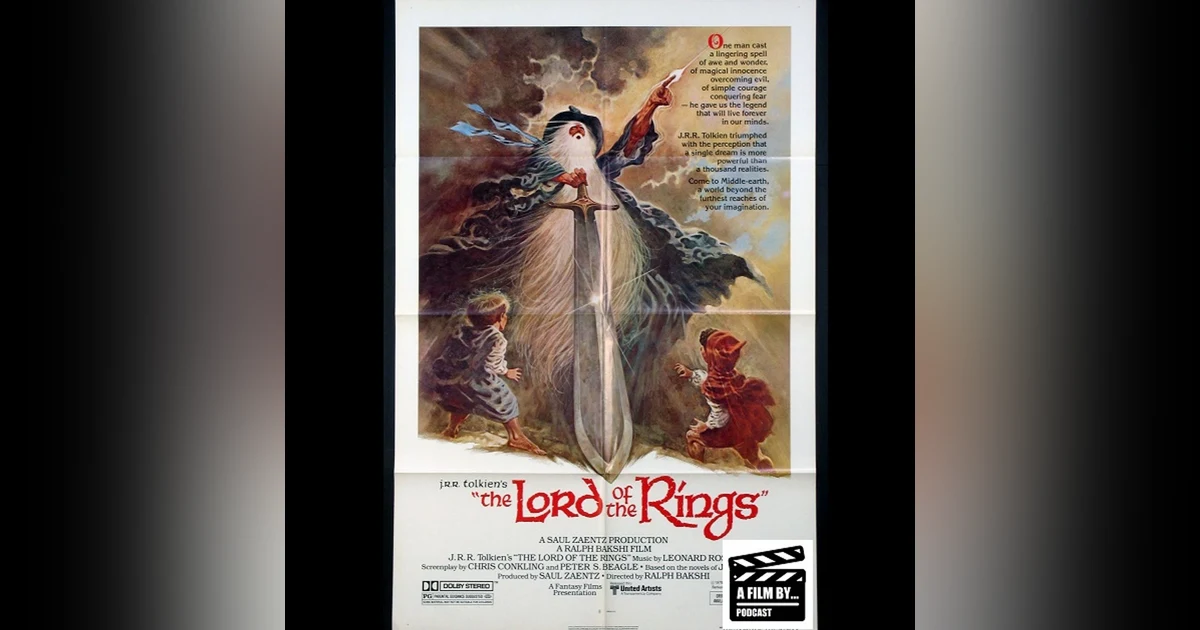
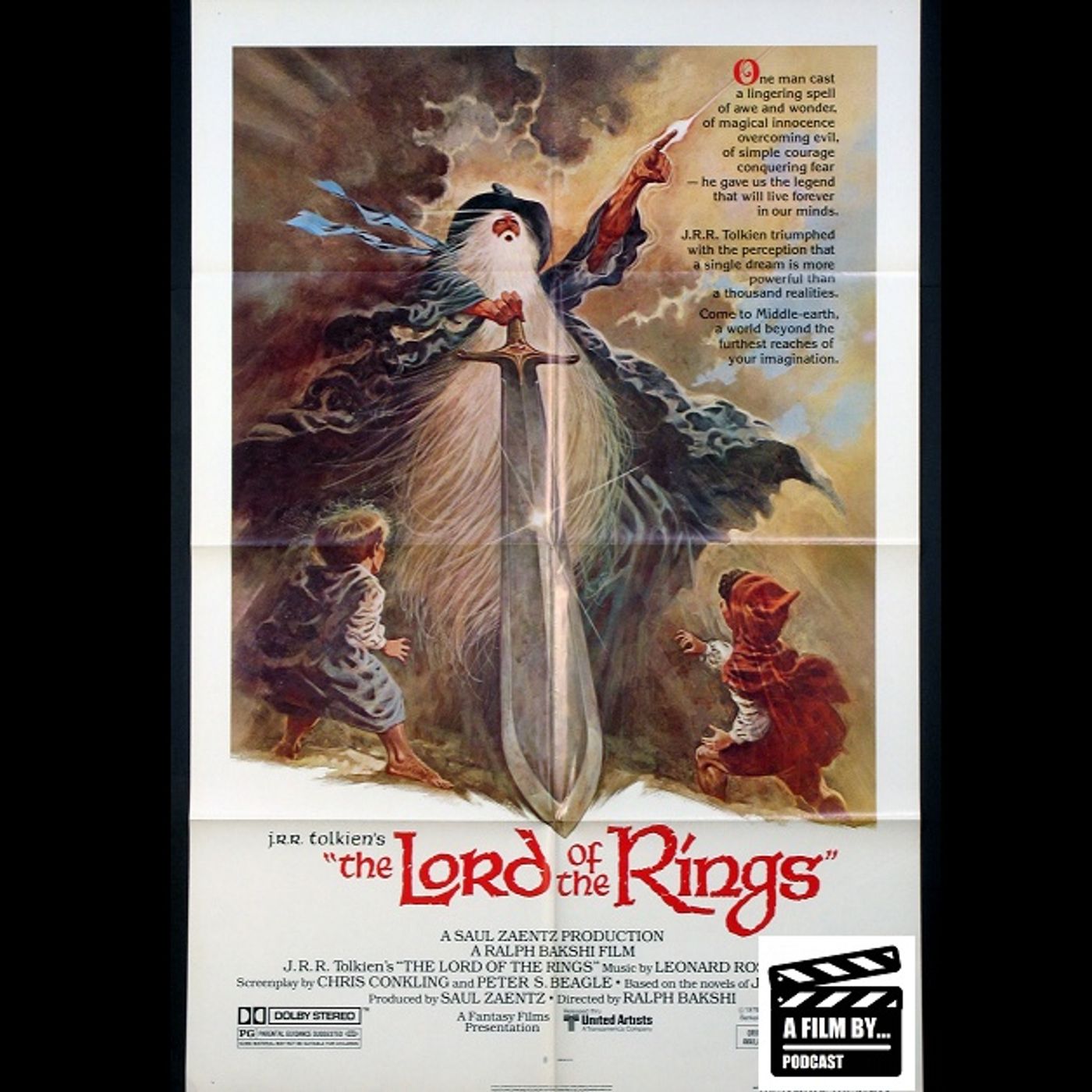
Come to Middle-earth, a world beyond the furthest reaches of your imagination.
Join David Burns and Scott Hoffman as they celebrate the 45th anniversary of some of the most memorable films of 1978. This week, they travel to the animated world of...

 Apple Podcasts

 Spotify

 Goodpods

 Pandora

 Amazon Music

 iHeartRadio

 Castbox

 Deezer

 TuneIn

 Podcast Addict

 Podchaser

 Spreaker

 JioSaavn

 Castro

 RSS Feed
Come to Middle-earth, a world beyond the furthest reaches of your imagination.
Join David Burns and Scott Hoffman as they celebrate the 45th anniversary of some of the most memorable films of 1978. This week, they travel to the animated world of Middle-earth to discuss Ralph Bakshi's Lord of the Rings; starring the voice-acting talents of John Hurt, William Squire, and Anthony (C-3PO) Daniels.
Check out www.afilmbypodcast.com for more information, and www.patreon.com/afilmbypodcast to get exclusive content!
Email us at afilmbypodcast@gmail.com with your questions, comments, and requests.
Find us on Twitter, Instagram, and Facebook @afilmbypodcast.
0:00 Hello everyone, and welcome back to the year nineteen seventy eight and a Film Buys limited series A Film at forty five. I am David Burns and I'm Scott Hoffman, and thanks for joining us again. As you know, we've said this several times, but just a reminder what we're doing here. So for a Film at forty five, we're dusting off the end of a decade that changed cinema forever with a fresh look at modern classics, at hidden gems that we can't stop watching even forty five years after their debut. With today's episode, we're drawn into the animated world of Ralph Backshee's Lord of the Rings. It's the Ring, isn't it Bilbo's funny magic ring. Give it to me. It is all together evil. It will corrupt and destroy anyone who wears it. One ring to rule them all, one ring to find them, one ring to bring them all, and in the darkness bind them, one ring to rule them all, one ring to find them, one ring to bring them all, and in the darkness them That's right, everyone, We are heading to Middle Earth to join the Fellowship of Proto, Mary Pippin and others tackling our first animated film of nineteen seventy eight. So Scott, you know we've been spoiled with Peter Jackson's Lord of the Rings. We know what an incredible series of movies that is. Ok, it's hard to imagine
1:33 what it was like when we didn't have that. But for those who have not seen this animated version, how would you describe this to someone? Well, that's a good point. I mean describing this is going to be to someone who hasn't seen it as a little tricky. It's a story that's been popular since it first came out in nineteen fifty four, and it's become even more iconic, like you said, with Peter Jackson's cinematic masterpiece of a trilogy in two thousand and one. Just in case there's somebody who hasn't seen it. How do we sum this up? This is the first cinematic adaptation of the one of the most seminal iconic works of fantasy literature. Imagine a world much like our own back in the fifth century, a world of knights and castles and wizards. But in the world of Middle Earth, the magic is real. It's dungeons and dragons, orcs and ogres, dwarves and elves in a land that was once almost conquered by the evil Sauron and his Ring of Power. Although Sauron was killed, his evil lived on in that Ring, which waits for someone to bring him back to life. When that Ring falls into the hands of a simple halfling farmer named Frodo, he sets off on a quest along with a mighty little fellowship friends that destroy the Ring, resist the temptation of its power, and fight the rising forces of darkness or if you've seen clerks too, it's a lot of walking. It's a lot of walking. Right. Um. So yeah, this this version, which I guess should have been called The Lord of the Rings Part one but it didn't
3:07 happen, um, is based off of what Gerard Tolkien's novels, The Fellowship of the Ring in the Two Towers, right, the first two books. Yeah, it's almost So you've got this trilogy at it's part one that takes over the first two books but doesn't quite get to the third, right And you know, I know we're going to get to eventually the animation style and we're going to talk about that a little bit. Um. But for me, when I was when I was a kid. I remember seeing this movie, and I want to say it was early eighties. I had seen Ranking in Basses The Hobbit, uh you know which, you know, I saw that one first, so when I went so when I went to go see The Lord of the Rings, you know, I was expecting that traditional animation style that we got with Ranking in Bass. You know their style. So when the movie started, you know, you get the credit role, Okay, cool, cool, But then when it rolls into talking about what you know, the Lord of the Rings is about the rings and all those kind of things, you know, you're like, what's what's what's going on here?
4:05 What's going on? What kind of animation is this? I'm confused? Yeah, you know, And then you know I liked you get the opening sequence with where you get like the act the live actors that are silhouetted with that like red background, you know, when they're talking about sniegel Um. You know, I was a little confused when I saw that. So young David came out of that movie a little confused, a lot more. This movie is a lot more adult than The Hobbit was. Would you agree with that? Absolutely? And like you said, it came out in a really interesting time. By the time I was catching it, I'm guessing it was I don't know if it was on HBO or what or syndication, and you know, catching it on TV several times, but I was in the same boat. My first exposure was The Hobbit by A Rank and Bass, and you know, it's an animation and style that automatically caught my interest because of growing up with seeing that style in things like ThunderCats, right, being that style on some of the the Halloween specialist Lorty on some of the Christmas specials that were hand drawn, and recognizing that name Rank and Bass so incredible voice acting. I know that that was a little bit more geared toward children and made for the for television instead of on film, but was still very impressive.
5:29 And anytime that I would see this one, because at that point they were showing both The Hobbit and its sequel from Ranking and Bass, Return of the King, anytime I would catch this one, I would be a bit disappointed because it didn't have that style, and it almost kind of seemed like someone who was trying to do the same movie in a different way. And this is before I understood any of the you know, the actual story and anything else that we grew up with. So for the longest time, i'd say, for I don't know, the past forty years, I've been kind of dismissing this movie as that other Lord of the Rings that's not in the style that I like. And I think I've been kind of doing a disservice to a movie that has an interesting place in history, because I think without this we wouldn't have a lot of what we have today. I mean, this is something that inspired Peter Jackson when he was growing up, absolutely to do something with this. And just looking at the you know, you know, the scope and the spectacle that went into Peter Jackson's trilogy, imagine trying to do that in nineteen seventy eight with a modest budget, very limited time, and and not a lot of people around you that that understand what this is supposed to be, right, And that's one thing you got to consider, you know, this is this is the seventies. The only way you had Lord of the Rings was either in book form or you had the the
7:00 BBC. They did a broadcast with like the actors and stuff on the radio. You know, you didn't have The Lord of the Rings on the big screen, you know, like we're spoiled today with So this was huge and there were a few people that were making attempts to bring this to the big screen with various results. There was somebody who preceded backshe and trying to do so, and there were discussions about trying to cram all three books into less than two hours, which to anybody who has it kind of you know, appreciation for the books and the need to kind of take the time with the scale as backs. She was was like, no, we're not doing it, and he was. He was very It was very important to backsh to you know, get permission from the Tolkien family to do so. And I had read that he you know, traveled the way to England to visit h Tolkien's daughter Priscilla and and get permistion to do so, um and basically making sure that they would they would do it right. Very hard for something that was popular but was a little bit more underground like in today's day and age, you know, Stranger Things has certainly brought dungeons and dragons into the spotlight.
8:24 Peter Jackson again has brought that into the mainstream. So a lot of people that normally wouldn't have heard that. It's kind of a household thing, right, Um, but back then it was kind of like the thing that a few people knew about, and it was kind of like this, you know, this secret thing, like do you know about this thing? Then when you do, it's it's epic, right, absolutely, And had a really small budget. You mentioned it, it's only four million dollars, but if you look at what it earned, this was a very successful film. Yeah, thirty million dollars, I believe so. I mean it clearly made its money back in a lot more. Yeah, And it's a it's a longer movie for an animated movie. When in the popular culture you have a lot of the Disney features and things like this. It's a it's a pretty big one, one hundred and thirty two minutes, which, looking at what we know about it, seems like not enough time, right. There's a lot of shortcuts that were taking a lot of things they had to do to get it into that time frame. But yeah, thirty million domestically the box office when it opened on November fifteen, nineteen seventy eight, and got a lot of praise, got a saturn Award nomination for Best Fantasy Film, a Hugo Award for Best Dramatic Presentation, Golden Globe nomination for Original Score, and some international acclaim as well. So people were really soaking it up and chumping in the bit for something that they've been winning a long time to see.
10:00 I think one of the things that I've seen and you just mentioned it how you haven't seen us in a while and you know, not giving it the justice that it deserves. Now if you've seen it again, you know, I'm just in a similar boat with you. Look watching it again, reviewing it, you know, I do feel it deserves a lot more respect than I have given it over the years. And people talk about after this came out and they learned that there was not going to be a part two because the studio, you know, refused to back it. You know, got really upset at this movie because and they took it out on it like saying, well, you know, I'm not gonna like this movie because I'm not going to get a sequel. But thank goodness that Rank of Bass did the Return of the King, because after people had seen that, then they realized exactly what they had with the Lord of the Rings a more adult version of it, and they respected a lot more over the years, and I think a lot of people have that Scott, So I feel like we both fall in that boat now. Yeah, I mean I feel like it used to be a kind of like Team Rank in Bass or Team Ralph Bacchi exactly like which one. But when you look at the totality, if you wanted to absorb the story in the animated world, I think it would be a great idea to start with the Rank and Bass Hobbit, follow with Bakshi's Lord of the Rings, and finish with Rank and Basses Return of the King. They all have such fantastic voice work, especially Gallum in the Rank and Bass, that I can't shake that one. And I know we're going to have to
11:31 make sure that we're not talking about both here, but I think both really do a lot of interesting things in the world of animation with this, and I think we have the benefit of kind of looking back when I think about if I had watched this without seeing the Peter Jackson trilogy, I probably would have a much harder time respecting it and appreciating it. Yeah, because as I'm watching this movie, I'm filling in the gaps in my mind by remembering what happened in the Peter Jackson trilogy. Right, Yeah, you can't help it. There were a lot of times when I was almost like, well, it's not my preferred animation style. It's not something that would have hit with me. But I can fill in those gaps, and I can almost treat this like I'm watching ainematics or an animated storyboard. That's kind of like what if in nineteen seventy eight. It's really surprising that it took until two thousand and one for somebody to pick up those rains and run with it to do what we had to do, But it makes sense, like waiting for the technology to catch up and make that shot of stuff possible. Yeah.
12:46 Absolutely, Well, let's talk a little bit about this cast that we got. I did a little digging in some of these guys, and a lot of them have got a lot of television work, nothing really major cinematic. Christopher Gardis Ferto, he did a lot of television. Williams Squire as Gandolf. He was in the Blake seventh series in some Doctor Who, which I found quite interesting. Yep. Michael Scholes as Sam again, another guy who had a lot of large body of work. The next guy name everybody's going to know that is, of course Eric Irn, played by none other than John hurt yea for those who know it. I'm sure everybody who listens to this podcast listen to a film by you know who, John hurt Is.
13:33 But we know the next year, in nineteen seventy nine, he's gonna play Kane, who's going to have an alien burst out of his chest. But for those a younger crowd out there, you would know him as Oliveander from Harry Potter series. He is. This guy has been around a very very long time, Scott, You and I will also be talking about him in another animated movie. He played a Hazel and Watership down that we'll be talking about soon. Yep, exact same year. So moving on with Simon Chandler as Mary, didn't we have Dominant Guard as Pippin, Norman Bird as Bilbo. And here is another familiar name playing Legolis, Scott. Who is this Anthony Daniels none other than C three Po himself. That's right, the man the myth C three Po himself, Anthony Daniels voicing Legolis, and we have David Buck as Gimili and then Peter Woodthorpe as Gallum, which I find interesting about Peter Worthup. He actually played Gallum too in the acclaimed BBC Radio adaptation of Lord of the Rings that I mentioned earlier. Yep. What I think is interesting about his voice characterization of Gollum is you can definitely see a blending, I would say, of the rank and bass and the backsheet Gollums into what we got with Peter Jackson's absolutely And I don't know that for sure.
14:58 I haven't done the research to see if Andy Serkis had that kind of you know, in mind when he was going through it, but kind of the the gravelly approach that we got in the rank and bass version, and the um kind of the intonations and the speech patterns that we get with Peter Woodthrop. I know a lot of that comes through in the book itself, you know, right, the lines that he had and things like that. But I can definitely see notes of that that appear in the circus version. Oh, there's there's no doubt about that. And Scott, I don't know about you, but when I was a kid, Gollum scared the crap out of me the animation and in both Ranking and Mass, and in you know, A Bakhi's version. Um Gollum scared me, man, anytime he was on screen. Man, it just gave me chills just thinking about him, you know, just creeping around, you know. Yeah. Well, one of the things that came to mind when I was looking at this version was and Jerome from House of Plastic is gonna have to keep me honest, but I think there's a line of toys called back Star when they had these kind of like flint things in their chest you could make sparks and whatever. I think you're right. Yeah, they would come with these little companion goblins that were like green and hunched over and orange and hunched over and have that very emaciated You could see their ribs, you could see their hips and all this other kind of stuff in this very menacing kind of look. They definitely captured that in this one, and hats off to him for doing it. I think Callum is one of my favorite characters in these things. I think so too, And you are right. I mean, we can talk about the Umpact
16:30 a little bit later, but Peter Jackson was very, very influenced by all of this, and you can see that in his in his series, and we'll talk about that a little bit later, but before we move on, we really need to talk a little bit about the director himself, and of course that's Ralph Bakshi. For those of you who don't know who that is, definitely take him. Look him up. He directed Cool World, He did animation work on Cannonball Run two. He directed Fire and Ice Wizards, Fritz the Cat, which I find absolutely hysterical, did some work which I did not know this Scott. He did work on the sixty eight through seventy animated Spider Man series. I did not know that. He had a lot of hand in a lot of aspects of animation that I was not aware of, Like some of the more cartoonish things. I think it wasn't Looney Tunes.
17:18 I think it was He's like Mighty Mouse and things like that. But yeah, a really weird connection to think about. You know, that Spider Man that we grew up, the pointing Spider Man that everybody like the meme, right, but all the way to something like Fritz the Cat. Very controversial, very controversial, and kind of pushing that envelope of adult animation. Some objectionable things for sure in his work, again, a lot of controversy and kind of you know, using that medium to tell stories in a different way. There weren't always meant for kids, right, And I think that says something to what he was trying to do with this. I don't get the sense that it was kind of like, I need to make something animated so it's accessible to the whole family. I think that animation is one of the best ways to get this kind of story across in a feasible way with the technology available in nineteen seventy eight. Yeah, you need people like this who are pushing those boundaries because that's what helps force change. You know, if you don't have people like this, you know you're gonna keep getting the same things over and over and over. So, you know, sometimes his animation style I may not like truly love, but I do respect and appreciate it, especially a lot more as an adult I do, you know, And when you realize wherever back she came from, his family left Israel escaping
18:51 World War Two in nineteen thirty eight, they would end up in Brooklyn, which is where he would you know, start working with his cartoon and animation and stuff like that. Um. The one thing that I disagree with actually apparently he dislikes and it is very critical of Don Bluth. Interesting. Yeah, I don't know, um, but I'm I'm sorry, Ralph. I love Don Bluth, so I have to disagree with you on this one. I didn't really look into why he dislikes. It was very critical of him. Um, but I'm sure some kind of competitive thing because they're both animators. Maybe maybe Don Bluth stole a job from him. I don't know.
19:32 I didn't find those details, but I did see that, and I was like, very that's very interesting, Ralph. Okay, yeah, yeah, well, and it's it's also interesting thinking about just like you know, opinions of different styles, right right this guy. Um. You know, critics were kind of harsh of this one. They thought they were it was confusing. Uh. They thought that his use of rotoscope was cheating. Even though it's something that was used to great effect in a lot of Disney features, it was maybe not this specific level of it. You know, you could see that the movements were captured based on somebody's style and then that was used as inspiration for something or is used as the basis for something I think the Superman Fleisher cartoons. It seems like it had a fair amount of rotoscoping that was used to great effect. But what is cheap noad? Sorry, no, they would just think they thought it was a cheap um. They thought it was a cheap way of doing it and was using too many different styles and the same thing, and apparently just um, you know, I had a field day with chopping at it. And I felt the same way when I was young, and when I was seeing it, I was just kind of like, what is this? It looks like you know, um, I can see the costumes, it looks like footage. It doesn't look like animation that I'm used to, which is kind of that traditional to the great animation again it I think for somebody like me, it takes time and distance
21:06 and perspective to to appreciate what was what was going on with this one. It doesn't. It's it's training your brain, you know, when when when you you you enjoy things that you love thunder Cats and g I Joe and all that stuff that we were growing up with, and then you ranking ambass hobbit when you go to this it's way out on the left field, you know, and your brain is so trained on that stuff, so when you see this, your brain's almost like rejecting it, you know. So, but you're right. When you put time behind that and you you look at it through a different lens, then you realize and appreciate that a lot more. But you know, you mentioned rotoscoping. Can you tell us about that? What is that? Uh? So, as I understand it, it's basically a process of filming live action footage. So you have a performer go through the scene and then the animation is laid in over that footage. So when you see somebody who's you know, an animated character that's that's running along and it almost looks like a real person is doing it from this kind of decade, it's most likely rotoscope. He had a lot of different techniques that he was doing in this, not just rotoscoping, but other I don't know the technical terms for them, but other ways of kind of almost like a Xerox kind of approach to creating some of the animation. In some cases, it was animation that was kind of adding texture to actual footage. So you'll
22:37 see a lot of shifts in this, and it was a limitation of the time, they didn't have computers doing any of this kind of stuff, and back she wanted to do this for that sense of realism that would come with it, So instead of there were some places where instead of tracing the photograph, he would put the actual photograph in high contrast on the animated cell and paint it so um it allowed him to to save a lot of money, but also to get the specific kind of look that he was looking for and be able to direct it like an actual film. It seems like they well, according to what I heard, they also had to shoot all of the actual footage first obviously, and then animate over it. But they had to shoot the footage before the voice actors were able to apply the lines to the characters. So I know that he had a huge team of animators working on this, a big team that he really trusted. It seems like it's upwards of three thousand animators working on the established footage. There were there were places where he had to basically be directing on set while also communicate with his team back in the States in order to get the production going. So he definitely had his full hands full with this one. Yeah, you and when you
24:10 look at, like, because some of the animation, like some of the scenes, you know, is really close to traditional animation. So a lot of the battle scenes and stuff like that, you know, specifically like in the Two Towers when they're battling at Helm's Deep. You know, I can't imagine animating all of that, you know, so I can kind of see the rotorscoping that they were doing with that, because I guess it was a little bit easier, you know, to hire all those actors and then just film that footage and then just animated over top of that. Because man, that was just you see it in Peter Jackson to I mean, that's mammoth Man. That's huge, right, absolutely, like thinking about what he had to do to coordinate all this and and get people to act things out, and knowing that he'd have to make up for you know, you have to have an entire army without casting an entire army. You have to take a very small crew, very small cast, and shoot them doing the same thing in very different situations, and then somehow edit that together. There's a great article that I found by David Weiner if I'm pronouncing his name right, did an interview with Ralph Bacshe on a blog called it came from when he was looking back at the production, and there was a great quote in there where he talks about Helm's Deep. So back, she says, I'm on the wall of the castle. It's windy, it's cold, I'm freezing. Coming
25:41 in from various towns or hundreds and hundreds of town folks. They all line up, they get fed, they're going to be orched with shields, spears, costumes. All morning and all the afternoon we're dressing and running around and doing composition. He was rolling several cameras, up to five cameras all at once to have one. So he has all these cameras rolling and by the time he gets cameras six setup um one of the people, apparently one of the extras, stands up in the middle of the composition, takes off his head and helmet and says time for lunch. Everybody drops their spears and their costumes and they walk off to lunch, but not to miss a shot.
26:22 I keep the cameras rolling. So there's a scene I don't remember. I don't know if you remember it, Dave, But in Holme's Deep, when Gandolf comes back and spoilers, but come on, yeah, come on. Yeah. So in that battle Gandolf shows up, all the the forces of evil freak out and start running away and dropping their dropping their equipment. That sne Yeah, So he wanted to get the scene of them walking away in disgust, so he decided to use that shot in the Enemys where they're actually dropping their shields and all their stuff to Russ for I think that's brilliant.
27:04 That's like a we've talked about those kind of things before, right, Like the ingenuity of the time, having to work with the technology that's available, Just those little nuances, those little things that show you know somebody really cares about the production, and just the ingenuity of being able to get that kind of thing done. I tell you, always keep that camera rolling because you never know what you're going to capture. And look, he was able to capture that and was able to use it in this film. That's incredible. Yeah. I did not know that. Yeah, that's that's cool. Um. I know, um, there's only one scene in the entire movie that was not rotoscope. Do you know what scene that is? Is it? Treebeard? Yep, you got it. It's Treebeard the only character that was not Rotoscope, which kind of makes sense, I guess because he's a big tree. Yeah, although that is kind of surprising, Like there's a lot of characters in there, like Gallum, I guess is a pretty good example.
28:00 His his look is so stylized that it seems a bit different from the rest of the characters. The rest of the characters, I can kind of see the actors faces through it. Um. I know that one of them, a very well known actor that I was able to recognize um is Billy Barty Okay, who, as I understand it was the inspiration for Sam, or was the footage used for Sam. And Billy tends to have a um, a certain look when he's when he's using certain lines and I'm thinking back to like, you know, cringe if you want to, but the Masters of the Universe Live Action movie, when he when he's saying certain lines and there's one eye that's a little bit more closed than the other. Yeah, I could definitely see that in Sam's face. And as soon as I knew that Billy barty I was involved, I was like, there he is.
28:55 You can see that. Yeah. Yeah, And it's a great thing have show through. I know there's a lot of hard work done by by all the actors and knowing that they would have to not only kind of get that performance out on camera and get the facial expressions and everything for the animators to catch up on, but then they're the basis for the voice actors to later dub their own lines in, right, So they have to be able to have something that they can kind of focus in on. That is really interesting. I didn't know that, but you can definitely see that in the performances now that you mentioned that, interesting, right exactly. Yeah. Apparently Tim Burton worked on some animation in this movie too. Yeah, he was an in between her. Yeah, that's crazy, man. You see the people who work on stuff that you didn't realize it until you start, you know, digging into these kind of things. You're like, wow, how everything just so connected? It's crazy, very well connected. Yeah. Yeah, there's there's a lot of crazy connections. I mean, Anthony Daniels, John Hurt, Billy Party, the cast that you listed is just phenomenal, and there's some interesting things about people that were almost part of it. And we'll get into that after. Take a short break. Now, Jeff, you know I love my extras and my bonus features. Now are you ready to offer some to our listeners? Absolutely, brad. That's why we've launched via film by Patreon. Starting for as little as three dollars, you can become
30:29 a production assistant to receive a film by Merchandise and gain access to our exclusive content. That's right. Each month, we'll be offering up everything from episodes about our favorite actors to audio commentaries of our favorite and not so favorite movies. And for you fans of the familiar, we've got a nice surprise, right Jeff. That's right, brad. Our Patreon is the only place you'll get access to the lost nineteen eighty six episodes. We're covering twenty more movies from nineteen eighty six, and we've got some of our favorite guests joining in. Now, you mentioned merchandise stickers, t shirts are new color changing stadium cups exclusive to the Patreon. So join today and get in on all the great bonus content. All right, welcome back, And so let's talk about some of those what ifs, Scott. Yeah, so I'll take about I'll talk about two what ifs. Well, I'll set up two what ifs that are specifically rooted in the land of music, which I know is near and due to your heart, David is the one that I'll talk about is one that surprised me. Mick Jagger, front man of the Rolling Stones, apparently learned about the production and wanted to get involved. He actually called Backshee at one point to see what they were doing on the in the studio. So
32:00 he walks Jagger through the studio and apparently there's this, you know, two to three thousand people that are just you know, dazzled by the star struck, starstruck presence of Mick Jagger, and apparently he wanted to do the voice of Frodo. Interesting he told him that he would have used him easily, but he was already recorded and everything was already done. So there's another universe where we could have had Mick Jagger as Frodo. I think this would have had a very very different reception with that literally power in it. Yeah, yeah, absolutely interesting stuff. Um. I do know. The other one that you probably want to talk about is led Zeppelin was considered to be used their music to be used because I believe they've got like several their songs Misty Mountain hop with it over the Hills and far Away ramble ramble on and um yeah, all referencing you know, characters from Tolkien's books. Um. But apparently they couldn't get the rights or anything like that. But could you imagine now, I tell you it would be a completely You're right, the same thing with Mick Jaggard. It would be the same thing if we had gotten led Zeppel music in this movie, WHOA what reference? I think they would have gotten some some more time, and I'm absolutely sure it probably would have resulted in a sequel, especially if you can get that back into it.
33:28 UM. Actually apparently approached the band um and they were on board. They were ready to do it, but um, they couldn't get the rights and the contract prevented them from working on another label. So I passed it on to Leonard Rosenman to do the orchestral soundtrack, which but the entire time I was thinking about like where they would have peppered this in with led Zeppelin. I do too, you know, like Battle of Helm's Deep and all this other kind of stuff. It's hard to not imagine that, especially like you know, seeing it applied to thora Ragnarock and movie he's like that. I wonder if anybody has put together like a music video with the animation from this movie using led Zeppelin's music, that would be pretty cool. I wondered about that too, like the whole Wizard of Oz, Pink Floyd, Yeah, bang, you know, something like that, that would be cool, that would really be interesting. Yeah. But speaking of Leonard Rosamond, who ended up doing the score for this, I thought he did a fantastic job.
34:27 Yeah. I know. He known for music for Star Trek, The Voyage Home, which we did nineteen eighty six limited series about he did like RoboCop two, Battle for the Plan of the EAPs, lots of television work Rosenmand had done. And if you've never seen the movie The Car, which I believe came out and I want to say seventy six or seventy seven, definitely checked that out. That isn't a very difference, kind of kind of like Christine, definitely check it out. Interesting. Yeah, but yeah, I thought Rosamond's music was real well done in this. Uh, it hit the it was epic where it needed to be, it was calm where it needed to be. Um. I thought it was perfect. Yeah, Yeah, it's one of the things that really works about this production, it seems like it's appropriate for it. Um. There are a lot of good things that are that are going for this. When we've already talked about the voice acting them, I think the emotion that they get through, UM, in the scene where a Boomer dies, UM, in particular, the blend of performances, the voice of John Hurt and the the live action UM actor live action actor. I'll just be redundant. That's fine, UM, but they get across that kind of emotional heft of that scene. UM. I like, I think there are a lot of things that work well with that, And as much as I want to respect it, there's a lot of things that
35:57 don't quite work about this movie. Okay, please enlighten us. One of them I could think of in particular, and I know it's a limitation of the time, but man, that balo rog Oh gosh, yeah, that was cringe worthy. Man, A giant lion. It kind of looked like a you know, UM, imagine like a high school production has to put together a giant rig. And I feel like I'm heavily insulting the people that put this together. So please, you know, understand, I appreciate the limitations of the time, but absolutely, you know, Peter Jackson ballot rog versus this one. It's hard. It's hard to look at that, and it's easy to see where it may have given inspiration if this is something that Peter Jackson grew up with, because beat for a beat, it's very very sea. But it's essentially a guy in a giant lion head with great, big fuzzy boots and these big like you know, early actions of a kiss concert bat wings and this weird flame torch and I'm just like, what is this? It's funny? Is I don't remember that until I went and watched it again getting prepared for this podcast. So I'm like, all like excited for this scene because again, you know, not to go back to Peter Jackson's but you know how good that was in his movie. I was excited to see it in this one. And then we got that and what is going on? Yeah? Yeah, And I think that's one of the drawbacks
37:30 of you know, trying to do this so much based on live action. I feel like maybe that would be a place where it would have been better served by animating it originally, right, Like if they had already done so with a treacher like Treebeard who was supposed to kind of, you know, have this kind of scale to it. Balog is another place where I think they should have done so. I just think it takes you out of moment. You know, there are a couple of points when when you can really see that happening in the background, you can really see the live action basis for it. I think there are some parts of the Battle of Helm's Deep where you could see the separation between the the performer's glove like their orchand glove and things like that pokes through and it's just kinda it takes you. It takes you out of its time of time. Yeah yeah, so um, I know you've already quoted somebody. So I found it in their interesting quote from Ralph Bacchi himself, and I find it interesting. He says, I think it's impossible to do J. R. R. Tolkien. It's impossible to get the brilliance of what he wrote about just the medium the book.
38:43 The novel gives you other areas of imagination that film can't allow. Film has to describe and show with the brilliance of his words and his scenes. You imagine whatever you want. I'm sure various people imagine different things. He's right, it's so hard to kept and it is with any book, man. You know, it's so hard to capture what a book can do because everybody, when you're reading a novel, everybody is looking at that scene a little bit differently. They have different pictures in their head and it's hard to bring that to the screen. But I respect rough Boxy for what he did, just like I respect Peter Jackson for what he did. You know, this is what was in their imagination and I'm okay with that. Yeah, absolutely, and you really have to respect it. I mean, this is this is a time when it wasn't fantasy, wasn't getting a lot of love that it that it needed, and they didn't have the kind of you know, pop culture reach that it has now At the time, I think Dunson and Dragons itself had just recently come out in nineteen seventy four, so it didn't have a lot of traction yet. And just knowing that for some people, this is where it started to take with being able to see something like this, a book that had come out in the fifties, the first time we were able to see it on the big screen, it becomes real, it
40:15 becomes a bit large up there on the silver screen. So it definitely deserves some respect for getting it there and just knowing that the passion for not only the work, but the love that he had for his fellow animators. On this I found another quote again from Backshee talking about how how difficult it was going through this and how much he respects the people that helped him through it. He said at that same interview with David Weiner, I nearly died. It was the hardest thing I had to do in my life. I didn't have the budget for producers. As I was shooting the picture live action in Spain. I was running the company on the phone through my secretary and my production manager. I didn't get much sleep. It's the hardest thing I ever had to do. But the animators loved me, and I had tremendous support on all my films from these guys because they loved what they were doing and they knew what I was trying to do. They held it all together for somebody who had so much, so much of an impact on animation at the time, and kind of pushing that envelope. You got to respect the love that he had for his crew kind of helping him through this. At the same time, when it comes down to it, if I still had to choose, I'd still go with Rank and Bass, and I don't doubts, probably due to just you know, nostalgia if nothing else, but it's just the style that hooked me. As soon as I saw the Peter Jackson movies,
41:50 I wanted to go back and rewatch those and you know, the songs that get stuck in my head. They work. So I think rather than saying like pitting one against the other, I think it's looking at him in totality and seeing what they're bringing to the whole experience. Yeah, I agree, absolutely. So, you know, speaking of the impact that we get from this film, because we love to talk about you know, that's one of the main reasons why we do this a film at forty five, because we want to talk about those movies who have had a huge impact on movies in the eighties, nineties and up to where we're at today. But this one was gigantic because, as we've already discussed several times, you know, Peter Jackson, you know, use this to influence himself and making the series that we know and love today. One of the scenes that I do love in this movie is when Frodo and Marian Peppin are leaving the Shire and they get off the road and that black writer shows up and you know, and they're they're they're hovering down underneath that that that tree route and like you know, he's like hovering over them, like trying to find them, and Frodo battling himself like getting ready to put that ring one. That was a huge influence on Peter Jackson, and it's almost exactly the same scene in the movie that he did, but it's also later on when they show up in the not a hotel but the tavern and like all the Nationals start tearing up the beds and stuff like that they're not there. Peter Peter Jackson took that again
43:21 and used that in his movie. So what a huge impact and influence it was on him. Yeah, And I mean it's one of the things that when you mentioned that first scene where they're kind of hiding from the Black Writer, it almost seems like the look and the feel of those black writers kind of changes in the production. Yeah, and I think if I didn't have the Peter Jackson as a basis, I might get confused as to whether they're actually the same kinds of character. Right. I think it's one of the places where that rotoscoping and the application of shadow is used to great effect there because that particular actor being very hunched over, kind of almost kind of like Gallum kind of things, but a bit more menacing with great vocal effects that are kind of giving it a little bit more of that kind of extra feel.
44:16 I think as we get further in, I feel like the Black Riders lose that. Yeah, you can start to see more detail, they start to come a little bit more real. They're less shadow and a little bit more like actual people. It just takes something away from me, but you can definitely see how it has an influence. It also makes me think of the scene when they're in the river and they're getting washed away. That wave made of horses looks fantastic. It does. I'd love to see more of that, But you can absolutely see, like what I mentioned before, like it's almost like you're watching an animatic or a storyboard, an animated storyboard for Peter Jackson's movies. You can definitely see that, but I don't know in in nineteen seventy eight, I can understand why the audience wasn't quite getting it, because if you didn't know the source material, if you didn't already know the story, there's a lot of abrupt jumps, there's a lot of abrupt edits where you can kind of get lost. Yeah, and you know, we've talked about the rotorscoping and what a huge impact that is. You know, I feel that rough Box she was a little bit ahead of himself at times, and maybe why this didn't get consumed by so many people because you know, look at what that impact has done on gaining You know, you have actors who are putting these balls and stuff on them, and they are you know, videotaping their movements and animating over that today. You know,
45:47 same thing with CGI. I mean, that's exactly what they did with Andy Serkis when he played Gallump. The same thing. This is all coming from you know, rough boxual what he did in his animation, So he was ahead of himself, you know, and it proves it to what we see in Hollywood to this day. Yep. Yeah, it's it's almost a shame that it didn't get that sequel either, because I think that kind of works against it. There's a very abrupt ending where they basically this is kind of a laughable scene, but you know, Gandalf comes running onto the scene. All the Orcs run away because somebody had lunched, and they kind of celebrating.
46:32 Gandalf kind of tosses his sword into the air and it says, so that's it for this first part of Lord of the Rings, and it fades out. That's gonna like, so, hello, what happened next? Like the whole time Fredo was trying to destroy the ring and he just gets lost somewhere. Apparently it didn't matter because if if we knew Gandolf was going to write on the scene and drive all the evil away, it should be like Gandolf's movie, right, and it's it's not. It was just very odd, And I can see if I watched that at the time, I'd be thoroughly confused. I would do absolutely all right, Well, let's rewind a little bit here, Scott. Any favorite scenes in this movie, anything you absolutely love about it? Um hm? I mean the ones that stand out to me the most are probably the ones we've already mentioned. I would say one of the best scenes, the probably the best part of it for me is anything that involves gall them. Yeah, cover to cover. I think that performance was really, really well done. It's just a shame that we didn't get to see it go all the way through. It was very hard to watch this movie and not have that song from Return of the King froto the Nine Fingers in the Rings Doom. Automatically, I was like, I need to go watch that animated movie now because it is going to be stuck in my head until I hear it again. What about you, Um,
48:04 you've already mentioned one of mine earlier, and that's Bourmer's death. M I thought they handled that extremely well in this animated But also the only one I've mentioned was Helm's deep. I'm a big fan of that in Peter Jackson's but I thought it was really neatness too to watch that. Um, just what they had to go through to animate this and make it happen. I thought it was pretty neat to see. Yeah, that was the place where I could hear the led Zeppelin music that was messing. Oh. Absolutely, it would have been very interesting if they had taken an approach similar to what Queen did with Highlander and recorded an original soundtrack with original songs specifically for this. Yeah. I think we could have if we had a little bit more time to apply that. There's a multiverse somewhere where that happened. Yeah, me too. All right, So where did you watch this that Scott um?
48:57 I saw it on Amazon Prime. It's got a very reasonable four dollar rental there. I tried to get it from the library but it just didn't show up on time. So you have a chance. There's several avenues. What about you. Yeah, same with me. Rented on Amazon Prime. It's worth three ninety nine. Come on, it's been a little money to give it. Give it a shot, take a chance, especially if you like Lord of the Rings and you've never seen this before, you know, take a trip back, watch it and tell us what you think about it. Although I would recommend if you do so, you've never seen anything with Lord of the Rings before, watch the Peter Jackson movies first. Agreed. Yeah, and it's it's an investment, you know, Honestly, it's an investment in time to do any of this stuff. But i'd go there first before watching this. I think it will make a lot more sense. Yeah, I completely agree, and do yourself a favor. Go watch Leonard Nimoy's The Ballad of billbo Baggen's music video from sixty eight. It's turtle nicky goodness.
49:51 You won't be disappointed. All right. Well, I want to thank all of our listeners for tuning in and listening to what we have to say. Once again, I want to thank Jeff and Brad for giving us the opportunity to talk about movies that we love to discuss. We could do this all the time. We appreciate it very very much. Do you have anything that you want to say to us, You know where to find us. But we'll talk about that, Scott. What's next? Well, the next thing we're going to dip into another animated classic, and this one the emotionally scarred generation. I think Watership Down, which was again something that was just on heavy rotation when I was growing up and always loved seeing it, but just forgot each time how heavy it is. So we'll talk about that next on the main podcast. On a film by we're gonna be talking about James Gunns super awesome. All right, Well, if you want to leave a combat discuss what's next or even half saggestions. You can find us at www dot film by podcast dot com, a film by podcast at gmail dot com.
50:57 A film by podcast on Facebook, Twitter, and Instagram. Until our film real will start rolling again. Go wat watch something new, watch something different, and who knews what you would discover next? Thanks everyone, Thanks see let's said caught caught, cat caught? Was that a Dumont reference? God bless you, David Berthe