A Film at 45: Meatballs

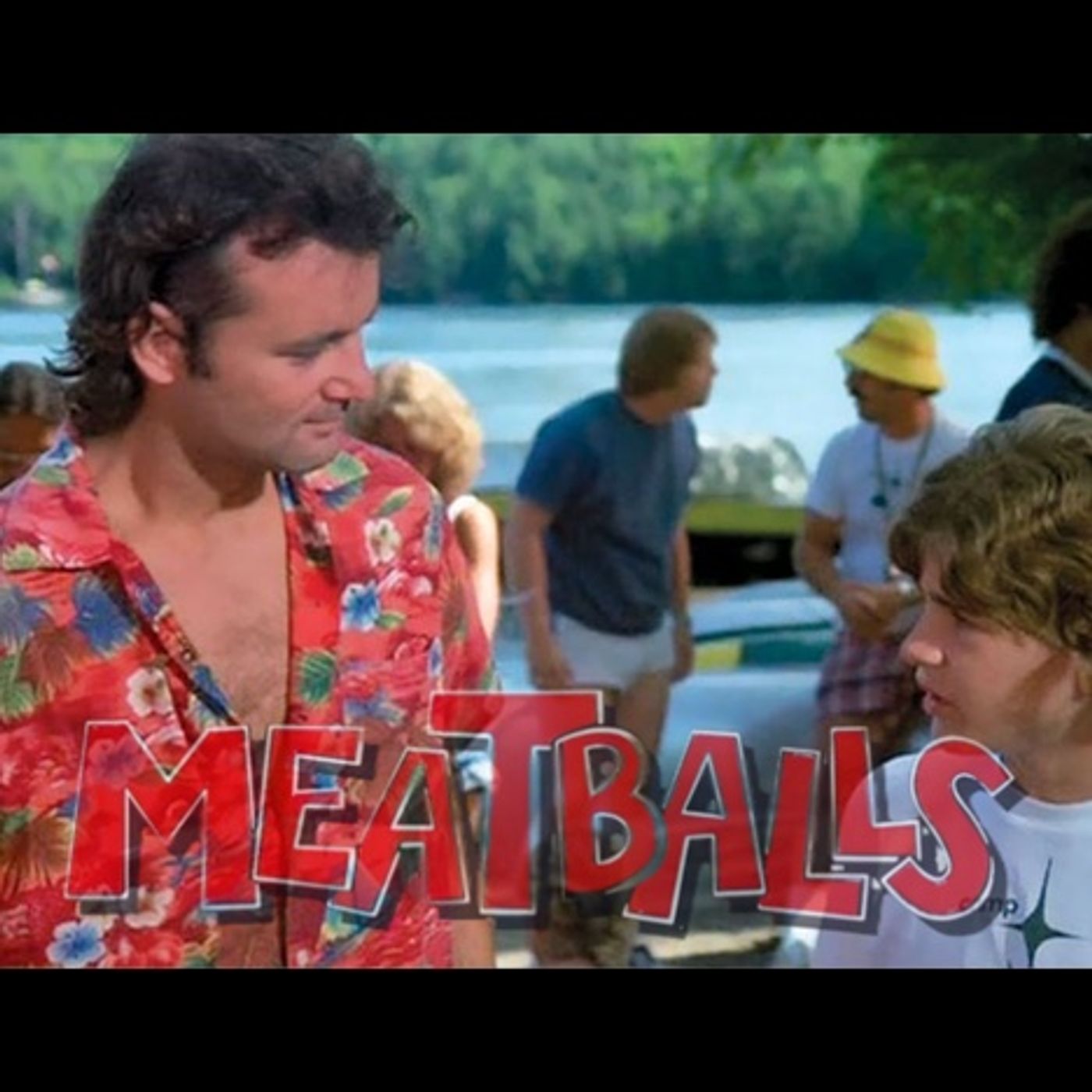
"It just doesn't matter! It just doesn't matter! It just doesn't matter!" Our limited series, "A Film at 45" is back to celebrate the 45th anniversary of the films of 1979. We're dusting off the end of a decade that changed cinema forever, with a...

 Apple Podcasts
 Spotify
 Goodpods
 Pandora
 Amazon Music
 iHeartRadio
 Castbox
 Deezer
 TuneIn
 Podcast Addict
 Podchaser
 Spreaker
 JioSaavn
 Castro
 RSS Feed
 Our limited series, "A Film at 45" is back to celebrate the 45th anniversary of the films of 1979. We're dusting off the end of a decade that changed cinema forever, with a fresh look at modern classics and hidden gems that we can't stop watching! On this episode, David and Scott are heading to camp with Bill Murray in his film debut, "Meatballs!"
For exclusive episodes and content, check out A Film By... Podcast on our Patreon with a FREE 7-day trial. You can also sign up as a free member!
Check out www.afilmbypodcast.com/ for more information.
Email us at afilmbypodcast@gmail.com with your questions, comments, and requests.
Find us on X Twitter, Instagram, and Facebook @afilmbypodcast.
0:00 Hello everyone, and welcome back to nineteen seventy nine in a Film buys limited series A Film at forty five. I am David Burns and I'm Scott Hoffman with this limited series by a Film by a podcast where we're dusting off the end of a decade that changed cinema forever with a fresh look at modern classics, at hidden gems that we can't stop watching. In this episode, we're taking a trip to summer camp with a band of misfits led by Bill Murray and his big screen debut in a movie directed by Ivan Reitman and written in part by Harold Ramis. We're talking about meatballs a time, seeing all campers. Sure, Mohawks beaten us twelve years in a row, but it doesn't matter. It just doesn't matter that if we win, even if got you telling him up comes down? And what's his hand at our side of the field. Shut attention, senior staff, counselors, counselors and training please rise for our national anthem. Are you ready for the summer? Are you ready for the good times? Are you ready for some love and fun in the sun? Well we show are as. It's time to head to summer camp at Camp nor Star, where it just doesn't matter. Even Wrightman's Meatballs, it just doesn't better. It just does it better. Scott, did you go to summer camp when you were a kid? I think once or twice, but not very much. It wasn't like every single summer that I was
1:30 going what about you? I did not, but I remember in the sixth grade it was like our celebration before we moved on to middle school. They sent us to a camp for like a week. It was a place called Woodland Altars, and I've got some fond memories I had at that camp. It is only a week, but it was. It was a blast. So some of the stuff happens in this movie, I'm like, hey, I have similar memories like that. There you go. Yeah for me, I think there was a place called Camp Joy. Okay, yeah I've heard for school. Yeah yeah, absolutely experience yeah absolutely. Well, before we talk more about this and dive into the comedy classic, Scott describe this film to our listeners who might not have seen it all. Right, So Camp north Star isn't the greatest camp around, but it's where these kids will have the best summer of their lives. Guiding these kids through all the typical seventies activities. Is a gang of hormonal counselors in training led by Bill Murray's Tripper Harrison, who spend most of their time trying to hook up with each other.
2:27 On the other side of the lake, so to speak, You've got Camp Mohawk, where campers spend one thousand dollars a week to get pampered and manicured experience with half the fun. The rivalry between camps will pit North Star misfits against the Mohawk elite and give Tripper a chance to help an insecure Rudy Gardner find his confidence and find new friends along the way. It's a wild start to the summer camp comedy genre and a great look back at the beginning of comedy giants that would have forever changed cinema in the next decade and beyond. So before your summer begins, see what camp is like back in the day with meat Balls. Very nice. I really enjoyed this film. I've seen it several times. It just has been a long time that I have seen it. What about you? I feel like this is my first time seeing it. Really, Yeah, I think I've seen more clips than anything but as I was starting to, you know, watch it all the way through, I was like, yeah, none of this is really familiar.
3:22 And I feel like part of that is because I think it's a good movie. I think it's a quality movie. But there weren't giant, memorable moments, like iconic Bill Murray type moments that I'm used to seeing from his work in this time period. Yeah. Yeah, I mean there's there's the classic scene obviously in this one where it you know, it just doesn't matter. You get to see a little bit of Bill Murray coming out there taking over that scene. But we'll talk a little bit about that later. What I like about this movie is it's a very universal film. What I mean by that is, you know, it's accessible by so many because you know, a lot of people went to summer Camp and they would have had very similar experiences that you see in this film. You know, you know, just a little bit that we talked about that this film is supposed to be about the c I ts, you know, the counselors and training. But what I love about the story is that you get your summer camp antics. You're goofing around, falling in love, and your typical mischief, but you know there's some heart and soul behind it too. And of course I'm talking about Tripper, which is kind of funny enough because it's Bill Murray, but you know, Tripper is this goofball, but you know he has a great heart, you know, especially when it comes to helping Rudy, you know, fit in taking care of him and you know, in camp and and he basically becomes a surrogate father, you know, for Rudy to make him believe in himself, you know, because he needed that. I know, Ivan Rightman recognized that after editing this film and had to make some adjustments, which
4:53 we'll talk a little bit about later when we get through the lens. But you know, this film has a good meeting behind it. You know, you have to look through the silliness, but you know it's it's fun. It's a fun film. Yeah, I think that's definitely fair. I mean, looking at this, you know, looking kind of back at what we got. It would be interesting to see it when it originally came out because you would have recognized Bill Murray from Saturday Night Live. And obviously there he had a couple of recurring characters, but for the most part, there's a lot of variety there. Right, this is the first time that we start to see the Bill Murray hype of character that we'll see in Stripes, that we'll see in Ghostbusters, right where it's that kind of reluctant leader, yeah for a bunch of people, you know, that kind of leading a band of misfits, kind of encouraging them to be something more. And this leader that feels like he's kind of making it up as he goes along, right, a lot of charisma, and I think that became the iconic brand of Murray comedy. It didn't carry through in all of his pictures. In fact, when I was kind of looking back to see if that was a theme.
6:10 Obviously it doesn't go there in you know, places like grandhog Day. That's more just like the you know, straight charismatic kind of thing, not necessarily the leader. But it's very interesting to see it kind of have its beginnings in something like this, and I totally agree, like it could have been. I think what I was expecting when I was coming into it was this will be a blend of gross out comedy and pranks with the kids, but there's also going to be the kind of you know, lewd kind of stuff like you would see with the counselors in training. Right, it didn't seem like there was a lot of that though. I was expecting to see a lot more, and I was pleasantly surprised that there wasn't, because that allows it to focus so much more on Tripper and Rudy versus everything else that you would see in these kind of you know, stereotypical summer camp movies, especially in this kind of time period. Yeah, put put a pin in that. Let's talk. We'll talk a little bit more about that when we talk to the lens of you know, some of the things I was mentioning about, right, men recognizing something, How interesting is it that you have Camp Mohawk with Was it a two year waiting list kids gotta be voted in?
7:24 It was about one thousand dollars a week or something like yeah, yeah, yeah, now yeah, And I mean, you know, just taking a moment to acknowledge there are some things that are not okay about Camp Mohawk. It's branding way not okay. But yeah, I think it was a great beat in there where he gets interviewed, Tripper gets interviewed about what they do and that's all Bill Murray and the Yeah, and the crazy thing is he he goes through this tirade and the guy doing the interview is like wow, really like he's not he's not phased by it at all really, but you can tell that it's like, you know, even though it's kids that want to go and kids that are having a you know, a higher cost experience, aren't going to get the same thing out of it. No, They're all going to have this very cookie cutter experience that's not necessarily going to let them grow. Yeah. Yeah, absolutely, And it's funny when you look through this film that you have your your different elements of the film too.
8:28 I like the fact that you had I think it was Fink and Spaz. They're really like the Laura and Hardy or the App and Costello of this film in my opinion. Yeah, because they had a lot of the physical comedy that you you would typically see like we saw an animal House at times too, you know with Blushie, you know, you get a lot of that physical comedy between them, and I thought that was quite interesting. Was kind of a nice break from like some other parts of the story too. Yeah, although I got to give it to Spaz. I think maybe think should have had Spaz's name because he was just like, he was so obsessed with you know, girls, girls, girls, like way over the top, and Spaz was pretty cool and collected. I remember seeing him and I was like, flip the script. When you show you know, uh, Spas in similar camp today, he would have the run of the place.
9:28 Absolutely. He's a good looking guy. He wears glasses but okay, but he's got a lot more going for him, I think than a lot of the other people, especially I don't know what his name was, but that one guy that was trying to be like, you know, all suave and cool and like hey ladies, it was like, yeah, jump in the lake man, just get out. But yeah, I think I think that that was an interesting pairing, and I think that was a good use of those kind of characters because you do get that kind of cross over, you go the some c I ts that go more into the adolescent kind of humor kind of territory. Yep, and Aspas was played by Jack Blum, who apparently is the costume designer's son from this film. Interesting. Yeah, and apparently, because I mean this is a small budget film, you know they were you know what small budget movies do back in the seventies. You know, you're trying to get everybody to do what they can, pull your friends in, who know friends, those kind of things. And yeah, so I mean that's that's who that is. But apparently it was his idea, Jack Blum, to tape put the tape on the glasses. According to Ivan Wrightman, so I thought that was interesting. I love when actors get into their roles like that to you know, hey, you know, let's let's try this, and directors allow that. I love directors to allow that, give their actors some freedom to get into that character because it's going to make them put more into that performance. Right, they're really going to own it because they've got some investment in it, and they say, oh, if
10:58 I can have this bad aspect of it, then I'm gonna plus it up a little bit further. Yeah, totally agreed. So this was first starring role for Bill Murray and it's a first for Evan Wrightman too. This is his first big film. I know he did like a small budget film in like seventy three or seventy two or something like that, but you know, this is some first from people. Rightman and Murray obviously would have a huge history with each other. You know, Ghostbusters, what Stripes, Caddy Shack, groundholl Day, the list goes on and on with those two. Yeah. But apparently, and here's the funny thing, Apparently they were after Bill Murray to do this role. And Bill Murray kept turning it down, kept turning it down, kept turning it down, didn't want anything to do with it. So I even Rightman actually went into production on this film without a tripper, still pounding Bill Murray. And apparently at this time, Bill Murray was playing baseball, and so right in the in the the cat crew were sending scripts to the ballparks, keep sitting him to him so he would look at it. And it took like to the third day of filming for Bill Murray to finally just show up on set and take the roll. But they had been three days into filming Scott with no tripper. I mean, what would you do if you didn't cast him. It's you're gonna have to shut down, right, Dave? Does that mean that this was seventy nine's longest pitch meeting? A? Yes, the keep coming this it is, but
12:37 no I found that very interesting. And apparently when he showed up it's the scene where Spaz has his his shorts his zipper down. Yeah scene, that's the scene Bill Murray showed up to start filming. Those were actually Bill Murray's clothes that he showed up in. So they just started filming with it. Yeah, there you go. Just let it roll, I know, just let it go. And he just and and iven Rightmon even said in that scene he just let Bill Murray go. You're getting to see Bill Murray beat Bill Murray and how talented he is in just going off script. Yeah, and he went off script like crazy in that scene, and for on they just let him go, which you would when you have somebody that talented, you know. Yep. And you can see how that you know, similar kind of facets to Bill Murray that we recognize coming out in other movies.
13:22 Yeah, I'd say that it paid out pretty well. Again, the character of Tripper doesn't seem like he necessarily needs to be shaped all that much, you know, aside from his relationship with Rudy and his you know, kind of leadership with the it doesn't matter role, there's not a lot for him to kind of develop No, there's Yeah, he's just there to help drive the core comedy and keep the story moving. So yeah, I think they made the right choice by just letting him run free. Yeah. Absolutely. Harvey Atkin, who plays Morty Morty, I thought he did a fantastic job in this role. Or should we say, Mickey, that was just a very funny U kept caim Mickey, my name is Morty. But in the fact that they kept you know, tying him up and when he was sleeping and they would taking somewhere else in his bed and he would wake up the morning somewhere else, I thought that was hysterical. Yeah, and it's it's the lighthearted kind of stuff you were saying, right Like, it never seemed to be mean spirited. It never seemed to be something where he's going to be angry about it, or that he's going to be in any kind of danger, even though he was kind of suspended however, many feet in the air while everybody's driving in. And I think there's a great dynamic between his character and Tripper, right because it was like that shared leadership kind of idea.
14:48 He was never trying to undermine Morty. He was just trying to kind of take him down a peg a little bit to say, like, don't take it so seriously, right, it's just summer camp. Yeah, but I totally agree. Harvey Adkin did a fantastic job with that because he took everything in stride. He did absolutely And another actress who did a phenomenal job in this was Kate Lynch, who plays Roxanne. I thought she held her own against Bill Murray in every scene that they were together. Yeah, yeah, for sure, And it seemed like kind of an unlikely pairing, I thought, you know, but to your point, like you know that she's she's standing up to him. There was you know, one particular scene that could probably have been lost where he chases after her a little bit too much, but through the whole thing, you know, she's like, no, I'm I'm I'm good. And eventually they end up together. But she kind of creates a good foil to almost take Tripper down a peg as he's doing with Morty. Right. I think that was a good basis for their relationship together. And then it wasn't just you know, a doe eyed kind of look at her. Romanticide is kind of thing or somebody who's always chasing tripper right right, yep, somebody that he actively has to pursue because his terms just aren't working. I know, in watching this again, I forgot how much I just every time Chris Christine de Bell was on screen she plays a l just how beautiful she is. Her eyes, I tell you, they
16:18 just they just pull you in. I just she's just such a beautiful young lady. And it's just every time she's on screens, you just can't take your eyes off of her. But she did really good, uh, in playing as al I mean, she didn't get a lot of screen time, but every time she was there, I always thought she did a fantastic job. Yeah. But the other one that we really need to talk about is obviously Chris Makepeace, who plays Rudy. This was his first film. I thought he had phenomenal chemistry with Bill Murray. Yeah, for for for an actor who's so young, I thought he was able to, you know, hold his own with Bill Murray. And you know, my understanding is they you know, they really had a nice relationship with each other, and Bill really took him under his wing, Chris, and it shows on screen, it really does. Yeah, And I think, correct me if I'm wrong, But I think a couple of scenes between the two of them, some pivotal scenes like the bus station were filmed after all the initial production, correct, And I'm really glad they and the peanut gambling scene, right, yep.
17:25 I think those were great choices to add in there, because you're totally right, there's a lot of that kind of mentorship relationship with Rudy, and I like how his character was designed from the beginning, like it's not going to be somebody that is always pushed around, but it's a kid who's having a tough time in a tough situation. I think his mom had just passed away recently, correct, and his dad is so wrapped up in his work. Now. They were cross over that a little bit, Yeah, and they say, well, his dad is always busy. There Probably I'll be a lot more depth put into that today, just that he's not he's not an outcast, he's not somebody who's going to get picked on a lot.
18:07 He's just somebody who feels isolated. And if there's any kind of isolated feeling that he gets from the rest of the campers, it's just going to kind of compound that. And the tripper recognizes it, recognizes it, and you know, reaches out of hand to be somebody who's like, you know, I'm not gonna make a big production out of it. I'm just going to let you know you're a cool kid. Yeah, you've got a lot of you know, qualities going for you, and let's spend a little bit of time together and you'll recognize that too, right. And then letting him kind of have more confidence in himself to be able to find his own friends a little bit more naturally. I think that was a great aspect of it.
18:48 Is. While we're on the topic of Chris makepeace theory time, sure, I wonder if Rudy grows up and starts using his middle name Keith as he starts during the Dangerous Nightlife that we talked about in nineteen eighty six Vamp with Chrag John's Jeff Johnson, tell me if I'm wrong, that is a good connection. I like it. I like it, Scott. I'm a little surprised that they didn't bring their characters back for the sequels, which I don't think we're going to get into because I don't think there's a lot of quality there. But I think the chemistry that they had this movie could have just been a standalone and just let that stay with them at the core of it.
19:36 Yeah, so I'm going to go back, let's let's let's move on to look through the lens, because I'm going to touch base into what you had talked about there about the bus scene between Rudy and Tripper. So apparently Ivan Rerightman had cut like a two hour film and he liked it. It just wasn't working, so he cut it down to sixty eight minutes and it was really funny, but it was missing something. So he knew he needed to add something else to it. To you know kind of what I mentioned where you It needed some heart and needed some soul in it, and he recognized the chemistry between Chris Makepiece and Bill Murray. So he decided, not only do you have the story of the CITs, which he already had in this sixty eight minutes that he already edited together, he wanted to add more of Rudy and Tripper. So they actually, as you mentioned, they filmed the bus scene and all those internal cabin scenes that you see between Tripper and Rudy, like the gambling with the peanuts and those kind of things that was all done well well well, after this film was done, cut edited everything, they brought Bill Murray back and Chris Makepiece to do those scenes because Ivan Wrightman recognized it was missing something and that's what it was a scene. I can imagine what this film would have been like without that, and I clearly he recognized that, as you know, as smart and intelligent as Rightman is,
21:07 he recognized that right away. And you know, and I think there's a funny story. Rightman mentions that Chris showed up and he was gone through maturity and had a little bit of a mustache. So Bill Murray actually had to take him back and have him shave it off so that he would look young again, look like himself in the movie. Uh. Clear, clearly Bill Murray sharing the first shaving experience where Chris Piece is pretty funny. Yeah, I mean, like think about that. You've got this big brother relationship and he's teaching him to shave, right, Like, that's that's pretty cool. That adds like another dimension to what they had together. Now, guys, as part of those extra scenes were they were the running or the jogging scenes In the original cuts, some of the jogging scenes were but they went back and added a few more between Tripper and Rudy to add more depth to that, to the more meaning of that of what happens obviously at the end of this film in the marathon rees. Yeah, And I think that's one of the things that makes a difference about this movie. It doesn't get a you know, let's I'll be honest, I don't think this goes down as a absolute must watch Bill Murray classic as I would with some of the others.
22:26 I do think it's absolutely worth watching to see where a lot of this stuff started, not only with Murray's approach, but with the writing from Harold Ramis and the rest of the writing crew to be fair, and Ivan Raymond's direction to make a comedy with heart, because I think that those are the things that really stick with us when there's a little bit more of an identifiable element in there where somebody can say, like, yeah, I went through something similar like that and it's cool this kid had that kind of a mentor right, yeah. That gives another layer of it, that identifiability that I think is the kind of thing that can keep people coming back to it.
23:07 Absolutely. I think without a lot of the bigger comedy beats and without having a bigger kind of ensemble cast on Bill Murray's level. That's maybe why it doesn't get to that kind of level some of the other movies do. But still it's really good writing and really good directing to take time to make sure that that fits in. Yeah, absolutely, And you mentioned Harold Ramis on helping with the writing. He actually did a lot of the announcements over the radio that Tripper does. A lot of that was Harold Ramis, and that's something else that was missing from the film that Rightman recognized. And it's funny enough because they had shot a lot of second unit stuff of real campers because this was shot at a camp that was being used as they were filming, So a lot of those kids that you see in families that they're not acting there, that's real. He shot a lot of that. And in order to put it all together, you know, to get that going from one scene to another scene to blend, Ramis wrote those scenes for Bill Murray to read. And what they also had to do is they had to go back because the opening scene where Bill Murray's in bed and gets up, that wasn't in the film either, So they had to go back and shoot that too to it to add to it, so they were able to connect all of that with the radio announcements that Ramis had wrote. Interesting. It's interesting they had that kind of timing too, because that gives that had to give Murray
24:37 a bit more like a different perspective on the whole thing. It's not we're going to work these things in with heart as you're doing it. It's more like, we're going to get a lot of the core done and then once you have a chance to look back at what you've been through. Yeah, now you can take kind of a deeper approach to the rest of this scene, those scenes, which is exactly what they needed. Oh. Absolutely, And it's funny. We talked earlier about Morty being strapped in his bed and you know, being taken to different places of the camp and stuff like that. That first scene where they actually do that, that was real. There was no stump man, there was no faking it. They actually strapped him into that bed, and they said it was a lot of effort because it's a lot more complicated than you think it is, even though it looks easy unscreened, especially when they turned him sideways to take him out of the door.
25:30 Oh yeah, I'm sure. And his face was very stoic that whole time. I don't know if I would have been so stoic. If they had been like, all right, now here's the sideways shut, I would have been like, oh, I hope, I hope you're notus work. Yeah. That's what I love about a lot of these older films, Scott, is the stuff that they had to do just you know, Okay, today they would have put a stump man in there, or they would have done something different, you know, they would have cut and not shown the whole thing. But back in the seventies, man, you did it all. Yeah, yeah, yeah, yeah, And that's a great point I am. Yeah, having recently come back from seeing The Fall Guy in the theaters, Yeah, you can a whole new appreciation for what they would go through in this era. And you have so much more appreciation for those kind of things, the amount of safety that you would have to go through, yeah, and the trust in the production crew to get it right and not you know, fall out of a tree, things like that, right right, that raft bed that he's on, to make sure that it's excit enough that he's not out there, like, you know, swimming for his life exactly. Yeah, there's some other fun scenes that Ivan Wrightman talked about that I would have never have known. So if you get a chance and you watched it on Blu Ray, that's where I caught it. Definitely listen to the commentary from right Men because it is so funny and he's so knowledgeable about it. He does not stop talking from beginning to end of this commentary.
27:00 He's fantastic. But one of the scenes in here, do you remember the campfire scene where all the cts and stuff like that were there, you know, and Bill Murray does the hook man story. Yeah, Well, apparently this was towards the end of filming and they told the cast and the crew you know, that they were almost done, so they can, you know, they kind of on vacation, they can have some fun while they're shooting these scenes. Well, the scenes took a little bit longer than they were anticipating, and the crew or the cast were drinking alcohol. So is Bill Murray. So the scene where he's giving the speech with the hook you can really tell if you pay attention, Bill Murray's drunk and he is really drunk.
27:41 Wow. In that scene, did you could tell he's barely keeping it together and apparently right man was getting so irritated by it and Bill pulled him off the side. Look, look, you're being kind of mean to the crew. You need to come down a bed. Yeah, yeah, drink Bill Murray clowning around with a hook hand like. But go back and watch that scene again now that you know that, and watch Bill Murray very closely, and you're going to see how drunk he was. That's interesting. Yeah. But then and then the additional part of that scene too is when Roxanne Tripper go off, you know obviously and have their romantic moment. Right the sun was coming up, so they're running out of time, and then you see all the clothes kind of scattered and you get that like slow Dolly shot, Yes, the trail of clothes and stuff like that, and you get the narration over top of that. That was done at the spur of the moment too, because they didn't know how they were going to handle it, so they came up with that and it works perfect in my opinion, because you don't need to see all that romance stuff just hearing it and with the clothes it was perfect. I thought, all right, Scott, before we continue on with our meatball as conversation, let's take a little break and we'll come back. We will continue, all right. Welcome back, listeners, as we continue our discussion with nineteen seventy nine Ivan Rightman's Meatball. So let's score it. As we know, this was composed by the incredible Elmer Bernstein,
29:12 who has a ridiculous amount of credits, Scott, like two hundred and fifty eight music credits on IMDb. This man was so busy, and I mean he'd already done like to Kill a Mockingbird, the Magnificent seven. We know he did Animal House the previous year that you and I covered last season on a film at forty five, The Great Escape, The Ten Commandments. So this guy has done a lot of big tent pole films and it You know, when they approached him about this, they were kind of nervous because, I mean, come on, this guy, this sounds almost like approaching John Williams. You know this little low budget film. Are you gonna do a comedy with us? Even though he'd already worked with Animal House. So they showed him the film and he loved it, so he said, yeah, I'll do it. And I think his score is just sweet, rich, fun, energetic and goofy when it needed to be. Would you agree?
30:04 Yeah? Yeah, And I wonder if that, you know, given that list of credits, you wouldn't necessarily associate meat Balls like that would be like that's the left turn in that IMDb list. But now it all seemed like it was appropriate. I think the one piece of music that became this unfortunate earworm. I don't know if he was responsible for that title song, but oh good god, that sounded like people had fun recording it because it's a lot of kids that are basically yelling and key. Yeah, but man, it's hard to shake. Yes, I have to rinse. It's like power of the Night, Like I have to rinse. After hearing that song playing, I'm like, oh god, I forgot how how this song kind of stick in my head? And sure enough it did it. It's playing in it right now, So you know, listeners, be careful if you're revisiting this. You're gonna need an audio scrub afterward. Yep. And apparently was it Rick D's who did the uh the title theme meat Balls When you hear it through it m H it's so odd when that happens, and it's just like, oh, okay, we'll go with it. Yeah. It kind of reminded me of Spaceballs a little bit, like the Spaceball's theme watcha All right, well, let's quote this, Scott. Did you find anything interesting? Yeah, there was an interesting moment that I found. In a
31:37 twenty seventeen Vanity Fair article by Eric Spitzennegel talking with producer and co writer Dan Goldberg about Bill getting an interesting moment of perspective, so he says, Goldberg says, the night that movie opened, Bill and I and Matt Craven were in a limo just driving around and being stupid. Bill was in character as Hunter S. Thompson because he was getting ready to shoot wear the Buffalo Room, and he had a cigarette and a cigarette holder and his sort of detached caustic air to him. We got in front of a theater in Toronto and I said, stop the car, Bill, come with me. I had seen the movie a billion times, already been to dozens of screenings and various cuts, but Bill hadn't seen any of it. We walked into the theater ten o'clock showing. The theater was packed there's this feeling when there's three hundred and fifty to four hundred people in a tight space watching a movie, kind of claustrophobic, but this wonderful shared experience that's unlike anything else. Bill was watching the campfire scene that you were talking about, I think, and he's watching the audience's reaction, and I saw this sweet little smile come over his face. It was a really unguarded moment. I might be ready into this, but I really felt at that moment that he got it. He understood what he'd done and how special this movie was and what it meant for people.
32:55 Wow. I loved hearing about that. I loved hearing about that moment, especially given what we have already talked about and we'll probably talk about a little bit more. Is his his kind of leadership role that he has in this right. He's helping everybody have a good time. He's helping everybody not take things too seriously. He understands the moments when it's important to kind of slow down and help somebody out. But for the most part, you know it comes out in his speech. It just doesn't matter, don't take it so seriously, just have a good time. And the rest will take care of itself. Now, what about you? That's really true? Yeah, So it took me a little digging, but I found an Entertainment Weekly article where they had interviewed Ivan Reightman back in twenty twelve, and here's what he had to say about meat balls. He said, for me, this was an antidote to my not being allowed to direct Animal House. I had worked on it three years, brought Belushi into it, and ended up producing the film. But my original intention was always to direct it. But because I had really only directed this small twelve thousand dollars improvised comedy called Cannibal Girls, the studio wouldn't let me do it, and so we hired John Mallandis, who did a great job. But I really wanted to direct, and literally, as soon as our cut was done at Animal House, I caught a couple of friends up, Lynn Blom and Dan goel Berg, who all gone onto at camp at various places, sometimes together in Ontario, Canada. I
34:29 said, let's see if I can put this summer camp movie together. This was March nineteen seventy eight. Animal House came out in late July and we started shooting Meatballs the third of August. Wow that fast. Wow, that is fast. Yeah, no kidding, but you can really tell. And again if you listen to the comments here, you can really tell how much he loved meatballs in the story and everything that was put into it. You really can. I love to hear creator's passion and you can really hear rightman's passion in that commentary. I know we lost him what a couple of years ago. He passed away unfortunately, but it looks like he passed some of that talent to his son, who I hope directs more and more and more.
35:16 And yeah, I thought he did great job with Ghostbusters after Life, so I hope he directs a lot more in the future because it looks like he has what his dad had. That's for sure. Totally agree. Any what IF's so a couple of interesting ones. We've talked before about Eddie Deason. We did, and if you check out his IMDb, he's automatically recognizable if you hear his voice, it's automatically recognizable. Initially approached to place Spaz. Now, I think Eddie would have done a terrific job because I think in all of his roles he was well into it, right, Yeah, But I think he would have been so decidedly different. Now he declined because he was already committed to nineteen forty one. But I think it just would have been a totally kind of different Spaz that we had. I don't think he would have had that underlying like, you know, if somebody gives him a chance and lets him get out of his shell and stops looking so kind of you know, two dimensionally at him. Yeah, he's got a lot of potential right completely with that, And I think if he had that kind of you know, there's the Jerry Lewis kind of like you know, if that affact had been put into this, I think it would have changed the character. Agree too much, yep, yep. I think what we got
36:46 is what we needed and deserve to have. It would have changed that character for sure, without question. Scott, I couldn't comp I couldn't agree more, could agree more. Now. The other what if that I heard about is a fellow Ghostbuster, Dan Ackroyd, was being pursued for this for a while for who will roll for Tripper? For Tripper? Really interesting? That would be an interesting you know, I think I might be interested in going to that kind of alternate reality video store that we talked about right the other world, Suncoast, where I could pick that up on the shelf and see what it looks like. Because there's a lot of iconic Bill Murray in this, and when I think about dan Aykroyd at the time, it would have been a very different kind of tone. It wouldn't have had the same charisma, it wouldn't have had the same energy. It would have been great, because it always is with dan Ackroyd, but it would have been so different, and I think we would be the lesser for it because there wasn't that opportunity for Bill Murray to grow into the kind of character the actor that he could be. Would you agree with that? I would completely agree with that, Scott, Yes, absolutely so. Scott. Let's let's rewind a little bit. Let's talk about some likes and dislikes. Anything for you. There's there's one c I t that we haven't talked about yet. Who is an
38:17 immediately recognizable face and it was bugging me for the longest time, the character of hardware. Oh yeah, right, who is that? Scott tell Hus Matt Matt Craven. When you when you see his face you will automatically. I mean I recognize for a few good men obviously Crimson Tide. Oh yeah, X Men first Class. Yep. It is so interesting with that last credit, which I think is a phenomenal movie. By the way, X Men first Class it is. It is the the the time between those a baby faced Matt Craven, that the Matt Craven and X Men First Class.
39:06 He had a great role in this. It was understated, but it wasn't underused. Yeah. I never really understood why they called him hardware, aside from the one moment when they wake him up and he's like in his underpants and he's got a Caribbean or around he's dreaming about being Schneider from one day at a time. But I think I think he did a great job in this, and that's true for a lot of the c I ts, I think, but he is that he's definitely for me, that recognizable face. It's like, wait a second, so what about you? Absolutely so I had. The biggest one for me is the scene where the marathon scene.
39:52 What I really liked about that is how I even Wrightman shot that because if you watch that scene, there's no music until a little bit later into the the race. You hear their breathing, you hear natural sounds that are going on around them, and I think that really added to the impact of that scene and what it meant not only for us as an audience, but for Rudy. You know, you felt the pressure on his shoulders that he needed to win that race because of what Tripper had done for him, but for the fact that he had been you know, everyone has been you know, on him. He hasn't fit in with everybody, and he really needed to show that to everybody because I remember the soccer game that he had earlier, you know, in the movie, where you know, he kicked it into the wrong goal and people were picking on him and those kind of things.
40:36 So, you know, I think with the way Ivan Wrightman shot that made it so more impactful than what it could have been. But then you get hints of Bernstein's us score, you know, until it revs up until that finish line, you know, and he crosses that finish line, and you just you can celebrate with everybody, and I just I think that was like my favorite scene in the entire movie. Yeah, there's a moment you're reminding me of in that race where you see the mohawk competitor kind of pause in the race, right with this moment of like, oh, I'm going to get this kid. Thinking back on it, I maybe I maybe I kind of want to think of it as the mohawk competitor kind of recognized what he could do for this kid, and maybe he intentionally dialed back just a little bit to let him win. I mean that makes it a little less of a satisfying victory. But yeah, that's that's a that's a great scene.
41:37 And I love the fact that Tripper is the one that stands up for him and that he had spent that whole time kind of training him Miagi style, right, doing all these runs of chatting and talking and and getting him going there to give him this kind of moment because he had to know that it was coming. Oh yeah, that's a great one. And even the scene that the build up scene to that, when you know, you realize her best racer for her leg and they were they were asking who who's going to finish this? Who's going to do the race? And then that's when you know Tripper basically volunteers Rudy to do that, and No, I don't want anything to do with this at all. You know that the whole scene there too, you know when they camp, you know, Tripper got the camp to believe in him, including Amory getting him to believe in it, you know, and sure enough, you know it paid off. I thought that was like a really great scene. All of that, The whole sequence I thought was fantastic and really well done by rightman. It really was totally agree There is one other scene m hm that I thought was unexpected and really well done. It's when Candice Boat naps Crocket Ah, Yeah, to say how much she loves seem Yeah, that was a very interesting flip. It wasn't, you know, absolutely crucial to the story, I guess, and it wasn't as heartfelt as like the race scene, but such a cool flip of the script on that kind of idea and the fact that she had to yell her lines the entire dime over the reving of the boat. I hope they didn't have to do too many takes of that, but performance was spot on.
43:07 Both of them did a great job in that. And she's really driving that boat, Scott. That's not fake, that's that's that's seventies stunts for you baby. Yeah, and the cameraman was not strapped in the camera was on the front of that boat filming her driving. That that's faith, yes, it is. That's faith and careful planning. You have to be like, here is here are the booies we're going to put out there that you steer around. Here's the very specific course. Please don't dunk me in my very expensive, very heavy camera. Yeah. Yeah. It kind of takes us back to what we talked to you a little bit about Matt Pax. You know, they had similar stuff where they were on the back of bikes and stuff like that in cars filming dangerously. You know, I guess it was the seventies thing. Scott, Yeah. I mean, you know now that you mentioned that. You know, listeners, if you've been following a lot of these movies we've been talking about, hearing about things like this, hearing things about Mad Max, you owe it to yourself to go out there and look for documentaries that focus on stunt work, yes, and focus on what people have gone through with this kind of stuff. It's really an unsung industry, especially from that era, and when you hear about some of the things that they had done to make it work with what they had available.
44:24 Yeah, it makes it so much more enjoyable to watch, and it makes you hold your breath a little bit more in some of these scenes because you're like, oh, they were really flipping that car. They were really you know, endangering themselves to make this thing happen. Yeah. I mean, let's look at John Wick. That's directed by a stuntman. Yeah, you know, I mean he shows these are stumman, this is what they go through. You're abslutely right. You know, we need to celebrate them more and you know, appreciate them because without them, we wouldn't have what we on screen, what we have, So good call on that for sure. All right, let's talk about the impact of this film, Scott. As you said, you know, this is Meatballs is a comedy that you know, isn't like stand out among much of other comedies that we know over the years and stuff like that, but it does have its place in nineteen seventy nine and it has a huge impact because again, this is Bill Murray's introduction into film, this is Ivan Rightman's introduction into the into film, and we know where these two man's career go. It explodes into Hollywood, and you know, it becomes becomes the the the the film gods that they become basically.
45:29 But you know, also it's the summer camp films. There wasn't very many, I don't think in the seventies. You know, you're gonna get more of those coming up in the eighties. I'm going to point out one. Don't laugh at me, Scott. Our producer Jeff Johnson will agree with me. Ernest goes to Camp. Come on, that was a fun romp and you know it was. I will admit I've never seen it. Oh come on, now, come on, listener, tell Scott he's got to watch that film. Come on, I've survived troll and Under the Cherry Moon is on the ground. I'll give it. I'll give it a chance on your revenundation. Yes, have you seen Wet Hot American Summer? I don't think that I have. You need to check that one out too. Yeah, that's a really good summer camp film. So listeners, if you've not seen either one of those films, go check them out. I think you appreciate it. But what about you, Scott, any any impact you see in these films? This film, well, you've already mentioned you know, Murray Rightman and Remis and their impact on you know, cinema ongoing certainly for the next decade. I think we're really fortunate to have something like this that can help set the tone for a different kind of summer camp movie because if you think about, like, you know, the undercurrent of Friday the thirteenth is that for counselors, it's glands all day, right yeah, and you know, the possible default of going to these movies being you know, very
47:00 raunchy and you know, but this lets you it kind of sets the tone for you know, looking back at what summer camp used to be like and how it can be that kind of growth experience, right yeah, and that can have a you know, as much as you have the gross out and all the aspects that you kind of cringe and you you know, relate with the kind of the rough aspects of summer camp, like the food and the facilities and all this other kind of stuff, the growth that can come from it. And I think we benefit from the creators behind this you're recognizing that and putting this kind of aspect into it, because I think a lot of the summer camp movies that would follow saw the opportunity to follow in the foot steps of Meatballs and make it actually mean something and make it a little bit more accessible to more than one type of audience. And I think we're better for it. I agree, and I'm going to go back. You know, we've talked about this several times. I know, we talked about Halloween, we talked about Mad Max, and we talked briefly during this conversation.
48:06 But in the seventies, small budget of films like this, you have to work your butt off as a creator, as a directors, as an actor, as whoever. Because you've got a little bit amount of money and you have a lot at stake and you have to do a bunch of different jobs. You have to put a lot more thought into what you're doing, and it really pays off in my opinion, And this is another film that all that work had paid off. Because one of the things we didn't talk about is I believe this film it was a little bit more than a small budget. It was like one point six million dollars, which is a lot of money back in the seventies. Sure, but you know, compared to a lot of other films, it's a small budget that you know I have discussed but ended up making like forty three million dollars. So for a comedy, that is a ridiculous amount of money that it would make. So that just shows you the impact right there in itself in seventy now, yeah, for sure. All right, where did you watch this set, Scott? I've saw it on Amazon Prime. Okay, it's always a good vehicle to help watch it with, you know, the trivia tidbits and whatnot. I'd be very interested to go back and listen to that documentary or the sorry, the commentary version that you had seen with id right Man. It's fantastic. Yeah, I mean I would just want to crank up the volume on the commentary and just let that play over and not hear anything from the movie. Yeah, he does a really good job in it. And I encourage you and encourage all the listeners go check out the commentary. I watch it on the
49:37 Blu ray that I own. It's well worth it. Believe me, you will have a good time listening to right Man because you know, he's a great director, writer, and and just he's just fun to listen to, that's for sure. Yeah. Well, Scott has always been thank you so much for joining me talking about these It's always a blast. Yeah. Likewise, thanks man, You're welcome. As always want to thank our listeners. I helpe you are exercised. As we continue our race through nineteen seventy nine, we've got some big films coming. Looking more and more excited. I believe Alien is coming up for us, Scott. I cannot wait to jump into that one. I really can. Just a little movie to talk about. Yeah, a little movie. Well, listeners, which camp do you belong to? Which one would you attend? Would you be one of those snobs and go to Camp Mohawk or would you want to have fun and chill out with those especially with Tripper at Camp north Star. Let us know if you want to reach us, you can at a film by podcast dot com.
50:34 You can reach us at a film by podcast at gmail dot com. You can get us on social at a film by podcast on Facebook, Instagram and Twitter. And remember, listeners, when the hand goes up, the mouth goes shut until our film reals start rolling again. Go out, watch somebody New, watch somebody Different, and who knows what you will discover next. Thanks everyone,