A Film at 45: Norma Rae


 Apple Podcasts
 Spotify
 Goodpods
 Pandora
 Amazon Music
 iHeartRadio
 Castbox
 Deezer
 TuneIn
 Podcast Addict
 Podchaser
 Spreaker
 JioSaavn
 Castro
 RSS Feed
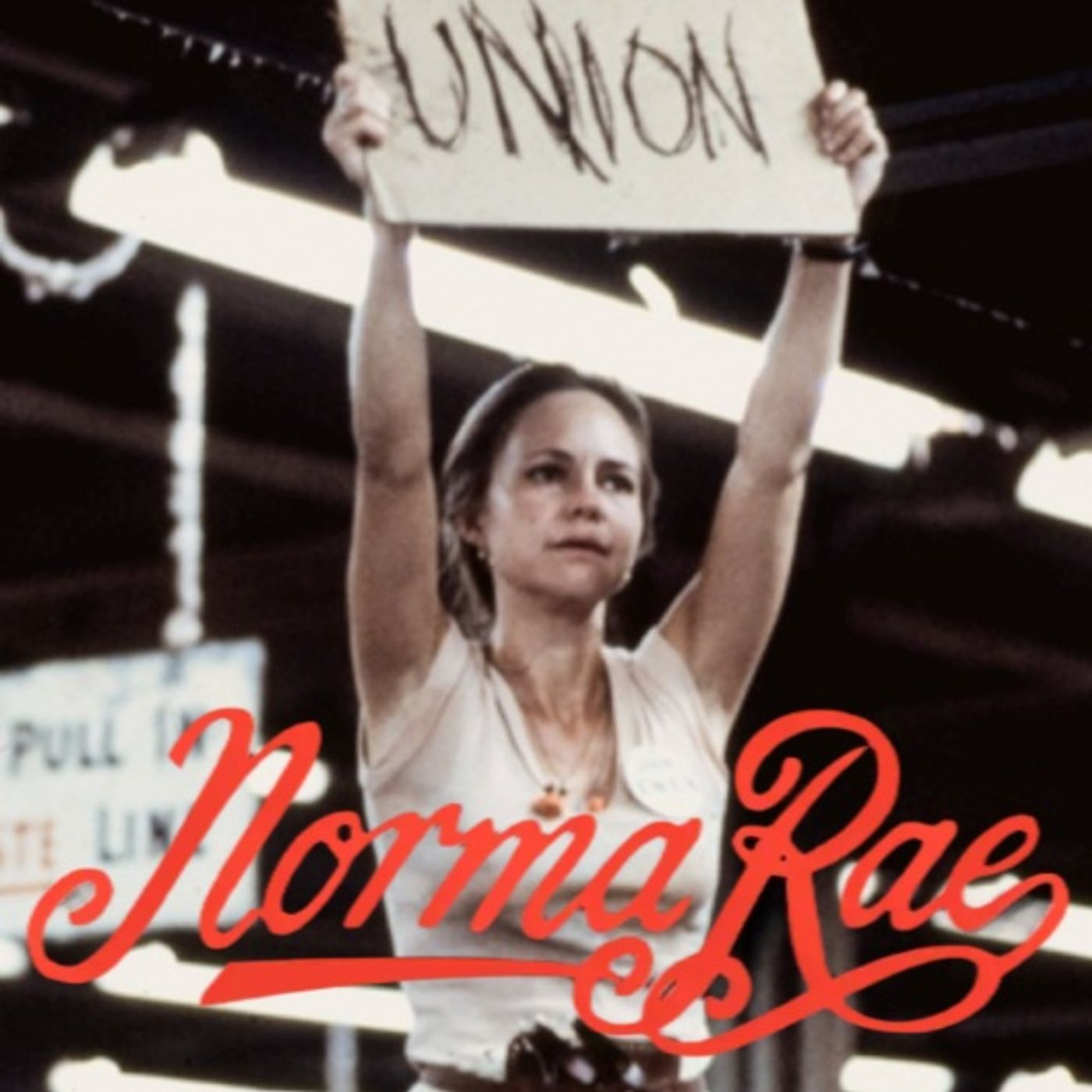
 Our limited series, "A Film at 45" is back to celebrate the 45th anniversary of the films of 1979. We're dusting off the end of a decade that changed cinema forever, with a fresh look at modern classics and hidden gems that we can't stop watching! On this episode, Amber Lewis joins David and Scott on the hellish floor of a textile mill to discuss Sally Field and her Oscar-winning performance in "Norma Rae."
For exclusive episodes and content, check out A Film By... on Patreon! with a FREE 7-day trial!
Check out www.afilmbypodcast.com/ for more information.
Email us at afilmbypodcast@gmail.com with your questions, comments, and requests.
Find us on X Twitter, Instagram, and Facebook @afilmbypodcast.
0:00 Hello everyone, and welcome back to the year nineteen seventy nine. In a film Buy It's a limited series, a film at forty five. I am David Burns and I'm Scott Hoffman with this limited series, as you said, from a film by a podcast where we're dusting off the end of a decade that changed cinema forever with a fresh look at modern classics and hidden gems. So we can't stop watching. And in this episode we're talking about a breakout role for Sally Field with Norma Ray. You're underpaid, your overwork, the shaft and you're right up to your tonsils. You need me never a very good girl, scattering. I'll go along with you. You got me, So what the hell are you gonna do with me? That's right, It's March, Scott, and what better way to start women's history moth than with a film ranked in the American Film Institute Top one hundred most Inspiring Movies of All times starring Sally Field, a film that was nominated for four Academy Awards and winner of two. Of course, as you said, we are talking about Normal Ray. But before we get to that, we have a special guest joining us in the op Henley Textile Mill. We have Amber from DOCTU Base seventy seven, but also has been joining us on a film buy for quite a few episodes. Amber. Welcome to the union meeting. Thank you, it's good to be here. Union Strong. We were gonna have a
1:30 big button, yes, but we couldn't. Jeff wouldn't let us have it. Yeah, I've got a budget. I don't know. I don't know. Numbers. Numbers, well Scott. For those who not seen this film, how would you describe it to someone? Norma Ray has lived and worked in the same textile mill in the same small town all her life. So has her mom, her dad and all her friends. Life isn't great for them, but it's enough. Norma is a single mom with two young kids who will probably work in the same mill when they grow up, and maybe that will be enough for them too. The job of the mill never changes, and the people who work there, men and women, young and old, work like machines every day and they're treated as such. But that because that's the way it's always been, and it's been enough. But when Norma's bomb starts losing her hearing from working in a loud mill, she finds that no one is listening to her family's needs. She starts to see the abuse and neglect that everyone just expects to put up with, and she decides she's had enough. Right at the time when a Union rep comes to her and the others at the mill with hope if they stand together, they can look beyond good enough and start demanding the better that they deserve. This is the story of how Norma finds a voice for herself and her family so that she can find a better life for everyone. This stars Sally Field, ron Liebman bow Bridges, among others that will get into Directed by Martin Writt and written by Irving Ravech and Harriet Frank Junior. This is such a wonderful film dealing
3:02 with a great message. You know, this is the time period where things were still rough for racial differences still are but a lot worse back then for women and for the working class. So so much was going on in this film, Amber was this How many times have you seen this film? Was it's your first time? Or have you seen this before? Oh? My goodness, my family is a union family. Oh okay, my grandfather was the vice president of the UFCW. One uncle was a recruiter. Another uncle was a lawyer for the union. So these kind of movies were you know, from when you're a toddler and it comes on TV and sit down and watch this. This is what your grandpa does. Yeah, that message was driven in, you know, at a time when you know, it's the seventies, the eighties, like, yeah, you watch things that you were too young for. That's just the way I was, you know. So I can't say I always understood what was going on, but I have watched this movie multiple times over the years, and three times this weekend. So nice, all right, Scott, what about you? This is I'll admit this is actually my first time ever seeing it. It's one where it's always been, you know, on my radar. Obviously it's one of the classics that you that you have to watch, but I'm you know, it's it's not coming up in circulation very often. Actually, when I when I found
4:32 this movie, the best way for me to get to it was through the local library on David Again, which I mean always has you know, great special features and things like that. But I was surprised at how on the forty fifth anniversary of a pretty big movie for nineteen seventy nine. It wasn't really widely available, but first viewing, I got to say I was thoroughly impressed. Yeah, it's a really good film and it should be seen by many people because of the message that it hasn't it. I know this is film is based off the true story of Crystal Lee Sutton, which was told in the nineteen seventy five book Crystal Lee, A Woman of Inheritance, which was done by reporter Henry P. Lieferman, I believe of the New York Times, which is where they came up with the idea for this film.
5:24 But before we really dive into it, let's talk a little bit about the cast itself. Clearly, the one who shined in this the most was Sally Field as Norma Ray. I just thought she was done an incredible job. I know there was a story that Bert Reynolds tried to talk her out of taking this role. I'm really glad that she did not listen to him, and I'm sure she's glad she didn't listen to him because she got an Academy Award for this film. Yeah, yeah, she got numerous awards, right, Yeah. Kind of reading about it, she had one of those run ups to the Oscars that you know you have every few years where somebody is just knocking down every single award you know that's available. Like that was her her year. You know, it was just just a whirlwind. And she even talked about that later when she won her second Oscar. She said, you know, the first time, like I was so out of it, like it had just been this blur, this whirlwind, you know. Yeah, that she didn't really appreciate the Oscar moment until she got her second one.
6:33 Yeah, she's a talented young lady, that is for sure. I remember her, and you don't laugh at me because this might date me a little bit, but I'm the flying Nun. I always remember her from that series. Oh yeah, I got that a lot in syndication. Oh yeah, that more than Gidget. Yeah yeah, but it's it's you know, to her credit. This is her first lead role in a major motion picture, right, I mean, she had other roles, but this is the first one where she's in the spotlight and yeah, knocked it out of the park. I mean, oh yeah, very believable in this role, I think, and perfectly cast. I know that we you know, usually talked about alternate pasting. I'll just spoil it here and say I can't imagine anybody else being in Sally's role. Oh yeah, she she had that, really, that believability that she was from a country town. You know, that small town vibe. She really had that, and she made you believe that's who she was. I thought she knailed it beautifully. Yeah. Well I have a girlfriend who's from North Carolina, And there are things that Sally Field says in this movie where I did like a double take because it sounds just like my friend. Like my friend says it exactly the same way. Yeah, well I know her. And about Bridges, I believe didn't they work in a factory before this film was made so they could get used to that.
7:49 Yeah, the factory they shot in. What it was there? Yeah, they worked on the line and she was like, well my textile didn't look very good, but I did do the shot. That's good. Somebody came behind with the clipboard and was like nope. And speaking of bow Bridges, who plays Sonny in his film, he is the one who becomes a husband of Norman Ray. His introduction I felt was really weird. Did you guys get that vibe? Yeah, yeah, I was. Actually when I was first watching the movie. You know, I watched the trailer first, and I'm seeing so much of Ron Leadman as Reuben, but I'm seeing bow Bridges as like, you know, second billing to Sally Field. And I'm like, yeah, but shouldn't it be Ron Leadman gets, you know, kind of a big role. So are you talking about the diner scene where they're sitting there kind of having a bunch of drinks or cheeseburgers. There's that one, but there's the other one when she's she becomes like the he got a promotion. She's walking around with her clipboard and I'm over here, I'm over here, and he keeps moving around, I expect to see like a line of cocaine under his nose. Like, yeah, that was kind of crazy. It was just felt weird, and you know, and that's that leads me to like one of my dislikes of the film. I felt like they didn't do his and her relationship justice. I understand what this movie was
9:20 about, you know, it's focused on you know, the union and stuff like that. In Sally Field, I just felt like there wasn't enough between the two of them. I felt their romance was kind of rushed, but maybe that was just me. What about you two, did you feel that way? It was kind of on fast forward a little bit. I also thought that his character was very refreshing, and it would have been so stereotypical. She's surrounded by so many just Neanderthals. Yeah, and it was so nice that she found this good, decent human to share her life with. And he was supportive in like a weary, annoyed way that is very real.
10:03 You know, he wasn't a saint, but he also wasn't trying to stop her. He was very supportive of what she was doing. So, like you said, it was a little problematic, a little rushed. You didn't get a lot of information. It was so sweet and so endearing that you know, I was I was fine with it. There was one specific scene where he's kind of going on a tirade in the kitchen and frustrated with you know, things that he feels like she hasn't been doing, which I mean, okay, guy, well you know where the machines are go, actually do something. There's two of you contributing. But it did, in that moment remind me a lot of Aaron Eckert's character George Aaron in Aaron Brockovich.
10:52 Yes, and that kind of relationship, you know, where he's like, I'm exhausted, I'm a little bit you know, weary of all this and I'm having to you know, there's certain things that he's having to kind of like temper about his own expectations or whatever. But yeah, I'm glad that he doesn't just throw his hands up and walk away. That she has that support because in this town it seems like people are very reluctantly, if at all, going to provide support. Yeah, right, even her parents. And you've got that relationship between her and Ruben played by Rob Leeman, who we can talk about him as well. You know, she's with him quite a bit. You know, Sonny could just believe that, you know, something was going on between the two of those, you know, because they were spending so much time together. But i mean, as you know, as Amber said, it's a supportive he was. It's just you know, it just added too much, so much to his character. But Rob Leeman as Ruben is one of my favorite things about the movie besides Norman Norman Ray. He has says so many good scenes in this movie, I believe, if I remember correctly, Jeene siskel uh said that Rob Leeman was like the one thing that he did not like about this film. And I was scratching my head trying to think, what in the world was Jeene Ciskel watching and what was Geene ciscyl thinking, Because I thought rober Leaman was fantastic in this film. I felt like he was the drive for the for you know, the union, and to help Norman Ray really start to break out and
12:24 become who she was. One of the scenes in particular that I thought was fantastic is when he was being shown around the factory for the first time and he has all these guys just like huddling around him and just trying to intimidate him, you know, and he's trying to find the billboard, the bulletin boards and stuff like that, and that whole line when they when they saw that the paper that he was supposed to be don where people could read it was like way way up there, you know, and he made that comment, well, chamber Lain still couldn't even read that, you know. I just love that scene so much, and I thought rob Leaman was fantastic in this movie. I was texting my mom about this earlier and she said that my uncle that was an organizer when this movie came out, that was the job he was doing. And she said she couldn't believe how real it was.
13:09 You know, he was living with her and my dad at the time, and like he would come home and tell them these stories and like this is exactly what he was dealing with. And she was blown away by that performance and the writing of it all because it was so authentic. But I love that he you know, he's passionate about what he's doing, but and develops a relationship with Norma Ray like he sees he targets her as she's the smart one, she's the one that I need to get. But they never crossed that line. No, you know, they have incredible chemistry, these two actors, and you know it's always they are friends and they're working hard and they have a goal and that's all it is. And I loved that because too many times for the Hollywood ness of it all. You know, of course they have to have a relationship, right, right, and that's just not real, no, right, Yeah, totally agree. Yeah, I mean, you know, it's it's that potential that he sees in her right. He sees that she is somebody who is willing to change, who wants change for various reasons, but also sees that, you know, she's somebody who has a lot of I don't know what it is, it's kind of quality that she can kind of she can draw people in right, kind
14:41 of a likability right inherently, like not just that people want to be, you know, friends with her or help her out or or whatever, but she has a lot of connections through the mill, and she cares about the people in the mill, all the workers, and yeah, him seeing that it was really powerful, and I totally agree. I'm glad they didn't pursue the romantic connection because it didn't need to be there at all. I think it's kind of a shame that when I was looking into Ron Leeman that he is. I mean, obviously he passed away fairly recently, and everybody that was kind of writing about it was saying, yeah, Ron Leebman, he was Rachel's dad and friends, and it was like, yes he was.
15:39 Yes, that's the context when a lot of people are going to remember him for. But he has this long list of accolades and this I feel is an extraordinarily powerful performance for him because of his the way he conducts himself in all those situations. Very patient. He's not going to back down, he's not gonna you know, get in people's faces. He'll stand up for himself. But he's you know, he's got that kind of even keeled nature, and I just thought his performance was fantastic. Yeah, even the scene when the union bosses showed up and they basically were there to talk about Norma, and you know, they basically said, you know, we want to do this with her not being here, and Ruben's like, no, she's going to stay here. And then when they talked about you know, the rumors and stuff they're flying around, and Ruben just came to her defense. You know, I respected that character that much more. Sure, Norman's got flaws, we all have flaws for crying out loud, but Ruben wasn't going to let that get in the way. And I thought that was incredible. That was a great powerful scene. Yeah. Yeah, his character is amazing because he doesn't ever look down on these people that he is working with that aren't as well educated as he is, aren't you know, as experienced you know, as worldly or whatever, but he treats them always with respect for who they are. And I love the scene in the motel room where he and uh Norma are talking about Dylan Thomas and he just talks to her like he
17:15 would be talking to appear about, you know, this author that he likes, and not like well, you wouldn't understand it because you know, you're this ignorant woman from Alabama, you know, like he he just talks to her like a person who could appreciate something that he appreciates. And she ends up buying her own copy, which just like absolutely destroyed me, which kind of by surprise too. He said that I bought my own copy. Yeah, that was great. Well, the name of her when you mentioned that you have a family that you know, uh, that are kind of in his role or that are in his role. The scene that comes to mind immediately for me is his speech in the church when he was rallying everybody together.
18:03 That was a great speech. Yeah, yep, he had a lot of good moments in this. Yeah, all those stories like growing up hearing about like these are your brothers, this is your family, they will take care of you. You all support each other, and raise each other up and like that was that's my whole life listening. Well, you know, we've also got Pat Hinkle. We know he has been in a ton of stuff. He played Vernon, Norma's father. Am I a bad person? Because all I could see was Commissioner Gordon, you're in good company. I was like, oh lord, I'm such a bad person. No, because that came to mind too. And of course Hender's shot from Maximum Overdrive Scott, Yeah, yep, that quickly came to mind. But I thought he did a fantastic job to so. But Pat Hinkle is also and everything he does, you know. Of course they've got Barbara Baxley who plays Leona, and Gail Strickland who played Bonnie May obviously the mother, so really good cast.
19:11 We know. It was directed by Martin Rett, who would also go on to direct, you know, other films like Back Roads. He would do Murphy's Romance with Sally Field in nineteen eighty five. Of course you've got somebody so talented you want to bring her back in another role. And he said other things too, like Stanley and Iris, the Right White Hope. So he does a lot of movies that are you know, about character, really character driven stories. It seems like, well, and if I could interject, he also before this one, he did The Molly Maguires, which is also a union yeah movie, a coal mining movie. Yeah, he's you can tell he's really driven by those kind of passionate stories that have good messages. And you know, I respect that. So he's got a lot of those very good director who you know, wants to try to change this society and stuff like that. So I respect that. So I got one more cast member. Okay, I want to bring up just because as soon as I saw his face, it just made me light up. Noble Willingham, who was in Good Morning Vietnam as General Taylor pretty recently. We talked about him on Start with the Next Generation in a Royale episode. He's right, and that is the first thing that came to mind when I saw him like barking across the desk. I was like, wait, shouldn't you be betting right now? Kind of situation. I couldn't think of a specific role, but I was like, oh, that guy, he's in everything.
20:33 Yeah, yeah, you think about that, Scott Good. First thing I thought I was Good Morning Vietnam, and then I looked it up and I was like, Texas, there we go, and we just, yeah, we just talked about him. I should have known that. So good catch, good? Can you got it? All? Right? Well, let's look through the lens of this film any behind behind the scene scene stories or anything like that that you guys might have come up with. Did anyone else not know that Sally Field is a method actor? No, I didn't know that. I did not know that. I did not know that. And and I found on YouTube some interviews that she did specifically talking about Norma Ray, but just talking about her career in general. And she was on Howard Stern talking about Lincoln and how she and Daniel day Lewis like the greatest method actor almost ever, like totally vibed and were like totally in sync and we're working together and everything, and so Howard Stern was surprised. He was like, oh, I didn't know you did the method thing, and she was like, oh, yeah, I always have. And so then she started talking about Norma Ray and talking about how, you know, like we said, she worked in the mill and lived in that town and was just became this person for the length of the shoot, and she did an interview at the time, you know, when the movie was coming out, and the woman interviewing her asked her, of course, you know, what does Bert Reynolds think of of course of your movie? You know, like who cares?
22:02 But whatever she asked and what oh she asked her, Oh the worst question. She was like, would Burt Reynolds date Norma Ray? And Sallyfield was like, well, he kind of did because I was her for the whole time I was shooting this movie, so he was living with her while I was, you know, on this gig. So I just thought that was fascinating because I did not know that about her. Yeah, I didn't either. I mean, if you really think about it kind of makes sense, I guess, you know, with Herbo Bridges doing the working in the factory before, I guess it kind of makes sense. And it shows why her performances are so good too. Yeah. Well, when you mentioned before that they had a hard time shooting or kind of coming to terms with shooting in the mill because of all that ambient noise. Oh yeah, every loud bloods. Like I feel like if I was in the theater listening to that, it would be kind of uncomfortable. I'd be like, does anybody need more popcorn? I just just gonna you know, step out and get a little of that, because it was it was just deafening. It was you know, literally for her, for her mom in that one scene. But it I think it's a good decision that they didn't try to you know, subdue that right. They tried to get a lot of authenticity with that.
23:22 I think it makes the Union sign scene more powerful. Oh hear all those machines shut down one at a time, and uh, it just made me really feel for her mom and her dad because you hear all these machines continuing to go. He's literally dying on the floor and it just keeps nothing stopped, nothing stops, nothing shuts down, It just keeps going. And it was just like, good God, these conditions. That scene was so heartbreaking. I mean, he was even someone came to check on him and you know, he said, you think, I go to cha the doctor. Your break's coming up soon. Just keep working really put heart attack like five minutes. Yeah, yeah, man, I am so sensitive to heat and sound, so this place just look, it just looks like hell to me, just absolute sheer hell that they're you know, working in And I can remember the one thing I remember from watching this when I was, you know, a kid, is my mom explaining what their job was and that they're not making the clothes that you wear. They're making the cloth that your clothes are made out of. So every time you touch something a towel, you know, you have to think about these people and this is what they do.
24:42 All that you have no clothes without these people. Yeah, you know, But to the technical aspect too, Sally Field said that this was a shot all handheld. Really, I didn't know that you could tell you could see the movement in the camera, but I really didn't know it was all hand held. That's incredible, but impossible to route that through the actual mill, right, Yeah, And I mean the fact that it was all real locations, and you know, like you were saying, the cacophony of sound just props to the sound department and the lighting department. Yeah, that this all seemed ambient natural light. I'm sure they used whatever tricks they use, but and how they ever captured any dialogue, I'm sure I don't know, but like it was really impressive. I surely hope they had vocal coaches and plenty of tea with honey for everybody having to project over these for several takes over these machines. Yeah right, yeah, I mean you're writing right.
25:45 I didn't think about that, Like everything is on location. There's no studio shooting at all involved in this film. It's all on location. That's crazy. Yeah, you don't see that today. No, That's what I love about movies of this time period though, Like we talked about the movie Night Shift, and you know, you're shooting on the streets of New York, like just gorilla style going there and there's people walking around in tourists and who knows what, and you can't do that today. No, yeah, you know, but it just it doesn't have the same feel. It doesn't. It doesn't you can you know. I know they're doing that today to save money for the budget, which still makes no sense to me because they still blow the budget out of proportion. But I still like a good on location set. You can't beat it, you can't do Yeah. There are a couple of things I saw in The American Film Institute had some background on this, and one of the things that I found was interesting was apparently several unions the Amalgamated Clothing and Textile Workers Union and the Retail Retail Store Employees Union booked movie theaters and showed the movie as a promotional tour for their labor campaigns.
26:56 Nice In an article in two thousand and seven, it seems like the film played a key role in a national boycott against JP Stevens Textile Products with a plant in Roanoke Rapids, and they eventually signed a union contract in nineteen eighty of the year after this opened. It also went ten years after the events of the movie to get the contract, Like they passed that they wanted a union, but then they just drive their feet eh years crazy, that's ridiculous. Yeah, And I guess Crystal Lee herself was campaigning heavily for unions with this with this movie. Yeah, I guess there was some controversy around what was given to Crystal Lee or how much she was written out whatever, you know, through that whole process. But it was interesting to see that instead of going after you know, profits or proceeds, it was more like, no, I want to use this to further the message, because that's what's important to ye message out there and continue to you know, get get rights for the workers. I know, speaking of Crystal Lee, as we know, this movie is based, you know, off of her. There's a couple of scenes in this movie that are exactly how it happened to her.
28:15 The union sign that we see in this movie, which is one of the most iconic scenes from this film, and the scene where she goes home and wakes up her children to tell them about her relationships with their fathers. Both of those are truly based exactly the way they happen to Crystal Lee. Yeah, that monologue when she talks to her kids like absolutely destroys me. Yea, like it is Shakespearean. Yep, Like, that scene just absolutely just takes your breath away. It takes something. It takes a very strong person to be able to do something like that, you know, to admit your faults, to say, hey, you know, I want you all to know everything, and so many people don't do that. I mean, I don't know if I could do something like that. You're right, that's very Shakespearean, a very powerful scene for her to do that, and what all happened to her right there, that just built up to that. Just man, her character was just so powerful, all right, I know this the movie was released in March of seventy nine. The budget was four point five million. It would earn twenty two million at the box office, which is a good success story for the film. Not a huge success, but hey, you know, I'd steal a lot of money back then, so, you know, very successful, and it did obviously well in the awards later on. Well, let's score the film, so I know. The music was by David Schier. He would also win an Academy Award for the music for It Goes Like It Goes, which was a really good song and it
29:48 was very fitting for this movie. Ye. That opening is just beautiful with the photographs, yes, and shots around the factory. Yeah. Yeah, very very well done. And then when that song kicks in again at the end, it has so much more emotion to it then you heard it towards the beginning. It's just so powerful there at the end. Yeah, well, I think it feels like it feels like it's punctuating, like you know, at the beginning of the movie. A very generational kind of thing, right, This has been the way that it's going to be for the longest time, which is just kind of a you know, complacency or a bit negative, but then in the back of it it has a little bit more of a positive spin. Now there's more of a hope for more of a positive future for people that work there, for her kids that might eventually work there, right, for a family that currently works there. That was That was a great scene. It also made me think, wow, being able to pack all that in a pinto there's no banking on that that's gonna tip right over. But what I really like about David Shire's score too, it never overpowered the story. You know, sometimes you can get those movies where the score just completely takes over, which could be good at times, and
31:18 you're talking to somebody who always talks about movie scores. But I liked that his score was just there and just filled in some of the gaps, but was always there to just meet the story and just keep it going. Nothing overpowering. I thought that was fantastic. It was very judiciously used because they used silence so well. Yeah. Also in you know, just certain moments where you I think to put a score over it would have ruined it, Like the tension built more with just the silence. Yeah, because I had to balance out the textile scenes. Yeah, right, and the mill like, you don't, let's get silenced, Let's get sitting quietly and watching a baseball game or something like yeah, no, I mean you need to hear.
32:07 What they were hearing is that that makes you feel that you're a part of the story, You're a part of the characters. So I thought that was a very very important It's a good point amber, all right, so let's rewind and let's talk about some of our likes and some of our dislikes of this film, and what are some lights you have. One of the things that I noticed was these subtle physical acting choices that Sally Field had where in the beginning, as you're just kind of observing her life and what it's like before she starts working with Reuben. You know, she gets off work and she is too tired to finish doing the dishes. She's like, i'll do it later. You know, she's sitting folding laundry and there's a knock at the door, and she like does the sigh when she gets up, and it's not exasperated that she has to answer the door. It's just when you're tired and you have to get up, you know. It's just that kind of weariness to her. And then as she starts working with Reuben, all of a sudden, all that exhaustion, it's not gone, but she has this energy and this purpose to what she's doing. That's like powering her through. I mean she's working until, you know, late into the night every single day after working all day at the mill, you know. And I just liked that that subtle change in her physical behavior. I thought that
33:39 was really really neat and told a story very in a subtle way. Absoline Scott, what about you. I thought her time as a supervisor got her roll, right, was very interesting and very powerful, right, like trying to give her giving a promotion that would make it seem like she had power in that role, or she had the ability to change things around the mill, and all was really doing was just putting her a position where she'd not only be exasperated with the responsibility that she has, but it would alienate her from the people that she works with until she gets to the point where she doesn't want to take it anymore and quits. And then she'll be right back on the machines. Like so much money at her Yes, a dollar and a quarter an hour, Like are you kidding me, Yeah, yeah, she couldn't say no, And then like, how many people have been put in the same position as her, right, how many people have maybe want to stand up in the past and they've been like, all right, well here's a role where you could try to and then they get quieted and put back. Like when you look at some of the other people working on the line, there are some that are almost they have that kind of expression that kind of says like, yep, we tried before, you're trying. Now you're finding out what we found out. There's nothing to fight right now,
35:12 there's no reason to keep going with it. I also wondered if that's how all of those because all of the people in management live in that town too, so how could they end up being these jerks that are like running over they're next door neighbor. You could see if you just had a little more tolerance for people not liking you and you didn't care and the money was good, Like that's how you become a suit. You just take that path and you just keep going with that power, you know exactly. It's funny how the you always had those guys who just surrounding norma like they were just you know, pressure, pressuring her, just towering over her when she's trying to make decisions or she's trying to think, you know, it just it just bothered me so much in her personal space. Yeah, like you know, it's bad enough that she's only like five foot nothing right right? Well, and on the on the flip side of that, I think one of the lighter moments I enjoyed was the the baseball game when Reuben shows up, specifically the fact that he can't get a Nathan's hot dog. I can't find Nathan's and he's like, what is this on meeting? Because it is yeah for me. Uh. There's so many good scenes and we've talked about many of them, so I'll bring up another one, but the normal relationship with our father of Vernon. You can you just see how much you know, those who care about one another, and how much Vernon cares about her because he's always wanted to know what she's doing, where she's going. And then when Sonny showed up and knocked on the door and she goes to see who it
36:45 was, and she comes back and starts getting ready and Verne's like, where are you going? Where did you meet him? And he's like, She's like, I just met him on the porch and I went out with him. I just loved the relationship between So it just you know, made it even more. It hurt more when we lost vern and the way we lost him, and you know, just another driving force for Norma to become who she was and you know, to help others. You know, we know she ended up losing her job, but you know what, she's still in the end one because even though it took ten years, she still was able to help that UNI get in place for everybody else. So just so many good things scenes in this movie. You know, we can be here forever talking about it, but we already talked about a bunch of the ones I already had, So yeah, any dislikes either one of you. The racism toward Ruben was unsettling. I understand what it does for the movie, and I appreciate how Rubin also handled that, even when Norma is, you know, sitting in this hotel room and she's saying so many uncomfortable things, right, and he's just very patiently approaching it and just you know, getting through that. So that was a bit cringey, but I understand why it's necessary for the for the movie. It's it's a time period. You can't really get around that. It just, unfortunately, is just the way society was at the time. You're right. I mean there were some times I'm like, oh, I can't believe that they just said that, or I can't
38:15 believe they just did that. But then I have to remind myself, you know, when this movie is supposed to take place and when it was made in those kind of things too, right, and knowing that that's just one way of them kind of trying to silence or or bucket the conversation right and say like, well, these are all the things that we're going to assume about unions, all these slanderous things that they're saying, and basically just like putting up their hands and not listening, and it's like you're not going to try to hear what he's saying, You're not going to hear how he's trying to make life better. Yeah. I also appreciated how when he's handing out the literature outside the plant and Norma is trying to help him, like you can't have this, you know, very late the article because they won't read it at all like you have to super simplify this way down you can see it feels like, you know, those are the kind of moments where he is like, all right, this is somebody who can try to help.
39:12 So it was just another you know, example of ron Leeman just I think doing an amazing job in that room. Amber any dislikes for you, the visceral watching them work in the mill really gave you the context, at least for me, because like I said, I'm very sensitive to those things, and I just I could only think like that nobody has air conditioning. My god, I would pass out. But there were a couple of like lines that got buried where when they promote her, they talk about how you know, she's already been saying like we need longer breaks or we need more frequent breaks. You know, the women didn't have sanitary napkins in their bathroom, you know, just things little things like that to show that they couldn't get anything, you know, they literally couldn't get anything. And then there was another kind of throwaway scene where she's on her break and she was, you know, recruiting for the union and the guys kind of the supervisor's kind of hassling her as she's walking back to work because she was on the wrong side of the building. Like, you weren't even allowed to move out of your section. And that's just another way of isolating groups, to keep them from talking to each other. And you know, things like that. So if you knew what you were looking for, like you got it. But kind
40:46 of those things that are in addition to the physical discomfort, like there's also this you know, they were treated like prisoners or like children, you know, and you know you might have missed that with those kind of throwaway moments. No, you're absolutely right. It just goes to show you how far we've come, because there's no way is that company is going to get away with that today, There's no way. I mean probably some countries they probably do, but you know, where there's laws and stuff like that, it doesn't happen much anymore. So, I mean, you know, the sacrifice that some has made has really benefited those today for sure. Yes, absolutely, shoulders of giants we do. Yeah, as you're mentioning those things, it's making me think about the movie itself. You know, there's a not to spoil a movie that's forty five years old. You're not gonna but go ahead. You know, it has a happy ending in the sense that they get what they've been looking for. Ye the union is established there and they're they're part of it. They have rights in place. But it's not going to change overnight. No, right, and knowing that they're still going to have a lot of struggles. There's going to be some division there probably in the planet for those who voted against and those who voted for and all this other kind of stuff. But at the same time, you also have that
42:16 hope that it's it's progress, it's changed. It's kind of a it's a resolve to pursue that change ongoing. It's not going to be easy. It's not going to happen automatically. No, at least it's it's there. At least it's suttainable. And you know, since we're talking about that, I mean, let's let's just go with it. Let's talk about the impact of this film. You know, this is what we talked about in seventy eight, is we're talking about in seventy nine, you know, not just the impact that this had on the film industry, the impact this had on everything else. The way unions are ran the way. You know, Amber you talked about, you know how the unions and stuff were looking at this film and we're showing it because you know, it had such a good message built into it, you know, just in itself. And this reminds me of the one scene and I should have mentioned this earlier about one of my biggest likes is when Norma is out of jail and she's in the car with Ruben and he gives that speech in the vehicle because she's crying, she's upset, and he gives that line. He goes, I know, the first time you're you know, the first time you're in is bad. It comes with the job. I saw a pregnant woman on a picket line get hit in the stomach with a club. I saw a boy of sixteen shot in the back. I saw a guy blown to hell and back when he tried to start his car in the morning. You just got your feet wet on this one. You know, Wow, what a powerful line right there, and just just that in itself. What an impact that this film has on any
43:52 industry. Would you guys agree with that? Yes? Absolutely, And it's something that you know, is it still remains relevant today. We just saw the sag after a strike and the way that like the studios, they cut down the trees that were shading the picket line so that people were picketing in you know, downtown LA in ninety degree heat. And then said, oh and you can't pass out water, you know, I mean it's still you know, it's the same relevancy. You know, it's just on different levels, you know, and you know that fight still goes on and it would never stop either. You know, the minute you you are silent, you know, is the minute you start to slide backward. Yep, yep, yep. That's that is very true, and where there are plenty of movies you know that focus on struggle that have come after. But I just you know, going back to the beginning when I said it was somewhat hard to find this one. Yeah, it's a shame, that's the case. And I feel like, you know, hopefully forty fifth anniversary, it's more of an opportunity to bring this back, I agree, get it seen more often by more people, just remembering, you know, one of the milestones in
45:23 there, and and I think an important movie for this, for this kind of message. Yep, for sure, absolutely well, any any quotes that you guys might have find from anybody, Scott. I found one. It wasn't necessarily about one particular moment or one particular movie, but there was an interesting quote that I found from an article in a variety where Steven spiel Steven Spielberg was talking about Sally Field after he directed her in Lincoln and said, as an actor, she dared this town to typecast her and then simply through every dogmatic barrier to find her own way, not to start them, which I imagine she'd to cry, but to great roles in great films and television.
46:07 Through her consistently good taste and feisty persistence, she has survived our ever changing culture, stood the test of time, and earned this singular place in history. Again like she it's a long way to come from the Flying Nun and Gidget days. Everybody was like, tell me about it, But you know, knowing who she is now looking back on this kind of role, you absolutely see that kind of review crystallized in this kind of role, which is why I think it's important to look back on Amber. What about you. I saw an interview with the director and he was talking about Crystally setting the woman that this movie is about, and he said, there are women with more education in class than Crystally Sutton, but they did didn't have the balls that she had. Nice. I think that just like underlines the whole movie right there. It does. It does. That's the quote I had too, and it was perfect. It was perfect. That is awesome when that happens. I do too, Yeah, because it's just so much meaning behind that, And he is absolutely right. He also talked about how women.
47:22 He found that the women in like the southeast corridor of the country were really like moving into leadership roles in like political movements and union movements. They were the ones that were kind of stepping up and kind of pushing things forward. And I thought that was a very astute observation. And I wondered if it's not because like men on some level, like they consider hardship like a personal challenge, you know, like I'm going to be the tough guy that can you know, work through the heat and you know, and women are like this is for the birds. That is very true. Let's talk about some what ifs. I know there's a few in this film. I know.
48:14 According to her Autobiophery Sean McLean wanted the lead role in this film. I find that quite interesting. I know Jane Fonda, I think Faye Dunaway we're also considered for this. Is that right? Yep? Yep? I also heard who else did we have? Jill Clayburg, Rusia Mason. We're a couple of other actors. Are actresses that turned down Norma Ray. I'm glad they did. Yeah, I did to no offense to those other actress, but you know, I think amazing. But nobody has the vulnerability, yeah that Sally Field has. She just has that, Like I don't know Sherley McLain. Nobody's gonna like beat her down. I'm not afraid for her.
49:12 I don't want to give her a hug like she'll give me fine, where Sally Field like you worry about her. Yeah. Well, and it's that quality, right of somebody who's very personable and is going to be able to, you know, relate to other people very well and draw other people in very well. I don't think it seems I could be as much of a leap to think that Shirley McClain would stand up on that desk and hold up the sign, whereas in the beginning of the movie. You believe that Sally Field would you don't necessarily expect her to at the beginning of the at the movie, and I just think I can't imagine it with different casting.
49:55 No, I'm very thankful Sally Field for not listening to Burt Reynolds. Yes, yes, probably one of many times. Yeah, absolutely, all right, where did both of you see this movie at on TV? At least once a year? Okay? Since I was like, it came out in seventy nine, so I was five. So now do you have it on DVD or Blu ray or any special kind of I actually do not. Long story short, but I don't have a lot of physical media. But don't let date hear that? Oh dat? And I go around and let me tell you. But it is available on Cinemax if you through Prime. So if you do like a I did a free seven day thing, you can watch it on there. If you have Cinemax, you can watch it on Cinemax. What I did. I caught this, like I said, at the library. It's it's my go to, especially for harder to find movies.
51:02 Instead of you know, jumping through a bunch of the hoops, I basically just looked it up, put it on hold. They had delivered to the local library, and it's DVD with you know, a handful of extras. You don't always get a big, you know production with a lot of these, but it does help if you want to listen to commentaries or whatever. So thankful to the library for that. Yeah, that's a good place to go. So listeners, listen to that. Go go to your local library for your library. That's right, support them, and you know, check out some movies. You never know what you're going to find there. Right well, As always, I want to thank our listeners and hope you are excited as much as we are as we continue our journey through the year nineteen seventy nine. I also want to thank Amber for joining us. I hope you had a good time with us. Amber, Oh I did.
51:51 This was such a delight to talk about. Good awesome, Thank you for being on. Yes, very much appreciated. And I know when we saw this the movie was coming out, We're like, oh, we got to get amper for this. So yeah, I mean Women's History Month. You might want to have just a third of your cast be representing that Democrat. That's probably that's a good idea, absolutely good suggestion. Mber. So if you want to leave a comment, discuss what's next, or even have suggestions, you can find us at www dot a film buy podcast dot com, A film by podcasts at gmail dot com. I film by a podcast on Facebook, Instagram and Twitter. I don't say goodbye. I have been known to cry, be happy, be well until our film reels start rolling again.
52:37 Go out, watch something new, watch something different, and who knows what you'll discover next. Thanks everyone,