A Film at 45 - Watership Down
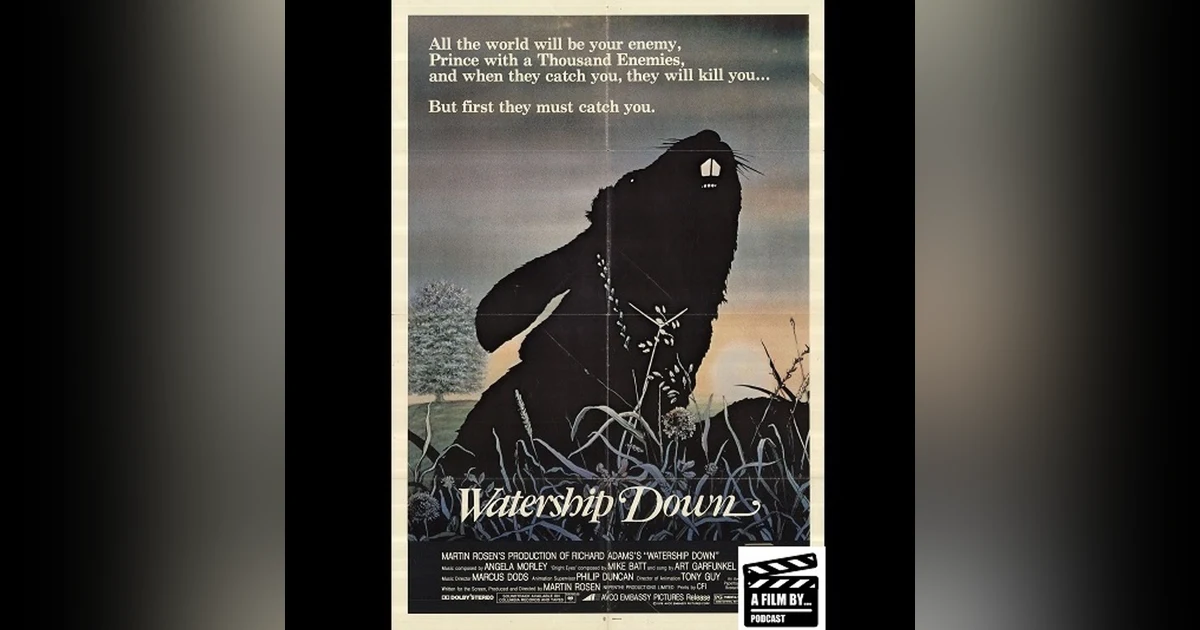
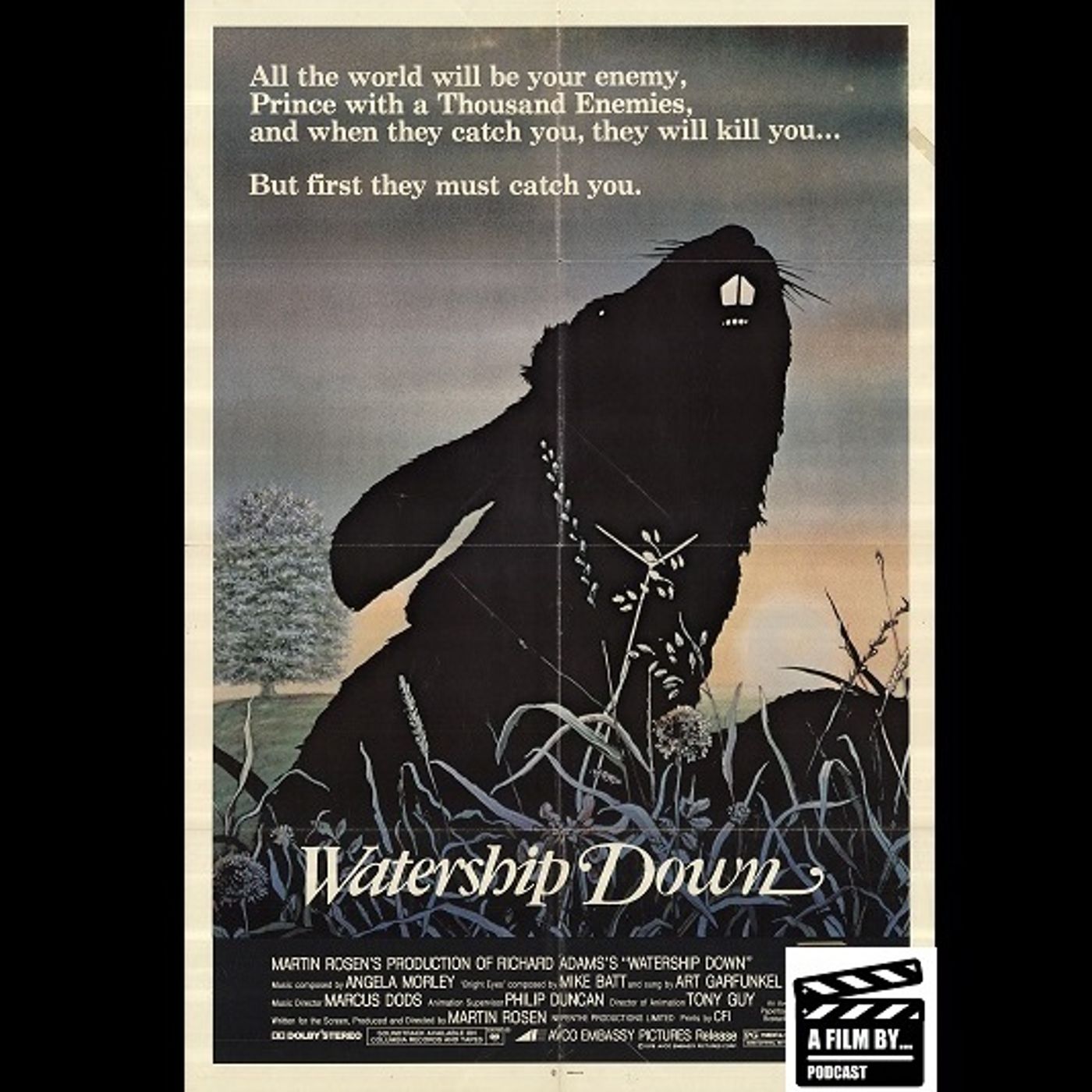
All the world will be your enemy, Prince with a Thousand Enemies, and when they catch you, they will kill you... but first they must catch you.
Join David Burns and Scott Hoffman as they celebrate the 45th anniversary of some of the most memorable...

 Apple Podcasts

 Spotify

 Goodpods

 Pandora

 Amazon Music

 iHeartRadio

 Castbox

 Deezer

 TuneIn

 Podcast Addict

 Podchaser

 Spreaker

 JioSaavn

 Castro

 RSS Feed
All the world will be your enemy, Prince with a Thousand Enemies, and when they catch you, they will kill you... but first they must catch you.
Join David Burns and Scott Hoffman as they celebrate the 45th anniversary of some of the most memorable films of 1978. This week, their animated discussion focuses on the highly memorable and surprisingly violent world of a warren of rabbits in Martin Rosen's Watership Down; starring the voice-acting talents of John Hurt, Richard Briers, Ralph Richardson, and Denholm Elliot.
Check out www.afilmbypodcast.com for more information, and www.patreon.com/afilmbypodcast to get exclusive content!
Email us at afilmbypodcast@gmail.com with your questions, comments, and requests.
Find us on Twitter, Instagram, and Facebook @afilmbypodcast.
0:00 Hello everyone, and welcome back to the year nineteen seventy eight and a Film buys limited series A film at forty five. I'm David Burns and I'm Scott Hoffman. Then thanks for joining us again. We're dusting off the end of a decade that changed cinema forever with a fresh look at modern classics and hidden gems that we can't stop watching even forty five years after their debut. With today's episode, we're jumping back into the animated side of seventy eight with Martin Rosen's Watership Down. All the world will be your enemy, Prince with a thousand enemies. Whenever they catch you, they will kill you. All the world will be your enemy, Prince with a thousand enemies, And whenever they catch you, they will kill you. But first they must catch you.
1:03 Digger listener, runner Prince with a swift warning, be cunning and full of tricks, and your people will never be destroyed. Based off the iconic nineteen seventy two novel by Richard Adams, it has been considered to be the most violent animated PG movie ever made, and could say traumatized a generation of kids, including yours. Truly, the film was nominated for the Hugo Award for Best Dramatic Presentation in nineteen seventy nine. Scott, let's take our listeners to the nearby warren and let them know what is this film all about? Yeah? So, this animated classic tells the story of a small group of friends on a quest to escape danger, find their freedom, and build a new home in a place called Watership Down. They just happen to be rabbits.
1:49 They live in their own natural environment, the wild hillsides of Hampshire in southern England, where they have their own culture, language, and mythology in a home that's always felt safe, but never quite free. When one of them is terrified by a premonition of their homes destruction, they set out on their own to find something new. It's an epic quest in a strange yet familiar world just below our backyard, and an original adventure unlike anything we've ever seen before. So let's get into this animated classic that's barely given half a century old and talk about why it endures as a timeless story. Dave, I don't know about you, but one thing I love about this movie is that it does take that that environment that's so familiar and turns it into another world entirely. It does. This is the movie that does an excellent job of putting us as an audience into the eyes of rabbits, and you know, we care and what they are going through, what they're dealing with, you know, you know, is it five I believe has the premonition of you know, what is to come. So he you know, freaks out and gets Hazel and they try to get out of there. You know, it's their quest and you completely pulled into that quest of them going across the land to find a new place to live, right, you know, And it's it's it's a scary world looking through those rabbits. You know, it's not your typical Disney film. It's not a Disney film, but you know what I mean, you know, it's it's scary, it's creepy, there's death, you know, and it's it's frightening world. And we see that through the eyes of the rabbits. Yeah, and it's it's expertly told. It's one that unfortunately in a lot of instances, it's um it's somewhat kind of
3:23 dismissed as a children's movie just because of the nature of it being animated, which I've always thought is a is a big mischaracterization of the genre in general. I think animation reaches a lot of people of different ages, and it's one of the reasons that a lot of animated movies become classics that adults continue to love. I think it's something that can transcend ages. I think it can transcend a lot of things if if people kind of give it the chance and don't kind of regard something that's animated as something that strictly for kids. And I think at the time, this is one of the first times when I think, in my experience in the in the US, this is one of the first times when animation was allowed to do so. Even though we had just talked recently about Ralph Bakshi's Lord of the Rings try to do a similar kind of thing right right, and both successfully did so. But there are times when this will be seen as you know, it's a movie about rabbits and it's animated, so people think it's just for kids. It's interesting that it is, but it really isn't. No, It's it's true.
4:36 I mean, you watch this film and especially you know the final fight there you have at the end. I mean, they don't hide anything when it comes to blood and gore and you know, the dog ripping the rabbits apart and stuff like that. That is some frightening stuff. Scott. Yeah. Well, and it's never used to excess, right, It's never used as like you know, seeing somebody's intestines spilt or something like that. Sorry, anybody who's having breakfast. But it's it's always told to make it very real, like this is not um even though they're they're rabbits that have their own language and society and things like that. They're not wearing outfits, they're not trying to be people. They're telling their story with a voice that we recognize, but it's very much their society. They're very much claws and fangs and and things like that to protect themselves and to establish new territory and um.
5:32 Yeah, I think one of the disturbing scenes that pops out in my mind is when they learn about Fiber's premonition coming true and how that's realized is a terrifying thought. Yeah, I'll give the spoiler warning now for anybody who's you know, it's a it's a it's a podcast. About forty five year old movies. But just in case, um, give you a chance to get out. Um the scene where they talk about the rabbits being trapped underground when they're being gassed, Oh my gosh. Yeah. And it's not only that terrifying idea of like, you know, your home being filled with gas. That's that's lethal, but the fact that they couldn't get out because the bodies of the other rabbits were piling up and block blocking the way. Yeah.
6:20 Scary, good god, you've got that. You've got a fair amount of violence. You've got this this idea of death personified in the Black Rabbit. Um, all very mature things, All things that I mean, I think you have to kind of gauge whether or not a child could be ready for that kind of stuff. Yeah, but then again, it's it's it's something that is a mature story that's not told, like I said, to excess, So it's something it's a very approachable when that kind of topic is is right for a kid. I think this is a great movie for them to see. So, Scott, you've got kids, Yeah, what age would you allow them to see this movie? That's a great question. It's what I've been thinking about because when I was watching this on my own, I was like, well, maybe I should watch this with my youngest. I think I would probably get into probably about fourth maybe fifth grade with this, because I think that's just around the time when they're probably going to start getting into dystopia kind of books. They're starting to learn about those subjection it's becoming a little bit more real. I think that's the kind of age where you can set this movie up, and I absolutely would set it up as this is a really interesting look at a world that we've never been able to see.
7:55 Whenever you see a rabbit runaway and run down a hole, you kind of one or how far does that go? You get to see that, you get to see a closer look at a rabbit's actual life. And even from the first I kind of want to call it an animatic in the in the opening, which is beautifully told and beautifully animated with the um with an amazing narrative that we'll talk about soon, one of my favorite voices of all time. But it sets up this idea of rabbits having the power of speed, the power of swiftness, being clever and all this other kind of stuff because they're having to evade things like weasels, foxes, dogs, cats, hawks. You get a very close look at a very real look at their What they need to do is to survive, and they're how They're kind of pursued by various creatures, including humans. But it's very real because you see um when they get trapped, there's in a snare, there's blood, they get cut, they get you know, it's it's never meant I don't think it's ever meant to be scary. No, it's not meant to be real.
9:13 But it is a very real discussion of death, and it's not always necessarily a violent death. Sometimes it's peaceful, sometimes it's natural. I remember when I saw this as a kid, I was not expecting it same. Yeah, when did you first see this? Oh gosh, I want to say I was probably eleven or twelve years old when I saw this movie for the first time. Like I said at the beginning, it did traumatize me a little bit. I wasn't ready for what I was going to get. Right, Um, I assume you probably saw it on TV and it just happened to beyond and you caught it right probably about the same time we were seeing things like the Hobbit exactly right at the ranking Bass Hobbit. I don't know about you, but this is one of the the first times when I saw a kind of mature animation that also seemed appropriate. It was kind of like finding a book for the first time that is accessible to kids, but not necessarily written as though it was kind of pandering to them or patronizing to them. It was kind of like, this is a serious journey if you're ready for it and jump in. I saw the same way for the first time, and it was it was fantastic. Um. It drew me in for the animation, right, because it seemed like it wasn't kind of the disneyfied kind of animation style, um, something different like Raging Pass's Hobbit.
10:43 It was also something that the voice acting absolutely drew me in in one in one regard because it was a lot of British actors and I was not used to seeing British things at the time. You're right, right, what kind of things were you seeing at that age, right, Like from Britain? The Hobbit. Maybe that's that's really all I can think of off the top of my head at that age. I mean there was like Doctor Who. I think I really won Doctor Who at that point, but yeah, I know it was around. I know my brother was watching that a lot, just like one of these weird special effects stuff like you know, Tomorrow People and Money Benny Hill, which is a whole different thing that was kind of being sprinkled in. And then when you hear so much voice voice acting from Britain, it kind of makes it seem a little bit more like, um, a little bit more unusual, a little bit more like something that's kind of an import that also kind of drew me in it does. You're right, I couldn't agree with any morning and I say, it's something else it does, is it? You kind of mentioned it touched on it a little bit ago. When you do see a rabbit now out in low in the world, you look at them a lot differently after you've seen water Ship Down.
11:56 Yeah. You know, even when I was a kid, like when I was out, you know, hiking in the wood and stuff, and I'd see a bunny bounce out and it quickly sent me back to watching Watership Down and say, oh, I wonder where his burrows at. I wonder what's going on? You know, right right well, and teaches you a little bit more respect for the rabbit, like, yes, this is not a cuddly creature. Don't try to grab it and take it home, because it will defend itself. Yeah. Yeah, it's got its whole society, it's got its whole own world, and obviously it's not as we might not understand it, but it is very real, absolutely absolutely Well, Scott, let's talk a little bit about this cast. Since we've mentioned we've touched a little bit on it, um, so let's talk about little bit about the narrator that you mentioned. Who is that, Scott, none other than Sir Ralph Richardson, returning as the voice of God known as Frith to the rabbit world, um, the Supreme Being from Time Bandits. Sir. He also plays the Chief Rabbit and um, his voice is spectacular. It's automatically identifiable as soon as I heard it. There are times when I was watching this and listening to it more than I was paying attention to the visuals, and it's it's it's fascinating how many times these voices bring you to other places at the same time. Fits so well within the role such a commanding presence, but also a welcoming kind of paternal presence. And yeah, in that intro,
13:33 oh goodness, such a beautiful intro with his voice and the stylized kind of um kind of reminded me of like Deathly Hallows, absolutely Black Panther, and it totally convinces you that all of this stuff is real. It seems like established mythology that's taken from another part in the world, but it is completely taken from the imagination of the author of the original book. Yeah, and I believe another director had done that part. It was John Humily was directing Watership Down first and then he got let Go, but that opening sequence is his and they kept it in the film, which I think is really cool. Yeah. Yeah, it's it's very fitting and it does a great job of from the beginning, it establishes you're gonna see some disturbing stuff because as soon as the cats and dogs and whatnot evolved to the point where they have kind of natural weapons, they're killing rabbits. So it's very clear from the beginning like this is about these rabbits getting pursued with this black rabbit of death kind of always looming presence. So yeah, Sir Ralph Richardson love it.
14:48 I do too, I do too. Well, we've already mentioned this, gentleman when we did The Rough Box. She's a Lord of the Rings. But John Hurt, who is the voice of Hazel, does such a wonderful job in this role. Um. He just got that distinctive voice. You know, I've known him for so many other things, and we've mentioned it before, you know, Alien Harry Potter. But what I found interesting too is that John Hurt and Nigel Hawthorne, who is also in this movie, Nigel author and plays Captain Campion. Uh, those two would go on to do a couple of other animated together. They would do Richard Adams The Plague Dogs in nineteen eighty three, and they would also do The Black Cauldron in the nineteen eighty five together. And I want to do a shout out there to a docking base seventy seven Dayton Johnson's podcast. We did a podcast on the Black Cauldron with him, so and that was a lot of fun.
15:41 How do yeah, yeah, um, but yeah, John Hurt does a wonderful job as Hazel. Um. Then we have what Richard Bryers, who plays Fiver. Um, I didn't really know much about him, but apparently he did some UK work for Bob the Builder, which he was one of the voices above the Builder. That is amazing, Yeah it is. He did some Torchwood, which I love. You've never seen Torchwood, definitely check that out. Yeah, you know, he did Doctor Who as well, which these were British actors. You're probably gonna see a lot of these, uh you know connected to Doctor Who in some way or Oh yeah, well, John Hurd is one of my favorites as the war doctor. Oh yeah, absolutely, so good, so good yep um our test based on Ralph Richardson. There the next one who has a very special place in my heart because I know him as Marcus Brody Indiana Jones. And of course that is then Holme Elliott, who plays cow slip Um. He has done so much work over the years, and but I will always know him as Marcus from Indiana Jones. Just it just is that's who I grew up with.
16:48 I'm sorry. When I first heard his voice when I was watching it recently, I happened to be looking away before he said his first line, and as soon as he spoke, I felt like Salah, oh yeah, I was just like Marcus Brodie. Oh yeah, I loved hearing his voice and and so so well done. There is there is, there are no gaps here in voice acting. Um, it's all just astonishing. Um. And another familiar voice that came around, Um Roy Kinnear as Pipkin. Oh yeah, mister Salt from Willy Wonka. Yep. Another distinct voice that that just made me smile as soon as I heard it. Um. Joss Ackland surprised me. Um in this one as the voice of the Black Rabbit, who I always come back to, Um, the villain from Lethal Weapon too.
17:45 That's right. Oh yeah, I forgot about that, you're right. Yeah, yeah, I watched the documentary, so as soon as it's his hace, I was like him, that's right. And then of course you know Michael Graham Cox who plays big Wig. We talked about him. He was in Ralph back to He's Lord of Rings as um a boor Mere. Yeah yeah, a lot of connections here, yeah absolutely. Um. But of course U Zero Mostel who played as a Key Horror. Yes, he voiced Key Horror. This was his last movie because he would pass away after voicing um Keyr, which you know, we definitely want to mention him. He's done a lot of work as well, but you know, he went out with a great film, I'll definitely say that, and anything hard for him.
18:29 I think his his role was spectacular in this one, and I think he did a great job of giving the right kind of um, kind of comic relief. Yeah, but never being you know, bumbling or that you would would laugh at somebody who just gave a little bit of levity to the situation. And the way that he portrayed this character, uh, spectacular. Yeah. Not not to keep using the same words again, but it's hard not to, but it's hard not to, right, it does, and you know, and they've made some other versions of Watership down over the years. I believe there's a TV series too that they did. Um. Netflix has done one recently if you've not seen that, and I guess we can touch based on all it later. But it's really well done. I enjoyed it, um, But this one in nineteen seventy really holds a special place in my heart. But you're right, you know, you got this, this this crazy bird who does such a wonderful job of just you know, he makes you laugh. But it's not you're not laughing at him, you're just laughing because he's just goofy, you know, right right, well, and he's one of them. He's one of the few times when the character it's almost like a character from outside the rabbit world, right right, So he's aware of things like the oceans and you know, all this other kind of stuff and the world beyond theirs. So he gives us a little bit of um It's almost like Han Solo I think does in Star Wars, where it's like everybody's very immersed and bought into this mythology and somebody like what hold on a second, ken, It gives you like a realistic kind of record
20:00 scratched there. So yeah, I think he did a phenomenal job and he definitely steals the scene. Oh ever seen that he's in. And these rabbits aren't dumb. I mean they're finding people or they're finding other animals who can help them, because I mean, you know, you get a bird who can like fly high and look around and spy, which is exactly what you need, you know, a scout. Yeah, So I mean these rabbits are intelligent. They're trying to find their way to a safe place. But yet they're they're getting assistance where they need it, so very smart of them. Yeah. Yeah, we got to talk about the dark side too. We gotta talk about General Woundwart. Oh yeah, Harry Andrews is the voice of a General Woundwork. Yes, very creepy um just seeing him. How decrepit and evil he looks. Man, you can tell he's been through a few fights. Well, he's been through the horrors of losing his home planet of Krypton. Yeah, he's right, the Elders in nineteen seventy eight's Superman.
20:55 He sure is you're right now another connection, Scott, They're all over the place exactly. Yes, No, he gets such a wonderful job as genner Win work that you know, you dislike you're scared of him, especial when you're a little kid. Man you're like, yikes, man, I mean he's like the Darth Vader of this for sure. Right. And it's it's again like when you think about animation, it frees it frees up the production to a certain degree to be able to say, like, we don't have to try to craft this thing three dimensionally and make sure that it doesn't fall apart. Animation on its own is a very painstaking, intricate process, but I think it allows somebody to do so much more, to explore so much more. And the way that he's drawn, the way that he's illustrated, he fills every area that he's in, even when he's standing outside.
21:52 It's this big, intimidating presence of a rabbit that has m one one eye that's completely glazed over. He clearly has his scars. Um and balance that with the voice UM that absolutely calls anybody to stand at at attention and um and and be afraid of him. And there's a viciousness that comes out UM in that voice acting during the climax, and it just it draws you so much further in and um and does just a great job of making it kind of a thrilling scene. Yeah, And he's the he's the leader that leads.
22:36 You know, he may be evil, but he maybe you know, sees the world in his own way. He doesn't care about anybody else, but you know he Um, he gets in there and fights. He doesn't sit back and let his soldiers do the work. You know, he goes, he goes in there and fights himself. And you see that man. He goes right into that burrow and goes after those other rabbits because you know, he doesn't care he's going to tear him apart and take over, because he's just got that vengeance in his in his eyes that he just sorry. And I like that because the fights that he has, you know, they're they're rough, man, they're tough that you see on screen. Yeah, for sure. Yeah, Well, of course we have to talk about the director himself, Martin Rosen. You know, I know that we talked a little bit about John Hubily. He was supposed to do this, but I believe it was Martin Rosen who was in disagreement with him, and I guess they ended up just letting him go. I know, John Hubily passed away, I believe in seventy seven, so he wasn't able to see the finished product that was out there, and I'm just glad they were able to use his opening sequence that we already talked about because it was very fitting for this film. You know, it's set the tone. But but a nice way to honor that director of making sure some of his work still made it into the film. Yeah, Martin Rosen. He began production in this in seventy five. He is actually from Bronx, New York. It seems like we get a lot of that anymore, you know. I believe Boxhi two went to New York as well. Yeah, in the thirties, so it seemed
24:07 like a lot of people go to New York. You would think it would be Hollywood, California, but now back then it seemed to be in New York. Seemed to be the popular place. You know. All right, so let's talk. Let's talk some more about through the lens Scott. What do you got. Yeah, there's a very interesting documentary on the DVD that I've haund actually where they do a conversation with Martin Rosen and the editor Terry Rowlings, and they talk about the production of this movie and the what they had to go through to get it done. It's an independent movie. They had a hard time getting it secured with a studio. A lot of a lot of places actually didn't really understand what it was supposed to be about, which is something similar to what we heard with Lord of the Rings. They would hear a rabbit movie and and one of them happens to have, you know, extrasensory perception and things like that and warns him of danger, and they were really bought into it, even though this had begun as such a popular novel in the UK, which I don't think we can we can skip over. It's a completely original story which I think is fascinating the way that I understand it. It was written by Richard Adams at the insistence of his daughters, Juliette and Rosamund, based on these long car trips that they would take to see Shakespearean productions. He would make up these stories on the fly and just kind of talk to them and kind of just tell them off the
25:38 top of his head, and they convinced him to turn it into an actual story, to weave it all together, which he got done in eighteen months, dedicated to his to his daughters and based on some descriptions he knew of wild rabbit behavior. With time he spent with a friend, Ronald Lockley, a famous British nationalist, they went on a tour of Antarctica and wrote another book on that voyage. Had some difficulty getting that made. It was rejected seven times before it was finally produced again. It was that idea like you know, not understanding exactly what it's about and seeing it as as as a big risk. But when it was published it got a lot of acclaim Like you said, the seventy two Carnegie Medal, the Guardians Children's Fiction Prize, Californian Young Reader Model, aside from being tremendously popular in the UK, so as I understand, when it was released there it did very well as a movie and then found legs to be able to reach in other places. It wasn't easy to do so they couldn't even get an advance on from showing it in theaters. They could get maybe a couple of locations, They couldn't get advertising money, couldn't make prints, and basically had to try to get it going on their own, a very independent kind of approach for something that became
27:12 the second or third highest grossing movie in the UK at the time I think it was. Yeah, Yeah, I'm just astonished at how much they were able to take something that was very well known in some places but unknown in others and turn it into something that has become this classic in both media, in both as a book and as a movie. It's clearly had a big impact. Yeah, and again, you know we've mentioned as many many times in other podcasts. You know, this is a time when there's no social media. You know, there's none of that. So you know, these movies thrive on word of mouth from people. I mean, yeah, you have news you know who talk about stuff. You know, you had Jeans, says Gordon Rodert Ebert that would you know, review these movies, And you were pretty much lenient on that kind of off in newspapers and on TV.
28:02 But you really didn't have what you have today with Facebook and you know, the Internet and stuff like that. So these movies really thrived on word of mouth. So it just shows you the legs this movie got and how well it was done, on how successful it became with it being an animated film that was just so independent and they struggled to find that money to make it, but look what happened. They have a classic on their hands to this day. Yeah. Absolutely. What I find interesting too is Watership Down is a real place. It's located in south of Newberry, in which I find that so cool. I want to go visit that just to walk around, you know, see some rabbits please. Yeah. You know, here's another thing that I found very interesting. A couple of things actually so this is the first anime movie to be presented in Dobe stereo in theaters, a little ahead of its time. But apparently back in two thou eleven, developers had announced they're planning to develop a park near Newberry, Berkshire, which is almost what happens in the movie that Fiber has the vision of, right, you know, the same scenario was happening in and apparently Richard Adams got involved.
29:11 You tried to organize in opposition to the development for obvious reasons, you know, because you know he talks about that in his book, it's in the movie. You know that this is why, you know, the rabbits were leaving that, you know, to go find a new place because of humans threatening and destroying the place that they want to live. I just found out how unusual it is that this actually really happened in the same place that this book takes place. How crazy is that? But yeah, and it seems like something that people wouldn't allow. It would just be like, you know, here's my proposal for why this should be essentially be in nature preserve. Yeah, puts the book on the table, puts the DVD on the table and says absorb either one of these, and you understand why there's a case that has been made since the seventies to keep this, to keep this killing. There's a difference between developing it into a park and it's made for people and maintaining its something that's a preserve. Like you said, you'd love to go visit, not so that you can, you know, go to a pepsi machine and drop a few quarters and get something to drink, and you know, go to the snack bar that's down the path. Something where you want to see it, but you don't want to disturb it because you respect what's happening there. I love the fact that when they when they illustrated this movie, it's it's all based on real locations, and they wanted to maintain that realism, even down to the sound um. When they went and did the sound recording, they recorded things like the train, things like the cars, just the environment. They recorded in a in the actual location,
30:45 so there's sounds from the actual water ship down at the time. They did some other fully work behind the scenes afterward, putting together just massive trays of grass and soil and even using some some rabbit for to to help simulate it, just running through it with their fingers. I think there's a that's another aspect of the the realism in this. You hear nothing but the sounds of wilderness, aside from those times when you do have that trespass of a train or a car, which sidebar is a is a great, a great representation of this being their own world because they have these uh what do they call it? The car, the yeah, and the train, and it's all naming it based on the sounds that they hear. But other than that, you don't get humanity trespassing very much. Um. There are scenes where they trespass on a human farm, but otherwise it's all the grass rustling. It's all that stuff that you'll hear if you go out and just stay in the middle of nature and just kind of let it surround you. And I think it's a beautiful thing that they did with this, right. Um, Well, before we go too much further down the rabbit hole, let's take a quick break and come back for the rewind now, Jeff, you know I love my extras and my bonus features. Now, are you ready to offer some to our listeners? Absolutely, Brad, That's why we've launched via Film
32:16 by Patreon. Starting for as little as three dollars, you can become a production assistant to receive a film by Merchandise and gain access to our exclusive content. That's right. Each month, we'll be offering up everything from episodes about our favorite actors to audio commentaries of our favorite and not so favorite movies. Now, for you fans of the familiar, we've got a nice surprise, right Jeff, that's right, brad Our. Patreon is the only place you'll get access to the lost nineteen eighty six episodes. We're covering twenty more movies from nineteen eighty six, and we've got some of our favorite guests joining in. Now you mentioned merchandise stickers, t shirts, our new color changing stadium cups exclusive to the Patreon. So join today and get in on all the great bonus content. Welcome back, everybody. So let's let's rewind a little bit. Let's talk about some of our favorite stuff in this movie, Scott, some favorite scenes. I think some of the favorite scenes would probably be Fiber's visions. There's there's the premonition, and then there's another one later in the movie. And what I like about that is that it it blends the animation style that we saw in the beginning with the animation style of the main part of the story, and I think that does such a great job to
33:49 kind of keep you grounded in the rabbits world but also take you out of it a little bit and use the animation to kind of take you to another place. Um. I think that's done so beautifully. Similarly, I guess along similar lines the Black Rabbit. Um, just the way that that's illustrated, kind of the the shading and the way that it kind of fades in and out. Um. I just find those things so fantastical while also staying grounded and sundering leaving. Yeah, yeah, what about you I have There's so many favorite things that I counsaid here and talk about for a while. But I think one of the scenes that I loved was when the rabbits to go to let the dog go because to attack to fight General Woundwork and his soldiers. Um. I love how you know each rabbit stopped in their spot.
34:40 Yeah, that they would take turns to the dog would look at them, and they, you know, to give the other rabbit a break because they were running so much, give them some rest. So the next one would take on the journey of making the dog chase them. UM. I love that that quick plan that they came up with to do that. Um. I thought that was so well done. And then when, of course, when the dog arrives and he just starts attacking General were his soldiers, and it's just the violence of all that was just well done. You know. We we said, you know, they don't have the violence here just to have the violence. They don't show the gore, to show the gore. You know, they're just showing, you know, what would happen in a situation when a dog would go after a rabbit like that. And I just thought that was well done. And you know, but one of the other ones that I loved too, and I already mentioned it was the fight between big Wig and General Winwart. I think because it was so brutal.
35:30 You could just see two rabbits going out one another that just did not like or care about it, but they were just trying to defend what they believed in. I thought that scene was really well done. And the other one, I've got to mention this one too. I told you I've got so many. I could keep going and going and going, Scott, because this movie has just done so well. Big Wig. I like when he got captured in the trap, because you saw the panic, You saw the fear and the other rabbits when trying to dig that spike out, you know, when he got trapped in trying to you know, get it out so he could get some air in his lungs, and then you know he didn't.
36:10 He thought he died. You know, you have the blood coming out of his mouth, and he's just like, you know, that was devastating. Man. You know, I'm thinking back to when I first saw this. I just remember like, oh my god. I was just sitting back, depressed and just scared, frightened and worried, like does this really happen? You know, did do rabbits get caught in traps like this? And of course they do, but you're seeing this for the first time, you know, through through your child's eyes, and he's just like, Wow, that was rough, Scott. It was rough, But I was glad to see big Wigs survived. Yeah, And I mean two of the things that you just mentioned make this a masterclass intention. Literally that scene where he's trapped in the snare, it's his own resistance that's strangling him, right, he keeps that line taught on the spike and he's trying to pull himself away to get out of it, not understanding that that's making the line around his neck tighter.
37:05 There's a great amount of so that that tension of the scene, the dramatic tension where you don't know if he's going to live or die. He looks like he has all this blood writing down his face. He seemed like he's a goner. He has that pause for a moment where it seems like he is going and then he kind of sputters and comes back. Spoilers on a forty five year old movie. But but that is a great kind of simple, um but very powerful example of that tension. And then what you mentioned about the dogs or the dog scene, Um, they have that great plan, but it kind of builds in tension. So there's the tension of being chased by the dog. Will they each be able to get away?
37:53 Then as they stop near that the giant robot robot wire tower, the dog stops for a minute and comes back like he's catching in on you know, he's getting wise to what they have planned. And then as they get him close to where the big fight is happening. You know that that dog is outside, so you've got the tension of what's happening and inside with the Manoamano battle. But you also know that anybody who sticks their head out there's a risk that giant set of dog jaws could be waiting for you out there, which is what they have in mind. But it's just such a great build of sequential tension when it's really just one idea of being chased by a dog.
38:38 It's brilliant. It is absolutely brilliant. Is definitely the word we want to use here, all right, So let's move on to let's score it. Any thoughts on the music's got I thought the music was very impressive. There's two parts we have to talk about. The first is obviously the score itself. So as I understand it, the original composer was only able to put together a few sketches of music and five minutes of score for a ninety minute film. They were able to get Angela Morley and who picked up after Malcolm Williamson, who was the one that was unable to finish it. But what Angela was able to do is to develop the whole score in two weeks and did so with very little to work with, but just knocked it out of the park. In that documentary they comment on how you know, when the composition was played by the orchestra, there was this giant applause in the room with respect to what she was able to do. It's just it fits this so well. Can you imagine only getting two weeks to do something like that, something that massive. I cannot imagine the pressure that would be put on you, that would be put on Angela in a situation like that.
40:00 I just it's mind boggling, it really is. But yes, knocked it out of the park. Yeah, for a movie that not a lot of people were understanding what it was supposed to be. The studios didn't even understand what it was trying to be. There's no precedent set for this kind of thing that I can think of. Um, so it's it's trying to, you know, get the right tone and get everything the way it needs to be to set the stage for all this. From a musical's perspective, I think she did a brilliant job. Oh yeah. But the other side of this we have to talk about is art Garfuncle's British number one hit Bright Eyes, Bright Eyes, Yes, perfect perfect, that one perfect song. I'm gonna stay right there for that. Um, I know was it was it?
40:46 Mike? Was it Mike Batt who wrote other songs for the film but weren't used. Ye, so they went the composer recorded three songs with vocals by Art golf Uncle, but it was only the Bright Eyes that was made for this film. And you know when when that happens in the movie, I you know again, I could go back to say that was probably one of my favorite parts of this film too, just because it was five going looking for Hazel correct. Um, you know when when this was used, so you don't know what's going to happen. So I thought this was a perfect song for that, for that part. Yeah, And I mean it really Um it gets into the the emotional power of this movie. I think that's something that comes across in it because it is a you know, it's a it's a peaceful kind of tune. Um, it does but exactly what it's supposed to do. But I remember watching this when a kid, when I was a kid, and I was like that song got me really sad.
41:45 Yeah, but an appropriate way, right, And that's one of the things that kind of makes this more of a mature movie. But also I think something that's you know, for kids at a certain age, is it appropriate watch right? I completely agree because you know a lot of I don't honestly a lot, but some other movies have done this part so well too, where they just add a song into a part where you know it seems all hope is gone. You know, your your main character is going looking for another character that you probably is dead or something bad has happened, and you just have this song put in place that just is in the exact perfect spot, and that is this situation. You have a perfect song, you have a perfect scene, and the emotions are already built up, so now you're getting all this combined together. Just makes it for a fascinating time yep.
42:31 And it's that unmistakable voice of our darf uncle yep. You know the seventies and that that time period. I mean, at this point he has been such a a powerful presence in the music world, and it's automatically familiar and recognizable, but at the same time it's so ethereal and kind of mysterious. I think it is a great job. Yeah, I do too, all right, So let's quote this. The only one I really could find was from director Martin Rosen himself. This was on Watership Down. He says, some people get it and some people don't. Some people get it very powerfully. I'm accused of waking people up at night twenty five years after they saw it. And it's true, you know I mentioned earlier. I mean, this had such a huge impact on you know, a generation, you know, and it did for me. You know, you saw it at a certain age. And I'm telling you, I'm going to be fifty years old soon, and I'm telling you I still remember the day I saw this movie just like it was yesterday. That tells you the impact of this film.
43:42 Yeah, And I mean you and I have shared our passion and our reverence for another animated movie that's considered a bit traumatizing, Transformers, the movie Oh Yeah, which I think some would say you're talking to apples and oranges, But it's that it's a similar kind of idea of an animated movie that hits so powerfully with certain notes, and it seems like something as a kid that you're not quite ready for. But when you experience it, you find out that you're better for it coming out on the other side. Yeah, this is not something where you know, I'm growing up with a phobia of rabbits. It's not something where it's you know, scarring me or you know, anything else like that. It stays with you, it's impactful, it makes you sad. But I think we're better for having access to this story in another way that we may not have otherwise discovered and giving it that broader reach. I think it's something that makes us accessible to a lot more people.
44:45 It's a relatively brief movie that gives you an overview of the book, and I think probably interested a lot of people in getting into the book and diving into more detail. So anytime you can have a movie that does any of those things, I think it's a it's a win. And it's absolutely the case for an animated feature that helps to kind of elevate the perception of what can be done in illustrated storytelling, not just for kids, but for audiences of all ages. Yeah. Absolutely, And you know you hit the key right there, man um. You know, as a parent, you know, if you see this movie with your kids or you allow them to watch this movie. Um, definitely sit down with them, read the book with them, you know, because you're going to open up a bigger world, which a book always does, because come on, you know, we love movies, we love TV series, but they only have a limited amount of time to tell the story that a book can go on and on and on to explore more for you. Definitely read this book. Read it with your kids, let them read it, you know, and get to enjoy this world that is Watershipped Down. It has a huge impact. It shows right now what an impact it has on Scott and I. You know, we're talking about it to this day. Yeah, we're specifically doing a podcast on this movie because what it did to for us when we first saw this film. You know, this isn't your typical animation. It truly pushes the boundaries and it allows us to look through the eyes of a rabbit right rights.
46:19 It's illustrated storytelling and its finest and I think a lot of people took cues from this in animation that we see today that's able to tell these kind of stories. I think it's one that hits right in the middle of right in the middle of age and what that can reach. It kind of transcends being defined by age. Like you said, for kids, it's a very mature story that they discover and it makes it feel like this is something a little bit more grown up the movie I wasn't ready for For adults. It's a still a serious and gripping thriller that's intricate without being too complex, and I think the the way that it's portrayed takes you back to a time when it kind of lets the adult world fall away. There's no technology, there's no cities, there's nothing surrounding that you're taken into a very simple, yet focused and relatable story that yeah, just draws you right in. Yeah, And like we mentioned earlier, they've they've done different versions of this in later years, And I will mention again the twenty eighteen version that Netflix did.
47:31 I really enjoyed it. Definitely check that out if you get an opportunity. Scott, I don't know if you've seen Netflix version. I haven't. I saw a trailer and I saw that James McAvoy was associated and a lot of great voice actors with it, and I just I'm definitely interesting in catching that. Yeah, definitely give it a chance. But if you've not seen the original nineteen seventeight version, please do yourself a favor go watch this movie. If you've got young kids, just as Scott has mentioned, you know, you know there may be a little bit young if you want to wait a little bit, sure, I understand, but definitely give them an opportunity to watch this to have the experience we had when we were kids to see this movie. Scott, where did you watch this at? So? I caught it in two different ways. HBO Max I think currently has it, but I also found a copy of through the local library, found it on DVD, has great features on the side, and just gives you another way to absorb it. As Dayton Johnson Document seventy seven would say, a physical media is always better. He's right. There's a lot of advantages to catching it that way, and it just allows you to see it wherever you have it, regardless of what kind of streaming service that you have. Absolutely, I saw it on HBO Max as well. I'm glad they have older films like that popping up on some of the streaming services to give them an opportunity to gain a new audience. Yeah. And the fact, yeah, that you go to the library to get these Scott, that's that's a brilliant idea.
48:53 Please go use your library, you know, check out those movies, check out those books. Gives you an opportunity to get both of them, you know, the book and the movie, and you can share that experience with your family. Yeah, or obviously you can you can buy this physical media as well. About make the the developers very happy, and it's something that you can actually kind of, you know, take off the shelf and pass down from time to time. I would just recommend just anybody who's kind of wondering when to see this. Uh. There was a kind of a slip slip up made when they broadcast this around Easter. No I remember hearing thinking, oh, it's a rabbit movie. Let's show that rabbits. You don't want to show this at Easter. This is not a story of the Easter, buddy. So just you know, I think you catch the drift from what a lot of what we discussed. But um, yeah, it's especially in springtime. I think it's a great time to watch this movie. Gives you another appreciation from nature from another angle. Yeah, that's right. All right, Well, I want to thank all of our listeners for tuning in listening to what we have to say. We've got some other films coming up that we're going to discuss, and some guests coming up that are going to be joining us. But I want to say, listen, kids, if you don't do as your parents ask, then general winwork. We'll get you Scott. What's next for us? So on the marquee, we've got another dive into a different kind of animal world. We're talking about Animal House with
50:24 our favorite guests dot com based seventy seven Zone, Dayton Johnson. Yes. On the main podcast A Film by, We're gonna hear Jeff dive into jj Abrams Super eight. Such a great movie. I cannot wait to hear what they have to say about that movie. Yep. All right, folks. So if you want to leave a comment, discuss what's next, or even half suggestions, you can find us at www dot a film by podcast dot com, A film by podcast at gmail dot com, a film by podcast on Facebook, Twitter and Instagram. Until our film real start rolling again, go out watch something new, watch something different, and who knows what you will discover next. Thanks everyone, Thanks, have a good win